How to Deep Clean Your Bathroom: A Step-by-Step Guide
SHARE:
A thorough bathroom deep clean means scrubbing every surface from ceiling to floor, including the spots a quick weekly wipe misses: grout lines, toilet bases, showerhead nozzles, and behind the toilet tank. Deep cleaning a bathroom removes built-up soap scum, mineral deposits, mold, and bacteria that can affect your family’s health. This step-by-step guide walks you through every task in order so nothing gets skipped.
Step 1: Declutter and Prep the Bathroom Before You Clean
Every effective bathroom deep clean starts before you pick up a single sponge. Remove everything from countertops, windowsills, shower shelves, and the floor. Toss empty shampoo bottles, expired products, and anything that doesn’t belong. A clutter-free bathroom lets you reach surfaces you’d otherwise skip, and it stops you from cleaning around obstacles instead of under them.
While you’re clearing the space, pull out your supplies so they’re within arm’s reach: an all-purpose cleaner, a disinfectant spray, a grout brush, a scrubbing pad, microfiber cloths, rubber gloves, and a mop or floor scrubber. Pre-soaking is the secret weapon of a proper bathroom scrub-down. Spray your toilet bowl cleaner, apply a cleaning solution to the shower and tub, and let everything dwell for at least five to ten minutes while you work on other areas. The product does most of the heavy lifting so you don’t have to.
If you’re preparing for a large event or a post-renovation bathroom refresh, our holiday cleaning service is built exactly for situations where you need every room, bathrooms included, immaculate in one visit.
Step 2: Deep Clean the Toilet from Top to Bottom
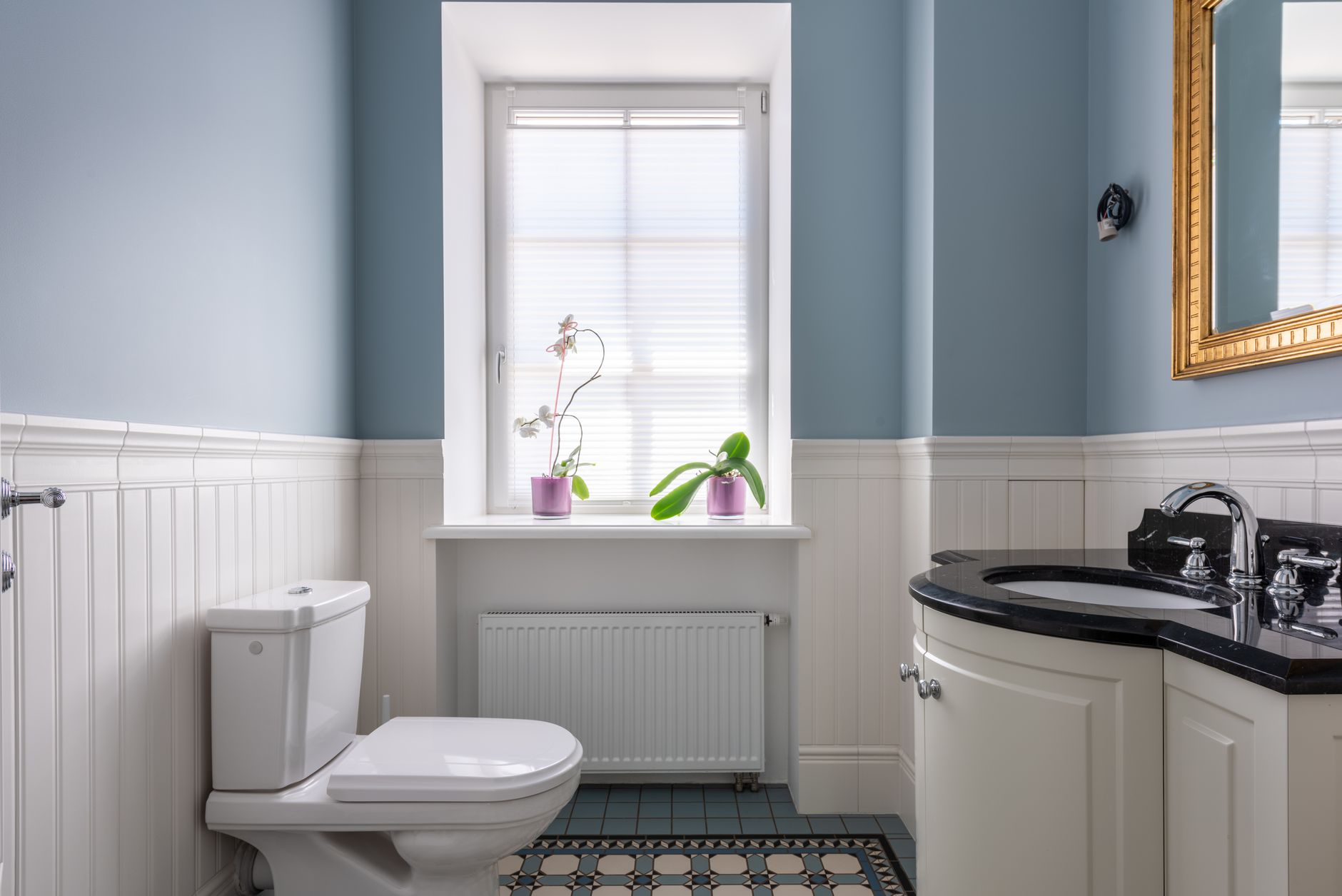
The toilet is the most bacteria-dense fixture in your home, so it deserves its own dedicated step. Spray a disinfectant generously on the outside of the toilet: the tank lid, tank body, flush handle, seat lid (top and underside), seat, bowl rim, and base. Let the disinfectant sit for the manufacturer’s recommended contact time, usually two minutes, before wiping in that same top-to-bottom order. Use a fresh cloth or paper towel at each zone to avoid cross-contaminating surfaces.
For the bowl itself, a gel or foam toilet bowl cleaner works best because it clings to the underside of the rim where stains and limescale hide. Scrub with a toilet brush, paying extra attention to the siphon jets under the rim. For stubborn mineral rings, a pumice stone designed for porcelain is a surprisingly effective tool that won’t scratch the bowl. Flush and rinse the brush before returning it to its holder.
Don’t forget the toilet base and the floor directly around it. Bacteria and grime accumulate there constantly, yet it’s one of the most commonly skipped spots in a routine bathroom cleaning. A disinfectant spray and a paper towel handle it in seconds.
According to the CDC, moisture-heavy environments like bathrooms create conditions where mold and bacteria thrive, making regular disinfection especially important in this room.
Step 3: How to Clean Your Bathtub or Shower the Right Way
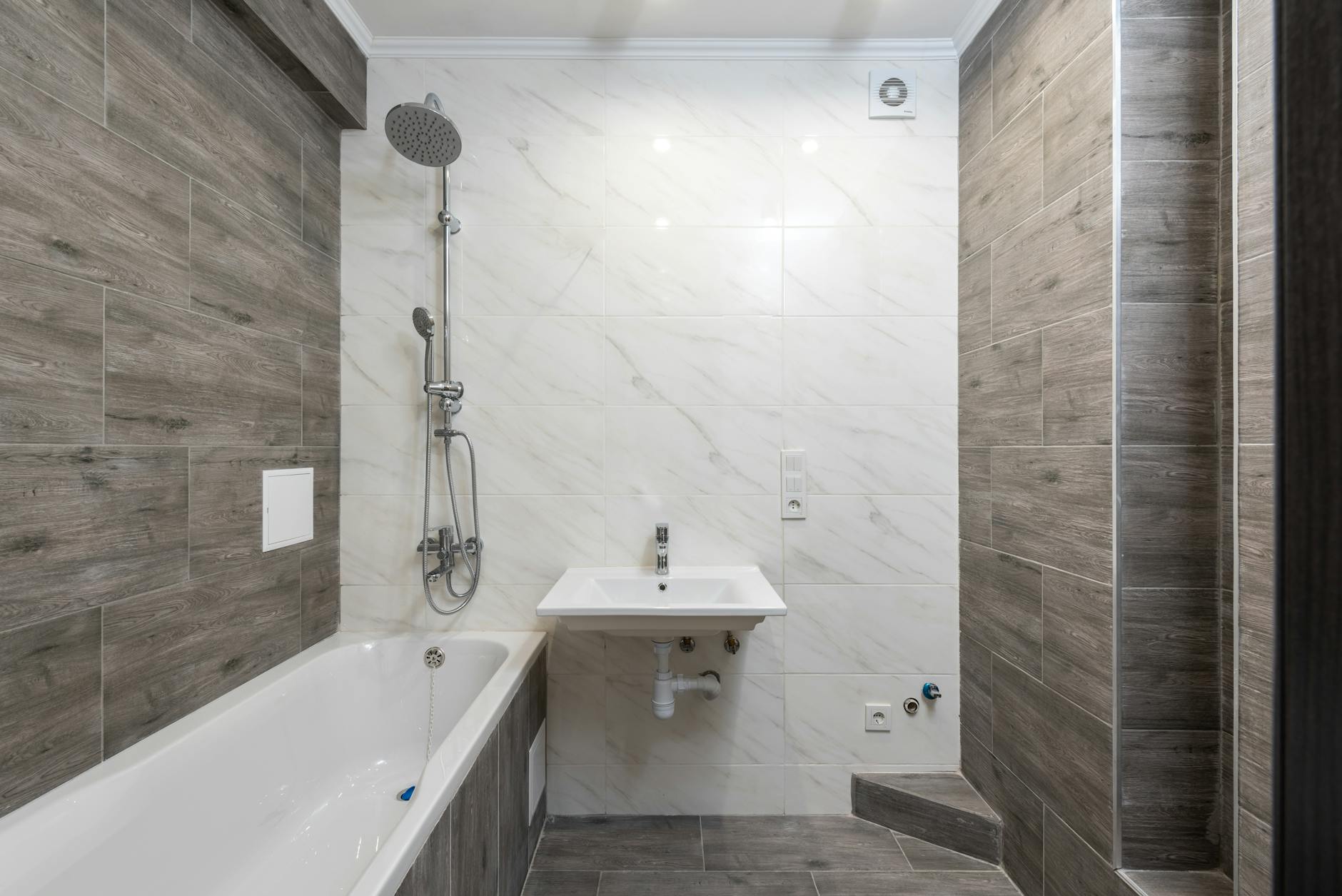
Cleaning your bathtub or shower is the most physically demanding part of a bathroom deep clean, but the right approach makes it far less of a struggle. Start by rinsing the walls and tub floor with warm water to loosen surface grime. Then apply a cleaning paste or spray, a mixture of baking soda and dish soap works well on acrylic and porcelain, while a dedicated tile and grout cleaner is better for ceramic tile surrounds.
Work from the top down: clean the showerhead, then the walls, then the tub floor. For the showerhead, fill a plastic bag with white vinegar, submerge the showerhead in it, and secure the bag with a rubber band. Leave it for 30 minutes to dissolve mineral buildup, then wipe and run hot water through the nozzles. A small detail brush or an old toothbrush is ideal for scrubbing individual nozzle holes.
Grout lines are where most people give up during a deep clean of the bathroom. A stiff grout brush and a paste of baking soda and hydrogen peroxide applied directly to the lines cuts through discoloration. Scrub in short circular motions, let it sit for a few minutes, then rinse. For stubborn mold in grout, the EPA’s mold guidelines recommend cleaning with a detergent solution and ensuring the area dries completely after to prevent regrowth.
Glass shower doors get a film of soap scum that dulls them quickly. A squeegee used after every shower prevents the worst buildup, but for existing scum, spray with undiluted white vinegar, wait five minutes, then wipe with a microfiber cloth. For textured shower floors, a stiff scrub brush and a tile cleaner will reach into the texture far better than a flat sponge.
If you’d rather have a professional handle the heavy scrubbing, check out our guide on deep cleaning bathrooms in Chandler homes to see what a professional bathroom deep clean covers.
Step 4: How to Clean a Bathroom Sink and Vanity Area
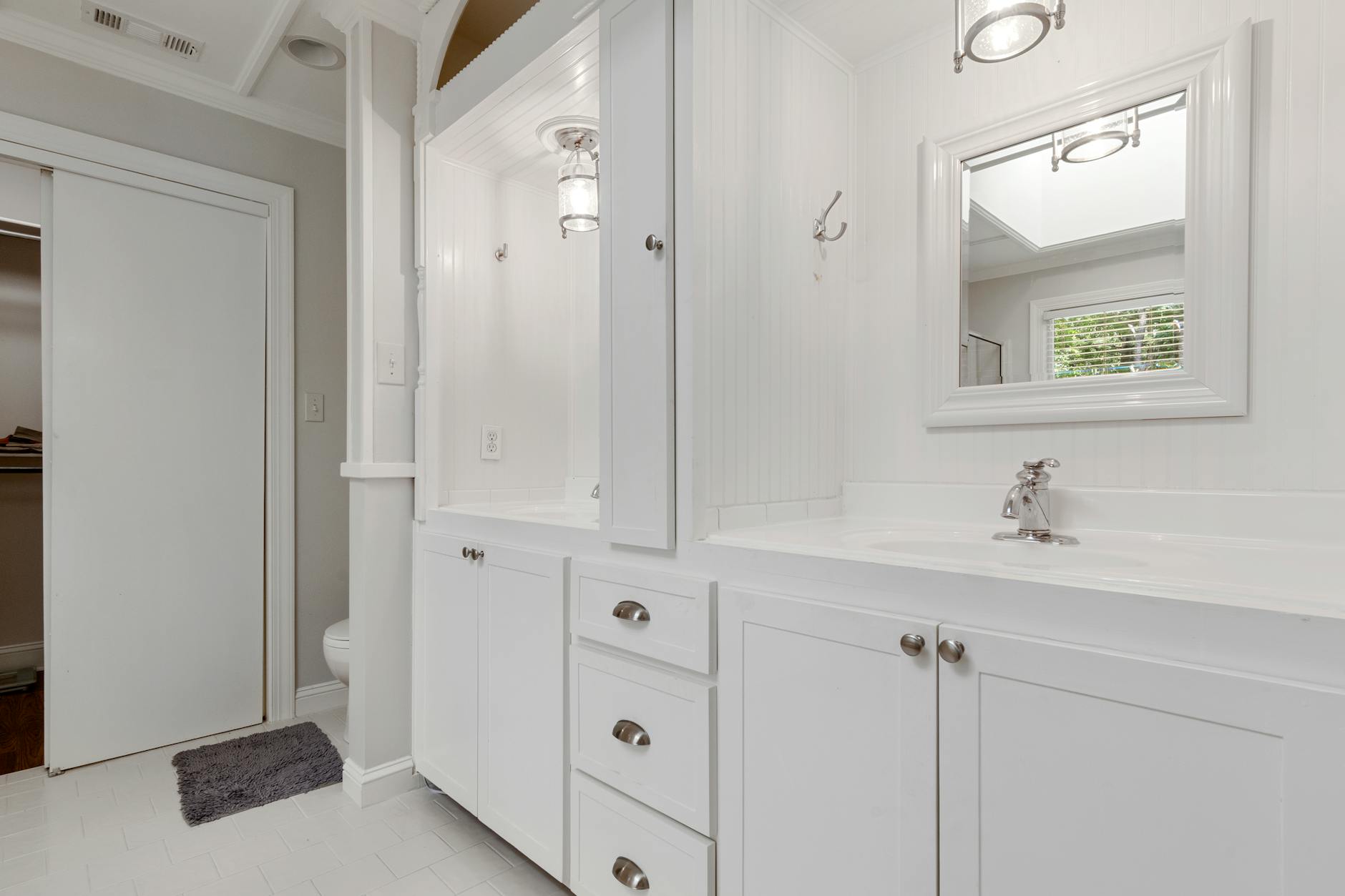
The bathroom sink collects toothpaste residue, soap scum, and water spots daily, yet it’s often wiped down rather than truly cleaned. For a proper bathroom sink cleaning, start by clearing everything off the vanity top. Spray the faucet, handles, and basin with a disinfectant or all-purpose cleaner. Use a small brush, a grout brush or an old toothbrush works perfectly, to scrub around the base of the faucet and the handles, where grime collects in the crevices.
Scrub the basin itself with a non-scratch scrubbing pad to remove soap scum and toothpaste stains. Pay special attention to the drain area and the overflow hole near the top of the sink bowl. The overflow hole is a notorious collector of mold and biofilm; a small bottle brush or a pipe cleaner dipped in bleach solution cleans it out thoroughly.
Cleaning a bathroom sink properly also means wiping down the vanity cabinet fronts, the mirror, and any hardware. For the mirror, a spray of glass cleaner and a lint-free microfiber cloth gives a streak-free result. Wipe in an S-pattern rather than in circles to avoid redistributing the cleaner. If you notice water staining on faucet hardware, a cloth dampened with white vinegar dissolves mineral deposits without scratching the finish.
The vanity countertop itself should be disinfected and dried. Standing water encourages mold growth along the backsplash and caulk lines, so always dry these areas after cleaning. If your caulk is discolored or pulling away from the wall, re-caulking is a straightforward weekend task that makes a dramatic difference in the overall cleanliness of the sink area.
Step 5: Deep Clean Bathroom Tiles and Grout
Bathroom tile cleaning goes beyond a surface wipe. Grout is porous, which means it absorbs dirt, soap, and moisture over time, turning from white or cream to gray or brown. The most effective way to deep clean bathroom tiles is to work in small sections, applying a grout cleaner or a paste of baking soda and water directly to the grout lines, letting it dwell, and then scrubbing with a stiff brush.
For wall tiles, a spray-and-wipe routine with an all-purpose cleaner handles everyday grime, but a deep clean of bathroom tiles requires a heavier-duty approach: a tile cleaner applied to the full tile surface, scrubbed with a scrubbing pad, then rinsed thoroughly. Pay attention to the grout lines at eye level, which often get missed because they’re harder to see clearly.
Floor tile cleaning benefits from a similar method. A tile-safe floor cleaner diluted in a bucket, applied with a stiff mop, and left to dwell for a few minutes before scrubbing loosens the ground-in dirt that builds up from foot traffic. After scrubbing, mop with clean water to rinse, and then dry the floor to prevent water from sitting in grout lines and encouraging mold. According to the EPA’s indoor air quality resources, controlling moisture in bathrooms is one of the most effective ways to prevent mold growth that can compromise air quality throughout your home.
If you want a room-by-room approach to tackling every surface in your home at this level, our whole house deep cleaning checklist is a useful companion resource.
Step 6: Tackle the Spots Most People Miss
A genuine bathroom deep clean covers the areas that a weekly wipe-down never reaches. These are the zones that cause buildup to compound over months and years if left unaddressed. Going through this list once every few months makes your routine cleaning much easier to maintain.
Exhaust fan cover: Remove the cover grate and vacuum or wipe away the dust buildup. A clogged fan runs less efficiently, leaving humidity in the room longer and accelerating mold growth.
Behind and underneath the toilet: Use a long-handled brush or a sponge on a stick to clean the wall directly behind the toilet and the floor beneath the tank overhang.
Door tracks and hinges: Shower door tracks collect hair, soap, and mold. A small brush and a diluted bleach solution clear them out. Cabinet hinges and door hinges can be wiped with a damp cloth and dried immediately.
Light fixtures and switch plates: Dust and moisture combine on bathroom light fixtures. Wipe them down with a dry cloth first, then a lightly damp cloth if needed. Switch plates can be wiped with a disinfectant wipe.
Ceiling corners: This is where mold spores often first appear. A damp microfiber cloth on an extension handle or a mop head reaches ceiling corners easily. For any visible mold, a diluted bleach solution or a mold-specific remover handles it at the source.
Towel bars and toilet paper holder: These get handled constantly but rarely cleaned. A quick wipe with a disinfectant cloth covers them in seconds.
Toothbrush holder and soap dish: Both collect standing water and bacteria. Remove them, wash in the sink with dish soap, rinse, and dry before replacing.
If you’d rather hand off this level of detail to a professional team, you can book a bathroom deep clean online with instant pricing and same-day availability.
Step 7: Clean the Bathroom Floor and Finish Strong
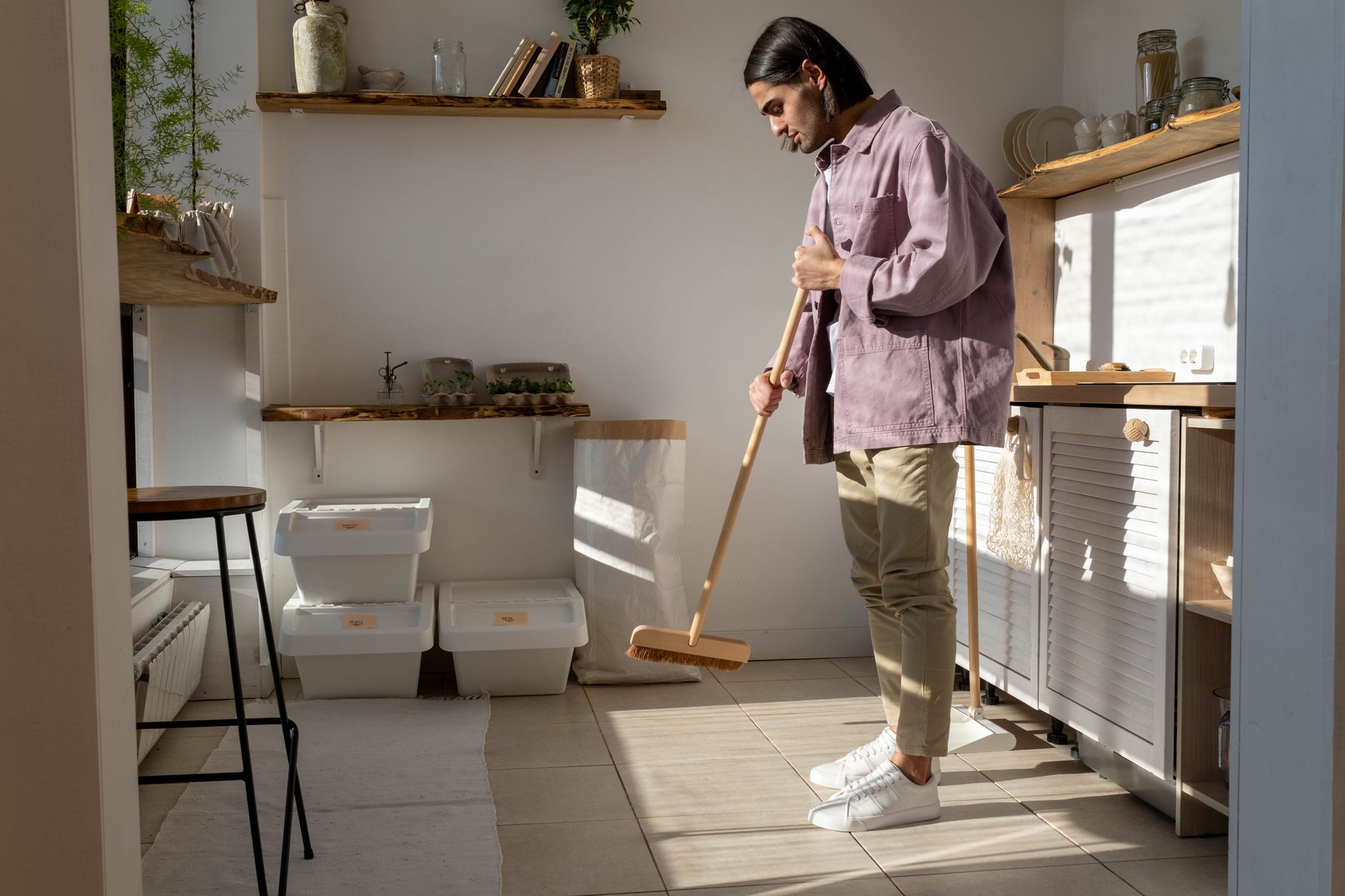
The bathroom floor is always the last step, because everything you’ve cleaned above will have dripped, splashed, or shed debris downward. Sweep or vacuum first to remove hair, dust, and loose debris. This is especially important before mopping, because mopping over hair just moves it around rather than removing it.
For deep cleaning bathroom floors, fill a bucket with warm water and a floor cleaner appropriate for your floor type. Tile floors handle most cleaning solutions well. Vinyl floors need a gentler cleaner to avoid dulling the finish. Stone floors (marble, travertine, slate) require pH-neutral cleaners only, acidic cleaners like vinegar etch stone surfaces over time.
Mop in sections, working backward toward the door so you don’t step on the wet floor as you go. For grout lines on the floor, a scrub brush attachment on a drill or a dedicated grout brush and some elbow grease makes a visible difference. Rinse the floor with clean water after mopping to remove any cleaner residue, then leave the bathroom door open and the exhaust fan running to dry the floor as quickly as possible.
Wipe down baseboards as a final step. Baseboards in bathrooms collect dust and moisture, and cleaning them last means you catch any drips from the mopping step at the same time. A damp microfiber cloth and a quick pass is all it takes.
For Arizona homeowners who want a detailed bathroom-specific approach tailored to their region’s hard water and dust conditions, our guide to deep cleaning bathrooms in Tucson homes covers those local considerations in depth.
Your Bathroom Deep Cleaning Checklist at a Glance
Use this bathroom cleaning checklist before you start so nothing gets missed. Print it, save it to your phone, or bookmark this page as your go-to reference every time a deep clean is due.
Remove all items from counters, shelves, and the floor
Apply toilet bowl cleaner and let it dwell
Spray shower and tub surfaces and let them soak
Disinfect toilet exterior top to bottom
Scrub toilet bowl and under the rim
Clean toilet base and surrounding floor
Scrub shower walls, tub, and floor
Clean showerhead with vinegar soak
Scrub grout lines in shower and on floor tiles
Clean glass shower doors
Deep clean bathroom sink basin, faucet, and handles
Clean the overflow hole and drain
Wipe vanity countertop, cabinet fronts, and mirror
Clean wall tiles and floor tiles
Wipe exhaust fan cover
Clean ceiling corners and light fixtures
Disinfect towel bars, toilet paper holder, door handles
Wash soap dish and toothbrush holder
Sweep or vacuum floor
Mop and scrub bathroom floor
Wipe baseboards
Run exhaust fan until floor is dry
A full bathroom deep clean done at this level typically takes 45 to 90 minutes for a single bathroom, depending on its size and how long it’s been since the last deep clean. Doing it every one to three months keeps the bathroom manageable between routine weekly cleans. If you want a professional team to handle the whole process, Arizona’s most-reviewed house cleaning company has background-checked, fully insured cleaners ready to book today.
Ready to get your bathrooms spotless without spending your weekend on your knees scrubbing grout? Contact Elite Maids house cleaning today for a free quote and find out why Arizona families trust us to handle the hard work. Book online in minutes with instant pricing, same-day availability, and a satisfaction guarantee that means we reclean at no cost if anything falls short.
Frequently Asked Questions
How often should you deep clean a bathroom?
Most bathrooms benefit from a thorough deep clean every one to three months, with a lighter maintenance clean weekly or biweekly in between. High-traffic bathrooms used by multiple people may need deep cleaning more often. Regular maintenance cleaning keeps the space sanitary, but only a full deep clean addresses grout, mineral buildup, and the hidden spots that routine cleaning skips.
What is the best way to remove mold from bathroom grout?
Apply a paste of baking soda and hydrogen peroxide directly to discolored grout lines, let it sit for 10 to 15 minutes, then scrub with a stiff grout brush. For more persistent mold, a diluted bleach solution (one cup bleach per gallon of water) applied with a brush and rinsed thoroughly is effective. Always ventilate the bathroom well during and after treatment.
How do you get rid of soap scum in a shower or bathtub?
White vinegar is one of the most effective solutions for dissolving soap scum. Spray undiluted white vinegar on affected surfaces, let it sit for five to ten minutes, then scrub with a non-scratch pad and rinse. For heavy buildup, a commercial soap scum remover or a paste of dish soap and baking soda can cut through layers that vinegar alone won’t remove.
What is included in a professional bathroom deep clean?
A professional bathroom deep clean typically covers toilet disinfection inside and out, shower and tub scrubbing, grout cleaning, sink and faucet descaling, mirror and vanity cleaning, floor mopping and grout scrubbing, fixture wiping, and detail work on areas like exhaust fans, door tracks, and baseboards. The scope can vary by provider, so confirming the checklist before booking is always a good idea.
How much does a professional bathroom deep clean cost?
Pricing varies based on bathroom size, condition, and location. A standalone bathroom deep clean from a professional service generally ranges from $75 to $200 per bathroom, with full-home deep cleans priced by square footage or room count. Getting an instant online quote from your local cleaning company is the fastest way to see exact pricing for your specific home.
A thorough bathroom deep clean removes soap scum, mold, mineral deposits, and hidden bacteria that routine scrubbing misses. In Tucson, hard water and dry desert heat create unique buildup challenges that make deep cleaning especially important. This guide walks you through every step, from the supplies you need to the finishing touches that keep your bathroom fresh between professional visits.
Why You Should Deep Clean Your Bathroom Regularly
Most Tucson homeowners wipe down surfaces during a weekly clean, but a true deep cleaning goes far beyond that. Tucson’s famously hard water leaves calcium and mineral scale on faucets, showerheads, and tile grout that only breaks down with targeted products and real dwell time. Beyond aesthetics, bathrooms are one of the highest-humidity rooms in any home, which creates the perfect environment for mold and mildew. According to the CDC’s guidance on mold in homes, mold exposure can trigger respiratory irritation, allergies, and other health problems, making regular deep cleaning a genuine health priority rather than just a cosmetic preference.
A deep clean also extends the life of your fixtures, grout, and caulk by removing corrosive buildup before it etches surfaces permanently. For families with children, elderly relatives, or anyone with asthma, a sanitized bathroom reduces pathogen exposure significantly. Whether you tackle this yourself or call in a professional, building a bathroom deep cleaning routine is one of the highest-return habits you can build as a homeowner in Tucson.
Step 1: Gather Your Supplies and Bathroom Deep Cleaning Checklist
Before you start scrubbing, gather everything you need so you are not running back and forth between rooms. Having the right products and tools on hand is what separates a surface wipe-down from a true bathroom deep cleaning. Use this as your bathroom cleaning checklist before you begin:
White vinegar or a commercial descaler for hard water mineral deposits
Baking soda for gentle abrasive scrubbing on grout and tubs
Microfiber cloths (at least four to avoid cross-contamination)
An old toothbrush or grout brush for crevices
A squeegee for glass shower doors
Rubber gloves and eye protection
A mop or scrub brush for bathroom floors
A trash bag for decluttering expired products
If you prefer eco-friendly options, look for products listed in the EPA Safer Choice database. Many Tucson families have shifted to plant-based cleaners, especially in homes with pets or young children, and they work surprisingly well on the hard water scale common in the area. You can also check Good Housekeeping’s cleaning product reviews to find vetted options before you buy.
Step 2: Declutter and Prep the Space Before Cleaning
Empty the counter completely. Pull every product off the shelves, check expiration dates, and toss what you no longer need. Remove bath mats, towels, and any fabric items so they can be washed separately. Take out the trash can liner and replace it at the end. If you have a shower caddy, move it out of the shower so every surface is fully accessible.
This prep step is worth taking seriously. Cleaning around clutter means you will miss buildup on the edges of counters, under soap dispensers, and in the corners of shelves. A clear bathroom is the foundation of any effective deep cleaning procedure. Think of it as resetting the room before you restore it.
Step 3: How to Deep Clean Bathroom Tiles, Grout, and Shower Walls
Shower walls and tile grout are where Tucson’s hard water does the most visible damage. Start by spraying your descaler or a white vinegar solution generously across all tile surfaces and let it dwell for at least five to ten minutes. The acid in vinegar dissolves limescale and mineral deposits without scratching most tile finishes.
While the solution dwells, apply a paste of baking soda and water directly to grout lines using an old toothbrush or grout brush. Scrub in small circular motions. Grout is porous and holds onto soap scum, mold spores, and grime at a microscopic level, which is why surface wiping never fully cleans it. For black or pink mold on grout, use a diluted bleach solution or a hydrogen peroxide spray and let it sit for ten minutes before scrubbing.
Rinse all surfaces thoroughly with warm water and use a squeegee on glass doors to prevent new water spots from forming immediately. This is one of the steps that a professional bathroom deep cleaning service will always include, and for good reason: it makes the biggest visible difference in the room.
For more room-by-room deep cleaning techniques beyond the bathroom, the deep cleaning services Tucson guide to one-day DIY projects has a practical breakdown worth bookmarking.
Step 4: How to Deep Clean a Toilet the Right Way
Apply toilet bowl cleaner inside the bowl and let it sit while you clean the exterior first. This dwell time is critical for breaking down stains and killing bacteria under the rim. Starting from the outside and working inward is a key part of any bathroom cleaning procedure: clean from least to most contaminated.
Wipe down the tank, lid, seat (both sides), and the full exterior of the bowl using a disinfectant spray and a dedicated microfiber cloth. Use your grout brush or an old toothbrush to get into the hinges on the toilet seat, which accumulate an alarming amount of grime. After cleaning the exterior, scrub the inside of the bowl thoroughly under the rim using your toilet brush, then flush.
If you notice orange or rust-colored staining inside the bowl, that is a sign of iron in Tucson’s water supply. A pumice stone or an iron-specific toilet cleaner will handle those marks without scratching the porcelain.
Step 5: Clean and Disinfect Sinks, Faucets, and Countertops
Bathroom sinks accumulate toothpaste residue, soap scum, and splashed water daily. Spray your entire counter surface and sink basin with a disinfectant cleaner and let it dwell for at least two minutes. Meanwhile, soak a paper towel or cloth in white vinegar and wrap it around the base of the faucet and around the handles. This loosens hard water buildup that usually gets ignored during routine cleaning.
After the dwell time, wipe all counter surfaces with a microfiber cloth, scrub the sink basin with a soft brush, and use your grout brush around the drain. Polish faucet handles and fixtures with a dry cloth to remove water marks and restore shine. Check the faucet aerator as well. In Tucson, mineral deposits clog aerators more quickly than in softer-water cities, so unscrewing and soaking it in vinegar every few months keeps water pressure consistent.
If you are wondering how the 10 BEST HOUSE CLEANING SERVICES IN TUCSON, AZ handle countertop sanitation, most professional teams use hospital-grade disinfectants on sinks and counters and follow an established surface-by-surface protocol rather than a single all-purpose spray-and-wipe approach.
Step 6: How to Deep Clean Bathroom Floors
Bathroom floors collect hair, dust, skin cells, and cleaning product residue at an impressive rate. Start by sweeping or vacuuming the floor thoroughly before any wet cleaning, including behind the toilet and in corners where dust accumulates. Moving the toilet brush holder, trash can, and any floor-standing accessories to get the full floor surface is essential.
Mix a floor cleaner appropriate for your tile or grout type with warm water. For ceramic or porcelain tile floors, a pH-neutral cleaner works well and will not strip grout sealer over time. Apply with a mop and scrub grout lines with your grout brush as you work your way from the far corner of the bathroom toward the door. This ensures you do not step back on wet, freshly cleaned sections.
Rinse with clean water and allow the floor to air dry before replacing bath mats. If your tile grout looks stained even after scrubbing, a grout sealer applied after cleaning can protect it going forward and make future deep cleanings faster. Homeowners in Tucson who deal with porous saltillo tile should use a specially formulated saltillo cleaner rather than vinegar, which can damage the finish over time. For a thorough bathroom deep cleaning checklist that also covers Chandler homes, the bathroom deep cleaning Chandler post covers many of the same floor care techniques.
Step 7: Eliminate Odors and Keep Your Bathroom Smelling Fresh
A deep cleaned bathroom should smell as good as it looks. After all surfaces are dry, tackle the sources of odor directly rather than masking them with sprays. The most common odor sources in bathrooms are the toilet base and bolts, drain buildup, and damp bath mats or towels that develop mildew. Each one responds to a different approach.
Pour a cup of baking soda down the drain followed by a cup of white vinegar. Let it fizz for five minutes, then flush with boiling water. This breaks up biofilm inside the drain pipe that creates musty smells even after you have cleaned every visible surface. For the toilet base, spray and wipe the floor around the toilet carefully, paying attention to the caulk seal at the bottom which can harbor bacteria.
For ongoing freshness, consider a few habits between deep cleanings: run the exhaust fan during and for 15 minutes after showers, replace bath mats weekly, and leave the shower door or curtain partially open after use so moisture can escape. The American Lung Association’s indoor air guidance specifically notes that reducing bathroom humidity is one of the most effective ways to prevent mold growth and improve home air quality overall. This is especially relevant in Tucson during the summer monsoon season when indoor humidity spikes. For a Tucson holiday cleaning refresh before guests arrive, adding a bathroom odor-elimination step to your pre-visit checklist makes a noticeable difference.
When to Hire a Professional Bathroom Cleaning Service in Tucson
DIY deep cleaning works well for regular maintenance, but there are situations where a professional team gets better results faster. If you are preparing a home for sale, recovering from a renovation, moving into a new property, or simply have not done a thorough bathroom cleaning in several months, a professional Tucson Home Cleaning Service brings the right products, tools, and experience to restore the room efficiently.
Professional cleaners also follow a structured bathroom cleaning procedure that covers every surface systematically, including areas that are easy to overlook during a DIY clean: the exhaust fan vent cover, the back of the toilet, inside medicine cabinets, and the tracks of sliding shower doors. For ongoing upkeep, a recurring maid service keeps your bathroom in deep-clean condition between scheduled thorough cleanings, so the work required each time is significantly less.
Elite Maids House Cleaning serves Tucson homeowners with background-checked, fully insured cleaning teams who are backed by a reclean-at-no-cost satisfaction guarantee. Every cleaner follows a detailed cleaning checklist designed for Tucson’s specific hard water and climate conditions. You can check out the House Cleaning Service Tucson, AZ – Best Cleaning Company page for service details, pricing, and same-day booking options available seven days a week between 8am and 6pm.
Closing: Book Your Bathroom Deep Clean in Tucson Today
A sparkling, sanitized bathroom is within reach whether you follow this step-by-step guide yourself or bring in a professional team. Tucson homeowners dealing with hard water scale, monsoon-season mildew, or simply a bathroom that has not had a real deep clean in months deserve a room that looks, smells, and functions at its best. If you are ready to skip the scrubbing and hand it off to experts, Professional cleaning in Tucson is just a few clicks away. Book your cleaning online now or contact Elite Maids house cleaning today for a free quote and get your bathroom back to its best.
Frequently Asked Questions
How much is it to deep clean a small bathroom?
Professional deep cleaning for a small bathroom in Tucson typically ranges from $75 to $150 depending on the condition of the space, the products used, and the cleaning company. Standalone bathroom cleanings are sometimes priced as an add-on to a whole-home deep clean, which can make the per-room cost lower. Request an instant online quote for an exact price based on your home’s specifics.
How often should you deep clean a bathroom in Tucson?
Most Tucson homeowners benefit from a full bathroom deep clean every four to six weeks. Tucson’s hard water accelerates mineral scale buildup on fixtures and tile, so waiting longer than six weeks usually means more work per session. High-traffic bathrooms used by multiple people daily may need deep cleaning every two to three weeks.
What is the difference between a regular clean and a bathroom deep clean?
A regular clean covers visible surfaces: wiping counters, a quick toilet scrub, and mopping the floor. A bathroom deep clean goes further by targeting grout, mineral deposits, drain biofilm, exhaust vents, behind the toilet, inside cabinet interiors, and caulk lines. Deep cleaning takes more time and targeted products but produces results that a surface clean cannot match.
What products work best to deep clean a bathroom with hard water?
White vinegar, citric acid-based descalers, and commercial products containing hydrochloric acid are the most effective options for hard water mineral buildup. Baking soda works well as a gentle abrasive for grout. For disinfection, look for EPA Safer Choice-certified products that kill bacteria without introducing harsh chemicals into a small, enclosed space with limited ventilation.
Can I deep clean my bathroom in one day?
Yes. A thorough bathroom deep cleaning typically takes two to four hours depending on bathroom size and how long it has been since the last deep clean. Following a room-by-room checklist and allowing proper dwell time for cleaning products makes the process efficient. If the bathroom is heavily soiled, a professional team can complete the same job in under two hours.
A bathroom deep cleaning means scrubbing every surface from ceiling to floor, including grout lines, fixture bases, exhaust fans, and hidden corners that routine tidying misses. In Chandler’s hard-water environment, mineral deposits and soap scum build up fast, making a thorough clean more than just a comfort issue. This guide walks you through every step, plus explains when calling a professional makes more sense than doing it yourself.
If you live in Chandler and want a spotless bathroom without spending your Saturday on your knees, cleaning services Chandler are available through Elite Maids House Cleaning, Arizona’s most-reviewed residential cleaning team. Whether you tackle this project yourself or hire help, the steps below will give you a roadmap to a genuinely clean bathroom.
Why Bathroom Deep Cleaning in Chandler Matters More Than You Think
Chandler’s water supply is notoriously high in mineral content. That means calcium and magnesium deposits coat your faucets, showerheads, and toilet bowl rims within days of a basic wipe-down. A standard weekly cleaning routine rarely removes these layers completely, which is why a dedicated bathroom deep cleaning session needs to happen at least once a month in most Chandler households.
Beyond hard water, bathrooms are the most moisture-rich rooms in your home. According to the CDC’s guidance on mold in homes, damp surfaces with limited ventilation are prime breeding grounds for mold and mildew. Grout lines, caulk edges, and the underside of bath mats are classic hiding spots. A proper deep clean eliminates these colonies before they spread to walls and subflooring, where remediation becomes costly.
A thorough cleaning of your Chandler bathroom also protects indoor air quality. The EPA’s indoor air quality resources note that mold spores and volatile cleaning residues trapped in a poorly ventilated bathroom can aggravate allergies and asthma. Doing the job correctly, with the right products and ventilation, keeps your family breathing easier.
Supplies You Need Before You Start Deep Cleaning Your Bathroom
Gathering everything before you begin saves time and prevents you from tracking dirty gloves through the house mid-clean. Here is what a complete bathroom deep cleaning kit looks like:
Heavy-duty rubber gloves and safety glasses
A grout brush with stiff bristles
Microfiber cloths in at least three colors (one for toilets, one for sinks, one for mirrors and glass)
A flat-head screwdriver for removing exhaust fan covers
A squeegee for shower glass
White vinegar and baking soda for natural descaling
An EPA Safer Choice-certified bathroom cleaner (see the EPA Safer Choice program for vetted options)
A toilet brush with a narrow neck for under-rim scrubbing
A stepladder for reaching the exhaust fan and upper tile rows
If you prefer to skip harsh chemicals entirely, our post on hypoallergenic cleaning supplies breaks down exactly which natural alternatives are effective in a bathroom setting without irritating sensitive skin or lungs.
Step-by-Step Bathroom Deep Cleaning Checklist
Follow this order. Working top-to-bottom and dry-to-wet keeps you from re-contaminating surfaces you have already cleaned.
Step 1: Clear and Ventilate
Remove every item from countertops, the shower ledge, and the floor. Open the window if you have one and turn on the exhaust fan. If your fan is caked with dust, pop off the cover and vacuum the grate before you start. A working exhaust fan speeds up drying and pulls chemical fumes out of the room during the deep cleaning process.
Step 2: Apply Cleaner and Let It Dwell
Spray your toilet bowl cleaner under the rim and let it sit. Apply your tile and grout cleaner to shower walls and the tub surround. Spray the sink basin and counter. Letting products dwell for 5 to 10 minutes does most of the work for you, so do not rush this step during a bathroom deep clean.
Step 3: Scrub Grout Lines
Grout is porous and holds staining compounds even after the surface looks clean. Use your grout brush in short, firm strokes. In a Chandler home with hard water, you will likely see orange or pink residue in shower grout. A paste of baking soda and hydrogen peroxide applied directly to the grout and left for 10 minutes before scrubbing handles most staining without damaging tile.
Step 4: Clean the Toilet Thoroughly
Start with the tank lid, then the outside of the tank, then the seat hinges, the seat top, the seat bottom, the rim, and finally the bowl. Most people clean in the wrong order and end up dragging toilet rim bacteria onto the tank lid. Scrub under the rim with a narrow toilet brush. Flush to rinse. Wipe the base and the floor around the base, which is often the dirtiest spot in the entire bathroom.
Step 5: Tackle the Shower and Tub
Rinse the dwell-time cleaner, then scrub tile with a non-scratch pad. For hard-water deposits on the showerhead, fill a small bag with white vinegar, secure it around the showerhead with a rubber band, and let it soak for 30 minutes while you clean other areas. Wipe the shower door tracks with a cotton swab. Squeegee glass doors and dry them with a microfiber cloth to prevent immediate re-spotting.
Step 6: Sink, Faucet, and Counter
Scrub the sink basin, paying attention to the drain opening and the overflow hole near the top of the basin. These are mold hotspots. Clean around faucet bases where toothpaste and soap collect. Wipe the counter, backsplash, and any soap dishes or toothbrush holders you removed at the start.
Step 7: Mirrors and Light Fixtures
Spray mirror cleaner on a microfiber cloth, not directly on the mirror, to avoid drips behind the frame. Wipe fixtures with a damp cloth. If light covers are removable, take them down and wash them in the sink.
Step 8: Floors Last
Sweep or vacuum first, then mop with a disinfecting solution. Pay attention to the edges along baseboards and the area behind the toilet. Let the floor dry completely before replacing rugs and bath mats.
Removing Hard Water Stains and Soap Scum the Right Way
Hard water stain removal is the part of bathroom cleaning that trips people up most. The instinct is to scrub harder. The actual fix is to use the right chemistry. Mineral deposits, which are alkaline, respond to acidic cleaners. White vinegar, citric acid, and commercial descalers all work on this principle.
For glass shower doors with heavy calcium buildup, apply straight white vinegar with a sponge and let it sit for 15 to 20 minutes. If that is not enough, a pumice stone designed for bathroom use will remove stubborn deposits from porcelain without scratching, though you should never use pumice on fiberglass, acrylic, or coated surfaces.
Soap scum is a different compound made when soap reacts with hard water minerals. It needs a surfactant-based cleaner rather than a pure acid. Many all-purpose bathroom sprays handle both if you give them enough dwell time. If you want to see Good Housekeeping’s tested recommendations for bathroom cleaning products, their cleaning section covers the most current lab-tested options.
One tip that professional cleaners in Chandler use: after the shower glass is clean and dry, apply a thin layer of rain-repellent car glass treatment. It causes water to bead off the glass and dramatically slows soap scum buildup between deep cleaning sessions.
For more ideas on tackling a single room thoroughly in one session, check out our guide on DIY one-day deep cleaning projects covering kitchens, bathrooms, and bedrooms.
Mold and Mildew Prevention After a Deep Clean
Getting rid of existing mold is only half the job. The other half is making conditions in your Chandler bathroom hostile to regrowth. According to EPA mold guidance, controlling moisture is the single most effective prevention strategy. That means running your exhaust fan during every shower and for at least 15 to 20 minutes afterward.
Re-caulk any cracked or discolored caulk lines around the tub and shower. Old caulk is porous and harbors mold colonies even after surface scrubbing. Removing and replacing a caulk bead is a one-hour project and one of the highest-value maintenance tasks in a bathroom. Use a mold-resistant silicone caulk rated for wet areas.
Swap fabric bath mats for quick-dry options or machine wash your current mat weekly. Leave the shower door or curtain open after each use to let air circulate through the enclosure. These small habits extend the life of your deep clean significantly.
If mold has penetrated drywall or subflooring, no surface cleaning will resolve it. At that point, you need a professional assessment. Our disinfection services include treatment of surface mold and bacteria as part of a broader home sanitizing plan.
How Often Should Chandler Homes Schedule a Bathroom Deep Clean
The honest answer depends on how many people use the bathroom and how hard your water is. For a single-person household in Chandler with a water softener, a thorough deep cleaning every six to eight weeks is reasonable. For a family of four sharing one bathroom with no softener, every three to four weeks is more realistic.
Here is a simple maintenance schedule that works for most Chandler households:
Daily: Squeegee shower glass, hang towels to dry, wipe the sink if toothpaste or water splashes
Monthly: Full bathroom deep cleaning including grout, fixtures, exhaust fan, drain, and caulk inspection
Quarterly: Replace or re-caulk if needed, clean the inside of the toilet tank, deep clean exhaust fan blades
If keeping up with this schedule feels overwhelming alongside work and family commitments, a recurring maid service visit handles the weekly maintenance so your monthly deep clean is a much lighter lift. You can also check cleaning in Chandler prices to see what a recurring plan would cost for your home size.
When to Hire a Professional Deep Cleaning Service in Chandler
There are situations where a DIY bathroom deep cleaning simply will not cut it. If you are moving into a new Chandler home, the previous occupants’ bathroom needs a professional-grade clean before you settle in. A deep cleaning service addresses areas a standard clean skips, including under the toilet tank bolts, inside the exhaust fan housing, and behind the toilet base.
The same applies before a home sale, after a renovation, or following an extended absence where the bathroom sat unused and moisture collected unchecked. Professional cleaners bring commercial-grade tools and solutions that remove years of buildup in a single visit.
Elite Maids House Cleaning sends background-checked, fully insured cleaners to Chandler homes with a reclean-at-no-cost guarantee. If anything is missed, we come back and fix it, no questions asked. You can book online for same-day service between 8am and 6pm without a phone call, which works well for homeowners with packed schedules. Our team also knows what works in Chandler’s hard-water conditions specifically, which makes a real difference in the final result.
For a look at how professional cleaners approach a thorough home clean differently from a typical surface wipe, read our post on what professional cleaners always do during a deep clean. The habits described there apply in any Arizona city, including Chandler.
If spring is around the corner and you want to extend this bathroom reset across your whole home, our ultimate guide to spring cleaning covers a full-home approach room by room.
Your Chandler bathroom deserves more than a surface wipe. Whether you use this guide to do it yourself or decide the time is better spent elsewhere, do not let hard water buildup and hidden mold go unchecked. cleaning Chandler reviews consistently point to Elite Maids House Cleaning as the team locals trust for a genuinely thorough clean. Contact Elite Maids House Cleaning today for a free quote and get your Chandler bathroom looking its best without giving up your weekend.
Frequently Asked Questions
How long does a bathroom deep cleaning take?
For a standard single bathroom, plan on 1.5 to 2 hours if you are doing it yourself and working methodically through every surface. A bathroom with heavy hard-water buildup or mold in the grout can take closer to 3 hours. Professional cleaners working in teams can typically complete the same job in 45 to 60 minutes using commercial tools and solutions.
What is the best cleaner for hard water stains in a Chandler bathroom?
White vinegar and citric-acid-based descalers work well for mineral deposits common in Chandler’s water supply. For heavy buildup, a commercial descaler with a longer dwell time outperforms vinegar alone. Always test any cleaner on a small hidden area first, especially on natural stone tiles, which can be etched by acids.
How do I get rid of mold in bathroom grout?
Apply a paste of baking soda and hydrogen peroxide directly to the grout, let it sit for 10 minutes, then scrub with a stiff grout brush. For persistent mold, a diluted bleach solution applied with an old toothbrush and rinsed thoroughly is effective on ceramic and porcelain tile. If mold returns quickly after cleaning, check for a ventilation problem and consider re-caulking cracked or discolored grout lines.
Should I clean the bathroom exhaust fan during a deep clean?
Yes, absolutely. A clogged exhaust fan cannot remove moisture effectively, which makes mold and mildew problems worse over time. Turn off the power at the breaker, remove the cover, vacuum the grate and housing with a brush attachment, and wipe the fan blades with a damp cloth. This takes about 10 minutes and noticeably improves the fan’s ability to keep your bathroom dry.
How much does a professional bathroom deep cleaning cost in Chandler?
Cost varies based on bathroom size, current condition, and whether you are booking a standalone bathroom clean or a whole-home deep clean. Elite Maids House Cleaning offers instant online quotes so you know the price before anyone arrives at your door. Recurring plans typically cost less per visit than one-time bookings, and same-day availability is offered between 8am and 6pm.
If your bathroom hasn’t had a proper scrub-down in a while, you’re not alone. For homeowners focused on cleaning in Arvada, the bathroom is often the room that gets a quick wipe-down instead of the thorough attention it actually needs. Soap scum, hard water deposits, mold creeping into grout lines, and bacteria hiding behind fixtures can all build up fast, and a surface-level clean just doesn’t cut it. This guide walks you through every step of a proper bathroom deep clean so your space looks, smells, and actually feels fresh.
What a Bathroom Deep Clean Actually Covers
A real bathroom deep cleaning goes far beyond wiping the mirror and swishing a toilet brush. It means pulling everything off the counters, cleaning behind and underneath fixtures, scrubbing grout, disinfecting all contact surfaces, and tackling buildup in areas that rarely get attention during a standard weekly cleaning session. Think of it as a full reset for the room.
A thorough bathroom deep clean should include:
Scrubbing tile grout from floor to ceiling
Descaling the showerhead and faucets
Cleaning behind the toilet, including the base and bolts
Wiping down cabinet interiors and door tracks
Disinfecting light switches, door handles, and towel bars
Washing or replacing bath mats and shower curtain liners
Arvada sits in Colorado’s Front Range, and the water here tends to be on the harder side, which means calcium and mineral deposits build up on showerheads, faucet spouts, and glass doors faster than in softer-water areas. Soap scum bonds to these mineral deposits and becomes a stubborn film that regular cleaning sprays can barely touch.
Here’s what actually works:
Fill a small plastic bag with white vinegar and rubber-band it around the showerhead overnight. The acid breaks down mineral deposits without scrubbing.
For glass shower doors, apply a paste of baking soda and dish soap, let it sit for 10 minutes, then scrub with a non-scratch pad.
Use a commercial EPA Safer Choice-certified cleaner for stubborn soap scum buildup on tile. These formulas are tough on deposits without releasing harmful fumes into your bathroom air.
Rinsing thoroughly after each treatment is key. Leftover residue from any cleaner, even natural ones, can attract new buildup faster than before.
Grout Cleaning and Mold Prevention in the Bathroom
Grout is porous, and bathrooms are wet. That combination makes mold and mildew almost inevitable without consistent effort. If you’ve noticed dark spots spreading along your tile lines, that’s likely mold, and it’s not just an eyesore. According to the CDC’s guidance on mold in homes, mold exposure can trigger respiratory symptoms and allergic reactions, particularly in children and older adults.
For grout cleaning during a full bathroom deep clean:
Apply a baking soda paste directly to grout lines and let it sit for five minutes before scrubbing with a stiff-bristle grout brush.
For visible mold, use a diluted bleach solution (one part bleach to ten parts water) on non-colored grout, or an oxygen-based cleaner if your grout is colored or stained.
After cleaning, reseal grout annually to close the pores and prevent future moisture intrusion.
Ventilation is your first line of defense against mold returning. Run your bathroom exhaust fan for at least 20 minutes after every shower, and if your fan is old or underpowered, it may be worth upgrading. The EPA’s mold prevention resources recommend keeping indoor humidity below 60 percent to stop mold growth at the source.
Disinfecting High-Touch Surfaces the Right Way
Most people spray and wipe toilet seats and counters and call it done. But true disinfection requires dwell time. A disinfectant only works if it stays wet on the surface for the amount of time listed on the product label, usually between 30 seconds and 10 minutes. Spraying and immediately wiping is closer to spreading germs around than eliminating them.
High-touch bathroom surfaces that need proper disinfection include:
Toilet seat, lid, handle, and the tank exterior
Faucet handles and the sink rim
Light switches and the bathroom door handle (both sides)
Towel bars and toilet paper holders
Soap dispensers and toothbrush holders
If you prefer to avoid harsh chemical disinfectants, look for products carrying the EPA Safer Choice label, which confirms that the formula has been reviewed for safety to human health and the environment without sacrificing cleaning effectiveness.
Homeowners looking for cleaning in Arvada who also want to minimize chemical exposure in their homes will appreciate knowing these options exist and work just as well as conventional products when used correctly.
Cleaning Bathroom Fixtures and Often-Missed Spots
A full bathroom deep cleaning should cover the spots most people skip entirely. These overlooked areas are where bacteria and grime quietly accumulate between deep cleans. For a detailed look at fixture-by-fixture technique, the guide on bathroom cleaning methods for Arizona homes covers a lot of the same principles that apply to Colorado bathrooms as well.
Don’t skip these areas:
Exhaust fan cover: Remove the cover and wash it in warm soapy water. Use a vacuum attachment to pull dust from the fan blades inside the housing.
Behind the toilet: Use a flat microfiber cloth or a flexible duster to reach the wall behind and the floor around the base of the toilet.
Cabinet hinges and drawer tracks: These collect dust and moisture over time. A cotton swab dipped in cleaner gets into tight corners.
Shower curtain rings: Soak them in warm, soapy water for 30 minutes and then scrub. Soap residue and rust collect on curtain rings faster than most people realize.
The underside of the toilet seat: This area is touched every single day but often missed during cleaning. Lift the seat fully and clean the underside with a disinfectant spray and paper towel.
For households that want to go green during their deep clean, check out this resource on eco-friendly cleaning products that work beautifully in bathrooms without harsh fumes.
How Often Should You Deep Clean Your Bathroom
Standard weekly cleaning keeps a bathroom presentable. A bathroom deep clean is a different level of effort and doesn’t need to happen weekly, but it should happen on a regular schedule. For most Arvada households, a full deep cleaning of each bathroom every four to six weeks is realistic and enough to stay ahead of buildup.
If you have a large household, pets, or children, push that frequency to every three weeks. Guest bathrooms that rarely get used can get away with a thorough deep clean every two to three months, though a quick disinfecting wipe-down in between is still smart.
Pairing your bathroom deep cleaning with a broader home reset works well. If you’re doing a seasonal refresh, the ultimate guide to spring cleaning walks you through how to integrate your bathroom deep clean into a full-home strategy so nothing gets overlooked.
When the schedule feels like too much to keep up with consistently, a recurring maid service that includes bathroom deep cleaning can keep your home in top shape without adding anything to your to-do list. Knowing that a professional team handles the hard work on a regular schedule makes a real difference for busy Arvada families.
When to Call a Professional for Bathroom Deep Cleaning
Some bathroom situations go beyond what a Saturday afternoon and a bottle of spray cleaner can fix. If grout is badly stained or crumbling, if mold is present on drywall or behind fixtures, or if hard water deposits have been building for years, a professional deep cleaning service is the smarter move. Professionals bring commercial-grade tools, the right chemicals for each surface type, and the experience to clean safely and efficiently without damaging tile, fixtures, or finishes.
For Arvada homeowners who want the cleaning in Arvada without carving hours out of their weekend, booking a one-time deep clean is an excellent way to get the bathroom back to baseline. After that, a recurring cleaning schedule keeps it there. According to Good Housekeeping’s cleaning guidance, professional deep cleans also help extend the lifespan of bathroom fixtures and tile by removing the corrosive buildup that weakens surfaces over time.
The American Lung Association also notes that indoor air quality in bathrooms improves significantly when mold, mildew, and chemical residue are properly removed, which is a benefit that goes well beyond appearances. Investing in professional cleaning in Arvada means your family is breathing cleaner air every single day.
If your bathroom is overdue for a real deep clean, don’t put it off any longer. Elite Maids House Cleaning is ready to handle every corner, grout line, and fixture with professional care. Whether you need a one-time reset or want to stay on a regular schedule, our background-checked, fully insured team delivers results backed by a satisfaction guarantee. Book in minutes at elitemaidshousecleaning.com/book-now and get your bathroom looking its best. For trusted cleaning services in Arvada, contact Elite Maids house cleaning today for a free quote and take the first step toward a cleaner, healthier home.