10 Common Cleaning Mistakes Glendale Homeowners Make (And How to Fix Them)
SHARE:
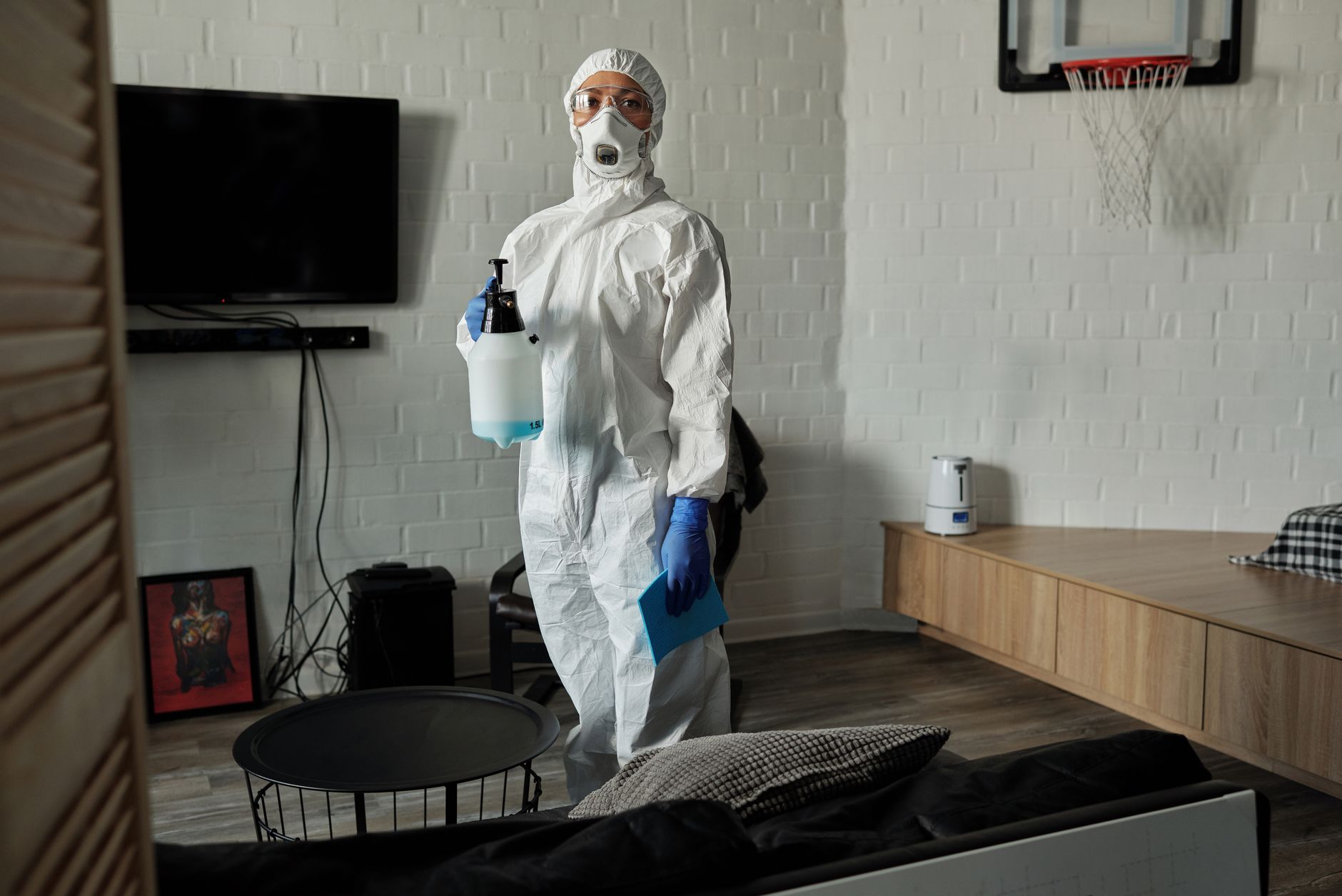
The most common cleaning mistakes Glendale homeowners make include spraying product directly on surfaces, skipping sponge sanitation, rushing through rooms, and putting away a wet toilet brush. These habits do not just leave your home dirtier than before; they can actually damage surfaces and spread bacteria. This post walks you through 10 of the worst offenders and exactly how to correct them.
1. Spraying Cleaning Product Directly on Surfaces
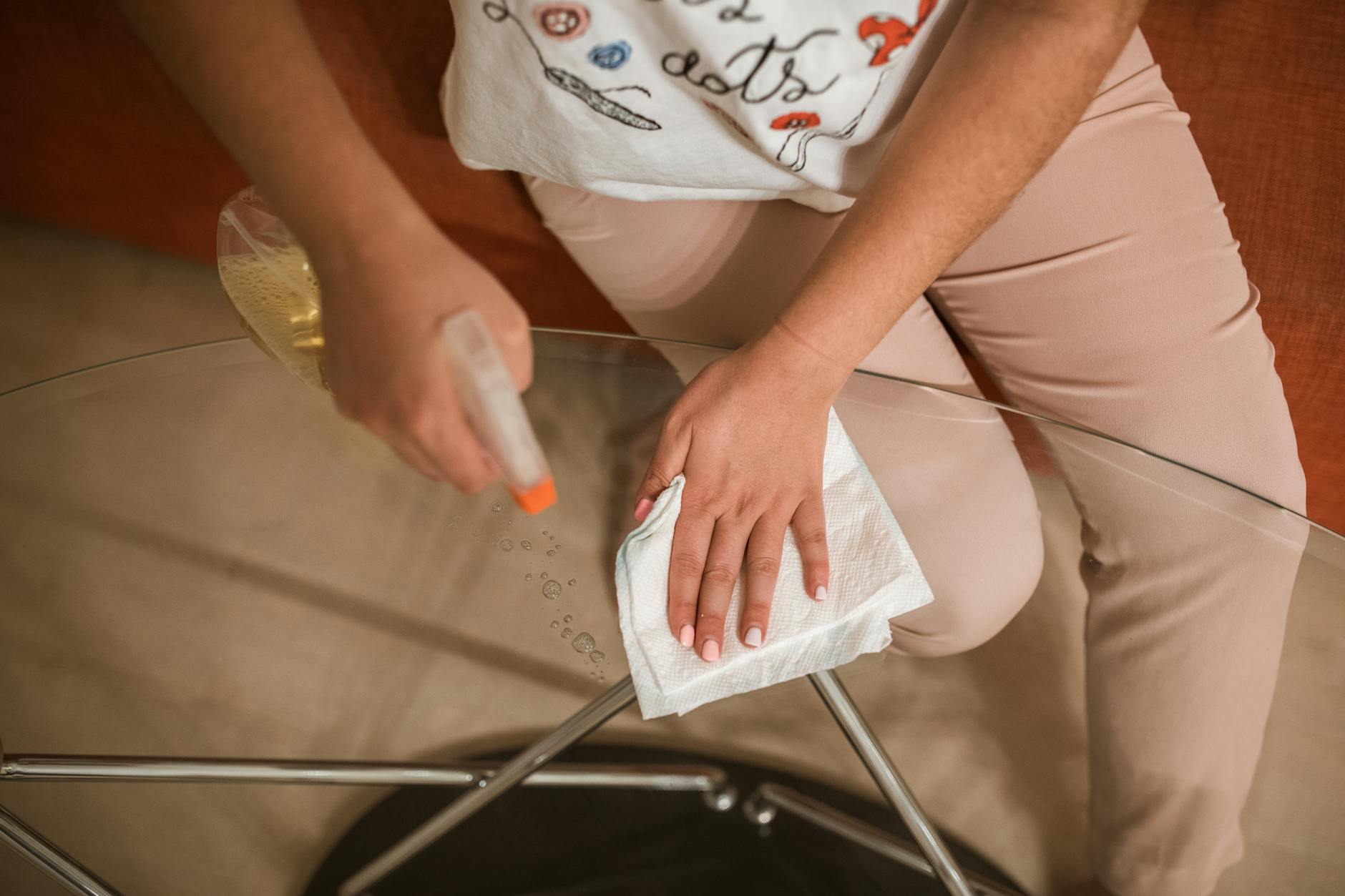
Walk into almost any home in Glendale and you will find someone spraying cleaner straight onto a countertop, mirror, or screen. It feels efficient, but it is one of the most damaging cleaning mistakes you can make. When you spray directly onto a surface, you deposit more liquid than the material can absorb evenly. The result: streaks, residue buildup, and on electronics or natural stone, lasting damage.
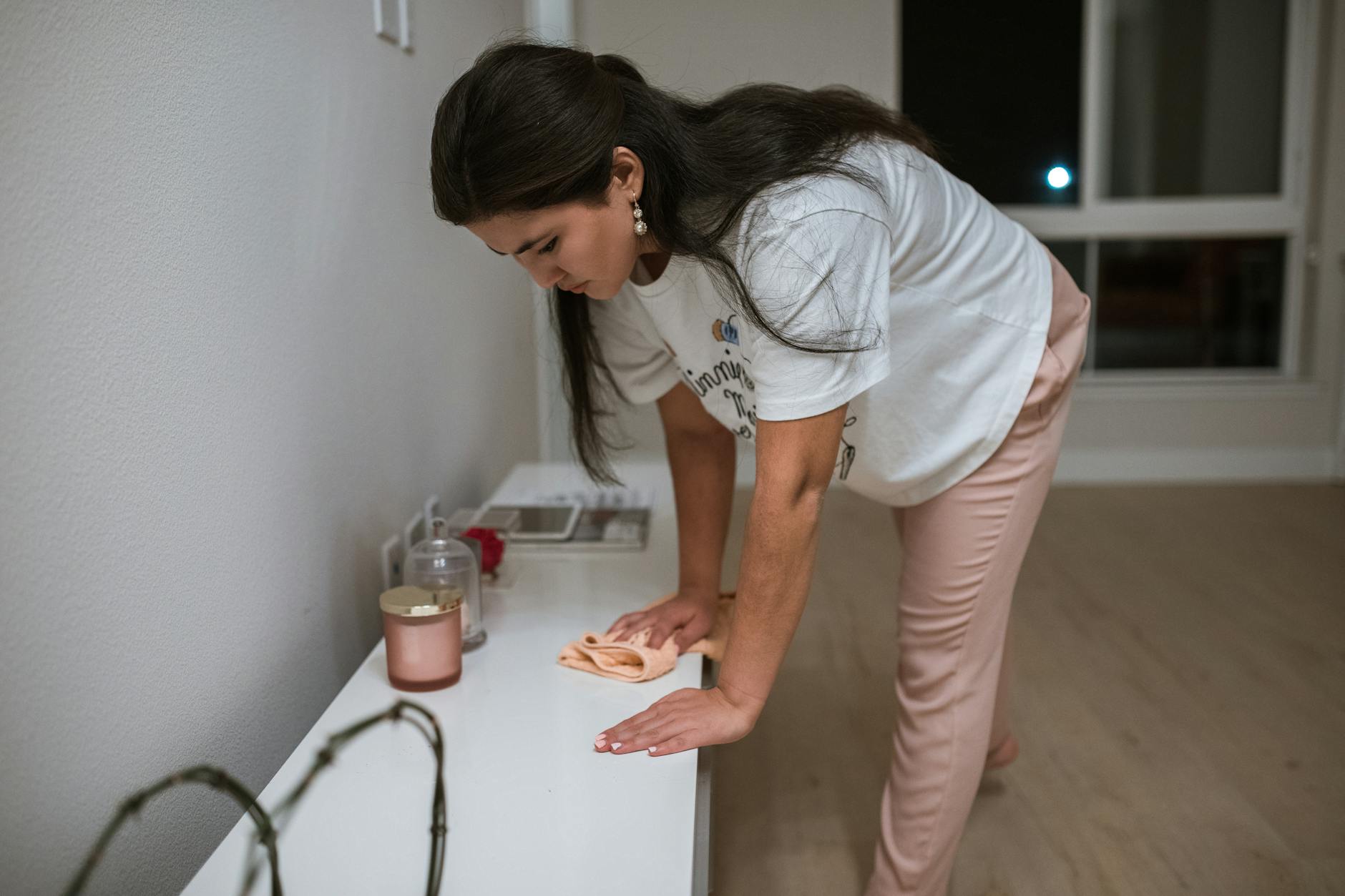
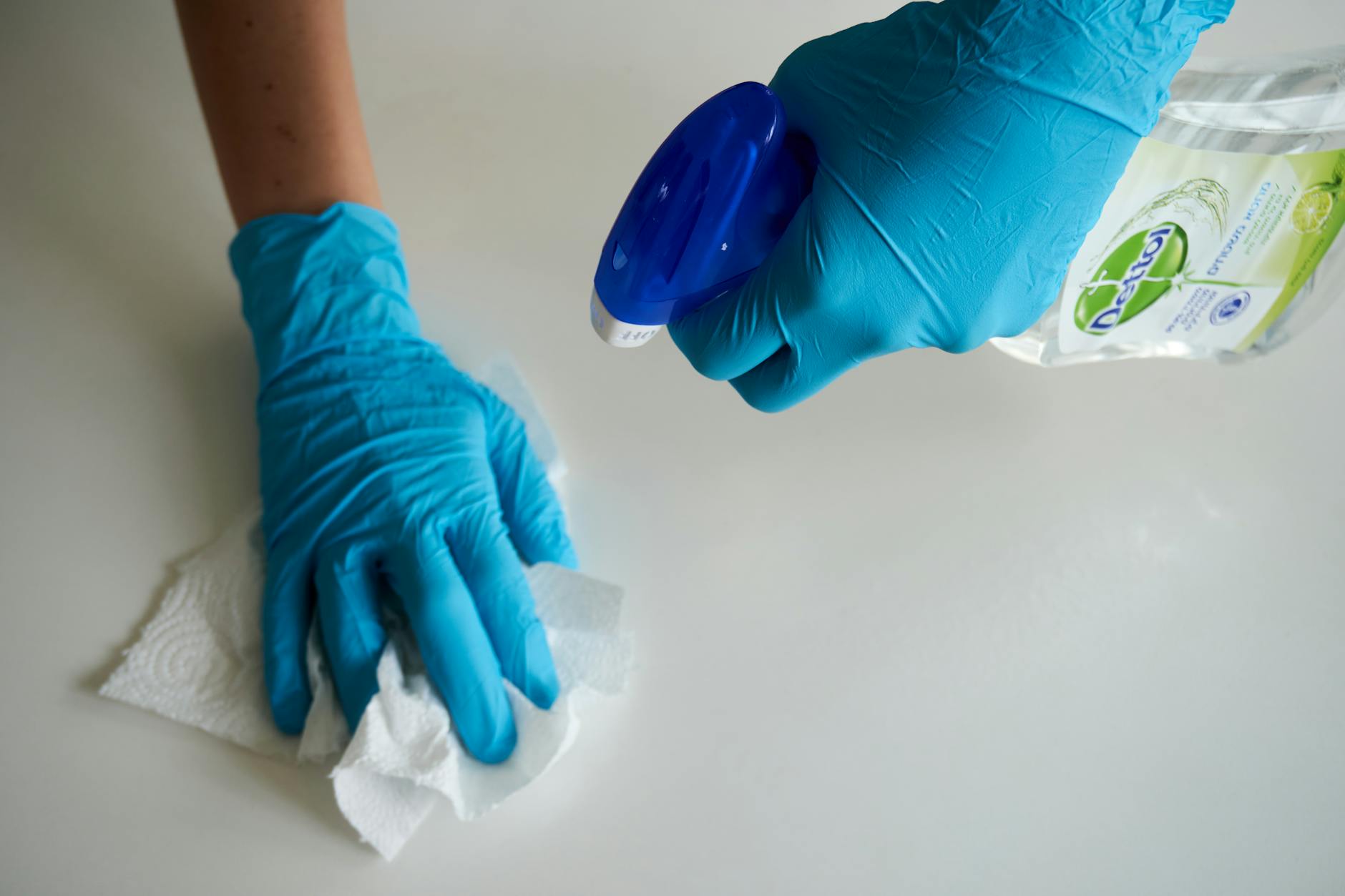
The fix is straightforward. Spray your cleaner onto a microfiber cloth first, then wipe the surface. You use less product, get a cleaner finish, and protect the materials underneath. Good Housekeeping’s cleaning experts consistently recommend this method for everything from stainless steel appliances to wood cabinetry. If you want a deeper reset for surfaces that have been over-sprayed for years, a professional deep cleaning service can strip away the residue and restore the finish.
This single habit shift will make every room look noticeably better within a week.
2. Not Cleaning Your Sponge
Your kitchen sponge might be the single dirtiest object in your home. Research cited by the CDC on household bacteria confirms that moist, porous surfaces are prime breeding grounds for pathogens. A sponge that sits wet on the sink between uses can harbor more bacteria than a toilet seat, and every time you “clean” with it, you are redistributing that bacteria across your countertops, dishes, and sink.
Not cleaning your sponge is a cleaning mistake that compounds fast. The fix: microwave a damp sponge on high for 60 seconds every day, or soak it in a diluted bleach solution (one tablespoon of bleach per quart of water) for five minutes. Replace sponges every one to two weeks regardless. Better yet, switch to washable microfiber cloths that can go through the washing machine after each use. This one change alone dramatically reduces cross-contamination in your kitchen.
3. Cleaning Too Quickly and Skipping Dwell Time
Speed-cleaning feels productive, but rushing is one of the most widespread cleaning mistakes in any home. Disinfectants and cleaners need contact time, also called dwell time, to actually kill bacteria and break down grime. Most people spray, wipe immediately, and move on, which means the product never had a chance to work. You have essentially just smeared the mess around.
Check the label on your cleaning product. Most disinfectants require anywhere from 30 seconds to 10 full minutes of wet contact to be effective. Spray the surface, walk away, come back, then wipe. This is especially important in bathrooms and kitchens where harmful bacteria are most concentrated. According to Real Simple, building dwell time into your routine can cut cleaning time overall because surfaces come clean in a single pass instead of requiring repeated scrubbing.
If you are regularly short on time, consider scheduling recurring maid service visits so a trained cleaner handles the detail work while you focus on your day.
4. Putting Away a Wet Toilet Brush
This is one of those cleaning mistakes that almost nobody talks about, but nearly everyone makes. After scrubbing the toilet bowl, most people shake the brush once and drop it straight back into its holder. The holder then traps moisture, creating a dark, warm, enclosed environment that is perfect for mold and bacteria growth. The next time you use that brush, you are spreading whatever colonized it back into your toilet.
The fix: after scrubbing, rest the toilet brush horizontally across the bowl rim (under the seat) so it drips dry into the bowl for 10 minutes. Then return it to its holder. Better still, rinse the brush with hot water and a splash of disinfectant before storing it. The EPA’s guidance on mold prevention is clear: reducing moisture is the single most effective way to stop mold and bacteria from taking hold in any enclosed space, including a toilet brush holder.
5. Not Reading Product Directions
Product labels exist for a reason, and skipping them is one of the most overlooked cleaning mistakes homeowners make. Mixing the wrong products, using too much concentration, or applying a cleaner to an incompatible surface can cause damage ranging from discoloration to dangerous chemical reactions. Bleach and ammonia, for example, produce toxic chloramine vapors when combined, a risk flagged repeatedly by the EPA’s Indoor Air Quality guidelines.
Not reading directions also leads to overuse. More product does not mean more clean. Excess cleaner leaves residue that actually attracts more dirt over time. Take 30 seconds to read the label before you open a new product. If you want peace of mind about what goes into your home, ask about eco-friendly cleaning options. Plant-based and non-toxic cleaning products often have simpler, safer instructions and are less likely to cause surface damage or indoor air quality issues.
Glendale homeowners who switch to green cleaning products often report that their homes smell fresher and their families experience fewer respiratory irritations, a meaningful benefit in Arizona’s dry indoor air conditions.
6. Washing Windows on a Sunny Day
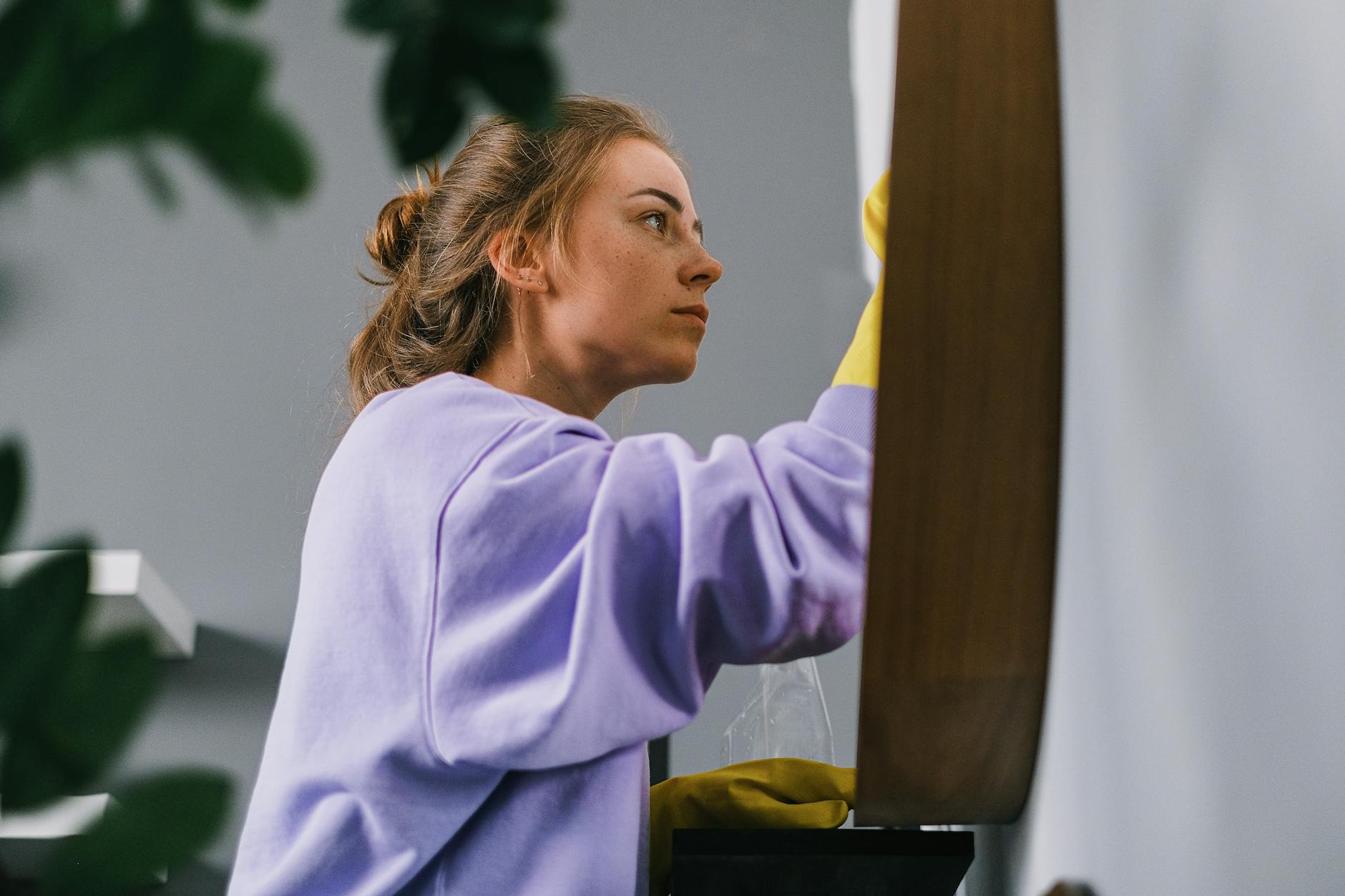
It seems logical to wash windows when the sun is shining, but this is actually a classic cleaning mistake. Direct sunlight causes glass cleaner to evaporate before you can wipe it away, leaving behind streaks and a filmy residue that is harder to remove than the original dirt. You end up wiping more, not less, and the results are worse.
Clean windows on an overcast day or tackle them early in the morning before the Arizona sun heats the glass. Use a squeegee instead of paper towels; The Spruce’s cleaning guides consistently rank the squeegee method as the fastest route to a streak-free finish. Wipe in a top-to-bottom pattern and overlap each stroke slightly. For homes in Glendale that deal with heavy dust and hard water deposits, a thorough deep cleaning that includes window tracks and frames makes a visible difference.
7. Cleaning in a Buffing Motion
A circular buffing motion feels thorough, but for most household surfaces it is the wrong technique. Buffing spreads dirt in every direction instead of removing it. On glass, mirrors, and polished surfaces, you end up with circular smears. On floors, you push grime into grout lines and corners rather than lifting it away.
The correct method is an S-pattern or straight-line stroke: start at one edge, move to the other, then step down and repeat. This ensures you are always working into clean territory rather than dragging dirt back over areas you just wiped. For floors, mop in the same direction as the floorboards and work backward toward the exit so you never step on a freshly mopped surface. If you are looking for professional house cleaning that uses correct technique on every surface, trained cleaners are worth it for the results alone.
Cleaning mistakes like this are easy to make when nobody ever shows you the right way. Most people clean the way they watched a parent clean, buffing motion included.
8. Not Emptying the Vacuum Regularly
A vacuum that is more than half full loses meaningful suction power. Running a full vacuum across your carpet is like trying to drink a milkshake through a pinched straw: the motor works overtime and the results are poor. Dust, debris, and allergens get pushed around rather than captured, and a clogged filter can release fine particles back into the air you breathe.
The American Lung Association recommends regular vacuuming with well-maintained equipment as a primary strategy for reducing indoor allergens, particularly important for Glendale families during Arizona’s high-dust and pollen seasons. Empty bagless vacuums after every use, or when the bag is two-thirds full for bagged models. Clean or replace the HEPA filter every three to six months. A clean vacuum is not optional; it is the difference between actually cleaning your floors and just redistributing what is on them.
One cloth for the kitchen counter, the bathroom sink, and the stovetop is a surefire way to spread bacteria from room to room. This cross-contamination cleaning mistake is common because people underestimate how much bacteria transfers between surfaces even on a cloth that looks clean.
Color-code your cleaning cloths: one color for bathrooms, one for kitchens, one for general dusting. Wash all cloths in hot water after each cleaning session. If you want to eliminate the guesswork entirely, House cleaning services Glendale, AZ professionals bring fresh, laundered microfiber cloths to every visit so there is zero cross-contamination between rooms or between homes. It is a detail that makes a real difference in how clean your home actually is versus how clean it looks.
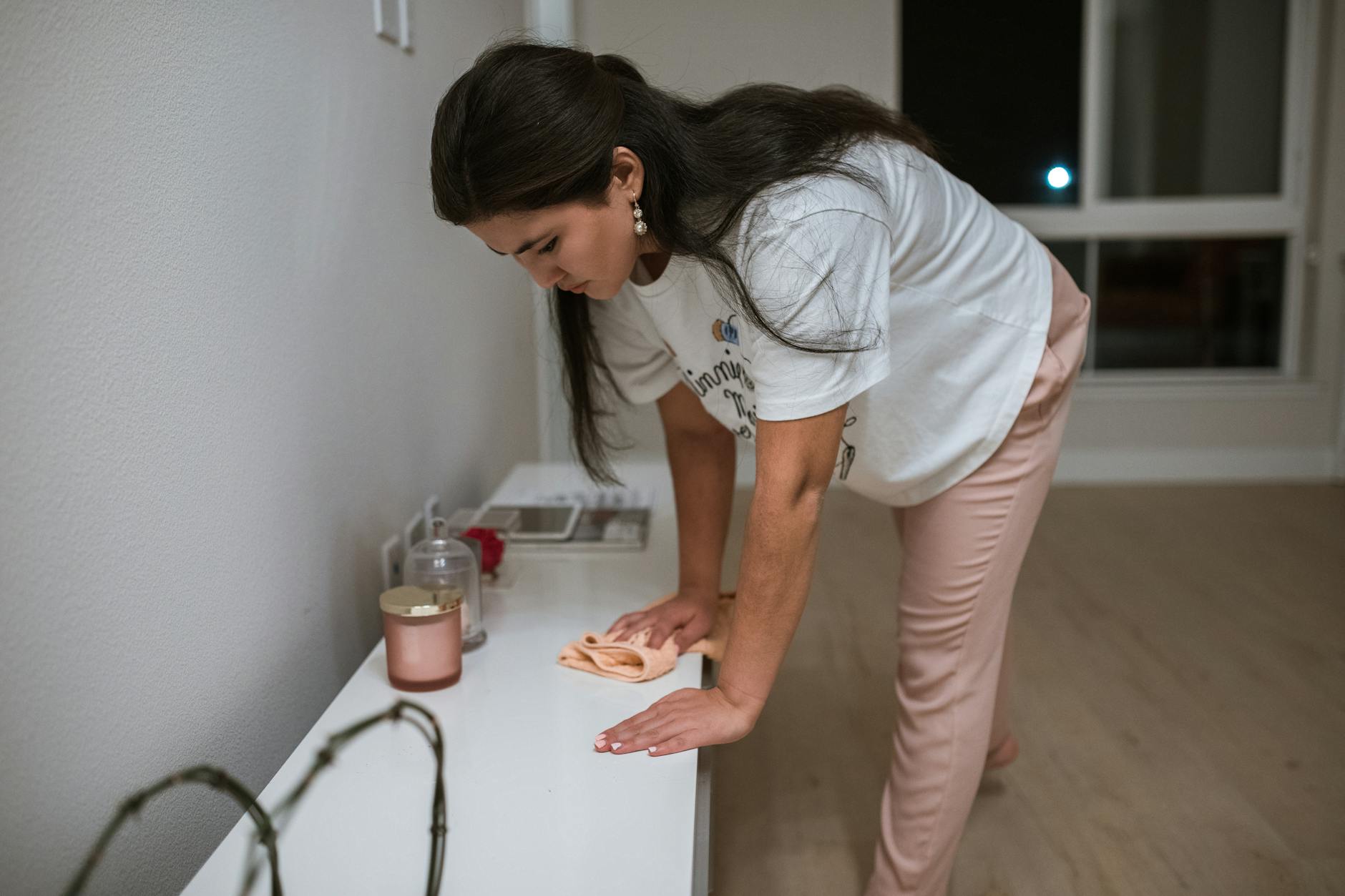
Cleaning reactively, waiting until things look visibly dirty, is one of the most common cleaning mistakes that costs you the most time and effort. Surface grime, dust, and bacteria build up gradually. By the time something looks dirty to the naked eye, it has been accumulating for days or weeks. Catching messes early with a regular schedule means every cleaning session takes a fraction of the time.
Set a weekly rhythm: wipe countertops and sinks daily, vacuum twice a week, mop hard floors weekly, and schedule a seasonal deep clean at least twice a year. If keeping up with that schedule is a challenge, residential cleaning services with a recurring weekly or biweekly visit keep your home consistently clean without the mental load of planning it yourself. For Glendale households dealing with Arizona dust, pet hair, or busy family schedules, a recurring home cleaning plan is often the most practical solution.
If you want more localized advice, our post on cleaning mistakes Queen Creek homeowners make covers additional habits worth breaking. And professional disinfection services are worth scheduling at least once a season to address the bacteria and viruses that regular cleaning misses.
Whether you are tackling a move, a post-event mess, or just want to start fresh, professional cleaning services in Glendale can give you a clean baseline to maintain. For Glendale residents dealing with the aftermath of a big life change, move-in/move-out cleaning is one of the most useful services available to make sure nothing gets missed.
Check out cleaning in Glendale to see full service options and read what local homeowners are saying about their experience with Elite Maids House Cleaning. You can also browse The 10 Best House Cleaning Services in Glendale, CA 2026 for a full breakdown of what to look for when hiring a cleaning team in the area.
Ready to Stop Making These Mistakes? Let Elite Maids Handle It
Avoiding these 10 common cleaning mistakes will absolutely improve the cleanliness of your Glendale home. But if you want results that go beyond what any DIY routine can deliver, the team at Elite Maids House Cleaning is ready to help. Every cleaner is background-checked, bonded, and backed by a reclean-at-no-cost satisfaction guarantee. You can book online in minutes with an instant quote and same-day availability between 8am and 6pm. See why Glendale families trust us by checking out cleaning Glendale reviews, and then contact Elite Maids house cleaning today for a free quote. Your weekends are worth it.
Frequently Asked Questions
What are 10 common cleaning mistakes people make?
The 10 most common cleaning mistakes include spraying product directly on surfaces instead of on a cloth, not sanitizing your sponge, cleaning too quickly without allowing dwell time, storing a wet toilet brush, ignoring product directions, washing windows in direct sunlight, buffing instead of using straight strokes, running a full vacuum, using the same cloth across multiple rooms, and cleaning without a consistent schedule. Each of these habits reduces how clean your home actually gets.
What is the 20 minute rule in cleaning?
The 20-minute rule is a time-boxing approach where you clean in focused 20-minute sessions rather than trying to tackle the entire house at once. It works because short, consistent sessions prevent overwhelm, maintain momentum, and keep messes from building to the point where cleaning feels like a major project. Many professional home cleaning coaches recommend pairing this rule with a room-by-room rotation so every area gets attention regularly.
What not to use to clean a toilet?
Avoid using bleach and ammonia-based products at the same time, as combining them creates toxic fumes. Do not use abrasive scrubbers or steel wool on porcelain, as they scratch the surface and make it harder to keep clean over time. Avoid using the same cloth you use on other bathroom surfaces without washing it first. And never use a toilet brush that has been stored wet without disinfecting it, as it redistributes bacteria rather than removing it.
What is the hardest thing to clean in a house?
Grout is widely considered the hardest thing to clean in a home. Its porous texture traps dirt, soap scum, mold, and bacteria in a way that most standard cleaning products cannot fully penetrate. Oven interiors, window tracks, and the areas behind and under large appliances are close runners-up. These are the spots where a professional New Era Cleaning approach, using the right tools and products at the correct dwell time, makes the biggest difference over a DIY effort.
5 Common Cleaning Mistakes Chandler Homeowners Make (And How to Fix Them)
SHARE:
The most common cleaning mistakes Chandler homeowners make include using the wrong products on the wrong surfaces, skipping a cleaning routine order, and cross-contaminating tools between rooms. These habits leave homes looking dull and can actually spread bacteria instead of eliminating it. This post walks through five specific mistakes and gives you practical, no-fuss fixes for each one.
If you’ve been spending your Saturday afternoons cleaning only to feel like the house still isn’t quite right, you’re probably not alone. Across 10 BEST House Cleaning Services in Chandler, AZ, one of the most common complaints homeowners share is that their home never feels truly clean despite hours of effort. The culprit is almost never laziness. It’s technique. The good news: once you spot these mistakes, they’re easy to fix. And for the days when you’d rather hand it off entirely, Elite Maids House Cleaning has Chandler covered with background-checked, five-star rated cleaners ready to book online with same-day availability.
1. Cleaning in the Wrong Order
One of the most overlooked cleaning mistakes is tackling rooms and surfaces out of sequence. Most people start by vacuuming the floors, only to dust the shelves and counters afterward, sending particles raining right back down onto clean carpets and hard floors. This forces you to clean the same surface twice without even realizing it.
The correct order follows a simple principle: top to bottom, back to front, dry before wet. Start at the ceiling level, ceiling fans, light fixtures, and high shelves. Work your way down through countertops and furniture. Finish with floors. In the bathroom, wipe mirrors and fixtures before scrubbing the toilet or mopping. In the kitchen, clean cabinets and backsplash tile before wiping the counters or sweeping.
Here in Chandler, where desert dust and pollen settle quickly on every surface, getting the sequence right makes a noticeable difference. Skipping the sequence is one of the worst cleaning mistakes any homeowner can make because it multiplies your workload without improving the result.
Always dust before you vacuum.
Wipe down cabinets before cleaning countertops below them.
Mop or vacuum floors last, after all other surfaces are done.
Work room by room from the farthest point back toward the exit.
According to Good Housekeeping’s cleaning resource, cleaning in the right sequence is one of the simplest ways to cut total cleaning time in half while getting a better result.
2. Using Too Much Cleaning Product
More soap does not mean cleaner surfaces. This is one of the most common home cleaning errors people make, and it creates real problems. Excess product leaves a sticky residue that actually attracts more dust, dirt, and grime between cleanings. On floors, too much multi-surface floor cleaner can dull the finish over time. On glass and mirrors, over-application leads to streaks no matter how many times you wipe.
Cleaning with dish soap is a great all-purpose option for many surfaces, but even a few drops go a long way. The same applies to bathroom bowl cleaner for toilets and spray-on glass cleaner for mirrors. When in doubt, use less product and more elbow grease or dwell time. Read the label, most cleaning products are formulated to work with a light application and a short wait before wiping.
A few specific notes on amounts:
For mopping hard floors, a small capful of floor cleaner per bucket of water is usually sufficient.
For mirrors and windows, two to three sprays of a window cleaner across the entire surface is plenty. Wipe with a clean microfiber cloth in an S-pattern, not circles, to avoid streaks.
For toilets, a ring of bowl cleaner under the rim is all you need. Let it sit for five to ten minutes before scrubbing.
When cleaning with dish soap on counters or appliances, a single drop diluted in a cup of water works for most jobs.
Wasting product also adds up financially. Cutting usage in half on every clean can stretch your supply budget significantly over a year.
3. Ignoring Cross-Contamination Between Rooms
This is one of the cleaning mistakes that genuinely makes your home less clean, not just less tidy. Cross-contamination happens when you use the same sponge, cloth, or scrub brush in multiple areas without washing it in between. The toilet brush stays in the bathroom, but what about the sponge you used on the toilet tank before wiping down the kitchen counters? That’s a real health issue.
The fix is simple: use color-coded microfiber cloths. Assign specific colors to specific areas. For example, red for bathrooms, blue for kitchens, yellow for general dusting. Wash cloths after every use or at least between rooms. Never use the same scrubbing pad on the toilet and the sink, even in the same bathroom.
The CDC’s guidance on household hygiene emphasizes keeping cleaning tools for high-bacteria areas, like bathrooms, completely separate from food-contact surfaces. This is especially relevant for Chandler households with kids or pets, where cross-contamination risks are higher.
A few practical steps to avoid cross-contamination:
Buy a multipack of microfiber cloths in different colors and label them by zone.
Store bathroom cleaning tools separately from kitchen tools under each respective sink.
Replace sponges at least every two weeks, or soak them in a bleach solution between uses.
Never use the same mop head for bathrooms and living areas without washing the mop head first.
If you’ve been making this mistake for a while, a deep cleaning service is worth scheduling to reset your home to a truly sanitary baseline before you take over the maintenance routine.
4. Mixing Cleaning Products That Should Never Be Combined
Mixing the wrong cleaning products is not just ineffective; it can be genuinely dangerous. The most common harmful combinations are bleach with ammonia, bleach with vinegar, and hydrogen peroxide with vinegar. Each of these mixtures releases toxic fumes that irritate the lungs, eyes, and skin. In enclosed spaces like bathrooms with poor ventilation, the exposure can be serious.
A common misconception is that combining products makes them more powerful. In reality, many combinations cancel each other out or create unpredictable chemical reactions. For example, mixing bleach-based bathroom bowl cleaner with an acidic toilet cleaner can produce chlorine gas.
What percentage vinegar for cleaning is safe? Plain white vinegar at five percent acidity, the standard grocery-store variety, is effective for most household tasks: cutting grease, removing mineral deposits, and deodorizing surfaces. It is NOT safe to mix with bleach. Use them on separate days if both are part of your cleaning routine, and rinse surfaces between applications.
Safe product practices to follow:
Never mix bleach with any other cleaner unless the label explicitly says it’s safe.
Open windows and run exhaust fans whenever using any spray cleaner in a bathroom or kitchen.
Store cleaning products in their original containers with labels intact.
If a product requires dilution, always add the product to water, not water to the product.
5. Skipping Regular Maintenance Cleans in Favor of One Big Clean
Many Chandler homeowners fall into the same pattern: let things build up for two or three weeks, then spend an entire Saturday doing a massive clean. The problem is that this approach is harder on you, less effective on surfaces, and less hygienic in between sessions. Bacteria, mold spores, and dust mites don’t pause while you wait for cleaning day.
Regular house cleaning on a consistent schedule, whether weekly or biweekly, prevents the buildup that makes big cleaning sessions necessary. It also protects surfaces. Soap scum that’s allowed to harden on a shower wall for three weeks requires significantly more scrubbing than a quick wipe-down every few days. Grease that bakes onto a stovetop over multiple cooking sessions is much harder to remove than fresh splatter.
This is where a recurring maid service makes a real difference for busy households. Regular professional visits keep the baseline clean, so your day-to-day maintenance is minimal. Homeowners across Chandler who switch from monthly deep cleans to biweekly visits consistently report that their homes feel cleaner all the time with less personal effort.
For homes that have gone a while without a thorough clean, start with a holiday deep cleaning to reset everything, then transition into a recurring maintenance schedule.
A practical maintenance rhythm for most homes:
Daily: wipe kitchen counters, run a dish cloth over the stovetop after cooking, squeegee shower glass.
Weekly: vacuum all floors, clean bathrooms, mop hard floors, wipe appliance exteriors.
Monthly: clean inside the microwave and oven, wipe baseboards, dust ceiling fans and light fixtures.
Seasonally: deep clean the refrigerator, wash windows, check for mold in damp areas.
If you’re looking for a seasonal deep clean guide to complement this routine, the ultimate guide to spring cleaning is a great place to start building out your full-year cleaning plan.
Bonus: Not Using the Right Tools for the Job
This one doesn’t get talked about enough. Using the wrong cleaning tools is responsible for more frustration, wasted time, and damaged surfaces than almost any other household cleaning error. Paper towels scratch some surfaces and leave lint on others. Old cotton rags push bacteria around instead of trapping it. The wrong mop type can leave more water on floors than it picks up.
Switching to quality microfiber cloths is one of the single best upgrades you can make to your home cleaning routine. Microfiber picks up bacteria and dust at a microscopic level that cotton and paper products can’t match. For mirrors and glass, a dedicated microfiber glass cloth eliminates the streaks that paper towels leave behind. For floors, a flat microfiber mop with a removable, washable head outperforms a traditional string mop on most surfaces.
Other tool upgrades worth considering:
A grout brush for tile lines instead of a regular scrub brush.
An extendable duster for ceiling fans and crown molding.
A squeegee for shower glass after every use to prevent mineral buildup.
Separate scrubbing pads designated by room (remember the cross-contamination point above).
You don’t need to spend a lot. A good set of color-coded microfiber cloths, a quality flat mop, and a proper grout brush will outperform a cabinet full of expensive products used with the wrong tools.
How Chandler Homeowners Can Avoid These Cleaning Mistakes for Good
Avoiding the most common residential cleaning mistakes comes down to three things: the right sequence, the right products in the right amounts, and consistent frequency. Most of the errors covered above have been creating extra work for homeowners in Chandler for years, not because anyone is cleaning wrong on purpose, but because these habits go uncorrected and get passed down without question.
The homeowners who see the biggest improvement are the ones who pick one or two of these fixes to implement this week, not all five at once. Start with cleaning order if yours is off. Start with product amounts if you’re constantly dealing with streaks or residue. Add color-coded microfiber cloths if cross-contamination has been an issue.
For a broader look at how these same mistakes show up in neighboring communities, the post on cleaning mistakes in Queen Creek covers several overlapping habits worth reading through. And if you want to see how these issues compare across the wider Valley, the rundown of cleaning mistakes Phoenix homeowners make is a solid companion read.
Check out the cleaning chandler prices to see current options for recurring, deep, and move-in/move-out cleans in your area. Every booking comes with a no-cost reclean guarantee, so there’s no risk in trying professional service for the first time.
Ready to stop repeating the same cleaning mistakes and actually enjoy a clean home? cleaning in Chandler is available right now through Elite Maids House Cleaning’s online booking tool. You can lock in same-day service, get an instant quote, and have a background-checked, fully insured cleaner at your door the same day. Contact Elite Maids house cleaning today for a free quote and give yourself back the weekend you deserve.
Frequently Asked Questions
What are some common cleaning mistakes to avoid?
The most common cleaning mistakes to avoid include cleaning in the wrong order (dusting after vacuuming), using too much product which leaves sticky residue, cross-contaminating tools between bathrooms and kitchens, mixing incompatible chemicals like bleach and vinegar, and relying on infrequent deep cleans instead of a regular maintenance schedule. Fixing these habits takes less time than repeating them.
Is it safe to clean with vinegar and dish soap together?
Mixing vinegar and dish soap is generally safe but largely counterproductive. Dish soap is a base and vinegar is an acid. Combined, they neutralize each other and reduce the effectiveness of both. Use them separately for better results. Vinegar works well on mineral deposits and glass; dish soap handles grease and grime on surfaces.
How often should Chandler homeowners deep clean their homes?
Most Chandler homes benefit from a thorough deep clean at least twice a year, typically in spring and fall, with regular weekly or biweekly maintenance in between. Homes with pets, kids, or allergy sufferers may benefit from a deep clean every three to four months. A professional deep cleaning service can reset your home between regular maintenance visits.
Why do my mirrors always look streaky after cleaning?
Streaky mirrors are almost always caused by one of three things: too much product, using paper towels that leave lint, or wiping in circles. Use two to three sprays of a glass cleaner, wipe with a clean dry microfiber cloth in an S-pattern from top to bottom, and buff with a second dry cloth. Avoid cleaning mirrors in direct sunlight, which causes product to dry too fast.
What is the best way to prevent cross-contamination when cleaning?
The most reliable prevention method is using color-coded microfiber cloths assigned to specific areas of the home. Designate one color for bathrooms, another for the kitchen, and a third for general dusting. Never use bathroom cleaning tools on food-contact surfaces. Wash cloths after every cleaning session and replace sponges frequently to keep bacteria from spreading between rooms.
7 Common Cleaning Mistakes Queen Creek Homeowners Make (And How to Avoid Them)
SHARE:
The most common cleaning mistakes Queen Creek homeowners make include using the wrong products, cleaning in the wrong order, and skipping tools that actually work. These habits leave homes looking worse than before you started and can even spread bacteria rather than eliminate it. This post walks through seven mistakes, explains why each one backfires, and gives you a straightforward fix for each.
1. Using Toxic or Mismatched Cleaning Products
Walk into almost any Queen Creek home and you will find a cabinet stuffed with cleaning sprays, scrubs, and multi-surface liquids that were bought on impulse and used interchangeably. The problem is that the wrong product on the wrong surface can strip finishes, leave residue, and in some cases, release harmful fumes. Mixing bleach and ammonia-based cleaners, for example, produces a toxic chloramine gas that irritates the lungs.
According to EPA Safer Choice guidance on household cleaning products, many conventional cleaners contain volatile organic compounds that linger in indoor air long after you put the bottle away. The EPA’s research on VOCs and indoor air quality shows these compounds can reach concentrations two to five times higher indoors than outside, which matters a lot in a sealed Arizona home running the air conditioning all summer.
The fix: Read labels before mixing products. Look for green cleaning certified options or eco-friendly alternatives that do the job without the chemical load. Elite Maids House Cleaning offers eco-friendly product options specifically for families who want a thorough clean without harsh fumes.
2. Cleaning in the Wrong Order
Most people in Queen Creek vacuum before they dust, wipe counters before they scrub the sink, and mop before they clean the toilet. Every one of those sequences sends dirt right back onto the surfaces you just cleaned. This is one of the most common house cleaning errors, and it doubles your workload without improving the result.
The correct order is top to bottom, dry to wet. Dust ceiling fans and shelves first, then wipe surfaces, then sweep or vacuum floors, then mop. Move from the least contaminated area, like bedrooms, toward the most contaminated, like bathrooms. This way, falling debris lands on uncleaned surfaces and gets picked up in the next step rather than recontaminating clean ones.
The fix: Before you start, map out a room-by-room sequence. If you use a recurring maid service rather than cleaning everything yourself, your cleaner already follows a tested sequence so nothing gets missed. Recurring cleaning also means grime never builds up to the point where order of operations stops mattering.
3. Using the Wrong Cleaning Tools
A paper towel on a glass surface leaves lint. A rough scrubbing pad on stainless steel leaves permanent scratches. An old cotton rag pushed across a dusty floor just redistributes the particles. Using the wrong tools is one of the sneakiest house cleaning mistakes because the effort looks real while the results stay invisible.
Microfiber cloths are worth the small investment. They trap particles at a microscopic level instead of just moving them around, and they work on glass, stainless steel, and sealed stone without scratching. A quality microfiber mop head outperforms a traditional string mop on tile and hardwood because it absorbs rather than spreads dirty water.
For Queen Creek homes with tile throughout, as many desert-build homes have, a steam mop is particularly effective at lifting the mineral deposits and tracked-in dust that make grout lines look permanently gray. Good Housekeeping’s cleaning coverage regularly highlights microfiber and steam as the two biggest upgrades for everyday home maintenance.
The fix: Match the tool to the surface. Buy a pack of color-coded microfiber cloths so you are never wiping a toilet with the cloth you used on the kitchen counter.
4. Letting Cleaning Products Sit for the Wrong Amount of Time
Spray and immediately wipe. That is what most Queen Creek homeowners do, and it is exactly wrong. Disinfectants, mold sprays, and bathroom cleaners need dwell time, the period the product sits on the surface, to actually kill bacteria and break down buildup. Wiping too fast means you are simply spreading liquid around. Leaving a product on too long, especially acidic cleaners on natural stone, can cause etching or discoloration.
The CDC’s guidance on mold in homes emphasizes that mold-killing products need adequate contact time to be effective. The same logic applies to bathroom disinfectants and kitchen degreasers. Check the label on every product you use. Most require at least thirty seconds to two minutes of contact before wiping.
The fix: Spray first, then move to another task in the room. Come back to wipe after the product has had time to work. This habit alone can cut your cleaning time because you are not re-scrubbing surfaces where the product never got a chance to do its job.
When grime is heavily built up, no amount of dwell time on a routine cleaner will cut it. That is when a deep cleaning service makes sense. A professional deep clean treats every surface with the right product at the right concentration, so you are not fighting months of buildup with a spray bottle and wishful thinking.
5. Ignoring High-Touch Surfaces and Neglecting Disinfection
Light switches, door handles, remote controls, and cabinet pulls are touched dozens of times a day. Most cleaning routines skip them entirely. In a Queen Creek household with kids or anyone who is frequently outdoors in the Arizona dust and heat, these surfaces accumulate bacteria at a faster rate than countertops that at least get wiped during meal prep.
Genuine disinfection is different from cleaning. Cleaning removes visible dirt. Disinfection kills pathogens. The American Lung Association’s indoor air guidance notes that reducing pathogen load on surfaces is especially important for children, elderly residents, and anyone with respiratory sensitivities. In a home that gets heavy traffic, high-touch surface disinfection should happen at least weekly.
If you are doing a full-home reset after illness or before a gathering, professional home disinfection services cover every high-contact area with hospital-grade products, something a standard wipe-down cannot replicate.
The fix: Add a dedicated high-touch surface wipe-down to your weekly routine. Keep disinfecting wipes accessible near doors and in bathrooms so the habit is low friction. For a deeper sanitizing pass, schedule a deep clean a few times a year.
6. Overlooking Ventilation and Letting Moisture Linger
Arizona is known for its dry heat, but bathrooms and kitchens in Queen Creek still generate enough moisture to cause mold growth if the space is not ventilated properly after cleaning. Wiping down the shower walls and then closing the door traps the humidity that just got released. Using water-heavy mopping techniques on wood or laminate floors and then closing windows is another common cleaning error that causes warping and mold over time.
The EPA’s mold prevention guidance recommends keeping indoor humidity below 60 percent and ventilating bathrooms during and after use. Run exhaust fans for at least 20 minutes after a shower or after mopping a bathroom floor.
The fix: Build ventilation into your cleaning routine. Open windows when weather allows, run bathroom fans, and leave interior doors ajar after wet cleaning. On floors, use a damp mop rather than a soaking-wet one, and dry the surface with a second pass if needed. If you are seeing dark spots in grout or along caulk lines, that is mold already taking hold. You can read more about addressing that and other seasonal concerns in our seasonal spring cleaning guide.
7. Skipping Professional Help When You Actually Need It
There is a point in every home’s cleaning cycle where the DIY approach stops being enough. Grout that has never been treated, baseboards caked with a year of dust, tile that has mineral deposits from hard Arizona water, and refrigerators that were never pulled away from the wall. Queen Creek homes accumulate these issues the same way any home does, and a bottle of spray cleaner and a Saturday afternoon will not fix them.
Homeowners who try to push through on their own in these situations often end up frustrated, spending more time than planned, and still not getting the result they wanted. Worse, using the wrong products in an attempt to tackle stubborn stains can permanently damage surfaces like natural stone countertops or hardwood floors.
Real Simple’s cleaning coverage regularly recommends scheduling a professional clean at least once or twice a year, even for homeowners who maintain a regular cleaning routine. Think of it like a dental check-up. You still brush every day, but the professional service catches and treats what daily habits miss.
The fix: Schedule a professional house cleaning service for deep resets before the holidays, after a move, or after a big event. Elite Maids House Cleaning serves Queen Creek with background-checked, fully insured cleaners and a reclean-at-no-cost satisfaction guarantee, so you know the job will get done right.
Stop Making These Mistakes: Book a Professional Clean in Queen Creek
Correcting these seven cleaning mistakes will make a real difference in how your home looks and how long your surfaces last. But even the most careful DIY cleaner hits a wall with deeply embedded grime, mineral buildup, or surfaces that need professional-grade treatment. Queen Creek families who want their weekends back and their homes genuinely clean, not just surface-tidy, trust the team that has built the highest review count of any residential cleaning company in Arizona.
Whether you need a one-time deep clean, a recurring Queen Creek, AZ Best House Cleaning Services visit on a schedule that works for you, or a move-in clean for a new home, Elite Maids House Cleaning has a service that fits. Book online in minutes and get an instant quote, no phone call needed, with same-day availability between 8am and 6pm.
If you are ready to stop fighting the same messes week after week, Dry Cleaners Queen Creek is just one part of what we cover. Reach out today and let a professional team handle the hard work so you do not have to. Contact Elite Maids House Cleaning today for a free quote and see why Queen Creek homeowners keep coming back.
Frequently Asked Questions
What cleaning mistakes make a home dirtier?
Cleaning in the wrong order is one of the biggest offenders. Vacuuming before dusting sends debris back onto the floor you just cleaned. Using dirty mops or reusing the same cloth across rooms spreads bacteria rather than removing it. Spraying and immediately wiping disinfectants without letting them dwell also leaves pathogens behind. Combined, these habits can actually increase the germ load in your home.
How often should Queen Creek homeowners schedule a professional house cleaning?
Most Queen Creek households benefit from a recurring cleaning every two to four weeks to stay on top of daily buildup, plus a deeper professional clean at least twice a year. Arizona’s dust, hard water, and extreme heat accelerate grime accumulation, so homes here often need more frequent attention than the national average suggests. Homes with pets, kids, or frequent guests may need weekly service.
Is it a mistake to mix different cleaning products?
Yes, and it can be dangerous. Mixing bleach with ammonia creates toxic chloramine gas. Mixing bleach with acidic cleaners like vinegar releases chlorine gas. Even products that seem similar can react unpredictably. Always read labels before combining any cleaners, rinse surfaces between product applications, and never mix products in the same spray bottle or bucket without manufacturer guidance.
What is the correct order to clean a house?
Work top to bottom and dry to wet. Start by dusting ceiling fans, light fixtures, and shelves. Then wipe down surfaces and appliances. Next, sweep, vacuum, or dry-mop floors. Finish with wet mopping. Move from bedrooms and living areas toward bathrooms and kitchens, since bathrooms carry the highest contamination load and should be done last to avoid cross-contamination.
When does DIY cleaning stop being enough?
When you are scrubbing the same stain multiple times without improvement, when grout is discolored despite regular mopping, or when rooms smell musty despite regular cleaning, it is time to call in professionals. A one-time deep cleaning service resets the home to a baseline that makes regular maintenance far more effective and far less time-consuming going forward.
5 Cleaning Myths Scottsdale Homeowners Believe That Are Making Their Homes Dirtier
SHARE:
Some of the most common cleaning myths Scottsdale homeowners follow are actually working against them, leaving surfaces dirtier, spreading bacteria, and quietly damaging finishes. These misconceptions get passed down through generations and feel like common sense, but the science tells a different story. This post breaks down the five biggest cleaning myths and shows you what actually works instead.
If you live in Scottsdale and want a home that is genuinely clean rather than just looking clean, keep reading. Whether you are doing your own weekly tidying or considering bringing in help, knowing the difference between cleaning fact and fiction makes every effort count. You can also Find Trusted House Cleaning Services in Scottsdale, AZ if you would rather leave the work to professionals who get it right every time.
Most people learn how to clean a home from whoever raised them. That knowledge gets locked in early and rarely gets questioned. The problem is that a lot of it is outdated, based on faulty logic, or just flat-out wrong. Common cleaning misconceptions can leave your kitchen sponge teeming with bacteria, your bathroom surfaces coated in chemical residue, and your floors looking dull within days of mopping. Before we get into each myth individually, it helps to understand why these false cleaning beliefs stick around: they feel intuitive, and no one is testing them with a microscope in their kitchen. Good Housekeeping’s cleaning experts have spent years documenting exactly how popular cleaning habits fall short, and the patterns are consistent.
If you want to see how local homeowners compare on Cleaning in scottsdale prices and what a professional clean actually covers, you can get an instant quote without picking up the phone.
Myth 1: More Cleaning Product Means a Cleaner Surface
This is one of the most widespread cleaning product myths out there. The reasoning makes sense on the surface: if a little soap cleans well, more soap must clean better. In reality, using too much cleaning product leaves a sticky residue on countertops, floors, and appliances. That residue attracts dust, traps dirt, and makes surfaces look grimy faster than if you had used less product to begin with.
Overusing cleaning solutions is especially common with multi-purpose sprays. When you saturate a counter and wipe it quickly, the surfactants do not fully lift off. Within hours, that surface has a thin film that collects whatever floats through your Scottsdale home: dust, skin cells, pet dander. The fix is simple. Use the recommended amount on the label, and always follow a cleaning product with a damp rinse cloth to remove any residue left behind. According to Consumer Reports’ laundry and cleaning research, using the correct product dosage consistently outperforms over-application in both cleanliness and surface longevity.
This myth also applies to laundry. Too much detergent leaves buildup inside your washing machine drum and on your clothes, making them feel stiff and smell musty faster. The right amount, used consistently, is always the better approach.
Myth 2: Bleach Cleans Everything
Bleach has a reputation as the ultimate household cleaner, and that reputation is only partially earned. Bleach is a powerful disinfectant on hard, non-porous surfaces, but it does not actually clean. It kills germs on surfaces that are already clean, but if a surface has grease, soap scum, or food residue on it, the bleach cannot reach the bacteria underneath. You end up disinfecting dirt rather than the surface itself.
This bleach cleaning myth leads a lot of Scottsdale homeowners to skip the actual cleaning step and go straight to dousing surfaces with bleach, feeling confident the job is done. It is not. The correct process is to clean the surface first with an appropriate cleaner to remove physical soil, then disinfect with bleach or another disinfectant if needed. The CDC’s guidance on mold in homes also makes clear that bleach alone is not adequate for porous surfaces like grout or drywall, where mold can grow beneath the surface layer.
There is also the indoor air quality angle. Bleach releases chlorine gas when it interacts with ammonia-based cleaners, and even on its own it releases volatile organic compounds that can irritate the lungs, especially in enclosed bathrooms. Ventilation matters every time you use it.
Myth 3: Feather Dusters Are Great for Removing Dust
Feather dusters are satisfying to use and look the part, but they are one of the least effective dusting tools available. Rather than trapping and removing dust, a feather duster redistributes it. It sweeps particles off surfaces and launches them into the air, where they float for several minutes before settling right back onto the same shelves, furniture, and floors you just dusted.
This is a particularly relevant dust removal myth for Scottsdale homes. The desert environment means significantly more fine particulate matter in outdoor air, and it finds its way inside constantly through doors, windows, and HVAC systems. Using the wrong dusting tool in a high-dust environment means you are essentially cycling the same dust around your home indefinitely. The American Lung Association’s indoor air quality guidance specifically recommends microfiber cloths and tools for dusting because they electrostatically attract and hold particles rather than scattering them.
A damp microfiber cloth or a vacuum with a soft brush attachment is the right tool for shelves, baseboards, and ceiling fans. If you want to understand how microfiber compares to other materials in real-world use, the breakdown on microfiber vs cotton cloths for home cleaning is worth reading. The short answer: microfiber wins every time for dust removal.
Myth 4: Vinegar Is a Safe Cleaner for Every Surface
Vinegar has earned its spot as a natural cleaning staple, and it genuinely works well in specific situations. It cuts through mineral deposits, handles light grease on glass, and works fine on sealed tile. But the vinegar cleaning myth that it is a safe, universal cleaner for every surface in your home has caused a lot of damage to a lot of kitchens and bathrooms.
Natural stone countertops, including marble, travertine, and granite, are acid-sensitive. A single application of undiluted vinegar can etch the surface permanently, leaving dull spots that no amount of polishing will fix. The same applies to grout: repeated vinegar use breaks down the cement-based material, loosening grout and making it more porous, which actually makes mold and staining worse over time. Hardwood floors are another casualty of the vinegar myth. The acidity strips the finish over repeated use, dulling the wood and shortening its lifespan. The Spruce cleaning guides consistently warn against vinegar on stone, grout, and wood for exactly these reasons.
Use vinegar where it belongs: on glass, stainless steel, and sealed ceramic tile. For everything else, choose a surface-appropriate cleaner. If you are scheduling a deep cleaning service and want eco-friendly products used on your specific surfaces, make sure you communicate that when booking so the right products go to the right places.
Scottsdale homes often feature natural stone in kitchens and bathrooms because it suits the aesthetic of the area. Knowing what not to use on those surfaces is just as important as knowing what to use. You can check out cleaning in scottsdale to see how a professional team handles surface-specific products correctly on every visit.
Myth 5: A Visually Clean Home Is a Sanitary Home
This is the most dangerous home cleanliness myth on the list because it provides false confidence. A home can look spotless and still harbor bacteria, mold spores, allergens, and dust mite colonies in places that never get attention during a typical surface clean.
The areas that drive the biggest gap between appearance and actual cleanliness include: the inside of your refrigerator seals, the underside of toilet rims, the inside of your dishwasher filter, grout lines in showers, the tops of door frames, and the area behind and beneath major appliances. These spots are out of sight during regular tidying, so they accumulate grime for months or years. The EPA’s mold resources note that moisture and organic material in hidden areas are the primary drivers of mold growth inside homes, which can affect indoor air quality long before you see or smell anything.
The fix is a scheduled house cleaning that goes beyond surface wiping. A true deep clean addresses the neglected zones that a standard tidy misses entirely. For Scottsdale homeowners who want to reset their home’s cleanliness, scheduling a one-time deep clean before switching to recurring maintenance visits is one of the most effective strategies available.
If you have been following this myth and skipping those hidden zones, you are not alone. A related post on cleaning mistakes that make your home dirtier goes deeper into the specific habits that undercut an otherwise diligent cleaning routine. It is a useful companion to this list.
What Scottsdale Homeowners Should Do Instead
Replacing bad cleaning habits with good ones does not have to be complicated. A few straightforward changes make a real difference in how clean your home actually is, not just how clean it looks.
Always clean before you disinfect. Remove physical soil first, then apply your disinfectant so it can do its job on a clean surface.
Use the correct amount of product. Check labels and measure when possible. More product is not more effective.
Switch to microfiber cloths for dusting. They trap particles rather than redistributing them, which matters in Scottsdale’s dusty desert climate.
Know your surfaces. Stone, wood, and grout each need specific products. Vinegar, bleach, and generic sprays are not universal solutions.
Schedule deep cleaning regularly. At minimum, a thorough deep clean twice a year catches the hidden buildup a weekly tidy cannot reach. You can review the ultimate guide to spring cleaning for a detailed breakdown of what a full reset should cover.
Check your cleaning tools. A dirty sponge, a clogged vacuum filter, or a rinsed-but-not-clean mop all spread bacteria more than they remove it.
For homeowners who want consistent results without the time investment, a recurring maid service removes the guesswork entirely. When a professional team arrives with the right tools, the right products for each surface, and a checklist that includes those often-missed zones, the gap between how clean your home looks and how clean it actually is disappears. Many Scottsdale residents who try professional home cleaning services once end up keeping them on a biweekly schedule because the difference is that noticeable.
You can also check out how other Arizona homeowners have navigated similar cleaning pitfalls in this post on cleaning myths in San Tan Valley homes for additional perspective.
Check what other Scottsdale clients are saying and get local House cleaners Scottsdale pricing details before you book.
Ready to Stop Cleaning Harder and Start Cleaning Smarter in Scottsdale?
Elite Maids House Cleaning has built its reputation in Scottsdale on one simple promise: a genuinely clean home, not just a surface-level tidy. Every cleaner on the team is background-checked, bonded, insured, and trained on the right products for the right surfaces. Whether you need a one-time deep clean to reset your home or a recurring schedule that keeps things consistently clean, you can book online for same-day service and get an instant quote without a phone call. Every visit is backed by a reclean-at-no-cost satisfaction guarantee. Stop letting cleaning myths undercut your efforts and let the Professional Home Cleaners in Scottsdale, AZ take care of it properly. Contact Elite Maids house cleaning today for a free quote and find out how much cleaner your Scottsdale home can actually be.
Frequently Asked Questions
Does vinegar actually disinfect surfaces?
Vinegar has mild antimicrobial properties, but it is not a registered disinfectant and it does not kill common pathogens like Salmonella or Staphylococcus at the levels needed to be effective. It works well for mineral deposits and light grease on appropriate surfaces, but for true disinfection on non-porous surfaces you need an EPA-registered disinfectant product used according to label directions.
How often should Scottsdale homeowners schedule a deep clean?
Most Scottsdale homes benefit from a thorough deep clean at least twice a year, with recurring maintenance cleaning in between. The desert environment brings elevated dust, pollen, and fine particulate matter indoors, which means buildup happens faster here than in other climates. A deep clean before monsoon season and again after it ends is a schedule many local homeowners find practical.
Is a clean-looking home actually clean?
Not necessarily. Bacteria, mold spores, and allergens accumulate in areas that look fine visually: inside appliance seals, behind toilets, in grout lines, and beneath furniture. Regular surface cleaning maintains appearances, but a scheduled deep clean targeting these hidden zones is what actually reduces pathogen load and improves indoor air quality in a meaningful way.
What cleaning products should I avoid mixing?
Never mix bleach with ammonia-based cleaners, as this produces toxic chloramine gases. Bleach and vinegar together release chlorine gas. Hydrogen peroxide and vinegar combined form peracetic acid, which can irritate lungs and skin. Always read labels and clean surfaces with one product before applying another. When in doubt, rinse a surface thoroughly between different cleaning agents.
Why does my home get dusty again so quickly after cleaning?
If dust returns within a day or two, the likely cause is that your dusting method is redistributing particles rather than removing them. Feather dusters, dry cotton rags, and dry paper towels all scatter dust into the air instead of capturing it. Switching to damp microfiber cloths and vacuuming with a HEPA-filter vacuum before dusting surfaces significantly reduces how quickly dust settles back.
14 Worst Cleaning Mistakes Salt Lake City Homeowners Are Making Right Now
SHARE:
The worst cleaning mistakes Salt Lake City homeowners make include spraying cleaner directly on surfaces, skipping dwell time, and using too much product. These habits leave homes looking clean on the surface while bacteria and grime build up underneath. This post breaks down all 14 mistakes and shows you exactly how to fix them.
If you live in Salt Lake City and feel like no matter how much you clean, your home never quite looks as fresh as it should, you are not alone. Many homeowners in the area turn to Salt and Slate Cleaning Company and similar local services after realizing their DIY routine has been working against them. The truth is, most common cleaning errors are not about effort. They are about technique. Even well-meaning habits can spread bacteria, dull surfaces, or damage materials over time. Elite Maids House Cleaning has seen these mistakes in homes across the region, and we put together this guide so Salt Lake City families can stop wasting time and start cleaning smarter.
Common House Cleaning Mistakes That Make Your Home Dirtier
Most people do not realize that certain cleaning habits actively make things worse. Consumer Reports has documented how improper cleaning technique can spread germs rather than eliminate them. Here are the most frequent cleaning blunders that undermine all your hard work.
Spraying cleaner directly on surfaces. When you spray a cleaning product straight onto a countertop or appliance, the liquid often sits unevenly and gets wiped away before it has any real effect. Spray onto your cloth or sponge instead, and you will get more consistent coverage and less product waste.
Not letting cleaner sit before wiping. Most disinfectants need a dwell time of at least 30 seconds to several minutes to actually kill germs. Wiping immediately after spraying is one of the most common house cleaning mistakes people make, and it essentially turns your disinfectant into an expensive smear.
Using too much cleaning product. More product does not mean a deeper clean. Excess soap and cleaner leaves a sticky residue that actually traps more dirt between cleanings. Use the recommended amount on the label and rinse thoroughly.
If you want to see how Salt Lake City residents are discussing these cleaning habits, searching for cleaning salt lake city reddit threads will surface plenty of real-world experiences from neighbors who have faced the same frustrations.
Dusting and Surface Cleaning Errors Salt Lake City Residents Should Know
Dusting might seem simple, but the wrong tools and the wrong order will undo everything. Good Housekeeping recommends always dusting from top to bottom so debris falls to surfaces you have not cleaned yet. Here are the dusting mistakes worth correcting right away.
Dusting with paper towels or dry rags. Paper towels and dry cloths push dust around rather than capturing it. Microfiber cloths are designed to trap particles electrostatically. Switch to microfiber and you will cut your dusting time in half while actually removing dust instead of redistributing it.
Cleaning in the wrong order. If you mop the floor before you dust the ceiling fans, guess where all that ceiling fan dust lands? Always work top to bottom, moving from dry tasks to wet tasks. This one change eliminates double work across every room in your Salt Lake City home.
Ignoring baseboards and vents. Baseboards collect dust and allergens quickly, especially in Utah’s dry climate where airborne particulates circulate easily. Vents are even worse. Dirty vents push contaminated air throughout your home every time the heat or AC runs.
For homeowners curious about recurring home cleaning mistakes and cleaning order strategies, our post on house cleaning mistakes in Gilbert covers several parallel issues that apply equally well to homes across the country.
Kitchen Cleaning Mistakes That Spread Bacteria Instead of Removing It
The kitchen is the room where cleaning errors matter most for your family’s health. The CDC notes that moisture and food residue create the perfect environment for mold and bacterial growth. Salt Lake City families dealing with persistent kitchen odors or recurring illness may be fighting a losing battle against these kitchen cleaning errors.
Using the same sponge for weeks. A kitchen sponge can harbor millions of bacteria within days of first use. Replace sponges weekly or sanitize them daily by microwaving a damp sponge for 60 seconds. This single habit change reduces cross-contamination dramatically.
Neglecting the garbage disposal and sink drain. The sink drain is one of the dirtiest spots in most kitchens. Running hot water and a baking soda and vinegar flush weekly keeps odors and buildup from becoming a bigger problem.
Cleaning the countertop before the sink. The sink holds more bacteria than almost any other kitchen surface. If you wipe down your counters and then clean the sink last with the same cloth, you are dragging bacteria right back onto your prep surfaces.
Scheduling a periodic deep cleaning service for your kitchen can reset everything, especially under appliances and behind the refrigerator where grease and debris accumulate for months without notice.
Bathroom Cleaning Errors That Allow Mold and Mildew to Grow
Bathrooms need a different approach than the rest of the house because moisture is the constant enemy. According to the EPA’s guidance on mold, controlling moisture is the single most effective way to prevent mold growth indoors. These bathroom cleaning mistakes let moisture win.
Not ventilating after showers. Leaving the exhaust fan off or the door closed after a shower traps humidity against walls and grout. Run the fan for at least 20 minutes post-shower and crack the door when possible.
Using the toilet brush without disinfectant. Scrubbing with a dry or water-only brush does not kill the bacteria clinging to the bowl. Apply a toilet bowl cleaner, let it sit for several minutes, then scrub. Rinse the brush in the treated water before storing it.
Forgetting the shower curtain liner. Soap scum and mildew build up on the inside of shower curtain liners quickly. Most fabric liners are machine washable. Toss them in with a little detergent and a couple of towels every few weeks to prevent that pink mildew ring from forming.
If your Salt Lake City bathroom already shows signs of mold or heavy soap scum buildup, a one-time deep clean is often the fastest way to get back to a fresh baseline before switching to a regular maintenance routine. You can also read about house cleaning mistakes Chandler homeowners make for related bathroom cleaning insights that translate well to any home.
Product Mixing and Chemical Mistakes That Damage Surfaces and Indoor Air
Using the wrong products together is not just ineffective. It can be dangerous. The EPA’s research on volatile organic compounds shows that many common cleaning products release harmful VOCs, and mixing certain chemicals amplifies those risks significantly. Salt Lake City is known for its temperature inversions that trap pollutants indoors, which makes indoor air quality an even more pressing concern for local residents.
Mixing bleach with ammonia or vinegar. Bleach combined with ammonia releases toxic chloramine gas. Bleach mixed with vinegar creates chlorine gas. These are not just bad cleaning practices. They are genuine health hazards. Never mix bleach with anything except water.
Using harsh chemicals on natural stone. Granite, marble, and travertine countertops are sensitive to acidic cleaners. Vinegar, citrus-based sprays, and many bathroom cleaners will etch the surface over time. Use a pH-neutral stone cleaner instead.
Overusing air fresheners instead of actually cleaning. Spraying air freshener over a dirty surface masks odors rather than eliminating their source. The American Lung Association notes that many aerosol sprays contain irritants that worsen indoor air quality. Find and clean the source of the odor instead.
If you want to switch to safer options, the EPA Safer Choice program certifies products that are effective and safer for people and the environment. Many of these products work just as well as harsher alternatives without the risks.
Families in Salt Lake City searching for Maid Brigade of Salt Lake City alternatives and similar professional services often discover that switching to eco-friendly cleaning products is part of what makes professional results look so different from DIY attempts.
Floor Cleaning Mistakes That Wear Down Your Surfaces Faster
Floors take a beating every day, and the wrong floor cleaning habits accelerate wear dramatically. The Spruce covers how excess water is one of the biggest enemies of hardwood and laminate flooring. These floor cleaning errors are worth correcting before they cause permanent damage.
Wet-mopping hardwood floors. Excess water causes hardwood planks to swell, warp, and eventually crack. Use a barely damp mop or a spray mop with a microfiber pad and always dry the floor immediately after cleaning.
Vacuuming with the beater bar on hardwood. The rotating brush on many vacuum cleaners is designed for carpet and will scratch hardwood floors. Switch your vacuum to the hard floor setting or use a dedicated hardwood floor vacuum head.
Not cleaning the vacuum filter regularly. A clogged vacuum filter reduces suction so dramatically that you are essentially just pushing debris around. Clean or replace your filter according to the manufacturer’s instructions, typically every one to three months.
For Salt Lake City homeowners who have tried to address deep floor grime on their own without success, cleaning services salt lake city can tackle the kind of buildup that requires professional tools and technique rather than more of the same home effort.
The Cleaning Schedule Mistakes That Keep Your Home from Staying Clean
Even if your technique is solid, a bad cleaning schedule will undermine your results. Many Salt Lake City homeowners either clean too infrequently and face overwhelming buildup, or they clean reactively rather than proactively. Here is how to fix the approach.
Spot-cleaning only and skipping regular house cleaning sessions. Spot-treating visible messes leaves invisible grime building up in corners, under furniture, and inside appliances. Regular scheduled cleanings prevent that cumulative buildup from ever reaching an overwhelming level.
Skipping seasonal deep cleans. A thorough seasonal approach, like the habits outlined in the ultimate guide to spring cleaning, addresses the areas that weekly maintenance misses: inside the oven, behind large appliances, inside closets, and above kitchen cabinets.
Not having a system for high-touch surfaces. Door handles, light switches, remote controls, and faucet knobs are touched dozens of times a day but rarely cleaned. Add a quick daily wipe of these surfaces to your routine and you will reduce illness transmission significantly.
Signing up for a recurring maid service is often the simplest solution for Salt Lake City families who want consistently clean homes without reorganizing their entire week around cleaning tasks. A professional team handles the deep work on a set schedule, so you are never starting from scratch again.
Closing: Stop Cleaning Harder and Start Cleaning Smarter in Salt Lake City
Fixing these 14 cleaning mistakes will save you time, protect your surfaces, and give you a genuinely cleaner home rather than one that just looks clean on the surface. Salt Lake City homeowners who want a professional reset or ongoing support from a team that does this right every time have a clear option available. For the cleaning in salt lake city, skip the trial and error and let the professionals handle it. Book your cleaning online today and get an instant quote in minutes, or contact Elite Maids house cleaning today for a free quote and see why thousands of families trust us to get it done right the first time.
Frequently Asked Questions
What are the most common cleaning mistakes homeowners make?
The most common cleaning mistakes include spraying product directly on surfaces instead of on the cloth, not allowing disinfectants to sit long enough to work, using too much cleaning product, dusting with dry paper towels, and cleaning in the wrong order. Each of these habits reduces effectiveness and can leave your home dirtier than before you started.
How do I stop spreading bacteria when I clean my kitchen?
The key is to clean high-bacteria areas like the sink first, then work outward to countertops and appliances with a fresh cloth. Replace sponges weekly, let disinfectants dwell for the full contact time listed on the label, and never use the same cloth for the sink and the prep surfaces without washing it first.
Is it bad to mix cleaning products?
Yes, mixing certain cleaning products is genuinely dangerous. Bleach combined with ammonia or vinegar releases toxic gases that cause serious respiratory harm. Even mixing two products that seem mild can reduce their effectiveness or create irritating fumes. Always use one product at a time and rinse surfaces thoroughly before switching to a different cleaner.
How often should Salt Lake City homeowners schedule a deep clean?
Most homes in Salt Lake City benefit from a professional deep clean at least twice a year, with many families opting for quarterly sessions given Utah’s dry climate and the particulates that settle indoors. Between deep cleans, a consistent weekly or biweekly maintenance routine keeps buildup from returning to problem levels.
Does using more cleaning product give better results?
No. Using more product than recommended leaves a sticky residue on surfaces that actually attracts more dirt and makes your next cleaning harder. Follow the label’s suggested amount, apply to a cloth rather than directly to the surface, and rinse well. Less product used correctly outperforms excess product used carelessly every time.
14 Worst Cleaning Mistakes Gilbert Homeowners Are Making Right Now
SHARE:
The worst cleaning mistakes Gilbert homeowners make include spraying cleaner directly on surfaces, skipping dwell time, and using too much product. These habits waste money, spread bacteria, and quietly damage surfaces over time. This post breaks down all 14 mistakes in detail so you can clean smarter, not harder, starting today.
If you live in Gilbert, you already know how quickly Arizona dust, hard water, and desert heat can make a home feel grimy no matter how often you clean. The frustrating truth? Many Gilbert families are spending hours cleaning and still not getting the results they want because common cleaning mistakes are working against them. Whether you are tackling weekly chores yourself or considering a House Cleaning Service : r/Gilbert to take the load off your plate, understanding what NOT to do is just as important as knowing what to do.
Common House Cleaning Mistakes That Spread Dirt Instead of Removing It
Most people assume that more scrubbing equals more clean. That is not how cleaning works. Several of the most common house cleaning mistakes actually redistribute bacteria, push grime deeper into surfaces, and leave invisible residue behind that attracts more dirt over time.
Mistake 1: Spraying cleaner directly on surfaces. When you spray directly onto a countertop, mirror, or stovetop, most of the product mists into the air or runs off before it can do anything useful. Spray onto your cloth first, then wipe. This simple habit change gives you better coverage and reduces chemical waste significantly.
Mistake 2: Not letting cleaner sit long enough. Cleaning products are formulated with dwell time in mind. Spraying and immediately wiping is one of the most widespread cleaning mistakes people make. Disinfectants, for example, need anywhere from 30 seconds to 4 minutes of contact time to actually kill pathogens. According to Consumer Reports’ laundry and cleaning research, skipping dwell time is one of the primary reasons households think a product is not working when they are simply not using it correctly.
Mistake 3: Using too much product. More soap does not mean more clean. Excess product leaves a sticky film on surfaces that traps dust, pet dander, and debris. Over time, that residue builds up into a layer that requires a full deep cleaning service to properly remove.
Mistake 4: Dusting with paper towels. Paper towels push dust around rather than capturing it. A quality microfiber cloth carries an electrostatic charge that actually lifts and traps particles. This matters especially in Gilbert, where fine desert dust is a constant presence in every home.
These are the home cleaning errors that quietly undermine every cleaning session. Fixing them costs nothing but awareness.
Wrong Order of Cleaning Rooms and Surfaces
The order in which you clean has a massive impact on whether you are actually making progress or just moving mess from one spot to another. Cleaning in the wrong sequence is one of the most overlooked residential cleaning mistakes homeowners make.
Mistake 5: Cleaning floors before surfaces. If you vacuum or mop first, then wipe counters, tables, and shelves, you are guaranteed to drop crumbs and dust directly onto your clean floors. Always clean from top to bottom: ceiling fans, shelves, counters, then floors last.
Mistake 6: Cleaning the kitchen before the bathrooms. Bathrooms harbor the highest concentration of bacteria in most homes. If you clean the bathroom last after moving through the rest of the house, you risk cross-contaminating surfaces with the same tools you have been using elsewhere. Bathrooms go first, or at minimum, dedicated tools stay in the bathroom.
Mistake 7: Forgetting high-touch surfaces. Light switches, door handles, remote controls, and cabinet pulls are touched dozens of times a day and almost never cleaned on a regular schedule. Research from the CDC on contamination in indoor environments consistently highlights high-contact surfaces as primary vectors for household germ transfer.
If you are tackling the whole house in one session, building a consistent cleaning sequence into your routine saves time and produces visibly better results. Gilbert families who invest in recurring maid service often report that their homes stay clean longer between visits precisely because professional cleaners follow a systematic order every single time.
Cleaning Product Mistakes That Damage Surfaces Over Time
The wrong product on the wrong surface causes real, lasting damage. This category of home cleaning errors costs homeowners money in repairs and replacements, often without them realizing the cleaning product is the culprit.
Mistake 8: Using bleach on granite or stone. Bleach degrades the sealant on natural stone surfaces, making them porous and vulnerable to permanent staining. Granite countertops, a staple in many Gilbert homes, require pH-neutral stone-safe cleaners.
Mistake 9: Using abrasive scrubbers on stainless steel. Steel wool and harsh scrubbing pads scratch the finish on stainless steel appliances, creating micro-grooves where bacteria can hide. Always use a soft cloth and clean with the grain of the steel.
Mistake 10: Mixing cleaning products. This one is dangerous, not just ineffective. Mixing bleach with ammonia-based cleaners releases chloramine vapor, a toxic gas that causes respiratory irritation. The EPA’s guidance on volatile organic compounds and indoor air quality makes clear that improper product mixing is a significant indoor air hazard. Never combine products unless the label explicitly permits it.
For Gilbert homeowners who want to avoid surface damage entirely, switching to EPA Safer Choice certified products is a smart move. These formulas are effective without the harsh chemical profiles that cause long-term wear.
Bathroom Cleaning Errors That Leave Germs Behind
Bathrooms require specific techniques that differ from the rest of the house. Most bathroom cleaning mistakes result in surfaces that look clean but are still harboring bacteria, mold spores, and soap scum that will return within days.
Mistake 11: Not cleaning the toilet brush holder. The toilet brush sits in standing water inside a holder that almost never gets cleaned. That combination is a breeding ground for mold and bacteria. Empty, disinfect, and dry the holder every week.
Mistake 12: Wiping the shower before applying cleaner. Shower walls and tubs need cleaner to sit for several minutes before you scrub. Applying cleaner and immediately rinsing gives it no time to dissolve soap scum or kill mildew. Spray, walk away for five minutes, then return and scrub with a non-scratch pad.
Mistake 13: Ignoring bathroom ventilation. Gilbert’s climate generates significant moisture when showers run. Running the exhaust fan only during a shower is not enough. The American Lung Association recommends running bathroom fans for at least 20 minutes after showering to prevent moisture accumulation that leads to mold growth. Poor ventilation is one of the fastest routes to a bathroom that always smells stale regardless of how often you clean it.
If your bathroom feels like it needs a reset regardless of your efforts, a one-time deep clean from a professional team is the fastest way to start fresh. You can find out more about what Gilbert residents say about professional results by visiting House Cleaning Services in Gilbert, AZ.
We have also covered related patterns in detail for neighboring communities. If you want to see how these mistakes play out across the Valley, check out this post on house cleaning in Chandler and this breakdown of home cleaning mistakes in Tempe.
Kitchen Cleaning Habits That Are Making Things Worse
The kitchen is the room where cleaning mistakes compound the fastest. Food particles, grease, and moisture create the ideal conditions for bacterial growth, and the wrong techniques accelerate that process rather than preventing it.
Mistake 14: Using the same sponge for weeks. A kitchen sponge becomes one of the most bacteria-laden objects in your home within 48 hours of first use. According to Good Housekeeping’s cleaning research, kitchen sponges harbor significantly more bacteria than most other household surfaces, including toilet seats. Replace sponges weekly, or switch to washable microfiber cloths that you can launder after every use.
Beyond that final mistake, the kitchen deserves a few additional preventive habits. Wipe the inside of your microwave weekly before buildup bakes on. Clean under the refrigerator at least seasonally, since dust accumulation around condenser coils makes the appliance work harder. For a full seasonal approach to your kitchen and the rest of your home, the ultimate guide to spring cleaning walks through everything in a manageable order.
Gilbert homeowners who want a deeper kitchen reset, including cleaning behind appliances, inside the oven, and inside cabinets, will find that a scheduled professional house cleaning delivers results that routine surface wiping simply cannot match. The cleaning services gilbert residents rely on are those that include these overlooked spots as standard practice, not as optional add-ons.
How a Professional Cleaning Service in Gilbert Fixes These Mistakes for You
Elite Maids House Cleaning was built specifically to solve the problem of cleaning that looks thorough but leaves issues behind. Every cleaner on our Gilbert team is background-checked, fully insured, and trained to follow a systematic process that eliminates the 14 mistakes listed above by default.
We use the correct products on the correct surfaces, follow a top-to-bottom room sequence every time, apply proper dwell time to disinfectants, and give high-touch surfaces the attention they deserve. Our eco-friendly product options meet EPA Safer Choice standards so your family and pets are not exposed to harsh chemical residues.
Gilbert homeowners can choose from recurring weekly, biweekly, or monthly home cleaning schedules, or book a one-time disinfection service when a deeper reset is needed. Online booking takes minutes and gives you an instant quote without a phone call. We back every visit with a reclean-at-no-cost guarantee, so if something does not meet your expectations, we come back and make it right.
For Gilbert families who are tired of spending their weekends fixing cleaning mistakes that keep coming back, the answer is a team that gets it right the first time. You can see what your neighbors are saying by searching house cleaning websites and checking our reviews. You can also browse everything we offer through Dry Cleaners Gilbert, AZ and see why we are the most-reviewed residential cleaning team in Arizona. Ready to stop making these mistakes and start coming home to a genuinely clean house? Contact Elite Maids house cleaning today for a free quote and let us handle the hard work for you.
Frequently Asked Questions
What are the most common cleaning mistakes homeowners make?
The most common cleaning mistakes include spraying product directly on surfaces instead of onto a cloth, not letting disinfectants sit long enough to work, using the same sponge for too long, cleaning in the wrong order, and mixing incompatible chemical products. These habits waste product, leave bacteria behind, and can permanently damage finishes on countertops and appliances over time.
Why does my house still smell after cleaning?
A house that still smells after cleaning is usually the result of using too much product and leaving a residue that attracts dust, neglecting high-moisture areas like bathroom exhaust vents, or failing to clean beneath and behind large appliances where organic matter accumulates. Switching to a top-to-bottom cleaning process and running bathroom fans for 20 minutes after every shower helps significantly.
How often should Gilbert homeowners schedule a deep clean?
Most Gilbert homeowners benefit from a professional deep clean two to four times per year, with routine recurring cleaning in between. Gilbert’s desert environment means dust and fine particulate matter accumulate faster than in many other climates, making periodic thorough cleaning especially important for air quality and surface longevity.
Is it safe to mix cleaning products to make them more effective?
No. Mixing cleaning products is dangerous and should never be done. Combining bleach with ammonia produces toxic chloramine vapor, and bleach mixed with acidic cleaners like vinegar releases chlorine gas. Always use one product at a time and rinse surfaces thoroughly between applications if switching from one formula to another.
What is the correct way to clean granite countertops?
Granite countertops should be cleaned with a pH-neutral stone-safe cleaner applied to a soft microfiber cloth, never sprayed directly onto the stone. Avoid bleach, vinegar, lemon juice, and abrasive scrubbers, all of which degrade the sealant. Wipe up spills immediately and reseal granite once or twice a year to maintain its stain resistance.
8 Cleaning Mistakes Experts Say Are Making Your Home Dirtier
SHARE:
The most common cleaning mistakes that make your home dirtier include using too much product, wiping surfaces with a dirty cloth, and confusing cleaning with disinfecting. These habits feel productive but they spread bacteria, leave residue, and grind grime deeper into surfaces. This post walks through eight specific errors and how to fix each one.
1. Using Too Much Cleaning Product
More product does not mean more clean. This is one of the most widespread cleaning mistakes homeowners make, and it backfires in a predictable way. When you overload a surface with spray cleaner, dish soap, or floor solution, the excess product does not rinse away cleanly. It sits on the surface and attracts dust, pet hair, and grime like a magnet.
Over time, surfaces treated with too much cleaner develop a sticky, dull film. Countertops look smeared even after you wipe them. Floors feel tacky an hour after mopping. Shower tiles look cloudy despite regular scrubbing. The culprit is almost always product buildup, not a lack of effort.
According to Good Housekeeping, most spray cleaners are formulated to work with a light, even coat. A two-second spray across a standard countertop is usually enough. For floors, follow the dilution ratio on the label rather than free-pouring into your mop bucket. Using concentrated cleaning solution at the wrong strength is one of the fastest ways to leave your home looking worse than before you started.
The fix is simple: use less, wipe thoroughly, and buff dry when needed. If you notice residue, a second pass with a clean, damp cloth will strip it away without adding more product.
2. Using One Cloth for Every Cleaning Job
One dirty cloth dragged across your whole house is not cleaning. It is relocating bacteria from one surface to another. This mistake is so common that professional cleaners consider it one of the top ways homeowners unknowingly spread germs around their homes.
Think about the route a single cloth travels during a typical cleaning session: toilet exterior, sink faucet, bathroom counter, kitchen counter, dining table. Each surface it touches after the first is now contaminated with whatever it picked up earlier. Using the same cloth for every cleaning job transfers fecal-oral pathogens from bathroom surfaces to food-prep areas, which is a genuine hygiene risk.
The professional standard is to use a color-coded microfiber system. Assign one color to bathrooms, a different color to kitchens, and another to general living areas. Wash cloths after every use in hot water. If you do not want to invest in a full microfiber set, at minimum keep bathroom cloths completely separate from kitchen cloths and never mix them.
A single-cloth cleaning habit also means you are wiping soiled surfaces with a rag that is already saturated with grime. A dirty cloth cannot absorb more dirt. It can only push it around. Swap cloths frequently during any cleaning session, even when you are working within the same room.
3. Ignoring Soap Residue on Surfaces
Soap residue is one of the sneakiest cleaning mistakes because it looks invisible at first. But left on countertops, shower walls, sinks, and stovetops, dried soap residue creates a film that collects grease, dust, and mineral deposits faster than a clean surface would.
The problem shows up most in bathrooms and kitchens. Bar soap scum on shower walls bonds with hard water minerals and calcium to form a crust that gets harder to remove the longer it sits. On kitchen counters, dish soap or all-purpose cleaner that is not fully rinsed away leaves a streaky haze that feels clean to the touch but looks dirty in natural light.
For bathroom surfaces and fixtures, use a squeegee after each shower to remove soap and water before residue can dry. For countertops, follow any cleaner with a wipe-down using a damp cloth with plain water, then buff dry with a dry cloth. For stovetops, check out our guide on kitchen deep cleaning in San Tan Valley for a room-by-room rinse routine that eliminates buildup for good.
Ignoring soap residue also affects grout lines. Soap film works into porous grout and creates a yellowed, dingy appearance that scrubbing alone cannot fix. A proper rinse step after every clean is the only way to prevent it from accumulating.
4. Cleaning with a Dry Cloth Instead of a Damp One
Wiping surfaces with a dry cloth is one of those cleaning habits that feels right but does the opposite of what you want. A dry cloth does not capture dust. It sends it airborne, where it floats for several minutes before settling back onto every surface you just wiped.
This is especially problematic on wood furniture, shelving, and electronics. Dry-cloth dusting with a dry rag or a used paper towel pushes particles off the surface without trapping them. If you are sneezing while you clean, this is likely why.
A slightly damp microfiber cloth is the right tool for almost every hard surface. The moisture helps the fibers trap particles instead of scattering them. For wood furniture, wring the cloth so it is barely damp, not wet. For electronics and screens, use a dry microfiber specifically designed for that purpose, but finish with a light pass to pick up what the dry wipe displaced.
The EPA’s guidance on indoor air quality notes that airborne particles are a significant contributor to poor indoor air. Dry dusting that suspends particles repeatedly throughout the week makes indoor air quality measurably worse, especially for households with allergy sufferers or children. Switching to damp-cloth cleaning is one of the simplest ways to reduce airborne particulates in your home.
5. Using a Blunt or Wrong Tool for Tight Spaces
Tight spaces collect a disproportionate share of a home’s dirt and grime, and the wrong cleaning tool for tight spaces will either skip over buildup entirely or push it deeper in. Using a blunt tool for narrow gaps and edges is one of the cleaning mistakes that pros flag most often when they walk into a home that gets cleaned regularly but never feels truly clean.
The problem areas are consistent: grout lines between tiles, the seal around faucets, the track of sliding doors and windows, the gap between the stove and the counter, the edges of baseboards, and the tight corners of showers. A standard sponge or flat mop cannot reach any of these areas effectively. A blunt tool pressed into a tight corner smears dirt rather than lifting it.
Effective tools for tight spaces include: an old toothbrush or a grout brush for tile lines and fixture seals, a flat-head screwdriver wrapped in a damp cloth for door tracks, a detail-tip vacuum attachment for window sills and baseboards, and a flexible crevice brush for the stove-counter gap. For bathroom tile and grout specifically, check out our bathroom cleaning tips for Scottsdale homeowners for targeted tool recommendations.
Having the right tool available matters less than actually using it. Build a five-minute tight-space routine into your cleaning schedule once a week and those areas will never reach the point where they require serious scrubbing to recover.
6. Reusing Dirty Mop Water
Reusing dirty mop water is the floor-cleaning equivalent of washing your dishes in the dishwater left over from last night’s pots. By the second pass across a room, your mop water is a murky soup of dissolved dirt, cleaning product residue, and bacteria. Every stroke after that point is depositing that mixture back onto your floors rather than lifting grime away.
Floors mopped with dirty water dry to a dull, grimy finish. The smell lingers. High-traffic areas like hallways and kitchen entries look worse after mopping than they did before. This is the reused dirty mop water problem, and it is one of the most common reasons mopped floors feel and look unclean even right after a session.
The solution is to change your mop water more often than feels necessary. For a standard home, start with two buckets of water: one with your diluted cleaning solution, one with plain rinse water. Wring into the clean solution bucket, mop a section, then rinse the mop head in the rinse bucket before repeating. Change both buckets when the rinse water turns visibly cloudy.
If you use a spin mop with a single bucket, empty and refill it at the halfway point of any floor larger than a standard bathroom. Microfiber mop heads that are pre-dampened rather than bucket-dipped avoid the dirty-water problem entirely and are worth the switch for most households.
7. Thinking That Cleaning and Disinfecting Are the Same Thing
Cleaning and disinfecting are two different processes, and confusing cleaning with disinfecting leaves your home sanitized in appearance only. This is one of the cleaning mistakes that matters most from a health standpoint, especially in households with young children, elderly family members, or anyone with a compromised immune system.
Cleaning removes visible dirt, grease, and grime from surfaces. It reduces the number of germs present but does not kill them. Disinfecting uses chemicals that kill bacteria and viruses on contact, but it only works effectively on a surface that has already been cleaned. Applying a disinfectant to a greasy stovetop or a dusty countertop without cleaning first significantly reduces the disinfectant’s ability to kill pathogens because organic matter blocks contact with the surface.
The correct sequence is always: clean first, then disinfect. For high-touch surfaces like door handles, light switches, toilet flush levers, and faucet handles, a dedicated disinfection service goes beyond what a standard wipe-down delivers. The EPA’s Safer Choice program lists disinfectants that are effective against common household pathogens while being safer for families and pets, which is a useful reference when choosing products.
During cold and flu season or after illness in the home, the clean-then-disinfect sequence on all high-contact surfaces should be non-negotiable. It is also the standard professionals use during any thorough deep clean.
8. Mixing Cleaning Products
Mixing cleaning products is not just ineffective. In some combinations it is genuinely dangerous. This is the cleaning mistake that surprises most people because the logic of combining two powerful cleaners to make something stronger feels intuitive. It is wrong, and in certain cases it can produce toxic fumes.
The most common dangerous combination is bleach and ammonia, which produces chloramine gas. Bleach and vinegar produce chlorine gas. Hydrogen peroxide mixed with vinegar creates peracetic acid, which is corrosive to skin and airways. These are not theoretical risks. They are real chemical reactions that happen in enclosed spaces like bathrooms with poor ventilation.
Beyond the safety hazard, mixing cleaning products often neutralizes both. Bleach mixed with an acid-based cleaner like vinegar renders the bleach ineffective before the mixture ever touches a surface. You are doing more work, spending more product, and getting less clean.
The EPA’s research on volatile organic compounds and indoor air quality highlights that cleaning products used improperly are a significant source of indoor VOCs, and mixing products amplifies that risk. Use one product at a time. Rinse surfaces between different products if you need to switch. Keep bleach-based products in a completely separate storage area from acid-based cleaners.
If you are planning a thorough seasonal clean and want a professional team that knows exactly which products to use safely and in what order, our holiday cleaning service covers every room with professional-grade products used correctly. For Arizona homeowners doing their own spring reset, the spring cleaning service in Chandler is another resource worth bookmarking.
Bonus: Neglecting the Garbage Disposal and Dishwasher
Two appliances that homeowners almost universally forget to clean are the garbage disposal and the dishwasher. Both get used daily to process food waste, and both can become significant odor sources if ignored.
For the garbage disposal, grinding ice cubes weekly breaks up grease and debris on the blades. Following that with a halved lemon eliminates odor. A baking soda and vinegar flush monthly keeps the drain line clear. For the dishwasher, pull the filter out monthly, rinse it under hot water, and run an empty cycle with a cup of white vinegar on the top rack. These two steps take less than ten minutes combined and prevent two of the most stubborn household odors.
Bonus: Rubbing a Carpet Stain Instead of Blotting It
Rubbing a carpet stain is the fastest way to make it permanent. The friction pushes the staining agent deeper into the carpet fibers and spreads it laterally, turning a small spot into a larger one. It also damages the fiber structure of the carpet, creating a fuzzy, matted area that catches future dirt even after the stain is gone.
The correct method is to blot from the outside edge of the stain inward using a clean, dry white cloth. Apply light pressure and lift. Repeat with a fresh section of cloth until no more color transfers. Then apply your cleaning solution, let it dwell briefly, and blot again. Never scrub. Patience and a clean cloth are more effective than effort and elbow grease here.
Working with a Arizona cleaning company like Elite Maids means you get a team that avoids every single one of these mistakes on every visit. Our cleaners use color-coded microfiber systems, proper dilution ratios, and the correct tools for every surface and tight space in your home. If you want your home genuinely clean rather than just rearranged, professional cleaning makes the difference.
Frequently Asked Questions
What are the most common cleaning mistakes people make at home?
The most common cleaning mistakes are using too much product (which leaves sticky residue), using one cloth across every surface (which spreads bacteria), confusing cleaning with disinfecting, and mopping with dirty water. Each of these habits makes surfaces dirtier over time rather than cleaner, even when effort and frequency are high.
Does using more cleaning product mean a surface gets cleaner?
No. Using too much cleaning product leaves a residue film on surfaces that attracts dust and grime faster than a clean surface would. Most cleaners are formulated to work with a light application. More product means more buildup, not a better result. Follow label dilution instructions and wipe with a damp cloth to remove any excess.
Is it safe to mix bleach and vinegar when cleaning?
No. Mixing bleach and vinegar produces chlorine gas, which is a respiratory irritant and potentially dangerous in enclosed spaces with poor ventilation. Never mix different cleaning products. Use one product at a time, rinse the surface between products if needed, and store bleach-based cleaners separately from acid-based ones like vinegar.
What is the difference between cleaning and disinfecting?
Cleaning removes visible dirt and reduces the number of germs on a surface. Disinfecting kills bacteria and viruses using chemicals, but it only works effectively on an already-cleaned surface. The correct sequence is always clean first, then disinfect. Applying a disinfectant to a dirty surface significantly reduces how well it kills pathogens.
How often should I change my mop water?
Change your mop water at least once per room, or whenever the water becomes visibly cloudy. For larger open-plan spaces, change it at the halfway point. Using two buckets, one with cleaning solution and one for rinsing, extends how long your water stays effective. Dirty mop water spreads grime rather than removing it.
Ready to stop the cycle of cleaning mistakes that leave your home looking less clean than it should? Contact Elite Maids house cleaning today for a free quote and let Arizona’s most-reviewed residential cleaning team handle it right, every time.
15 Common Cleaning Mistakes Tempe Homeowners Make (And How to Fix Them)
SHARE:
Most homeowners in Tempe are making at least a handful of cleaning mistakes that leave their homes dirtier than they realize. Common house cleaning mistakes include using the wrong products, cleaning in the wrong order, and skipping surfaces that quietly collect bacteria. This post covers 15 of those mistakes and shows you exactly how to fix each one.
1. The Most Common House Cleaning Mistakes Tempe Homeowners Make
Before getting into the full list, it helps to understand why these cleaning mistakes happen so often. Most people learned how to clean from watching others, not from any formal training. That means bad habits get passed down and repeated for years. If your home never quite feels fresh no matter how much time you spend scrubbing, one of the mistakes below is almost certainly the reason. Elite Maids House Cleaning sees these patterns in homes across Tempe every week, and fixing them makes a dramatic difference in how clean a space actually feels.
2. Not Replacing or Cleaning Your Sponge Often Enough
Your kitchen sponge is one of the dirtiest objects in your home. According to Good Housekeeping’s cleaning guidelines, a kitchen sponge can harbor millions of bacteria per square inch, which means every time you wipe down a counter with a dirty sponge, you are spreading germs rather than removing them. This is one of the most overlooked cleaning mistakes people make.
The fix is simple: replace your sponge every one to two weeks, or sanitize it daily by microwaving a damp sponge for 60 seconds. Switching to microfiber cloths that can be washed and reused is an even better long-term habit. When you stop reusing rags and sponges past their useful life, your kitchen surfaces actually come clean instead of just looking wiped down.
3. Using Chemical Cleaners on Electronics and Devices
Spraying general-purpose chemical cleaners directly onto phones, laptop screens, televisions, and kitchen displays is a fast way to destroy them. The harsh solvents in many all-purpose sprays eat through protective coatings and cause permanent streaking. This is a common home cleaning error that costs people far more than a professional cleaning service ever would.
For screens and devices, use a dry or lightly dampened microfiber cloth. If you need a cleaning solution, look for products specifically labeled safe for electronics. The EPA Safer Choice program lists household cleaners that are both effective and formulated without the harsh chemicals that damage surfaces and irritate lungs. Choosing safer products also protects your indoor air, which matters especially in Tempe’s tightly sealed, air-conditioned homes.
4. Cleaning in the Wrong Order
If you vacuum before you dust, you are doing twice the work. Dust falls downward, so if you clean floors first and then wipe down shelves and ceiling fans, you will be covering freshly vacuumed carpet with debris all over again. This is one of the cleaning mistakes that wastes the most time.
The correct sequence is top to bottom and dry before wet. Start with ceiling fans and light fixtures, move to shelves and surfaces, then tackle countertops and appliances, and finish with floors. Professional residential cleaning teams always follow this workflow, and once you build the habit, you will notice your home stays cleaner much longer between sessions. If you want to see this done right, a deep cleaning from a trained team is one of the fastest ways to reset your home and your habits at the same time.
5. Over-Cleaning Certain Surfaces and Under-Cleaning Others
One of the sneakier house cleaning mistakes is spending too much energy on surfaces that look dirty but are not, while ignoring the spots that look fine but are full of bacteria. People obsessively scrub stovetops and mirrors while leaving door handles, light switches, and remote controls untouched for weeks.
High-touch surfaces need attention at every cleaning session, not just occasionally. Door handles, cabinet pulls, toilet flush handles, faucet knobs, and phone chargers are some of the highest-contact areas in any home. If you want a resource for prioritizing disinfection, the CDC’s guidance on household hygiene provides a solid framework for understanding which surfaces carry the most risk. Proper home disinfection services address all of these touch points systematically, which is something a rushed weekend clean rarely accomplishes.
6. Using Too Much Cleaning Product
More product does not mean cleaner results. Using too much dish soap, floor cleaner, or multi-surface spray leaves behind a sticky residue that actually attracts more dust and grime. Floors cleaned with excess product end up looking duller and dirtier faster than floors cleaned with a properly diluted solution.
For most surfaces, a light, even application is all you need. Let the product dwell for 30 to 60 seconds before wiping, rather than pouring on more and scrubbing harder. This is especially relevant in Tempe, where Arizona’s dry climate means cleaning solutions evaporate quickly and residue builds up faster than in humid climates. Less product, more dwell time, and a clean cloth will outperform heavy application every time.
7. Ignoring Ventilation While Cleaning
Spraying cleaning products in a closed room without ventilation sends volatile organic compounds into the air you are breathing. The EPA’s research on volatile organic compounds shows that many common cleaning sprays release VOCs that can cause headaches, throat irritation, and respiratory issues, especially in enclosed spaces with poor airflow.
Always open windows or run a bathroom fan when using chemical cleaners. This is a cleaning safety mistake that most people do not even think about. The American Lung Association’s indoor air quality resources reinforce this point: indoor air quality can be significantly worse than outdoor air when cleaning products are used in sealed rooms. For Tempe homeowners who run the AC constantly to escape the heat, this is a particularly important habit to build.
8. Skipping the Grout and Tile
Wiping a tile surface and calling it clean while leaving the grout lines dark with buildup is one of the most common cleaning oversights in bathrooms and kitchens. Grout is porous, which means it absorbs moisture, soap scum, and bacteria over time. Standard surface wiping does nothing to address grout grime.
A stiff-bristled grout brush and a baking soda paste or an oxygen-based cleaner will pull years of buildup out of grout lines. For really stubborn buildup, a one-time deep clean from a professional home cleaning service will get grout back to its original color before you start maintaining it yourself. Real Simple’s cleaning guides have solid step-by-step breakdowns for tackling grout the right way if you want a DIY approach.
9. Not Washing Cleaning Tools and Equipment
Mop heads, vacuum filters, scrub brushes, and reusable rags all need to be cleaned regularly. If you are mopping your floors with a dirty mop head, you are not cleaning your floor, you are rearranging the bacteria already living in the fibers. This cleaning tool mistake is one of the main reasons a floor can smell worse after mopping than before.
Wash mop heads after every use, clean vacuum filters according to the manufacturer’s schedule, and toss scrub brushes in the dishwasher weekly. A guide from The Spruce covers the maintenance schedule for most common cleaning tools and is worth bookmarking. Taking care of your tools is just as important as the actual cleaning technique. Homeowners across Tempe who book recurring maid service avoid this problem entirely because every visit uses fresh, properly maintained equipment.
10. Mixing Cleaning Products That Should Not Be Combined
Combining bleach and ammonia, or bleach and vinegar, produces toxic gases that are genuinely dangerous in a closed space. This is not a minor cleaning mistake. It is a safety hazard that sends thousands of people to urgent care every year. Many multi-purpose cleaners and bathroom products contain one of these chemicals without making it obvious on the label.
Read product labels before you combine anything, and when in doubt, rinse a surface thoroughly between applying different cleaners. If you are ever unsure about which products to use together, the EPA Safer Choice database is a reliable reference for finding products that are both effective and safer to use in combination. Eco-friendly cleaning options, like those offered by Elite Maids House Cleaning, are formulated specifically to avoid these dangerous chemical interactions.
11. Forgetting to Clean Behind and Under Furniture
Dust bunnies under the bed and behind the refrigerator are not just an eyesore. They are a collection of allergens, dead skin cells, and in some cases mold spores, especially in humid bathrooms. The EPA’s guidance on indoor mold points out that mold thrives in dark, undisturbed areas where moisture can accumulate. Pulling appliances and furniture forward to clean behind them should happen at minimum once per season.
If this kind of thorough reset sounds like more than your regular routine can handle, that is exactly what a seasonal deep clean is designed for. Getting behind appliances, under beds, and into closet corners once or twice a year prevents the slow buildup that makes a home feel stale even when the visible surfaces look clean. Tempe’s dusty desert environment makes this even more critical than it would be in other parts of the country.
12. Using the Same Cloth on Multiple Surfaces
Using one cloth to wipe down the toilet, then the bathroom sink, then the counter is cross-contamination. It sounds obvious, but it happens in most households simply because people grab whatever is nearby. Color-coding your cleaning cloths by zone (one color for toilets, one for sinks, one for kitchens) is a simple system that eliminates this problem entirely.
Microfiber cloths are ideal for this system because they are washable, inexpensive, and highly effective at capturing bacteria without spreading it. Consumer Reports’ laundry and cleaning coverage has evaluated microfiber performance extensively if you want to dig into the specifics before buying. This small organizational upgrade is one of the highest-impact cleaning mistake fixes on this list.
13. Neglecting the Inside of the Microwave and Oven
Splattered food left inside a microwave or oven does not just smell bad. It carbonizes, becomes harder to remove with each passing week, and can affect the performance of the appliance over time. Most people wipe the outside of appliances without ever opening the door and cleaning inside.
For microwaves, heating a bowl of water with lemon juice for three minutes loosens dried splatter so it wipes away easily. Ovens need a proper degreaser and a little time. Making appliance interiors part of your regular home cleaning routine, even if just monthly, keeps the job manageable and your kitchen actually clean rather than just appearing clean.
14. Rushing Through the Bathroom
A quick spray and wipe of the bathroom vanity is not a bathroom clean. The toilet base, the area behind the toilet, under the sink, the shower door tracks, and the exhaust fan cover all need regular attention. Rushing through the bathroom is one of the cleaning mistakes most linked to odors and mold growth over time.
Give your bathroom cleaning products adequate dwell time before wiping. Spray the toilet bowl cleaner first, let it sit while you clean the mirror and counters, then come back to scrub the bowl. Working in this sequence takes the same amount of time but produces far better results. For Tempe homeowners looking to see what a genuinely thorough bathroom clean looks like, checking out how other Arizona households approach this is helpful. The post on house cleaning mistakes in Queen Creek covers bathroom technique in additional detail worth reading alongside this guide.
15. Skipping Regular Professional Cleaning
Even the most dedicated DIY cleaner misses things. Professional cleaners are trained to catch the spots that are easy to overlook, and they bring the equipment and products needed to do the job at a level that regular household cleaning rarely reaches. Skipping professional house cleaning entirely is one of the costliest cleaning mistakes over the long run because buildup compounds, surfaces degrade faster, and you end up spending more time and money on repairs and deep restoration.
A recurring house cleaning service in Tempe does not have to replace your regular cleaning routine. It supplements it, handles the tasks that fall through the cracks, and ensures your home gets a thorough reset on a consistent schedule. If you want to see how other Tempe-area homeowners approach this, the breakdown on cleaning mistakes Flagstaff homeowners make offers useful comparison on what a structured cleaning routine looks like across different Arizona households.
Book a Professional Clean and Stop Repeating These Mistakes
Knowing what you are doing wrong is the first step. The faster fix is handing the job to a team that never makes these mistakes in the first place. Elite Maids House Cleaning is background-checked, bonded, fully insured, and backed by a reclean-at-no-cost guarantee. Every visit is handled by five-star rated cleaners who follow a proven process from ceiling fans to baseboards. If your home in Tempe is overdue for a real clean, now is the right time to do something about it. Contact Elite Maids house cleaning in Tempe for a free quote and get your home back to the standard it deserves.
Frequently Asked Questions
What is the 80/20 rule house cleaning?
The 80/20 rule applied to house cleaning means that 20 percent of the surfaces in your home account for 80 percent of the visible dirt and wear. These high-traffic areas include kitchen counters, bathroom sinks, stovetops, and entryway floors. Focusing consistent effort on these spots first ensures the most noticeable improvement in the least amount of time, which makes your overall cleaning routine more efficient and sustainable.
What are some common house cleaning mistakes?
The most common house cleaning mistakes include not replacing sponges often enough, cleaning surfaces in the wrong order, using too much product and leaving residue behind, neglecting high-touch surfaces like door handles and light switches, and mixing cleaning chemicals that should never be combined. Most of these mistakes are easy to fix once you know what to look for, and correcting even two or three of them will make a noticeable difference in how clean your home actually feels.
Does dish soap attract dust?
Yes, dish soap residue left on surfaces after cleaning can attract dust. When dish soap is not rinsed off completely, the surfactants in the formula leave a slightly tacky film that dust and fine particles cling to more easily. This is why using too much soap when mopping floors or wiping counters tends to make those surfaces look dull and dirty again faster than expected. Always rinse or buff surfaces dry after using soap-based cleaners.
What is the hardest thing to keep clean in your home?
Grout lines, oven interiors, and refrigerator coils consistently rank among the hardest surfaces to keep clean because they require specific tools, cleaning agents, and more time than most people build into their routine. In Tempe, where desert dust finds its way into every corner, ceiling fan blades and window tracks also tend to accumulate buildup very quickly. A professional deep cleaning service tackles all of these areas systematically, which is why many homeowners schedule one at least once or twice a year.
15 Common Cleaning Mistakes Phoenix Homeowners Make (And How to Fix Them)
SHARE:
Most Phoenix homeowners are making at least a handful of cleaning mistakes that leave their homes dirtier than they realize. From using the wrong products on the wrong surfaces to skipping high-touch areas entirely, these habits quietly undo all your hard work. This post walks through 15 of the most common cleaning mistakes and gives you practical fixes for each one.
1. Using the Wrong Cleaning Products on Your Surfaces
One of the most damaging cleaning mistakes you can make is grabbing whatever spray is closest and going to town. Using the wrong cleaning products on delicate or high-shine surfaces can cause scratches, streaks, and permanent damage. Abrasive cleaners on stainless steel, for example, will leave visible scratch marks that cannot be buffed out. Acidic cleaners used on natural stone like granite or marble will etch the surface over time. Always read the label before you spray, and keep a dedicated product for each surface type in your cleaning kit.
If you are unsure which products are safe, the EPA Safer Choice program maintains a searchable database of cleaning products that have been vetted for both surface safety and human health. Switching to Safer Choice-certified products is a smart move for Phoenix families, especially those with young children or pets spending time on floors and countertops.
2. Cleaning in the Wrong Order
Cleaning your floors before you dust the ceiling fans is one of those house cleaning mistakes that sends you straight back to square one. Dust, debris, and product drips all fall downward. If you vacuum or mop first, you will just be doing it again ten minutes later after the counters and shelves are wiped down. The right order is always top to bottom, back to front. Start with ceiling fans and light fixtures, move to shelves and countertops, and finish with floors. This single shift in your routine eliminates a surprising amount of wasted effort during home cleaning.
3. Not Letting Cleaning Products Sit Long Enough
Spray and immediately wipe is one of the most common home cleaning mistakes people make. Most disinfectants and bathroom cleaners require a dwell time, meaning the product needs to sit on the surface for a specific number of minutes before it can actually kill bacteria and break down grime. When you wipe too quickly, you are really just spreading the mess around rather than eliminating it. Check the instructions on your cleaner and let it do its job. For toilets and tubs, a five to ten minute dwell time makes a dramatic difference in how clean those surfaces actually get.
According to Good Housekeeping’s cleaning guides, this is one of the top reasons bathroom cleaning feels like it never really works, even after a full scrub session.
4. Overlooking High-Touch Areas in Your Home
Neglecting high-touch areas is one of the most common cleaning oversights in any Phoenix household. Light switches, door handles, cabinet pulls, remote controls, and faucet knobs get touched dozens of times a day by every person in the house, but they rarely make the weekly cleaning checklist. These surfaces accumulate bacteria and germs faster than almost any other spot in your home. A proper residential cleaning routine should hit every high-touch area at least once a week with a disinfecting wipe or spray. During cold and flu season, consider bumping that up to every few days. The CDC consistently highlights surface contamination as a key pathway for illness transmission in households, making this one mistake that has real health consequences.
5. Using Dirty Cleaning Tools
Mopping your floors with a dirty mop head is not cleaning, it is just redistributing bacteria across a larger area. The same goes for reusing a grimy sponge, a clogged vacuum filter, or a microfiber cloth that has not been laundered. Dirty cleaning tools are one of the sneakier home cleaning mistakes because the effort looks the same from the outside, but the results are completely undermined. Replace sponges every one to two weeks, wash microfiber cloths after every use, and rinse mop heads thoroughly after each session. A clean tool is the foundation of a genuinely clean house.
6. Scrubbing Stains Instead of Blotting Them
When something spills on your carpet or upholstery, the instinct is to scrub it hard and fast. That instinct is wrong. Scrubbing pushes the stain deeper into the fibers and spreads it outward, making it harder to remove and more likely to leave a permanent mark. Blotting with a clean cloth from the outside edge of the stain inward is the correct technique. Work slowly and change to a clean section of your cloth often. This approach works for coffee, wine, pet accidents, and most other common household spills. It is a small adjustment that makes a big difference in how your carpets and furniture hold up over time.
For stubborn carpet stains, The Spruce’s cleaning section has detailed guides on stain-specific treatment approaches worth bookmarking.
7. Forgetting to Clean the Cleaning Appliances Themselves
Your dishwasher, washing machine, and even your vacuum all need to be cleaned regularly. Dishwashers accumulate food debris and mineral buildup from Phoenix’s notoriously hard water. Washing machines develop mold and mildew in the drum and detergent drawer. Vacuums lose suction power when filters are clogged and canisters are too full. Neglecting these appliances is a cleaning mistake that quietly degrades the performance of every cleaning task you do. Run a monthly cleaning cycle on your dishwasher and washing machine, empty your vacuum canister after each use, and replace or wash filters on the schedule the manufacturer recommends.
8. Using Too Much Cleaning Product
More soap does not mean cleaner surfaces. Overloading on dish soap, laundry detergent, or all-purpose spray leaves behind a sticky residue that actually attracts more dirt over time. This is an especially common cleaning mistake in Phoenix homes where people use extra detergent trying to compensate for hard water. The correct fix for hard water buildup is a dedicated descaling product or a water softener, not double the dish soap. On floors, excess cleaner leaves a dull film that makes the surface look dirty even right after mopping. Read the dosage instructions on every product and stick to them.
9. Ignoring Indoor Air Quality While You Clean
Many conventional cleaning products release volatile organic compounds (VOCs) that reduce indoor air quality and can cause respiratory irritation. In Phoenix, where homes stay sealed against extreme heat for months at a time, poor ventilation amplifies this problem significantly. Always open windows when possible during cleaning, use exhaust fans in bathrooms and kitchens, and consider switching to low-VOC or eco-friendly cleaning products. The American Lung Association’s indoor air resources explain clearly why ventilation during cleaning is not optional, it is a health necessity. Elite Maids House Cleaning offers eco-friendly product options for clients who want a cleaner home without compromising their air quality.
10. Rushing the Kitchen Without a System
The kitchen is the most complex room to clean because it involves so many different surface types: grease-prone stovetops, porous grout lines, food-contact cutting boards, and stainless steel appliances that show every fingerprint. Rushing through it without a system leads to cross-contamination and missed spots. A good kitchen cleaning routine starts with clearing and wiping counters, then moving to the stovetop and oven, then the sink, and finishing with the floor. Never use the same cloth on food-prep surfaces that you used on the stovetop or sink. And always clean the refrigerator handles and microwave buttons, two of the most overlooked high-touch areas in any Phoenix kitchen.
If your kitchen needs more than a routine wipe-down, a professional deep cleaning service can address grease buildup, appliance interiors, and cabinet fronts that standard weekly cleaning simply does not reach.
11. Cleaning Windows on a Sunny Day
Phoenix gets an enormous amount of direct sunlight, which makes this one of the most locally relevant cleaning mistakes on the list. Cleaning windows in direct sun causes the glass cleaner to evaporate before you can wipe it off, leaving behind streaks and residue that look worse than the original smudges. Clean your windows in the early morning or evening when the glass is cool and shaded. Use a squeegee for a streak-free finish and a lint-free microfiber cloth for the edges. This small timing adjustment produces dramatically better results with the same amount of effort.
12. Neglecting Baseboards, Ceiling Fans, and Vents
Phoenix homes collect a unique combination of desert dust, pollen, and fine particulate matter that settles on every horizontal surface in the house, including baseboards, ceiling fan blades, and HVAC vents. These are consistently the most missed areas when cleaning a house, and skipping them means that every time the AC kicks on or someone walks past, that dust gets redistributed into the air. Wipe baseboards monthly with a damp microfiber cloth, clean ceiling fan blades before you vacuum floors, and vacuum HVAC vent covers at least once a season. For a thorough top-to-bottom reset, many Phoenix homeowners schedule a one-time deep clean to address everything that routine maintenance misses.
If you are building better cleaning habits room by room, our ultimate guide to spring cleaning is a great resource to bookmark for your next seasonal reset.
13. Skipping a Pre-Clean Declutter
Trying to clean around clutter is one of those cleaning mistakes that doubles your time and halves your results. When counters are covered in mail, toys, and random objects, you end up moving things from one spot to another rather than actually cleaning the surface underneath. A five-minute declutter before you start cleaning is one of the highest-return habits you can build. Put items away, clear the counters, and pick things up off the floor. Once surfaces are clear, cleaning them takes a fraction of the time and the result is noticeably better. Phoenix homeowners who make this part of their weekly routine consistently report that keeping up with cleaning feels far less overwhelming.
14. Not Adjusting Your Routine for Phoenix’s Climate
Cleaning in Phoenix is not the same as cleaning in Seattle or Chicago. The desert climate brings specific challenges: fine dust that coats every surface, monsoon season moisture that can introduce mold into unexpected areas, and dry air that causes certain wood surfaces to need more careful product choices. Phoenix homeowners should vacuum and dust more frequently than the national average, check under sinks and around AC units for moisture issues after monsoon season, and be mindful of how fast cleaning products dry in low humidity. Adjusting your home cleaning routine to account for local conditions means your effort goes further and your home stays cleaner between sessions. The EPA’s mold guidance is particularly relevant for Phoenix homes after the monsoon months, when humidity spikes create conditions for mold growth that most desert residents are not used to watching for.
There is a point where DIY cleaning stops being cost-effective and starts costing you time, energy, and the long-term condition of your home. Grout, oven interiors, window tracks, and bathroom tile all need periodic deep cleaning that goes well beyond what a standard weekly routine can deliver. Skipping those sessions means buildup compounds over months and years until the job is significantly harder and more expensive to fix. Scheduling a professional house cleaning service a few times a year for the deep work, while maintaining a solid routine in between, is the smartest approach for most Phoenix households. It protects your surfaces, saves your weekends, and ensures nothing gets missed.
For holiday entertaining prep, our holiday cleaning service is a popular option among Phoenix homeowners who want a guest-ready home without the stress of doing it all themselves.
Phoenix Cleaning Tips: Putting It All Together
Fixing even half of the cleaning mistakes on this list will produce a noticeably cleaner home with the same amount of effort you are already putting in. The biggest wins come from cleaning in the right order, using the right products on the right surfaces, not skipping high-touch areas, and adjusting your routine to account for Phoenix’s unique climate. cleaning in phoenix az starts with the right habits at home and gets a serious boost when you bring in professionals for the deep work. Whether you are a Phoenix homeowner keeping up with weekly maintenance or prepping for a move, event, or seasonal reset, the goal is the same: a genuinely clean home that does not require you to sacrifice your entire weekend to achieve it.
Homeowners across the Valley can also read our full breakdown of cleaning myths in San Tan Valley that may be making your home dirtier without you realizing it.
Book a Professional House Cleaning in Phoenix Today
You now know exactly which cleaning mistakes to stop making and what to do instead. If you are ready to hand off the hard work to a team you can trust, Elite Maids House Cleaning is Phoenix’s most-reviewed residential cleaning team, with background-checked, fully insured cleaners and a satisfaction guarantee that comes standard on every visit. From recurring maid service to one-time deep cleans and move-out cleanings, we have a service that fits your schedule and your home. Book online in minutes with an instant quote, or contact Elite Maids house cleaning today for a free quote and get your Phoenix home looking its best without lifting a finger.
Frequently Asked Questions
Is $50 an hour good for house cleaning?
Fifty dollars per hour is on the lower end of the market for professional house cleaning in the Phoenix metro area, where rates typically range from $50 to $90 per hour depending on the company, the scope of work, and the size of your home. Pricing at the lower end may reflect solo independent cleaners without insurance or a satisfaction guarantee. A fully insured, bonded, and guaranteed service like Elite Maids typically reflects the true cost of reliable, professional work.
What are the 5 rules of smart cleaning?
The five core rules of smart cleaning are: clean top to bottom so debris falls onto surfaces you have not cleaned yet; let products dwell long enough to actually work; use the right product for each surface type; clean your tools regularly so they do not redistribute dirt; and tackle high-touch areas and hidden zones like vents and baseboards on a consistent schedule rather than waiting until the buildup is obvious.
What are the most missed areas when cleaning a house?
The most commonly missed areas include ceiling fan blades, light switch plates, door handles and cabinet pulls, baseboards, HVAC vents, the top of the refrigerator, and the inside of the microwave. In Phoenix homes specifically, window tracks and AC vent covers also tend to accumulate significant dust and desert particulate that most people overlook during their regular cleaning routine.
How often should Phoenix homeowners schedule a professional deep clean?
Most Phoenix homeowners benefit from a professional deep cleaning service two to four times per year, with seasonal timing aligned to pre-monsoon, post-monsoon, spring, and the holiday season. Homes with pets, children, or high foot traffic may need a thorough deep clean more frequently. A recurring weekly or biweekly maid service in between keeps maintenance manageable and prevents heavy buildup between those deeper sessions.
Can using the wrong cleaning products damage my Phoenix home’s surfaces?
Yes, absolutely. Abrasive cleaners scratch stainless steel and glass, acidic products etch natural stone countertops, and bleach-based cleaners can discolor grout or damage painted surfaces when used incorrectly. In Phoenix, hard water compounds the problem because mineral deposits are more stubborn and tempt homeowners to scrub harder or use harsher products. Always match the product to the surface and when in doubt, test in an inconspicuous area first.
5 Common House Cleaning Mistakes Phoenix Homeowners Make and How to Fix Them
SHARE:
Keeping a home clean in Phoenix sounds straightforward until you realize that some of the habits you repeat every week are actually making your home dirtier. From overloading surfaces with cleaning products to skipping the vacuum before you mop, these small missteps add up fast. At Elite Maids House Cleaning, we hear about these same house cleaning mistakes from Phoenix homeowners all the time, and we want to help you clean smarter. Whether you are handling your own cleaning in Phoenix AZ or thinking about bringing in a professional crew, knowing what to avoid puts you ahead.
The Most Common House Cleaning Mistakes Phoenix Homeowners Repeat
When it comes to house cleaning mistakes, the most damaging ones are usually the most routine. Phoenix homeowners often do the same things over and over, assuming they are cleaning effectively, while dust, bacteria, and grime quietly build up in the corners. Some of the most common residential cleaning errors include using too much product on surfaces, cleaning rooms in the wrong order, and neglecting to clean the tools doing the actual cleaning. Cleaning mistakes in the home might seem minor on their own, but when combined, they create a cycle where your home never quite feels truly clean no matter how much time you put in.
According to Good Housekeeping’s cleaning guidance, product overuse is one of the biggest culprits behind filmy surfaces and residue buildup. Using more cleaner does not mean more clean. It usually means more rinsing, more streaks, and more time wasted.
Not Cleaning Your Cleaning Tools
This is one of those house cleaning mistakes that feels almost too obvious, yet it is almost universally ignored. Your mop, sponges, scrub brushes, and vacuum filters are collecting bacteria, dust, and grime every single time you use them. If you never clean your cleaning tools, you are essentially spreading old dirt around your home during every cleaning session.
Rinse mop heads thoroughly after every use and let them dry fully before storing.
Replace kitchen sponges every one to two weeks or sanitize them regularly.
Empty your vacuum canister or change the bag before it reaches full capacity. A clogged vacuum loses significant suction and leaves debris behind.
Wash microfiber cloths separately from other laundry so they do not pick up lint that reduces their effectiveness.
The EPA’s indoor air quality resources highlight how dust and allergens recirculated through dirty vacuum filters contribute to poor air quality indoors. In Phoenix, where dust storms and desert particulates are a real seasonal issue, keeping your vacuum filter clean is even more critical than in other parts of the country.
If you want a thorough reset after months of buildup, a professional deep cleaning service can address the areas your tools have been missing.
Skipping the Sweep Before You Mop
Mopping a floor without sweeping or vacuuming first is one of the most common and most frustrating cleaning mistakes homeowners make. When you mop over dry debris, you are not removing it. You are pushing it around and spreading it into a muddy film across your entire floor. Once that dries, it looks worse than before you started.
The correct order is always sweep or vacuum first, then mop. This applies to tile, hardwood, and laminate. In Phoenix homes, where tracked-in dirt, sand, and fine dust from the desert are a near-daily reality, skipping this step is especially costly. Always vacuum in straight rows or overlapping passes rather than random motions so you cover the full surface area without doubling back over dirty sections.
For a deeper look at mistakes people make when cleaning specific surfaces, the window cleaning mistakes guide on this blog covers similar technique errors that apply throughout the home.
Using the Wrong Cleaning Products on the Wrong Surfaces
Not every cleaner works on every surface, and using the wrong product can cause real damage. Bleach-based sprays on granite counters etch the surface over time. Acidic cleaners on marble cause permanent dull spots. Abrasive scrubbers on stainless steel leave visible scratch marks. These are not hypothetical worst-case scenarios. They happen regularly in Phoenix homes, especially when homeowners grab whatever is under the sink without checking the label.
A simple rule: always read the label, and when in doubt, test a small hidden area first. For a greener approach, the EPA Safer Choice program certifies products that are safer for surfaces, people, and the environment. This is especially worth considering for families with young children or pets.
One product worth understanding is white vinegar, which is highly effective on mineral deposits and hard water stains, both extremely common in Phoenix thanks to the region’s notoriously hard tap water. However, vinegar should never be used on natural stone, waxed wood, or cast iron. Know your surfaces before you reach for a shortcut.
Phoenix residents dealing with hard water scale will find white vinegar works well on faucets, showerheads, and glass shower doors. Soak a cloth in undiluted vinegar, wrap it around the fixture, and let it sit for an hour before wiping clean. It is one of the most effective natural mineral deposit removers available.
Ignoring a Consistent Cleaning Schedule
One of the biggest house cleaning mistakes is not having any real routine at all. Many Phoenix homeowners clean reactively, only when the mess becomes impossible to ignore. That approach means dirt, grease, and bacteria have far more time to set in, making every cleaning session harder and longer than it needs to be.
A consistent schedule is the single most powerful thing you can add to your cleaning habits. It does not need to be elaborate. Even a simple weekly rotation where you focus on one or two rooms at a time is far more effective than one exhausting marathon session every few weeks.
This is where the 80/20 rule for house cleaning comes in. The 80/20 rule applied to cleaning means that 20 percent of your effort, focused on the right high-traffic areas like kitchens, bathrooms, and entryways, delivers 80 percent of the visible results. Identify those high-impact zones and clean them consistently rather than trying to deep-clean every inch every week.
If maintaining that schedule feels overwhelming on top of work, kids, and everything else, a recurring maid service handles the heavy lifting so your home stays clean between visits without the stress. Many Phoenix families use biweekly professional cleaning to stay ahead of buildup without giving up their entire weekend.
Homeowners elsewhere in the Valley making the same routine mistakes might also find value in reading about house cleaning mistakes Flagstaff homeowners make, since many of the same patterns appear regardless of city.
Overlooking the Most Missed Areas When Cleaning a House
Even thorough cleaners tend to skip the same spots every single time. The most missed areas when cleaning a house include ceiling fans, baseboards, light switches, door handles, cabinet fronts, the top of the refrigerator, and the area behind toilets. These zones collect dust, grease, and bacteria steadily, and because they are out of easy sight or reach, they get skipped for months.
In Phoenix, ceiling fans run almost year-round. That means the blades accumulate a thick layer of dust that gets redistributed through the room every time the fan is on. Wiping fan blades with a damp microfiber cloth at least once a month makes a noticeable difference in overall air quality.
The American Lung Association notes that indoor air quality is directly affected by dust and particulate buildup on surfaces and in HVAC systems. For Phoenix homeowners dealing with seasonal allergies or asthma, addressing these missed zones is not just about appearances. It is a real health issue.
For those moving into or out of a Phoenix property, a professional move out cleaning covers all of these missed areas top to bottom so nothing gets left behind. Alternatively, for ongoing maintenance, consider how a scheduled house cleaning in the Gilbert area is structured to catch these commonly overlooked zones every visit.
Another useful framework is the 5×5 rule for cleaning. The 5×5 rule means that before you sit down to relax, you spend five minutes doing five quick tasks around the house: wiping the counter, putting dishes away, folding a blanket, picking up shoes, and wiping down the bathroom sink. These micro-sessions prevent small messes from compounding into large ones.
Phoenix homeowners making these same errors in other neighborhoods of the Valley can check our breakdown of house cleaning mistakes in Chandler for additional tips that apply across Arizona’s desert climate.
How Professional House Cleaning Services in Phoenix Fix These Problems
The honest truth is that avoiding every cleaning mistake consistently is hard when life is already full. Professional house cleaning services remove the guesswork entirely. Trained cleaners arrive with the right products for each surface, clean in the correct order every time, use tools that are maintained and replaced regularly, and cover the high-traffic and commonly missed zones as a standard part of every visit.
For Phoenix residents who want move out cleaning services Phoenix or recurring home cleaning without the hassle, Elite Maids House Cleaning offers online booking with instant quotes and same-day availability between 8am and 6pm. Every cleaner is background-checked, bonded, and backed by a reclean-at-no-cost satisfaction guarantee.
Whether your home needs a one-time reset or a holiday cleaning before guests arrive, having a professional team handle the job means you stop repeating the same mistakes and start walking into a home that actually feels clean.