Does Bleach Really Disinfect? The Truth About Bleach and Killing Germs
SHARE:
Yes, bleach really does disinfect, but only when it is used correctly. Sodium hypochlorite, the active ingredient in household bleach, destroys bacteria, viruses, and fungi by breaking down their cell structures. The catch is that dilution ratio, contact time, and surface prep all determine whether bleach actually works. This post covers everything you need to know to use bleach safely and effectively.
1. Does Bleach Disinfect Surfaces, or Just Clean Them?
Bleach disinfects, but it does not clean. That distinction matters more than most people realize. Disinfecting means killing pathogens on a surface. Cleaning means removing dirt, grease, and debris. Bleach is very good at the first job and practically useless at the second. If you spray bleach onto a grimy countertop, the organic matter in the grime actually neutralizes the active ingredient before it can kill anything.
So does bleach disinfect dirty surfaces? Not reliably. For bleach to work as a true disinfectant, you must clean the surface first with soap and water, rinse it, and then apply your bleach solution. Skip that step, and you are not really disinfecting at all. The question of whether bleach disinfects or sanitizes also comes up a lot. Sanitizing reduces bacteria to a safe level. Disinfecting eliminates nearly all pathogens. Bleach, at the right concentration, does the latter.
According to Good Housekeeping, bleach solutions are among the most effective disinfectants available for household use when applied correctly. The key phrase there is “applied correctly.”
2. How Long Does It Take for Bleach to Kill Bacteria and Viruses
Contact time is everything. Most people spray bleach and wipe it off within seconds. That defeats the entire purpose. For bleach to actually kill bacteria, the surface needs to stay visibly wet with the bleach solution for at least one minute. For harder-to-kill pathogens, you need longer contact time, sometimes up to ten minutes.
How long does it take for bleach to kill viruses? It depends on the virus. Enveloped viruses like the flu or coronaviruses are easier to destroy and typically require one to three minutes of wet contact time. Non-enveloped viruses are tougher and may need up to ten minutes. The label on your bleach bottle will list specific contact times for specific pathogens. Read it. Most people never do.
The bottom line on kill time: spray, walk away, come back, then wipe. That extra wait is the difference between a surface that is disinfected and one that is just wet.
3. How Much Bleach to Water Ratio for Disinfecting
Getting the bleach-to-water ratio right is one of the most misunderstood parts of using bleach as a disinfectant. More is not better. Too strong a solution can damage surfaces, leave residue, and create unnecessary fume exposure. Too weak, and it will not disinfect at all.
For general household disinfecting, the standard ratio is about 1,000 ppm (parts per million) of sodium hypochlorite. With a standard 6% household bleach, that translates to roughly 4 teaspoons (about 20 ml) per 1 liter of water. For tougher jobs involving blood or bodily fluids, a stronger 5,000 ppm solution is recommended, which is about 1/3 cup per liter of water.
How much bleach to 1 liter of water for disinfecting is a question worth memorizing: for everyday surface disinfection, 4 teaspoons per liter is the standard. Always use cool or lukewarm water. Hot water accelerates the breakdown of the active ingredient and makes your solution less effective, not more.
Mix fresh bleach solution each time you clean. Bleach degrades quickly once diluted, losing potency within 24 hours.
4. Is Bleach a Disinfectant or Antiseptic?
This is a question that confuses a lot of people. Bleach is a disinfectant, not an antiseptic. The difference comes down to where it is intended to be used. Disinfectants are formulated for use on hard, non-living surfaces like countertops, toilets, and floors. Antiseptics are formulated for use on living tissue, like skin or wounds.
Is bleach a disinfectant you can use on skin? No, and you should not try. Household bleach at typical concentrations will irritate and damage skin. There are diluted, medically supervised bleach baths used in some dermatological settings, but that is a completely different application handled by healthcare professionals. For home cleaning purposes, bleach belongs on your surfaces, not on your body.
If you are looking for a surface disinfectant that is registered with the EPA and proven to kill specific pathogens, bleach-based products are on the EPA Safer Choice lists when formulated and labeled appropriately. Always check the EPA registration number on your product label.
5. Does Bleach Kill Viruses and Mold?
Yes on both counts, with important caveats. Bleach kills viruses, including most of the common household pathogens you worry about: influenza, norovirus, rhinovirus, and others. This is one of the reasons bleach solutions were widely recommended for surface disinfection during respiratory illness outbreaks. Does bleach kill viruses reliably? Yes, at proper concentration and with adequate contact time.
For mold, bleach is more complicated. It kills surface mold on hard, non-porous surfaces like tile or sealed counters. It is not effective at penetrating porous materials like drywall, wood, or grout. For those surfaces, bleach may remove visible mold staining without actually killing the mold roots embedded deeper in the material. The CDC guidance on mold in homes notes that porous materials with mold often need to be replaced rather than treated with surface solutions.
If you spot mold on tile or glass, a properly diluted bleach solution can handle it. If mold is growing on drywall, wood paneling, or caulk that has started to break down, surface bleaching is not a real fix.
6. Is Cleaning With Bleach Harmful to Your Health?
Bleach is effective, but it comes with real health trade-offs worth understanding. The fumes from bleach, particularly chlorine gas released during use, can irritate your eyes, nose, throat, and lungs. In poorly ventilated spaces, even routine bleach cleaning can trigger respiratory irritation, especially in people with asthma or other lung conditions. The American Lung Association specifically flags bleach-based cleaners as a concern for indoor air quality.
Is cleaning with bleach harmful if you mix it with other products? Absolutely, and this is one of the most dangerous mistakes homeowners make. Never mix bleach with ammonia (found in many glass cleaners), vinegar, rubbing alcohol, or any other household cleaner. These combinations produce toxic gases that can cause serious respiratory damage or worse. Bleach plus ammonia creates chloramine vapors. Bleach plus vinegar releases chlorine gas. Neither belongs in your lungs.
To reduce harm when using bleach:
Open windows and run exhaust fans while cleaning
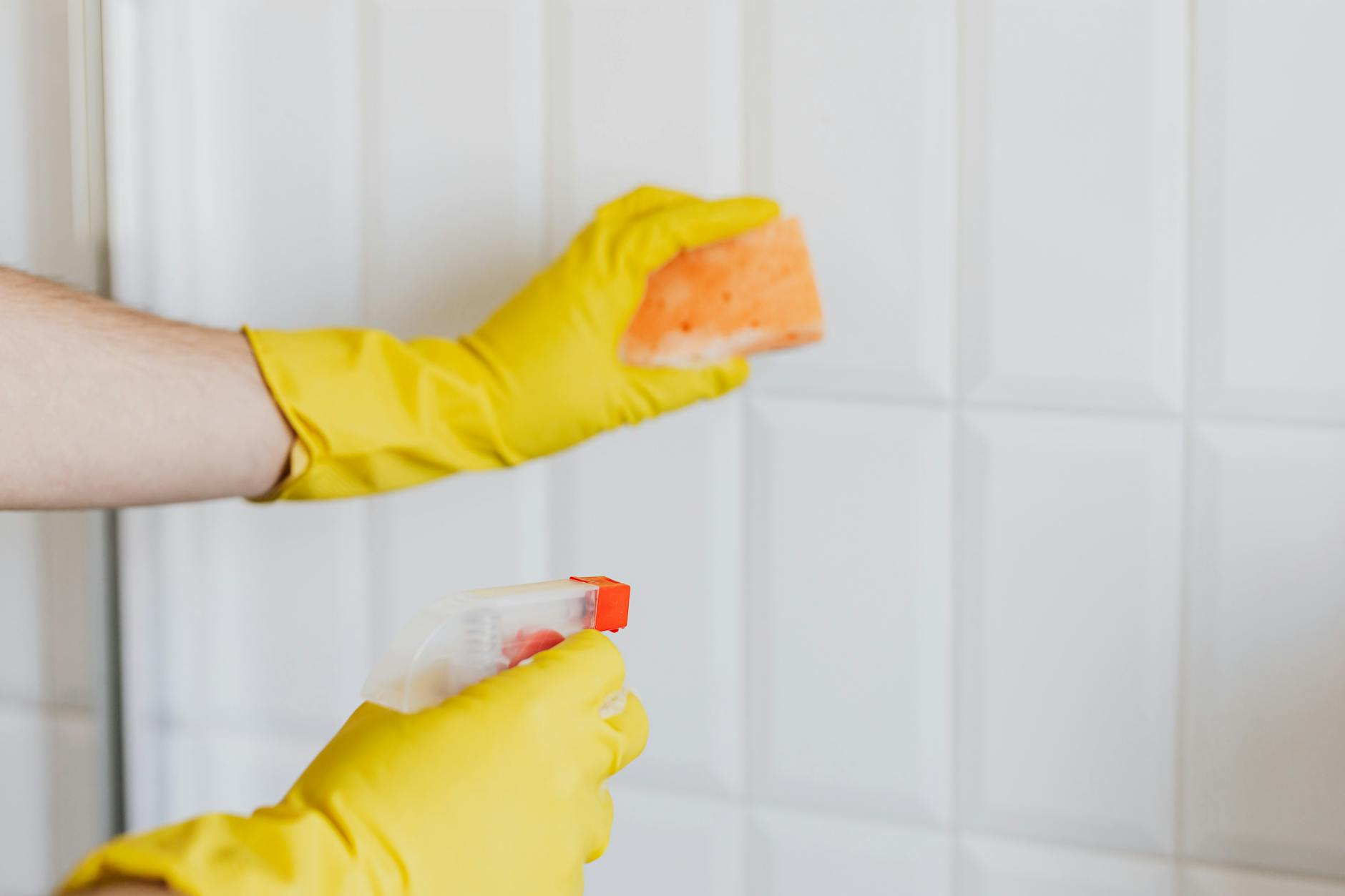
Wear rubber gloves and eye protection
Never mix bleach with any other cleaner
Store bleach in its original container, away from heat and sunlight
Rinse surfaces with plain water after disinfecting if food contact is possible
If you are looking for effective cleaning that avoids harsh chemical exposure, a professional house cleaning service in Arizona like Elite Maids offers eco-friendly product options that skip bleach entirely without sacrificing results.
7. How to Safely Disinfect With Bleach Step by Step
Knowing that bleach works is only useful if you apply it correctly. Here is the right process for safe and effective disinfection at home:
Step 1: Pre-clean the surface. Remove all visible dirt, grease, and debris with soap and water. Rinse and let the surface dry slightly.
Step 2: Mix your bleach solution fresh. Use 4 teaspoons of standard 6% household bleach per 1 liter of cool water for general disinfection.
Step 3: Ventilate the area. Open windows or run fans before you start.
Step 4: Apply and wait. Apply the bleach solution to the surface and let it sit wet for at least one to ten minutes depending on the pathogen and what the product label specifies.
Step 5: Rinse food-contact surfaces. Kitchen counters, cutting boards, and similar surfaces should be rinsed with plain water after the contact time is up.
Step 6: Dispose and wash up. Pour out any remaining solution after 24 hours. Wash your hands thoroughly after handling bleach, even if you wore gloves.
For high-touch areas like light switches, doorknobs, and bathroom fixtures, regular disinfection using this process provides real protection. If you want professional-grade results without managing the process yourself, you can book a cleaning online today and let trained cleaners handle the hard work.
8. When Bleach Is Not the Right Choice for Disinfecting
Bleach is genuinely powerful, but there are surfaces and situations where it is the wrong tool entirely. Understanding these limits helps you avoid damage and wasted effort.
Bleach will damage or discolor:
Natural stone surfaces like marble, granite, and travertine
Hardwood and laminate floors
Colored grout (it bleaches it unevenly)
Fabrics and upholstery
Metals that are not stainless steel
Painted walls (it strips paint finish over time)
For these surfaces, you are better off with pH-neutral cleaners, hydrogen peroxide solutions, or EPA-registered disinfectant sprays formulated for the material. A bonded and insured Arizona cleaning team knows which products are safe on which surfaces, which is one of the real advantages of hiring professionals over guessing with bleach on expensive finishes.
Bleach also loses effectiveness over time. A bottle sitting in a hot garage loses significant potency within three to six months of opening. Using old bleach to disinfect gives you a false sense of security without the actual kill power.
9. Eco-Friendly Alternatives That Still Disinfect Effectively
If the fumes, surface damage risk, or environmental concerns around bleach have you looking for alternatives, you have real options that actually work. Several non-bleach disinfectants are EPA-registered and proven effective against bacteria and viruses.
Strong alternatives include:
Hydrogen peroxide (3%): Kills bacteria and some viruses on hard surfaces. Safer fume profile than bleach and gentler on many surfaces.
Isopropyl alcohol (70%): Effective against bacteria and enveloped viruses. Evaporates quickly and leaves no residue.
Quaternary ammonium compounds (quats): Found in many commercial disinfectants, effective on a broad range of pathogens and safer for most surfaces.
Accelerated hydrogen peroxide products: Newer formulations that combine hydrogen peroxide with surfactants for broad-spectrum disinfection at lower concentrations.
None of these are miracle products either. They all require proper dilution, clean surfaces, and adequate contact time, just like bleach. The difference is that they tend to be gentler on surfaces and easier on indoor air quality. If you need a deep sanitizing clean before a holiday gathering or a family event, our team can handle it with the right products for every surface in your home. Check out our holiday cleaning services for a professional option that covers every room.
10. The Bottom Line on Whether Bleach Really Works as a Disinfectant
Bleach is one of the most effective and most misused disinfectants in the average home. It genuinely kills bacteria, viruses, and mold on hard non-porous surfaces when it is diluted correctly, applied to a pre-cleaned surface, and given enough contact time. The myths that trip people up are assuming it works on dirty surfaces, that more concentration means more power, and that any wet application counts as disinfecting.
The truth is simpler: bleach works when you follow the rules. Pre-clean, mix properly, wait for contact time, ventilate the space, and never mix it with other cleaners. Use it on the right surfaces and skip it on stone, wood, and fabric. If those variables feel like too much to manage, or if you want the job done right without the chemical exposure, a professional cleaning team is the more reliable option.
Get a Professionally Disinfected Home Today
Whether you want expert help picking the right products or just want to hand the whole job to someone who does this every day, Elite Maids House Cleaning is ready. We serve Phoenix, Mesa, Scottsdale, Gilbert, Chandler, Glendale, Queen Creek, San Tan Valley, Tucson, and Flagstaff with recurring cleans, deep cleans, move-in and move-out cleanings, and event cleanings. Every cleaner is background-checked, bonded, insured, and backed by our no-cost reclean guarantee. Contact Elite Maids house cleaning today for a free quote and book same-day service in minutes online.
Frequently Asked Questions
Is bleach good for gum disease?
Household bleach is not appropriate for treating gum disease and should never be used in the mouth. Some dentists prescribe highly diluted, medically supervised bleach rinses for specific periodontal conditions, but these are formulated differently from household cleaning bleach and used only under clinical guidance. Using household bleach orally is dangerous and can cause serious chemical burns.
Does bleach disinfect or sanitize?
Bleach does both, depending on concentration. At lower concentrations it sanitizes, reducing bacteria to safe levels. At standard household disinfecting concentrations (around 1,000 ppm), it disinfects, meaning it kills nearly all bacteria and many viruses on hard non-porous surfaces. The key is proper dilution, pre-cleaning the surface, and allowing sufficient contact time before wiping.
How long does it take for bleach to kill bacteria?
Most bacteria are killed within one to three minutes of contact with a properly diluted bleach solution on a pre-cleaned surface. Harder-to-kill pathogens may require up to ten minutes of wet contact time. The surface must remain visibly wet with the bleach solution for the entire contact period. Wiping immediately after application does not give bleach time to work.
How much bleach per liter of water for disinfecting?
For standard household surface disinfection, use approximately 4 teaspoons (about 20 ml) of 6% household bleach per 1 liter of cool water. This produces a roughly 1,000 ppm solution, which is effective against most common household pathogens. Always mix a fresh solution before each use, as diluted bleach loses its potency within 24 hours, especially in warm conditions.
Is cleaning with bleach harmful to indoor air quality?
Yes, bleach fumes can harm indoor air quality and irritate the eyes, nose, throat, and lungs, particularly in poorly ventilated spaces. People with asthma or respiratory sensitivities are especially at risk. Always open windows, run fans, wear gloves and eye protection, and never mix bleach with ammonia, vinegar, or other cleaners. Toxic gas can form instantly from those combinations.