10 Common Cleaning Mistakes Glendale Homeowners Make (And How to Fix Them)
SHARE:
The most common cleaning mistakes Glendale homeowners make include spraying product directly on surfaces, skipping sponge sanitation, rushing through rooms, and putting away a wet toilet brush. These habits do not just leave your home dirtier than before; they can actually damage surfaces and spread bacteria. This post walks you through 10 of the worst offenders and exactly how to correct them.
1. Spraying Cleaning Product Directly on Surfaces
Walk into almost any home in Glendale and you will find someone spraying cleaner straight onto a countertop, mirror, or screen. It feels efficient, but it is one of the most damaging cleaning mistakes you can make. When you spray directly onto a surface, you deposit more liquid than the material can absorb evenly. The result: streaks, residue buildup, and on electronics or natural stone, lasting damage.
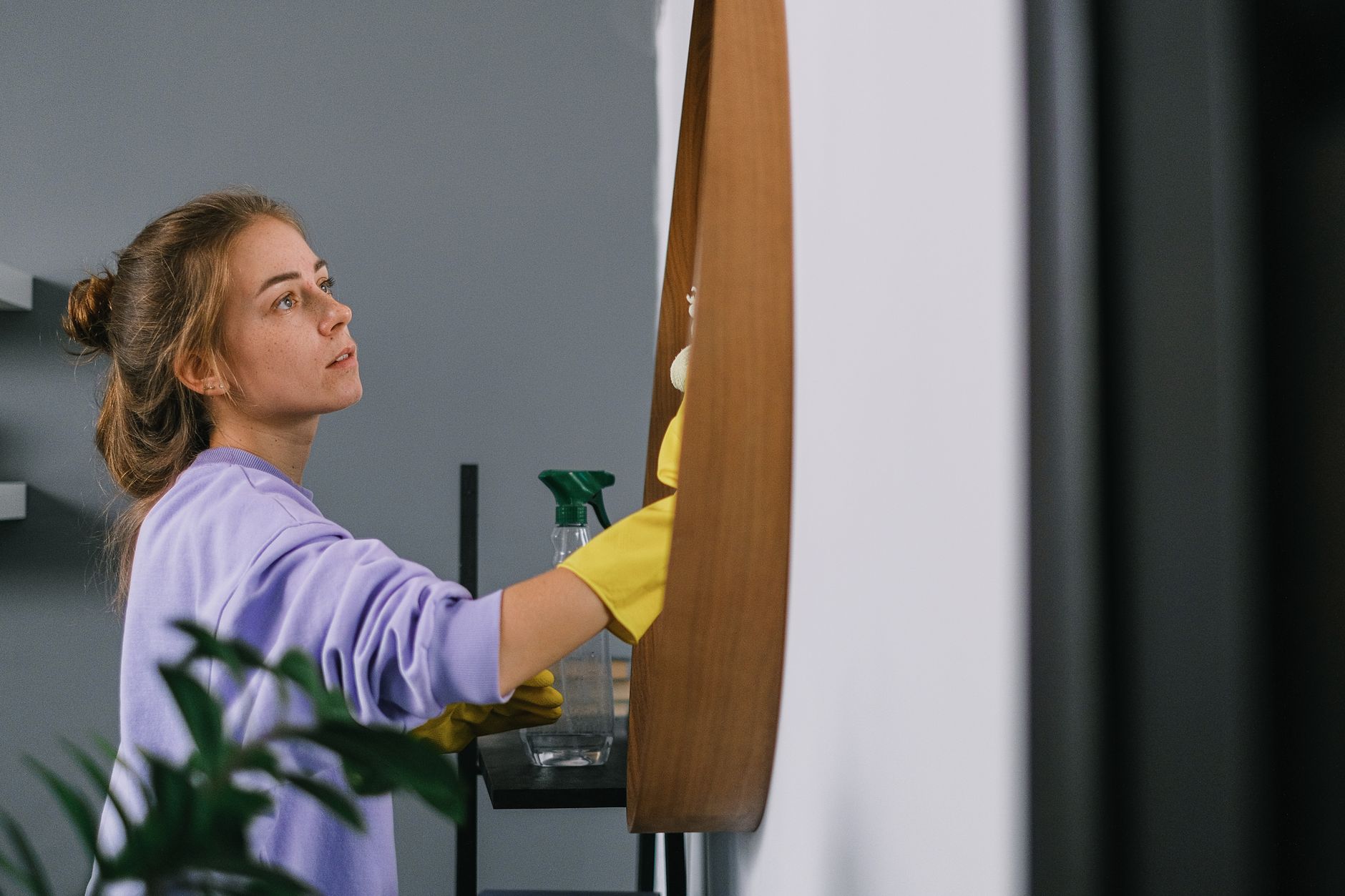
The fix is straightforward. Spray your cleaner onto a microfiber cloth first, then wipe the surface. You use less product, get a cleaner finish, and protect the materials underneath. Good Housekeeping’s cleaning experts consistently recommend this method for everything from stainless steel appliances to wood cabinetry. If you want a deeper reset for surfaces that have been over-sprayed for years, a professional deep cleaning service can strip away the residue and restore the finish.
This single habit shift will make every room look noticeably better within a week.
2. Not Cleaning Your Sponge
Your kitchen sponge might be the single dirtiest object in your home. Research cited by the CDC on household bacteria confirms that moist, porous surfaces are prime breeding grounds for pathogens. A sponge that sits wet on the sink between uses can harbor more bacteria than a toilet seat, and every time you “clean” with it, you are redistributing that bacteria across your countertops, dishes, and sink.
Not cleaning your sponge is a cleaning mistake that compounds fast. The fix: microwave a damp sponge on high for 60 seconds every day, or soak it in a diluted bleach solution (one tablespoon of bleach per quart of water) for five minutes. Replace sponges every one to two weeks regardless. Better yet, switch to washable microfiber cloths that can go through the washing machine after each use. This one change alone dramatically reduces cross-contamination in your kitchen.
3. Cleaning Too Quickly and Skipping Dwell Time
Speed-cleaning feels productive, but rushing is one of the most widespread cleaning mistakes in any home. Disinfectants and cleaners need contact time, also called dwell time, to actually kill bacteria and break down grime. Most people spray, wipe immediately, and move on, which means the product never had a chance to work. You have essentially just smeared the mess around.
Check the label on your cleaning product. Most disinfectants require anywhere from 30 seconds to 10 full minutes of wet contact to be effective. Spray the surface, walk away, come back, then wipe. This is especially important in bathrooms and kitchens where harmful bacteria are most concentrated. According to Real Simple, building dwell time into your routine can cut cleaning time overall because surfaces come clean in a single pass instead of requiring repeated scrubbing.
If you are regularly short on time, consider scheduling recurring maid service visits so a trained cleaner handles the detail work while you focus on your day.
4. Putting Away a Wet Toilet Brush
This is one of those cleaning mistakes that almost nobody talks about, but nearly everyone makes. After scrubbing the toilet bowl, most people shake the brush once and drop it straight back into its holder. The holder then traps moisture, creating a dark, warm, enclosed environment that is perfect for mold and bacteria growth. The next time you use that brush, you are spreading whatever colonized it back into your toilet.
The fix: after scrubbing, rest the toilet brush horizontally across the bowl rim (under the seat) so it drips dry into the bowl for 10 minutes. Then return it to its holder. Better still, rinse the brush with hot water and a splash of disinfectant before storing it. The EPA’s guidance on mold prevention is clear: reducing moisture is the single most effective way to stop mold and bacteria from taking hold in any enclosed space, including a toilet brush holder.
5. Not Reading Product Directions
Product labels exist for a reason, and skipping them is one of the most overlooked cleaning mistakes homeowners make. Mixing the wrong products, using too much concentration, or applying a cleaner to an incompatible surface can cause damage ranging from discoloration to dangerous chemical reactions. Bleach and ammonia, for example, produce toxic chloramine vapors when combined, a risk flagged repeatedly by the EPA’s Indoor Air Quality guidelines.
Not reading directions also leads to overuse. More product does not mean more clean. Excess cleaner leaves residue that actually attracts more dirt over time. Take 30 seconds to read the label before you open a new product. If you want peace of mind about what goes into your home, ask about eco-friendly cleaning options. Plant-based and non-toxic cleaning products often have simpler, safer instructions and are less likely to cause surface damage or indoor air quality issues.
Glendale homeowners who switch to green cleaning products often report that their homes smell fresher and their families experience fewer respiratory irritations, a meaningful benefit in Arizona’s dry indoor air conditions.
6. Washing Windows on a Sunny Day
It seems logical to wash windows when the sun is shining, but this is actually a classic cleaning mistake. Direct sunlight causes glass cleaner to evaporate before you can wipe it away, leaving behind streaks and a filmy residue that is harder to remove than the original dirt. You end up wiping more, not less, and the results are worse.
Clean windows on an overcast day or tackle them early in the morning before the Arizona sun heats the glass. Use a squeegee instead of paper towels; The Spruce’s cleaning guides consistently rank the squeegee method as the fastest route to a streak-free finish. Wipe in a top-to-bottom pattern and overlap each stroke slightly. For homes in Glendale that deal with heavy dust and hard water deposits, a thorough deep cleaning that includes window tracks and frames makes a visible difference.
7. Cleaning in a Buffing Motion
A circular buffing motion feels thorough, but for most household surfaces it is the wrong technique. Buffing spreads dirt in every direction instead of removing it. On glass, mirrors, and polished surfaces, you end up with circular smears. On floors, you push grime into grout lines and corners rather than lifting it away.
The correct method is an S-pattern or straight-line stroke: start at one edge, move to the other, then step down and repeat. This ensures you are always working into clean territory rather than dragging dirt back over areas you just wiped. For floors, mop in the same direction as the floorboards and work backward toward the exit so you never step on a freshly mopped surface. If you are looking for professional house cleaning that uses correct technique on every surface, trained cleaners are worth it for the results alone.
Cleaning mistakes like this are easy to make when nobody ever shows you the right way. Most people clean the way they watched a parent clean, buffing motion included.
8. Not Emptying the Vacuum Regularly
A vacuum that is more than half full loses meaningful suction power. Running a full vacuum across your carpet is like trying to drink a milkshake through a pinched straw: the motor works overtime and the results are poor. Dust, debris, and allergens get pushed around rather than captured, and a clogged filter can release fine particles back into the air you breathe.
The American Lung Association recommends regular vacuuming with well-maintained equipment as a primary strategy for reducing indoor allergens, particularly important for Glendale families during Arizona’s high-dust and pollen seasons. Empty bagless vacuums after every use, or when the bag is two-thirds full for bagged models. Clean or replace the HEPA filter every three to six months. A clean vacuum is not optional; it is the difference between actually cleaning your floors and just redistributing what is on them.
One cloth for the kitchen counter, the bathroom sink, and the stovetop is a surefire way to spread bacteria from room to room. This cross-contamination cleaning mistake is common because people underestimate how much bacteria transfers between surfaces even on a cloth that looks clean.
Color-code your cleaning cloths: one color for bathrooms, one for kitchens, one for general dusting. Wash all cloths in hot water after each cleaning session. If you want to eliminate the guesswork entirely, House cleaning services Glendale, AZ professionals bring fresh, laundered microfiber cloths to every visit so there is zero cross-contamination between rooms or between homes. It is a detail that makes a real difference in how clean your home actually is versus how clean it looks.
Cleaning reactively, waiting until things look visibly dirty, is one of the most common cleaning mistakes that costs you the most time and effort. Surface grime, dust, and bacteria build up gradually. By the time something looks dirty to the naked eye, it has been accumulating for days or weeks. Catching messes early with a regular schedule means every cleaning session takes a fraction of the time.
Set a weekly rhythm: wipe countertops and sinks daily, vacuum twice a week, mop hard floors weekly, and schedule a seasonal deep clean at least twice a year. If keeping up with that schedule is a challenge, residential cleaning services with a recurring weekly or biweekly visit keep your home consistently clean without the mental load of planning it yourself. For Glendale households dealing with Arizona dust, pet hair, or busy family schedules, a recurring home cleaning plan is often the most practical solution.
If you want more localized advice, our post on cleaning mistakes Queen Creek homeowners make covers additional habits worth breaking. And professional disinfection services are worth scheduling at least once a season to address the bacteria and viruses that regular cleaning misses.
Whether you are tackling a move, a post-event mess, or just want to start fresh, professional cleaning services in Glendale can give you a clean baseline to maintain. For Glendale residents dealing with the aftermath of a big life change, move-in/move-out cleaning is one of the most useful services available to make sure nothing gets missed.
Check out cleaning in Glendale to see full service options and read what local homeowners are saying about their experience with Elite Maids House Cleaning. You can also browse The 10 Best House Cleaning Services in Glendale, CA 2026 for a full breakdown of what to look for when hiring a cleaning team in the area.
Ready to Stop Making These Mistakes? Let Elite Maids Handle It
Avoiding these 10 common cleaning mistakes will absolutely improve the cleanliness of your Glendale home. But if you want results that go beyond what any DIY routine can deliver, the team at Elite Maids House Cleaning is ready to help. Every cleaner is background-checked, bonded, and backed by a reclean-at-no-cost satisfaction guarantee. You can book online in minutes with an instant quote and same-day availability between 8am and 6pm. See why Glendale families trust us by checking out cleaning Glendale reviews, and then contact Elite Maids house cleaning today for a free quote. Your weekends are worth it.
Frequently Asked Questions
What are 10 common cleaning mistakes people make?
The 10 most common cleaning mistakes include spraying product directly on surfaces instead of on a cloth, not sanitizing your sponge, cleaning too quickly without allowing dwell time, storing a wet toilet brush, ignoring product directions, washing windows in direct sunlight, buffing instead of using straight strokes, running a full vacuum, using the same cloth across multiple rooms, and cleaning without a consistent schedule. Each of these habits reduces how clean your home actually gets.
What is the 20 minute rule in cleaning?
The 20-minute rule is a time-boxing approach where you clean in focused 20-minute sessions rather than trying to tackle the entire house at once. It works because short, consistent sessions prevent overwhelm, maintain momentum, and keep messes from building to the point where cleaning feels like a major project. Many professional home cleaning coaches recommend pairing this rule with a room-by-room rotation so every area gets attention regularly.
What not to use to clean a toilet?
Avoid using bleach and ammonia-based products at the same time, as combining them creates toxic fumes. Do not use abrasive scrubbers or steel wool on porcelain, as they scratch the surface and make it harder to keep clean over time. Avoid using the same cloth you use on other bathroom surfaces without washing it first. And never use a toilet brush that has been stored wet without disinfecting it, as it redistributes bacteria rather than removing it.
What is the hardest thing to clean in a house?
Grout is widely considered the hardest thing to clean in a home. Its porous texture traps dirt, soap scum, mold, and bacteria in a way that most standard cleaning products cannot fully penetrate. Oven interiors, window tracks, and the areas behind and under large appliances are close runners-up. These are the spots where a professional New Era Cleaning approach, using the right tools and products at the correct dwell time, makes the biggest difference over a DIY effort.
I've Been a Professional House Cleaner for 18 Years in Glendale: Here Are My Best Before & After Secrets
SHARE:
After 18 years of professional house cleaning in Glendale and across the Valley, I’ve seen just about every type of mess a home can hold. The difference between a so-so clean and a jaw-dropping before-and-after result comes down to a repeatable system, the right products, and knowing which spots most cleaners skip. This post walks through the exact methods, habits, and hard-won lessons that produce those dramatic transformations you see in real before-and-after cleaning photos.
What 18 Years of Professional House Cleaning in Glendale Taught Me
When I started cleaning homes in Glendale, I thought speed was everything. It took a few years to realize that a fast clean nobody notices is worth less than a slightly slower clean that makes a homeowner gasp when they walk through the door. The secret is working a proven checklist from top to bottom, room by room, without skipping the details that separate a surface wipe-down from a true deep clean.
Glendale homes, especially in neighborhoods closer to the Westgate Entertainment District and Luke Air Force Base, collect a specific kind of dust and desert grime. The dry climate means fine particulate matter settles on every horizontal surface. EPA guidance on indoor air quality confirms that dust accumulation indoors is a genuine health concern, not just an aesthetic one. That context changes how you approach cleaning. You’re not just making things look good. You’re improving the air a family breathes every day.
Over nearly two decades, I’ve also learned that the products matter as much as the technique. Harsh chemicals can leave residue, damage finishes, and fill a home with fumes. That’s why I gravitated toward EPA Safer Choice certified products whenever possible. They work, they’re safer for kids and pets, and clients always appreciate not walking into a chemical fog after a cleaning visit. Recurring maid service clients in Glendale have told me their allergy symptoms improved once we switched to greener product options. That kind of feedback never gets old.
The biggest mindset shift for any aspiring professional house cleaner is treating every room like it has an audience. Imagine someone is about to photograph the space for a magazine spread. What would they notice? That’s your target. Work toward that standard on every visit, and before-and-after results take care of themselves.
The Professional House Cleaning Checklist That Produces Dramatic Before & Afters
A solid professional cleaning checklist is the foundation of consistent results. Without one, even experienced cleaners miss spots. With one, a new hire can produce results that rival a veteran. Here’s the framework I’ve refined over 18 years, broken down by zone.
Kitchens: Where Before & Afters Are Most Dramatic
Kitchens generate the most visible transformations. Grease builds up on cabinet faces, backsplashes, and the tops of the refrigerator in layers most homeowners don’t notice until someone else points it out. My approach: degrease cabinet fronts with a diluted dish-soap solution before touching countertops. That prevents drips from contaminating surfaces you’ve already cleaned. Then work the backsplash, the stovetop, and the inside of the microwave. Finish with countertops, the sink, and finally the floor. The sequence matters as much as the effort. Real Simple’s cleaning experts back up the top-to-bottom, back-to-front approach for exactly this reason.
Bathrooms: Professional Cleaning Tips That Actually Work
Professional cleaning tips for bathrooms almost always start with one step that amateurs skip: let the cleaner sit. Spray the toilet bowl, the tub, and tile grout with the appropriate cleaner and walk away for five minutes. By the time you come back, the chemistry has done half the work. Scrubbing immediately after spraying wastes product and effort. This dwell-time habit alone accounts for most of the difference between a mediocre bathroom clean and one that sparkles in photos. Glendale’s hard water leaves calcium deposits around faucets and showerheads, so a white vinegar soak on fixtures for 10 minutes is a simple house cleaning hack that dissolves mineral buildup without scratching chrome. According to The Spruce’s cleaning guides, regular descaling extends fixture life and keeps bathrooms looking professionally maintained between visits.
Living Areas and Bedrooms: Cleaning Fast and Professionally
Knowing how to clean a house fast and professionally in living areas means mastering a “S-pattern” dusting stroke. Move your microfiber cloth in a consistent S-shape across surfaces so you’re pushing dust toward you rather than redistributing it. Microfiber is not optional here. A cotton rag just moves dust around. A quality microfiber cloth traps particles at the fiber level, which is why professional cleaners swear by them. Dust ceiling fans and light fixtures before vacuuming floors, because what falls gets captured at the end. Vacuum upholstered furniture using the crevice tool along seams and under cushions. Those are the spots that show up in before-and-after photos when they’re finally addressed.
For clients who want to know how to maintain a clean home between our professional visits, I always recommend a short daily reset rather than a long weekend session. Check out this guide on maintaining a clean home between professional cleanings for a practical routine that keeps things manageable.
House Cleaning Hacks and Tips I Use Every Single Day
After 18 years, certain house cleaning hacks and tips become second nature. These are the ones I reach for constantly because they work every time.
The pillowcase trick for ceiling fans: Slip an old pillowcase over each fan blade and pull it back. The pillowcase catches all the dust instead of raining it onto the furniture below. Simple, fast, and the before-and-after difference on the floor alone is remarkable.
Baking soda on carpet odors: Sprinkle baking soda liberally on carpet, let it sit for 15 minutes, then vacuum. It neutralizes odors without masking them with fragrance. Glendale homes with pets benefit from this trick between deep cleans.
Two-bucket mopping: One bucket holds clean solution, one holds rinse water. Never dip a dirty mop head back into clean solution. This single habit eliminates the “dirty mop smell” that lingers after mopping and makes floors look dingy even right after cleaning.
Dish soap on baseboards: A thin layer of car wax or furniture polish on clean baseboards makes future dust slide right off. It’s a 10-minute investment that cuts your next baseboard cleaning time in half.
Toothbrush for grout and faucet bases: No professional cleaning tip list is complete without this. A dedicated old toothbrush reaches the tight curve where fixtures meet countertops, and the base of faucets where gunk concentrates. It’s the detail that clients photograph in their before-and-afters.
These tips and tricks for cleaning your house consistently are what separate a passable clean from a professional-grade result. None of them require expensive equipment. They require attention and a repeatable system.
What House Cleaners Want You to Know Before Your First Appointment
This is the section I wish every client read before booking. What house cleaners want you to know isn’t complicated, but it changes the outcome of every cleaning visit.
Decluttering before we arrive doubles the value of the clean. When surfaces are covered in items that need to be moved before we can clean underneath them, time that could go toward scrubbing tile grout goes toward shuffling objects. Even a 10-minute tidy before your cleaner arrives produces a noticeably better result. It also protects your belongings, because a professional cleaner who has to guess where items belong will place them somewhere logical but possibly not where you’d prefer.
Communicate your priorities upfront. Every home has a “most important room.” Tell your cleaner which one it is. In Glendale, I’ve worked in homes where the master bathroom was the absolute priority and others where the kitchen was the heart of everything. Knowing that shapes how we allocate time and energy across the visit.
A deep cleaning service before recurring maintenance is almost always worth it. A standard maintenance clean assumes a baseline of cleanliness. If a home hasn’t had a professional clean in months or has never had one, a one-time deep clean first resets everything to that baseline. After that, recurring visits maintain the result rather than trying to play catch-up every time. Glendale clients who start with a deep clean consistently rate their ongoing service higher because the maintenance clean can focus on what actually needs attention.
For anyone wondering what to expect before guests come over, I put together a detailed breakdown in this post about things to always clean before guests come over, which covers the spots that make the biggest impression on visitors.
Curious about how other Glendale residents are thinking about home cleaning? The Cleaning person? : r/glendale conversation captures real questions from local homeowners and shows just how universal these concerns are.
How to Deep Clean a House Professionally: Room-by-Room Strategy
Knowing how to deep clean a house professionally is different from knowing how to maintain it. A deep clean reaches the places a maintenance visit intentionally skips because they don’t need weekly attention. Here’s how a true professional approaches it room by room.
Kitchen deep clean: Empty the refrigerator and wipe every shelf and drawer with a food-safe cleaner. Clean inside the oven, including the racks. Degrease the range hood filter. Pull the refrigerator and stove out from the wall and clean behind and underneath them. Wipe inside cabinet interiors. These are the elements that transform a kitchen in before-and-after photos because homeowners rarely see or address them.
Bathroom deep clean: Remove everything from the shower or tub surround and clean the shelves, caddies, and walls individually. Clean behind and around the toilet base. Address grout with a grout brush and targeted cleaner. Wipe down the entire vanity interior. The CDC’s guidance on mold in homes makes a strong case for regular grout and tile cleaning in bathrooms, where moisture creates conditions for mold growth. Deep cleaning disrupts that cycle before it becomes a health issue.
Bedrooms and living areas deep clean: Move furniture and vacuum underneath. Wipe baseboards, door frames, and window sills with a damp cloth. Clean light switch plates and outlet covers, which accumulate skin oils and grime invisibly over time. Wipe down ceiling fan blades individually. Vacuum mattresses using the upholstery attachment. These are the details that never make it into a standard clean but define what “really clean” feels like.
If you want a full seasonal reset, our ultimate guide to spring cleaning walks through a comprehensive top-to-bottom approach designed to work alongside a professional cleaning visit.
If you’re searching for Dry cleaners in glendale ca, you’ll find that most residents are making the same discovery: hiring a consistent residential cleaning team delivers far more value than sporadic deep-clean attempts done solo. The right service partner makes all the difference for Glendale homeowners who want that before-and-after result every single visit.
How to Be a Good Professional House Cleaner: The Habits That Matter Most
People often ask me how to be a professional house cleaner and what it actually takes beyond knowing which products to use. The answer is almost entirely about systems and habits, not talent.
Carry your own professional-grade supplies. Relying on whatever the client has under the sink produces inconsistent results. A professional brings a caddy with known, reliable products, at least three different microfiber cloths designated for different surfaces (bathrooms, kitchens, general), and multiple scrubbing tools. This professionalism is part of why Consumer Reports consistently recommends hiring professionals over DIY for whole-home cleans. The tools and products gap between a homeowner and a professional is substantial.
Time yourself and build room benchmarks. A professional cleaner knows roughly how long a 200-square-foot bathroom should take. When a room is running over, you immediately know something is wrong: either the room is in worse shape than assessed, or your technique needs adjustment. This self-awareness is how to be a good domestic cleaner at any experience level.
Communicate after every visit. Leave a note, send a message, or ask directly: “Was there anything I missed or should focus on next time?” This closes the feedback loop that separates one-time cleaners from long-term service relationships. The cleaners who build loyal client bases in Glendale are almost always the ones who ask good questions and listen to the answers.
For more before-and-after insights from across the Valley, our post about professional house cleaning in Tucson covers similar transformations in a different Arizona climate and offers techniques that translate directly to Glendale homes.
You can check transparent Us cleaning services pricing and service details, and see how Cleaning in glendale prices compare so you know exactly what to expect before you book. There are no surprises.
Why Glendale Homeowners Trust Elite Maids House Cleaning
Elite Maids House Cleaning is a family-owned company and the most-reviewed residential cleaning team in Arizona. Every cleaner is background-checked, bonded, and fully insured. The team offers recurring weekly, biweekly, and monthly home cleaning, as well as holiday cleaning for the busy seasons when Glendale families host gatherings and need a home that looks its absolute best. Online booking with instant quotes means Glendale residents can schedule same-day service between 8am and 6pm without picking up the phone.
Every visit is backed by a reclean-at-no-cost satisfaction guarantee. If something was missed, the team comes back and fixes it at no charge. That confidence comes from 18 years of refining systems, training professionals who care, and treating every home in Glendale like the before-and-after photos matter. Because they do. Visit the New Era Cleaning service page to see everything available for Glendale homeowners.
Fifty dollars an hour sits at the lower end of professional house cleaning rates in the Phoenix metro area, including Glendale. Rates typically range from $50 to $90 per hour depending on the cleaner’s experience, whether the company is insured and bonded, and the type of clean required. A standard maintenance visit costs less per hour than a deep clean or move-out clean. Always confirm what’s included before comparing hourly rates across providers.
How much should I charge to clean a 2000 sq ft house?
A 2,000-square-foot home in Glendale typically costs between $150 and $280 for a standard maintenance clean, and between $250 and $400 or more for a deep clean. Pricing depends on the number of bathrooms, the home’s current condition, and whether it’s a one-time or recurring booking. Recurring clients almost always pay less per visit than one-time bookings because ongoing maintenance requires less effort than resetting a heavily soiled home.
How much do 2 hours of cleaning cost?
Two hours of professional house cleaning in the Glendale area generally costs between $100 and $160 depending on the company and scope of work. Two hours is usually sufficient for a small apartment or a targeted clean of specific rooms, but it’s not enough time for a full deep clean of a larger home. Get an instant quote online to see exactly what two hours of service covers for your specific space before booking.
What is the 20 minute rule of cleaning?
The 20-minute rule is a simple daily habit where you set a timer and clean as much as you can in 20 focused minutes rather than waiting for a full cleaning session. Professional cleaners recommend it to clients who want to maintain a tidy home between scheduled service visits. Focusing on high-traffic areas like the kitchen and bathrooms during those 20 minutes keeps buildup manageable and makes each professional cleaning visit more effective.