Eco-Friendly House Cleaning in Tucson: Protecting the Sonoran Desert While Keeping Your Home Spotless
Tucson isn’t just another American city—it’s a UNESCO City of Gastronomy, home to Saguaro National Park, and the heart of the magnificent Sonoran Desert. We live in one of the most biodiverse desert ecosystems on Earth, surrounded by iconic saguaro cacti, javelinas, roadrunners, and over 500 species of birds. This unique environment isn’t just our backyard; it’s a precious ecosystem that deserves our protection.
But here’s something most Tucson residents don’t realize: the cleaning products you use in your home don’t stay in your home. They wash down drains into our overtaxed water treatment systems, evaporate into our desert air, and eventually make their way into the very ecosystem we cherish. In a city where water is precious, air quality matters, and environmental consciousness runs deep, the way we clean our homes has far-reaching consequences.
The good news? Eco-friendly cleaning isn’t just better for the Sonoran Desert—it’s better for your family, more effective in Tucson’s unique climate, and often more economical than you’d expect. This comprehensive guide will show you how to maintain a spotless home while protecting the desert environment that makes Tucson so special.
Why Tucson Residents Should Choose Green Cleaning
Protecting Our Precious Water Resources
Tucson faces water challenges unlike almost any other American city. We’re one of the few major cities that relies primarily on groundwater, supplemented by Colorado River water delivered via the Central Arizona Project (CAP). With ongoing drought conditions, declining aquifer levels, and an uncertain water future, every drop matters.
How Traditional Cleaners Contaminate Groundwater: When you pour conventional cleaning products down your drain, they enter Tucson’s wastewater system. While our treatment facilities do excellent work, they weren’t designed to remove all the chemicals found in modern cleaning products. Phosphates, synthetic surfactants, optical brighteners, and other chemicals pass through treatment and eventually reach our groundwater or the Santa Cruz River.
Phosphates, once common in cleaning products, cause algae blooms that deplete oxygen in water systems. Synthetic surfactants don’t break down easily and accumulate in aquatic environments. Antibacterial agents like triclosan disrupt aquatic ecosystems and contribute to antibiotic resistance. In a desert city where water is literally life, contaminating our limited water resources with cleaning chemicals is both wasteful and dangerous.
Tucson’s Water Scarcity Issues: Tucson receives only about 12 inches of rain annually—less than half the national average. Our aquifers took thousands of years to fill but can be depleted in decades. The Central Arizona Project, which delivers Colorado River water to Tucson, faces uncertain future allocations as the Colorado River Basin experiences historic drought.
Every Tucson resident has a responsibility to protect our water resources. Choosing eco-friendly cleaning products that biodegrade completely and don’t contaminate water systems is one of the simplest, most effective ways to contribute to water conservation and protection.
Water Conservation in Cleaning Practices: Beyond product selection, eco-friendly cleaning emphasizes water conservation. Traditional mopping can use 3-5 gallons of water per cleaning session. Microfiber mopping systems use 90% less water while cleaning more effectively. Steam cleaning uses minimal water while sanitizing surfaces without chemicals. These water-saving techniques matter enormously in Tucson’s water-scarce environment.
Desert Air Quality Concerns
Tucson’s air quality is generally good compared to Phoenix or Los Angeles, but we face unique challenges—desert dust, seasonal wildfires, and temperature inversions that trap pollutants. The last thing we need is adding indoor air pollution from cleaning products.
Indoor Air Pollution Statistics: According to the EPA, indoor air can be 2-5 times more polluted than outdoor air, and in some cases up to 100 times more polluted. In Tucson, where we keep windows closed and air conditioning running for much of the year, indoor air quality is particularly important.
Conventional cleaning products release volatile organic compounds (VOCs) that contribute to indoor air pollution. These chemicals evaporate at room temperature, meaning you’re breathing them long after cleaning is complete. In Tucson’s sealed, air-conditioned homes, these VOCs accumulate rather than dissipating.
Impact on Respiratory Health in Dry Climates: Tucson’s low humidity (often 10-20% outside of monsoon season) already stresses respiratory systems. Dry air irritates nasal passages, throats, and lungs, making residents more susceptible to respiratory issues. Adding chemical irritants from cleaning products compounds these problems.
Studies show that regular use of conventional cleaning products can reduce lung function equivalent to smoking a pack of cigarettes daily. For Tucson residents dealing with allergies from desert pollen, asthma triggered by dust, or respiratory sensitivity from dry air, eliminating chemical irritants from cleaning products can dramatically improve quality of life.
VOCs and Their Effects: Volatile organic compounds found in conventional cleaners include formaldehyde, benzene, toluene, and dozens of other chemicals linked to headaches, dizziness, respiratory irritation, and long-term health effects. In Tucson’s climate, where homes are sealed tight against heat, these VOCs concentrate in indoor air.
Eco-friendly cleaning products use plant-based ingredients that don’t release harmful VOCs. They clean effectively without compromising your indoor air quality or your family’s health.
Protecting Sonoran Desert Wildlife
The Sonoran Desert isn’t a barren wasteland—it’s a thriving ecosystem that supports incredible biodiversity. Tucson’s unique position as a city integrated into this ecosystem means our actions directly impact desert wildlife.
How Chemicals Enter the Ecosystem: Cleaning chemicals don’t disappear when they go down your drain. They pass through wastewater treatment (which removes some but not all chemicals), enter the Santa Cruz River or recharge facilities, and eventually make their way into the broader ecosystem.
Chemicals that evaporate from cleaning products settle on outdoor surfaces, wash into storm drains during monsoons, and accumulate in desert soil. Desert plants absorb these chemicals, insects consume contaminated plants, birds and mammals eat contaminated insects—the chemicals move up the food chain, concentrating at each level.
Impact on Local Flora and Fauna: The Sonoran Desert ecosystem evolved over millions of years in chemical balance. Introducing synthetic chemicals disrupts this balance. Phosphates alter soil chemistry, affecting native plant growth. Antibacterial agents kill beneficial soil microorganisms. Synthetic fragrances confuse pollinators that rely on natural scent cues.
Tucson is home to endangered species like the cactus ferruginous pygmy owl, threatened species like the Mexican spotted owl, and countless other species found nowhere else on Earth. Protecting them means being mindful of every chemical we introduce into their environment—including cleaning products.
Our Responsibility as Desert Dwellers: Living in Tucson is a privilege that comes with responsibility. We share this desert with creatures that have adapted to one of Earth’s harshest environments. The least we can do is avoid poisoning their habitat with unnecessary chemicals when effective, eco-friendly alternatives exist.
Understanding Eco-Friendly Cleaning Products
What Makes a Cleaner “Green”?
Not all products labeled “natural” or “eco-friendly” actually are. Understanding what makes a cleaner genuinely green helps you make informed choices.
Biodegradable Ingredients: True eco-friendly cleaners use ingredients that break down completely into harmless substances within days or weeks. Plant-based surfactants (cleaning agents) derived from coconut, corn, or other renewable sources biodegrade rapidly and completely, unlike petroleum-based synthetic surfactants that persist in the environment.
Look for products that specify “readily biodegradable” or “biodegrades in 28 days or less.” This ensures the product won’t accumulate in Tucson’s water systems or desert soil.
Non-Toxic Formulations: Eco-friendly cleaners avoid toxic ingredients that harm human health or the environment. This means no:
- Chlorine bleach (which creates toxic byproducts)
- Ammonia (respiratory irritant and water pollutant)
- Phosphates (cause algae blooms)
- Phthalates (hormone disruptors)
- Synthetic fragrances (allergens and VOC sources)
- Triclosan and other antibacterial agents (contribute to antibiotic resistance)
Instead, green cleaners use ingredients like plant-based surfactants, natural acids (citric acid, lactic acid), plant oils, and minerals that clean effectively without toxicity.
Sustainable Packaging: Truly eco-friendly products consider the entire lifecycle, including packaging. Look for:
- Concentrated formulas (less water shipped, smaller packaging)
- Recyclable containers (HDPE #2 or PET #1 plastic, glass, or aluminum)
- Post-consumer recycled content in packaging
- Refillable containers
- Minimal packaging
In Tucson, where landfill space is limited and recycling infrastructure is developing, sustainable packaging matters.
Certifications to Look For: Third-party certifications help identify genuinely green products:
- EPA Safer Choice: Products meet EPA’s strict safety standards for human health and environment
- Green Seal: Independent certification for environmental leadership
- EcoLogo: North American environmental standard certification
- USDA Certified Biobased: Verifies plant-based content
- Leaping Bunny: Cruelty-free certification (no animal testing)
These certifications require independent verification, unlike vague marketing terms like “natural” or “eco-friendly” that anyone can use without proof.
Harmful Chemicals to Avoid
Understanding what to avoid is as important as knowing what to choose. These common cleaning product ingredients are particularly problematic:
Phosphates: Once ubiquitous in detergents, phosphates are now banned or restricted in many areas because they cause algae blooms that deplete oxygen in water systems, killing fish and other aquatic life. In Tucson’s limited water resources, phosphate contamination is particularly damaging. Avoid any product listing phosphates, phosphoric acid, or related compounds.
Chlorine Bleach: Sodium hypochlorite (bleach) is a powerful disinfectant but creates serious problems. It releases chlorine gas (a respiratory irritant), creates toxic byproducts when mixed with other chemicals, and persists in water systems. In Tucson’s dry climate, bleach fumes are particularly irritating to already-stressed respiratory systems. Alternatives like hydrogen peroxide or oxygen bleach clean and disinfect without the hazards.
Ammonia: This common ingredient in glass and floor cleaners irritates eyes, skin, and respiratory systems. It’s particularly dangerous when mixed with bleach (creating toxic chloramine gas). Ammonia also contributes to water pollution and air quality problems. Vinegar-based cleaners work just as well for glass and floors without the risks.
Synthetic Fragrances: That “clean scent” in conventional products comes from synthetic fragrance compounds—often dozens of chemicals hidden under the single word “fragrance.” These chemicals include phthalates (hormone disruptors), synthetic musks (bioaccumulative), and numerous allergens. They’re a major source of VOCs and trigger allergic reactions in many people. Eco-friendly products use essential oils or no fragrance at all.
Phthalates: These chemicals make fragrances last longer and help products stick to surfaces. They’re also endocrine disruptors linked to reproductive problems, developmental issues, and other health concerns. They accumulate in the environment and in human bodies. Avoid products listing phthalates or “fragrance” (which often contains phthalates).
Natural Alternatives That Work in Tucson’s Climate
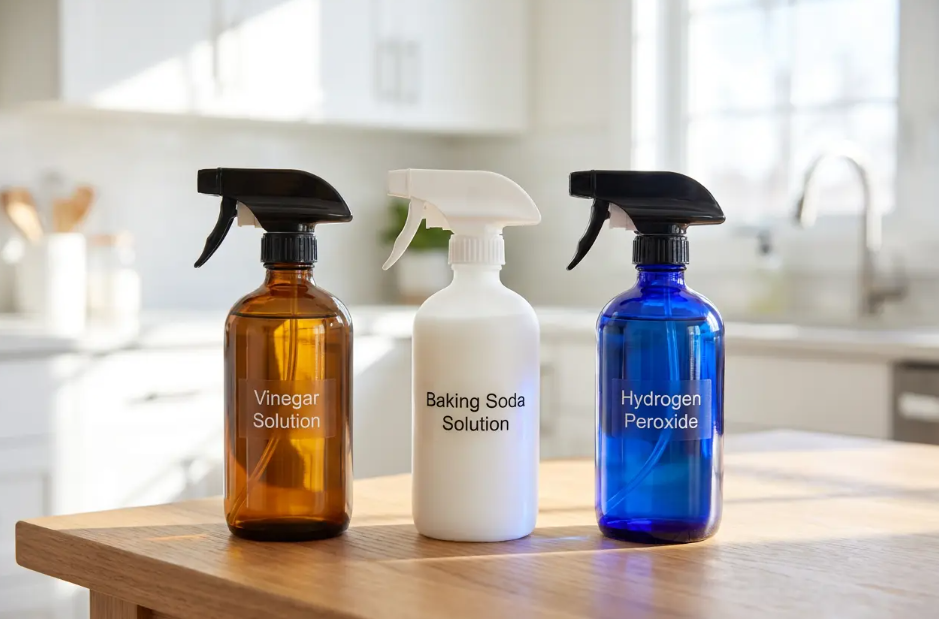
Tucson’s unique climate—extremely dry most of the year, with hard water and intense sun—means some natural cleaning methods work even better here than in other climates.
Vinegar Solutions for Hard Water: White vinegar is the MVP of Tucson cleaning. Its acidity (pH around 2.5) dissolves the calcium and magnesium deposits that Tucson’s notoriously hard water leaves on every surface. Mix equal parts white vinegar and water in a spray bottle for an all-purpose cleaner that tackles hard water stains, soap scum, and general grime.
For stubborn hard water deposits on faucets, shower doors, or tile, use undiluted vinegar. Soak paper towels in vinegar, wrap them around affected areas, and leave for several hours or overnight. The deposits will wipe away easily.
Vinegar also disinfects naturally—its acidity kills many bacteria and viruses without toxic chemicals. The smell dissipates quickly, especially in Tucson’s dry air.
Baking Soda Applications: Sodium bicarbonate (baking soda) is a gentle abrasive perfect for scrubbing without scratching—ideal for Tucson’s popular tile surfaces. Mix baking soda with water to create a paste for scrubbing sinks, tubs, tile, and grout. It deodorizes naturally (unlike synthetic fragrances that just mask odors) and is completely non-toxic.
Baking soda also softens water, making other cleaners more effective—particularly useful in Tucson where hard water reduces cleaning product effectiveness.
Essential Oils for Natural Fragrance: If you want scented cleaning products, essential oils provide natural fragrance without synthetic chemicals. Tea tree oil has antibacterial properties, lemon oil cuts grease and smells fresh, lavender oil is calming and antimicrobial, and eucalyptus oil is invigorating and helps repel insects.
Use 10-20 drops of essential oil per cup of cleaning solution. In Tucson’s dry climate, scents dissipate quickly, so you can use essential oils without overwhelming fragrance.
Castile Soap Uses: This plant-based soap (traditionally made from olive oil) is incredibly versatile. Dilute it for general cleaning, use it full-strength for tough jobs, add it to laundry, or use it for hand soap. Dr. Bronner’s is the most popular brand, available at most Tucson grocery stores and natural food stores.
Castile soap is biodegradable, non-toxic, and effective in hard water (though you may need to use slightly more in Tucson than in soft-water areas). It comes in various essential oil scents or unscented.
Hydrogen Peroxide Benefits: Three-percent hydrogen peroxide (the brown bottle from any pharmacy) is an excellent eco-friendly disinfectant. It kills bacteria, viruses, and mold without toxic residue—it breaks down into water and oxygen. Use it to disinfect cutting boards, countertops, bathroom surfaces, and anywhere you’d use bleach.
Hydrogen peroxide also whitens and removes stains. It’s particularly effective on grout, tile, and porcelain. In Tucson’s intense sunlight, hydrogen peroxide works even better—UV light activates its cleaning power.
Room-by-Room Green Cleaning Guide for Tucson Homes
Kitchen: The Heart of Eco-Friendly Cleaning
Eco-Friendly Degreasing Solutions: Kitchen grease combined with Tucson’s dust creates stubborn residue. Cut through it with this natural degreaser:
- 2 cups hot water
- 2 tablespoons castile soap
- 20 drops lemon essential oil
- 1 tablespoon washing soda (sodium carbonate—stronger than baking soda)
Spray on greasy surfaces, let sit 5-10 minutes, then wipe clean. This works on range hoods, stovetops, cabinet fronts, and backsplashes without toxic fumes or residue.
Natural Disinfectants for Countertops: Disinfect counters with hydrogen peroxide or vinegar (but not together—they create peracetic acid, which is irritating). Spray surfaces, let sit 5-10 minutes, then wipe clean. This kills 99.9% of bacteria without toxic chemicals.
For cutting boards that have touched raw meat, spray with vinegar, let sit, wipe, then spray with hydrogen peroxide, let sit, and wipe. This two-step process kills even stubborn bacteria like salmonella and E. coli.
Green Appliance Cleaning:
Refrigerator: Mix 2 tablespoons baking soda in 1 quart warm water. Wipe all interior surfaces. Baking soda deodorizes naturally and doesn’t leave chemical residue on food-contact surfaces.
Oven: Make a paste of baking soda and water, spread on oven interior (avoiding heating elements), let sit overnight, then scrub and wipe clean. For stubborn spots, spray with vinegar—the reaction helps lift baked-on grime.
Dishwasher: Place a cup of white vinegar on the top rack and run an empty cycle. This removes hard water deposits, soap scum, and odors without harsh chemicals.
Microwave: Place a bowl with 1 cup water and 2 tablespoons vinegar inside. Microwave on high for 5 minutes. Steam loosens stuck-on food, and you can wipe clean effortlessly.
Sustainable Dish Soap Options: Choose plant-based dish soaps like Seventh Generation, Ecover, or Mrs. Meyer’s (though Mrs. Meyer’s contains some synthetic fragrance). These work well in Tucson’s hard water and biodegrade completely. For extra grease-cutting power in hard water, add a tablespoon of washing soda to your dish water.
Bathrooms: Tackling Hard Water Naturally
Tucson’s hard water (typically 12-16 grains per gallon) creates bathroom cleaning challenges. Eco-friendly solutions work better than conventional products for hard water issues.
Hard Water Stain Removal (Natural Methods): For shower doors, tile, and fixtures covered in white, chalky deposits:
- Spray undiluted white vinegar on affected areas
- Let sit 15-30 minutes (longer for severe buildup)
- Scrub with a non-abrasive pad or brush
- Rinse thoroughly
- For stubborn deposits, make a paste of vinegar and baking soda, apply, let sit, then scrub
The acidity of vinegar dissolves mineral deposits that conventional cleaners can’t touch. In Tucson, vinegar is more effective than expensive commercial hard water removers.
Mold Prevention Without Harsh Chemicals: Tucson’s dry climate means less mold than humid regions, but bathrooms still develop mold, especially during monsoon season. Prevent and treat mold naturally:
Prevention: After showers, squeegee walls and doors to remove water. Run exhaust fans during and 20 minutes after showers. Keep humidity low with ventilation.
Treatment: Spray mold with undiluted vinegar, let sit 1 hour, then scrub and rinse. For stubborn mold, spray with hydrogen peroxide, let sit 10 minutes, scrub, and rinse. Both methods kill mold without toxic fumes.
Toilet Cleaning Alternatives:
Regular cleaning: Sprinkle baking soda in the bowl, spray with vinegar, let fizz for 5 minutes, scrub with a toilet brush, and flush. This cleans and deodorizes without harsh chemicals.
Hard water stains: Pour 1 cup vinegar in the bowl, let sit several hours or overnight, scrub with a pumice stone (which won’t scratch porcelain), and flush. For severe staining, use a paste of borax and lemon juice.
Disinfecting: Spray bowl and exterior surfaces with hydrogen peroxide, let sit 10 minutes, wipe, and flush. This kills bacteria and viruses without chlorine bleach.
Grout Cleaning Solutions: Tucson’s tile-heavy homes mean lots of grout to clean. Natural grout cleaning:
- Make a paste of baking soda and water (or hydrogen peroxide for extra whitening)
- Apply to grout lines with an old toothbrush
- Let sit 10-15 minutes
- Scrub with the toothbrush
- Rinse thoroughly
For severely stained grout, use oxygen bleach (sodium percarbonate)—it whitens without chlorine bleach’s toxicity. Mix according to package directions, apply, let sit, scrub, and rinse.
Living Areas & Bedrooms: Dust Control Without Chemicals
Dust Control with Microfiber: In Tucson’s dusty environment, microfiber is essential. Unlike cotton cloths that push dust around, microfiber’s split fibers trap and hold dust particles through electrostatic attraction.
Use dry microfiber cloths for dusting—no sprays needed. The cloths capture dust without chemicals or residue. Wash microfiber cloths separately in hot water without fabric softener (which coats fibers and reduces effectiveness).
For floors, microfiber mops clean with 90% less water than traditional mopping—crucial for water conservation in Tucson. They trap dust and dirt effectively without chemical cleaners.
Natural Wood Polish Recipes: Commercial wood polishes contain petroleum distillates and synthetic fragrances. Make your own:
Simple Wood Polish:
- 1/4 cup olive oil
- 1/4 cup white vinegar
- 10 drops lemon essential oil
Mix in a spray bottle, shake before each use, spray lightly on wood surfaces, and buff with a soft cloth. This cleans, conditions, and protects wood without toxic chemicals.
Furniture Wax Alternative:
- 1/4 cup beeswax (grated)
- 3/4 cup olive oil
- 10 drops essential oil
Melt beeswax and oil together in a double boiler, remove from heat, add essential oil, pour into a jar, and let cool. Apply sparingly with a soft cloth and buff to a shine.
Carpet Cleaning Without Chemicals: For spot cleaning, mix:
- 1 cup warm water
- 1/4 cup white vinegar
- 1 tablespoon castile soap
Spray on stains, blot (don’t rub), and repeat until the stain lifts. For whole-carpet cleaning, rent a steam cleaner and use plant-based carpet cleaning solution or make your own with castile soap and water.
Baking soda also deodorizes carpets naturally—sprinkle liberally, let sit 30 minutes, and vacuum thoroughly.
Upholstery Care: Vacuum upholstery weekly with an upholstery attachment to remove dust and allergens. For spot cleaning, use the same vinegar-castile soap solution as for carpets. Test in an inconspicuous area first.
For general freshening, lightly mist upholstery with water containing a few drops of essential oil, then let air dry. Tucson’s dry climate means upholstery dries quickly without mildew risk.
Windows & Glass: Streak-Free and Natural
Streak-Free Natural Window Cleaner: Tucson’s hard water makes streak-free windows challenging. This recipe works:
- 2 cups water
- 1/4 cup white vinegar
- 1/4 cup rubbing alcohol (70% isopropyl)
- 1 tablespoon cornstarch
Mix in a spray bottle, shake well before each use, spray on windows, and wipe with microfiber cloths or crumpled newspaper. The vinegar cuts through hard water deposits, alcohol helps evaporation, and cornstarch prevents streaking.
Tucson’s Dust and Eco-Friendly Solutions: Window tracks collect enormous amounts of dust in Tucson. Clean them naturally:
- Vacuum tracks with a crevice attachment
- Spray with vinegar-water solution
- Scrub with an old toothbrush
- Wipe clean with microfiber cloths
- For stubborn buildup, sprinkle baking soda in tracks, spray with vinegar, let fizz, then scrub
This removes dust and hard water deposits without toxic chemicals.
Elite Maids’ Green Cleaning Process
At Elite Maids, we say eco-friendly cleaning in Tucson isn’t a marketing gimmick—it’s our standard practice. We’ve spent years developing and refining green cleaning protocols specifically for Tucson’s unique environment.
Our Eco-Friendly Product Selection
Specific Brands We Use: We carefully select products that meet our strict environmental and effectiveness standards:
- Seventh Generation: Plant-based formulas, transparent ingredient lists, certified by EPA Safer Choice
- Better Life: Non-toxic, plant-derived ingredients, works excellently in hard water
- Branch Basics: Concentrated, non-toxic, safe for all surfaces
- ECOS: Made with renewable energy, carbon-neutral, biodegradable
- Bon Ami: Gentle abrasive cleaner, biodegradable, no harsh chemicals
We also use simple ingredients like white vinegar, baking soda, castile soap, and hydrogen peroxide—proven effective and completely safe.
Why We Chose Them: These products meet multiple criteria:
- Genuinely biodegradable (not just “biodegradable eventually”)
- Non-toxic to humans, pets, and wildlife
- Effective in Tucson’s hard water
- No synthetic fragrances or dyes
- Sustainable packaging
- Third-party certified when possible
- Actually work as well or better than conventional products
Effectiveness in Desert Climate: We’ve tested dozens of eco-friendly products in Tucson conditions. Many “green” products fail in hard water or don’t handle desert dust effectively. The products we use have proven themselves in real Tucson homes, tackling hard water stains, dust accumulation, and desert-specific challenges.
Sustainable Cleaning Practices
Reusable Cleaning Cloths: We use microfiber cloths exclusively—no paper towels, no disposable wipes. Our cloths are washed and reused hundreds of times, dramatically reducing waste. When cloths wear out, we recycle them as rags for rough jobs rather than sending them to landfills.
Minimal Water Usage: Our cleaning methods conserve Tucson’s precious water:
- Microfiber mopping uses 90% less water than traditional mopping
- Spray-and-wipe techniques use minimal water
- We don’t run water continuously while cleaning
- Concentrated products mean less water shipped and used
In a typical 2,000 square foot home, we use 2-3 gallons of water total—compared to 10-15 gallons with traditional methods.
Proper Disposal Methods: We never pour chemicals down drains. Our plant-based products biodegrade safely in wastewater systems. Any waste water from cleaning goes down drains, not into storm drains or desert soil. We recycle product containers and use refillable bottles when possible.
Carbon Footprint Reduction: We minimize environmental impact through:
- Efficient routing to reduce driving between appointments
- Concentrated products (less shipping weight and packaging)
- Reusable supplies (less manufacturing and waste)
- Digital communication (paperless invoicing and scheduling)
HEPA Filtration and Air Quality
How We Improve Indoor Air: Every Elite Maids team uses HEPA-filtered vacuums that capture 99.97% of particles as small as 0.3 microns. This removes dust, allergens, and pollutants from your home rather than recirculating them like standard vacuums.
Our cleaning products don’t release VOCs, so we’re not adding chemical pollutants while removing dust and dirt. The result is genuinely cleaner air—you can smell the difference (or rather, you can’t smell anything, which is the point).
Benefits for Allergy Sufferers: Tucson’s combination of desert allergens (pollen, dust) and dry air creates misery for allergy sufferers. Our green cleaning approach helps:
- HEPA vacuuming removes allergens from carpets and upholstery
- Chemical-free products don’t trigger sensitivities
- Thorough dust removal reduces allergen load
- No synthetic fragrances to irritate respiratory systems
Many clients report significant allergy improvement after switching to our eco-friendly cleaning services.
Tucson-Specific Allergen Removal: We understand Tucson allergens—palo verde pollen, mesquite, ragweed, dust mites, and desert dust. Our cleaning protocols specifically target these allergens:
- Extra attention to window sills and tracks where pollen accumulates
- Thorough vacuuming of upholstery where dust mites live
- HEPA filtration that captures fine desert dust
- Seasonal adjustments for peak pollen periods
Your Partner in Eco-Friendly Tucson Living
Living sustainably in the Sonoran Desert means making conscious choices about how we interact with our environment. The cleaning products and methods you use in your home might seem insignificant, but multiplied across thousands of Tucson households, they make an enormous difference to our water resources, air quality, and desert ecosystem.
At Elite Maids House Cleaning in Tucson, we’re committed to proving that eco-friendly cleaning isn’t a compromise—it’s an upgrade. Our green cleaning methods work better in Tucson’s unique climate, protect your family’s health, conserve precious water resources, and safeguard the desert environment we all love.
Whether you’re already committed to sustainable living or just beginning to consider eco-friendly alternatives, we’re here to help. Our experienced team brings expertise in green cleaning specifically tailored to Tucson homes, desert conditions, and the challenges of hard water, dust, and dry climate.
Ready to experience truly clean—without compromising your health or the environment? Contact Elite Maids today for a free consultation and quote. Call (480) 933-1692 or visit our website to schedule your eco-friendly cleaning service. Let us show you how green cleaning protects both your home and the magnificent Sonoran Desert we’re privileged to call home.
Elite Maids House Cleaning is Tucson’s leader in eco-friendly, sustainable house cleaning services. Our trained, background-checked professionals use only non-toxic, biodegradable products that protect your family and the Sonoran Desert ecosystem. From routine maintenance to deep cleaning, we deliver exceptional results while honoring our commitment to environmental responsibility. Experience the Elite Maids difference—where spotless homes and environmental stewardship go hand in hand.