How to Clean a Home with Kids and Pets: 10 Strategies That Actually Work
SHARE:
Cleaning a home with kids and pets comes down to building smarter daily habits, choosing the right tools, and tackling messes before they compound. Families that keep clean homes alongside children and animals follow a few proven principles: clean in short bursts, use pet- and child-safe products, and accept that a little mess is normal. This guide covers 10 practical strategies you can start today.
1. Take Stock of Your Home’s Unique Cleaning Challenges
Before you clean anything, walk through your home with fresh eyes. Every household with kids and pets has a different mix of problem spots: muddy dog paws tracked through the entryway, crayon marks on baseboards, sticky handprints on glass doors, pet hair woven into upholstery. Write them down. Knowing your specific challenges lets you target cleaning efforts where they matter most instead of spinning your wheels on surfaces that barely get dirty.
Think about flooring types, too. Carpeted rooms trap pet dander and crumbs far more than hardwood or tile. If you have a high-shedding dog or cat, the carpet near their favorite lounging spot is a completely different cleaning challenge from the rest of the house. Understanding those differences helps you allocate your time and energy correctly every single week.
For families in Arizona, dust and desert grit add another layer to the equation. Sand tracked in from the backyard by kids and dogs combines with pet hair to create stubborn buildup in corners and along baseboards. If this sounds like your situation, check out our house cleaning with kids and pets in Tucson post for region-specific tips.
2. Get Every Family Member Involved in Cleaning
A clean home is a shared responsibility, and this applies even when your family members are young. Children as young as three can pick up toys, wipe down low surfaces with a damp cloth, and carry their dishes to the sink. Older kids can vacuum their rooms, wipe bathroom counters, and take out trash bags. When everyone participates, the burden does not fall on one person, and kids learn habits they carry into adulthood.
With pets, “cleaning participation” looks a little different, but you can still involve them in a routine way. Brushing your dog or cat daily is one of the single most effective ways to reduce pet hair throughout the house. Less shedding on furniture and floors means less time vacuuming. Assign one child the daily pet brushing duty and you solve two problems at once: the pet gets groomed and the house stays cleaner.
Create a simple chore chart that rotates responsibilities. Kids respond well to visual systems, and consistency keeps the household cleaning load manageable. Even a 10-minute family tidy-up before dinner can dramatically reduce weekend cleaning time.
3. Use the Right Cleaning Products for Households with Kids and Pets
Choosing the right products when you clean a home with kids and pets is not optional. Many conventional cleaners contain volatile organic compounds (VOCs) that linger in the air long after the surface looks clean. Children breathe faster and closer to the floor than adults, and pets spend most of their time on surfaces you have just mopped or sprayed. That makes product safety a real concern, not just a marketing trend.
Look for products that carry the EPA Safer Choice certification, which signals the formula has been reviewed for safety to human health and the environment. You can also make effective cleaners at home using white vinegar, baking soda, and castile soap. These natural alternatives handle most everyday messes without the risk of chemical exposure to curious little hands or paws.
Avoid ammonia-based glass cleaners and bleach in spaces where pets roam freely. Cats in particular are sensitive to phenolic compounds found in some pine-scented and citrus-based cleaners. Stick to enzyme-based cleaners for pet accidents because they break down the proteins in urine rather than just masking the odor. For a deeper look at non-toxic options, our guide on natural cleaning solutions for every room walks through room-by-room product choices.
4. Clean Up Messes Immediately Before They Set
This is the single most important rule for anyone managing a house with children and animals. Messes that sit become stains. Stains that sit become permanent damage. Whether it is a spilled juice cup, a muddy paw print, or a pet accident on the carpet, a 60-second response time makes cleanup 10 times easier than a 10-minute response time.
Keep cleaning supplies accessible throughout the house so the barrier to acting fast is as low as possible. A spray bottle of enzyme cleaner under the kitchen sink, a roll of paper towels in the playroom, and a small dustpan by the back door all reduce the gap between a mess happening and you dealing with it. The Spruce Cleaning resource library offers solid techniques for specific stain types if you need guidance on a tricky spot.
For carpet pet accidents specifically: blot, never rub. Rubbing spreads the stain and pushes it deeper into carpet fibers. Apply enzyme cleaner, let it sit for five to ten minutes, then blot from the outside of the stain toward the center. Repeat if needed. This method works for both fresh and dried accidents when done consistently.
5. Declutter First, Then Clean
You cannot clean around clutter. Toys on the floor, backpacks on counters, leashes hanging from chair backs, and dog toys scattered across every room turn a 30-minute cleaning session into a 90-minute one. Decluttering before you clean is not a bonus step; it is the step that makes everything else possible.
Build a daily 10-minute pick-up habit, ideally at the same time each day. Right after school pickup and before dinner works well for many families. Kids toss toys in bins, backpacks go on hooks, pet gear goes in a designated basket. This one habit has a bigger impact on how clean your home feels than almost any actual cleaning task.
For storage, keep it simple and accessible. Kids are more likely to put things away if the destination is easy to reach and obvious. Clear bins with picture labels for young children, open shelves rather than closed cabinets, and a dedicated drop zone near the front door all reduce the daily clutter battle. A less cluttered home is also easier for a professional cleaning team to work through quickly when they visit.
6. Build a Room-by-Room Cleaning Routine for Pet and Kid Messes
A random approach to cleaning a home with kids and pets leads to burnout and inconsistency. A room-by-room routine gives you a repeatable system that covers all the high-traffic zones without overwhelming any single day. Think of it as spreading the cleaning work across the week rather than saving it all for Saturday.
Here is a simple weekly structure that works for most busy families:
Monday: Vacuum all rugs and carpeted areas, paying extra attention to pet resting spots and play areas.
Tuesday: Wipe down kitchen surfaces, appliance fronts, and the insides of the microwave and stovetop.
Wednesday: Bathrooms, including toilets, sinks, mirrors, and floors.
Thursday: Dust all surfaces, ceiling fans, and baseboards throughout the house.
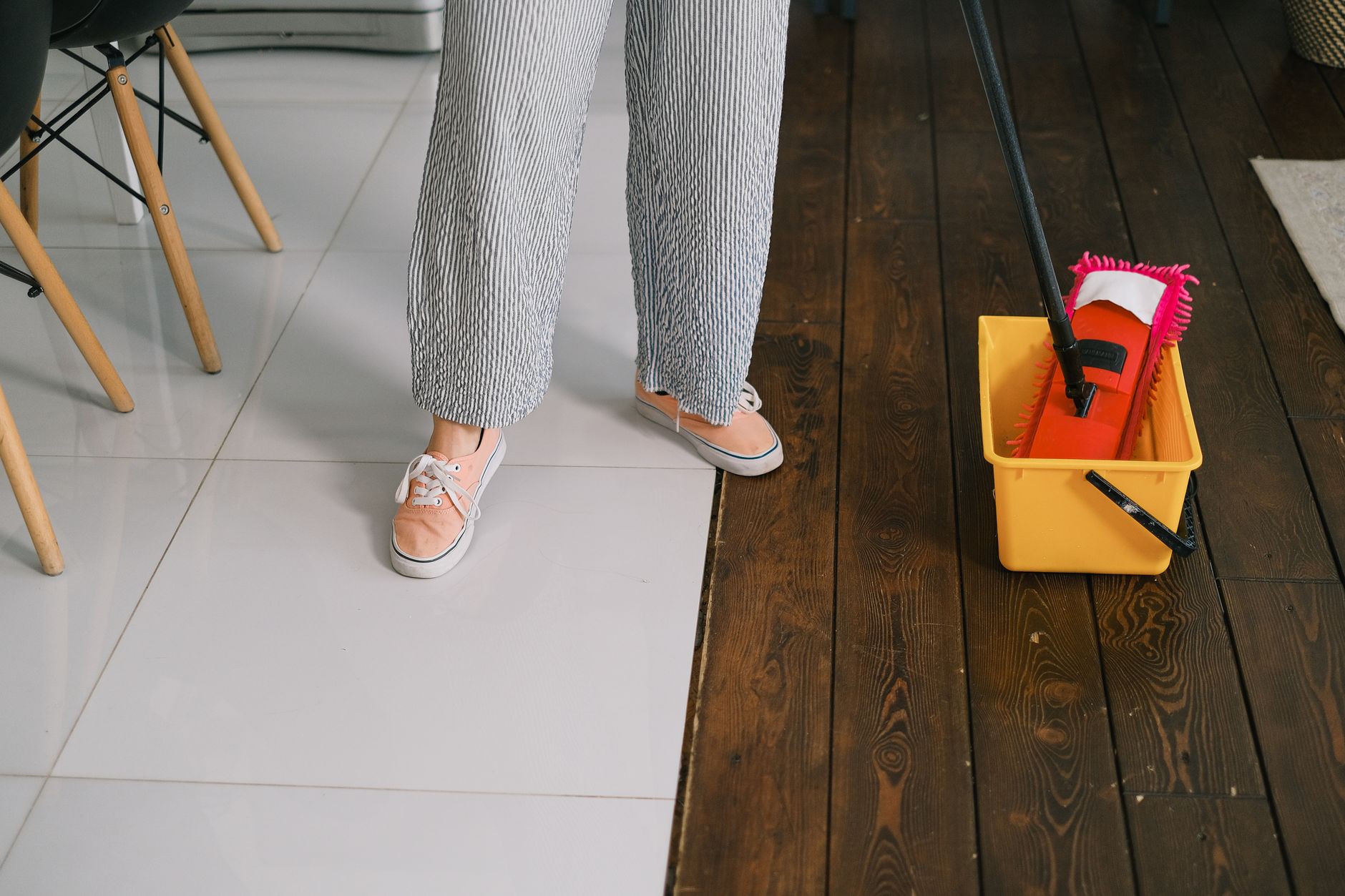
Friday: Mop hard floors with a pet-safe solution and clean any glass doors or windows covered in nose prints.
Weekend: Laundry for pet bedding and kids’ stuffed animals that accumulate dander.
This rhythm keeps the home consistently presentable without requiring a whole-house deep clean every weekend. Families living in Arizona’s Valley communities also benefit from scheduling a periodic deep clean to address desert dust buildup. Our ultimate guide to spring cleaning is a great reference point for those seasonal resets.
7. Invest in the Right Cleaning Tools for Homes with Animals and Children
Good tools make cleaning a home with kids and pets dramatically faster and more effective. The wrong ones waste your time and leave messes half-addressed. Here are the tools that consistently make a difference in family households:
A vacuum with a HEPA filter:HEPA filtration captures pet dander, dust mites, and fine particles that standard vacuums recirculate back into the air. This matters especially for children and anyone with allergies.
A rubber squeegee broom: Incredibly effective at pulling pet hair off carpets and rugs before vacuuming. Run it across the carpet in short strokes and watch the hair collect into easy-to-grab clumps.
A steam mop: Sanitizes hard floors without chemical cleaners, making it safe for both crawling babies and pets that lick the floor.
Lint rollers in bulk: Keep them in every room, especially near the sofa and in bedrooms where pets sleep.
A good microfiber mop system: Microfiber traps particles rather than spreading them, and washable pads save money over disposable alternatives.
Washable slipcovers for pet-favorite furniture: More of a prevention tool than a cleaning tool, but pulling a slipcover off and tossing it in the wash takes two minutes and eliminates a major source of odor and hair.
Investing in the right gear upfront pays for itself in time saved every single week. The Good Housekeeping cleaning resource regularly evaluates tools and products, which is a helpful reference for comparing options.
8. Address Indoor Air Quality When You Have Pets and Young Children
Cleaning surfaces is only part of the picture. Pet dander, mold spores, and chemical residue from cleaning products all affect the air your family breathes, and the American Lung Association notes that indoor air can be significantly more polluted than outdoor air. This is especially relevant in homes with dogs, cats, and young children who spend the majority of their time indoors.
A few steps that improve indoor air quality alongside your regular cleaning routine:
Change HVAC filters every 30 to 60 days in pet households rather than the standard 90 days.
Run an air purifier with a HEPA filter in rooms where pets sleep and where children spend the most time.
Open windows for cross-ventilation when weather allows to flush stale, dander-heavy air.
Wash pet bedding weekly in hot water to reduce dander accumulation at the source.
Avoid aerosol sprays and scented candles near pets, as these contribute to indoor air pollution.
If you notice persistent musty odors even after cleaning, that can signal a moisture issue. The EPA’s mold guidance is a useful resource for identifying and addressing the source.
9. Do Something Small Every Single Day
The families that maintain clean homes with kids and pets are not spending hours cleaning each weekend. They are spending 10 to 15 minutes every day. That daily consistency compounds over time and prevents the kind of whole-house overwhelm that makes cleaning feel impossible.
Pick one or two small tasks per day and rotate through the house. Today it is wiping the bathroom mirror and giving the toilet a quick scrub. Tomorrow it is sweeping the kitchen floor and wiping the stovetop. The day after, it is vacuuming the living room rug and wiping down the coffee table. None of these tasks take more than a few minutes individually, but together they keep the home consistently clean without requiring marathon sessions.
Teaching this habit to kids early also builds long-term household management skills. A child who picks up their toys before bed every night grows into an adult who maintains their living space naturally. These small, daily habits are the foundation that professional cleaners build on when they visit, making the service more effective and the results longer-lasting.
The online booking at Elite Maids is available same-day between 8am and 6pm, so when daily habits fall behind and you need a reset, scheduling a professional clean is easy without a phone call.
10. Call in Professional Help When You Need It
Even the most organized families need reinforcements. A professional cleaning team handles the deep work that daily habits cannot keep up with: scrubbing grout, cleaning under appliances, washing baseboards, and sanitizing bathrooms thoroughly. Recurring professional cleaning is not a luxury for family households with kids and pets; it is a practical tool for maintaining a healthy living environment.
For Phoenix Valley house cleaning, Elite Maids offers weekly, biweekly, and monthly recurring service along with one-time deep cleans. Every cleaner is background-checked, bonded, and insured. Eco-friendly product options are available for households that want to minimize chemical exposure around children and animals. If you have a specific event coming up or guests arriving, our post on preparing your home before guests arrive covers a quick priority checklist.
Professional cleaning gives families back their weekends, eliminates the stress of hosting, and ensures the deep sanitation that protects kids and pets from accumulated allergens and bacteria. When your home needs more than daily habits can deliver, this is the right call.
Take Back Your Clean Home
Keeping a clean home with kids and pets is absolutely doable when you have the right systems, tools, and help. Start with the habits and strategies in this guide, and when you are ready for professional support from licensed and insured Arizona maids, we are ready for you. Contact Elite Maids house cleaning today for a free quote and let our five-star-rated team give your family a spotless home to come back to.
Frequently Asked Questions
How to keep a clean house with kids and pets?
Keeping a clean house with kids and pets requires a combination of daily 10-to-15-minute tidy-up sessions, quick mess response, the right pet-safe and child-safe cleaning products, and a simple room-by-room weekly routine. Involve children in age-appropriate chores, brush pets daily to reduce shedding, and schedule periodic professional deep cleans to handle the buildup daily habits miss.
What is the 80/20 rule for house cleaning?
The 80/20 rule in house cleaning means that 80 percent of your home’s visible cleanliness comes from cleaning just 20 percent of the surfaces, typically the high-traffic areas: kitchen counters, floors, bathrooms, and entryways. For families with kids and pets, focusing your daily effort on these high-impact zones gives you the most noticeable results for the least amount of time spent.
How do people with pets keep their house clean?
Pet owners who maintain clean homes typically follow a few consistent practices: daily brushing of their animals to reduce shedding, enzyme-based cleaners for accidents, HEPA vacuums run several times per week, washable slipcovers on pet-favorite furniture, and HVAC filters changed every 30 to 60 days. Many also rely on recurring professional cleaning services to handle the deeper sanitation work.
How to keep the house clean when you have kids?
The most effective approach is building short daily routines rather than long weekly cleans. A 10-minute family pick-up before dinner, a simple chore chart that assigns age-appropriate tasks to each child, and accessible storage that makes putting things away easy all make a measurable difference. Decluttering regularly and keeping cleaning supplies staged around the house also reduce the effort required to stay on top of messes.
How to Deep Clean Your House: A Room-by-Room Guide
SHARE:
To deep clean your house, work room by room from top to bottom, tackling built-up grime, forgotten corners, and surfaces that routine cleaning misses. A full house deep clean covers everything from baseboards and ceiling fans to inside appliances and grout lines. This guide walks you through every step, the right supplies, and smart strategies to get your home genuinely spotless.
1. Gather Your Deep Cleaning Supplies Before You Start
The single biggest time-waster in any deep cleaning session is stopping mid-room to hunt for a product. Pull everything together first and you will move through your home at least twice as fast. For a thorough house deep clean, you need more than an all-purpose spray.
Microfiber cloths in two categories: one set for dry dusting, one set for wet cleaning. Microfiber traps particles rather than pushing them around.
HEPA vacuum with attachments for upholstery, crevices, and bare floors.
Grout brush and old toothbrush for tile lines and fixture edges.
Degreaser for kitchen surfaces, range hoods, and stovetops.
Baking soda and white vinegar for odor absorption and natural scrubbing.
Disinfectant spray or wipes for high-touch surfaces. If you want products that meet rigorous safety standards, look for the EPA Safer Choice label, these products clean effectively without harsh chemical residues.
Mop and bucket with a floor-appropriate cleaner.
Rubber gloves, a caddy, and a step stool so you can reach high shelves and ceiling fans safely.
If you prefer eco-friendly options, many plant-based formulas work just as well as conventional products for a standard deep cleaning of your house. Get a free house cleaning quote if you would rather leave the supply decisions to professionals.
2. Deep Clean Your Kitchen First for Maximum Impact
The kitchen holds more grease, bacteria, and hidden grime than any other room. A proper kitchen deep clean hits every surface, not just the counters you wipe down every night.
Appliances inside and out: Pull the refrigerator from the wall and vacuum the coils. Clean inside the fridge, freezer, microwave, and oven. For the oven, apply a baking-soda paste, let it sit for 20 minutes, then scrub and wipe.
Cabinets and hardware: Wipe cabinet fronts with a degreaser. Clean handles and pulls where cooking grease accumulates daily.
Range hood and filters: Soak metal filters in hot water and dish soap for 15 minutes, then scrub. Wipe down the hood exterior and interior surfaces.
Sink and garbage disposal: Scrub the sink basin with baking soda, then run ice cubes and lemon peels through the disposal to remove odor.
Backsplash and grout: Use a grout brush and a pH-neutral cleaner to scrub tile grout. Rinse thoroughly to prevent residue buildup.
Floors and baseboards: Sweep, then mop. Wipe baseboards with a damp microfiber cloth to remove the grease film that settles near the stove.
Deep cleaning a kitchen properly takes 90 minutes to three hours depending on size and how long since the last thorough cleaning. For families in Phoenix, Scottsdale, or Chandler who want this done without clearing a Saturday, a home disinfection service covers these high-touch kitchen surfaces with hospital-grade products.
3. Deep Clean Bathrooms from Ceiling to Floor
Bathroom deep cleaning means going beyond the toilet brush and sink wipe. Moisture and humidity create the perfect environment for mold, soap scum, and bacteria to build up in places you might not look at every day. According to the CDC’s guidance on mold in homes, bathrooms are one of the most common areas for mold growth because of persistent moisture, a compelling reason to make this a regular part of any whole-house deep clean.
Exhaust fan: Remove the cover and vacuum dust from the fan blades and housing. A clogged fan increases humidity and mold risk.
Shower and tub: Spray grout lines with a mold-killing cleaner, let it sit five minutes, then scrub with a stiff brush. Clean the showerhead by soaking it in a bag of white vinegar for 30 minutes.
Toilet, all surfaces: Clean under the rim, around the base, and behind the tank. Wipe the flush handle and seat hinges.
Vanity and medicine cabinet: Empty and wipe inside the medicine cabinet. Clean mirror edges and the back of the cabinet door where dust collects.
Caulk lines: Inspect caulk around the tub and shower. Re-caulk if you see discoloration or gaps that allow water to seep behind walls.
Floors and grout: Scrub tile grout with a brush and baking soda paste, then mop with a disinfecting floor cleaner.
4. Bedroom Deep Cleaning: Mattresses, Dust, and Air Quality
Most people change their sheets regularly but skip the deeper bedroom tasks that affect sleep quality and indoor air. A full bedroom deep clean targets the dust reservoirs that routine cleaning ignores.
Mattress: Strip the bed completely. Vacuum the mattress with the upholstery attachment, then sprinkle baking soda over the surface. Let it sit 30 minutes and vacuum again. This neutralizes odors and lifts dust mites.
Pillows and bedding: Wash pillows, duvet inserts, and mattress protectors according to their care labels. Most can go in a home washer on a gentle cycle with hot water.
Under the bed: Vacuum under and around the bed frame. Dust and allergens accumulate here in large quantities.
Ceiling fan and light fixtures: Use a pillowcase to trap dust from fan blades as you wipe, slide each blade into the case and pull it off so the dust falls inside rather than onto the floor.
Closets: Remove all items, vacuum the floor and shelves, and wipe shelves with a damp cloth before replacing clothes and boxes.
Windows and blinds: Wipe blind slats with a damp microfiber cloth. Clean window tracks with a small brush, then wipe with a damp cloth.
The American Lung Association notes that reducing dust mite exposure through regular bedding washing and vacuuming mattresses can meaningfully improve indoor air quality, especially important in Arizona’s desert climate where homes are sealed for air conditioning much of the year. If you want help keeping up with same-day deep cleaning service on a schedule, recurring visits keep these tasks from piling up.
5. Living Room and Common Area Deep Cleaning Checklist
Living rooms and common areas collect more surface area than most people realize, upholstered furniture, electronics, shelving, rugs, and window treatments all need attention during a proper house deep clean.
Upholstered furniture: Vacuum sofa cushions, armrests, and the area beneath removable cushions. Check care tags, most fabric sofas can be spot-cleaned with an upholstery cleaner.
Hard surfaces and shelving: Remove items from shelves, dust the surface, and wipe each item before returning it. This prevents the dust buildup that makes rooms feel perpetually dusty no matter how often you vacuum.
Electronics: Use a dry microfiber cloth on screens. Use compressed air around keyboard keys and speaker grills.
Baseboards and door frames: Wipe down all baseboards, door frames, and crown molding with a damp microfiber cloth. These surfaces are almost always skipped in regular cleaning.
Rugs: Take area rugs outside and beat them if possible, then vacuum both sides before returning them to the floor.
Light switches and outlet covers: Wipe with a disinfecting cloth. These are among the highest-touch surfaces in the home and among the least often cleaned.
Homeowners who follow a structured deep cleaning checklist like this one typically find the process goes faster after the first time. For a quick jumpstart, check out our guide on home cleaning routines that build momentum fast.
6. How to Deep Clean Floors Throughout the Entire House
Floor deep cleaning is the final step in each room but deserves its own focused strategy. Different floor types need different approaches, and doing this last ensures dirt knocked down from upper surfaces gets picked up.
Hardwood floors: Vacuum first with a soft-brush attachment to avoid scratches. Mop with a barely damp mop and a hardwood-safe cleaner. Excess moisture warps wood, so wring the mop thoroughly.
Tile and grout: Vacuum or sweep first, then mop with a pH-neutral cleaner. For grout, use a stiff brush and a grout cleaner or baking soda paste. Scrub in circular motions, then rinse.
Carpet: Vacuum in two directions to lift deep-set dirt. For stains, apply a carpet cleaner and blot from the outside of the stain inward, never scrub, which spreads the stain. Consider a steam cleaning or professional extraction every 12 to 18 months.
Vinyl and laminate: These surfaces scratch easily. Use a soft mop, avoid steam, and use a manufacturer-recommended cleaner.
Transition areas and thresholds: The strips between rooms collect grime. Wipe or scrub these as part of any full-home deep clean.
7. Seasonal and Pre-Event Deep Cleaning Strategy
Deep cleaning your house is not just a once-a-year task. Timing a thorough cleaning to seasonal changes, holiday gatherings, or before hosting guests gets your home to a level of cleanliness that regular maintenance cannot achieve.
Before the holidays: Clean ceiling fan blades, light fixtures, and windows so your home looks its best when guests arrive. Our holiday cleaning service is built specifically for this, handling the deep clean so you can focus on cooking and decorating.
Spring and fall: Use seasonal transitions to deep clean windows (inside and out), swap out bedding, and clean inside closets and storage areas.
Move-in and move-out: A full property deep clean before moving in removes the previous occupants’ buildup and gives you a genuinely fresh start. Move-out cleaning protects your security deposit.
After illness: Disinfect all high-touch surfaces, door handles, light switches, remote controls, faucets, and launder all bedding and towels.
Post-renovation: Construction dust is extremely fine and settles everywhere. A deep clean after renovation work includes wiping inside cabinets, washing all textiles, and cleaning HVAC vents.
Arizona’s Valley communities get a lot of dust intrusion from desert wind events. Homeowners in Mesa, Gilbert, Queen Creek, and San Tan Valley often find they need a deep cleaning session after any major dust storm to clear fine particulate from surfaces throughout the home. Resources like Good Housekeeping’s cleaning guides offer additional seasonal checklists that complement this approach.
8. When to Call a Professional Deep Cleaning Service
DIY deep cleaning is genuinely effective when you have the time and energy. But there are situations where calling in Arizona’s most-reviewed house cleaning company makes more sense than going it alone.
You are behind by months or more: When grime has been building for a long time, the initial deep clean requires significantly more scrubbing, product contact time, and effort than what a typical homeowner has on a weekend.
Post-construction or renovation: Professional equipment and techniques make a real difference when dealing with fine construction dust coating every surface.
Move-in or move-out situations: Landlords and property managers have specific standards. A professional deep clean gives you documented, thorough coverage.
Health events in the home: After illness, a professional disinfection service covers more surfaces with verified products than most homeowners would tackle alone.
Before a major event: When you have 30 people coming for a holiday dinner, you want to enjoy the week leading up to it, not spend it on your hands and knees scrubbing grout.
Recurring maintenance after the initial clean: Many families in Phoenix, Scottsdale, and Chandler schedule a one-time deep clean to reset their home, then switch to biweekly recurring service to keep it there. The cleaning mistakes that most homeowners make around common house cleaning mistakes are much less likely to occur when a pro is maintaining the home regularly.
Elite Maids House Cleaning serves Phoenix, Mesa, Scottsdale, Gilbert, Chandler, Glendale, Queen Creek, San Tan Valley, Tucson, and Flagstaff. Every cleaner is background-checked, bonded, and insured, and every visit is backed by a no-cost reclean guarantee if anything falls short.
Ready to stop spending your weekends scrubbing and start actually enjoying your home? Contact Elite Maids house cleaning today for a free quote, book online in minutes with instant pricing, same-day availability between 8am and 6pm, and a satisfaction guarantee that protects every single visit.
Frequently Asked Questions
What do housekeepers do in a deep clean?
In a deep clean, housekeepers go well beyond surface wiping. They clean inside appliances, scrub grout lines, wipe baseboards and door frames, clean ceiling fans, disinfect high-touch surfaces, clean behind and under furniture, sanitize bathroom fixtures thoroughly, and address buildup in areas that routine cleaning skips. A professional deep clean typically takes two to five hours depending on home size.
How often should you deep clean your house?
Most homes benefit from a full deep clean two to four times per year, roughly once per season. High-traffic households with kids, pets, or allergy sufferers may need it more frequently. After illness, before moving, and before hosting large gatherings are also ideal trigger points for a thorough whole-house deep clean regardless of the regular schedule.
How long does a house deep clean take?
A single person deep cleaning a standard three-bedroom home typically takes six to ten hours. A two-person professional team can complete the same job in three to five hours. The time varies based on the home’s current condition, square footage, and how many rooms need heavy-duty scrubbing versus light detail work.
What is the difference between a regular cleaning and a deep clean?
A regular cleaning maintains a home that is already reasonably clean, it covers visible surfaces, floors, bathrooms, and kitchen counters on a set schedule. A deep clean addresses the accumulated buildup in areas that regular cleaning does not touch: inside appliances, grout, baseboards, behind furniture, ceiling fans, window tracks, and cabinet interiors. Deep cleans take longer and require more effort and specialized products.
Should you clean top to bottom when deep cleaning a house?
Yes, always clean from top to bottom in every room. Start with ceiling fans, light fixtures, and high shelves, then work down through furniture surfaces to floors. This ensures dust and debris knocked from upper surfaces gets picked up when you clean floors last, rather than dirtying surfaces you have already cleaned.
How to Keep a Clean House Every Week: 10 Simple Habits That Actually Work
SHARE:
Keeping a clean house every week comes down to a handful of repeatable habits, not marathon weekend scrub sessions. The secret is spreading small tasks across each day so no single room ever falls too far behind. This guide walks through 10 proven weekly house cleaning habits, the tools and products that make them faster, and when to call in a professional house cleaning service in Arizona to handle the deep work.
1. What Does Keeping a Clean House Every Week Actually Require?
Maintaining a consistently clean home week after week requires a system, not just motivation. Most homeowners who struggle with weekly house cleaning are trying to do everything at once on Saturday morning, which means the job feels overwhelming before it even starts. A realistic weekly cleaning routine breaks the work into daily 10-to-15-minute windows so clutter, dust, and grime never compound into a multi-hour project.
Research from organizations like the American Lung Association consistently shows that dust, pet dander, and airborne particles build up quickly in residential spaces, making regular surface cleaning a genuine health priority, not just an aesthetic one. When you maintain a weekly home cleaning schedule, you are actively reducing allergen load in the air your family breathes.
The habits below are built around the way real households operate, with realistic time estimates and clear priorities so you always know what matters most on any given day.
2. Start With a Daily Declutter Routine
Before any surface can be wiped, swept, or vacuumed, flat surfaces need to be clear. A daily declutter habit, even five minutes before bed, is the single biggest lever for making your home look and feel clean on a consistent basis. Pick a “home” for every recurring item: mail, shoes, backpacks, charging cables, and remote controls are the usual offenders.
Use a small basket in each main room as a temporary landing zone for misplaced items.
Do a one-room reset each evening instead of trying to tackle the whole house at once.
Keep a donation box in a closet so clutter has an exit route before it multiplies.
A tidy home is not the same as a clean home, but decluttering every day makes every other cleaning task faster because you spend zero time moving things out of the way before you can actually clean.
3. Build a Weekly Cleaning Schedule by Room
A structured weekly cleaning schedule is the backbone of a consistently clean house. Assigning specific rooms or tasks to specific days prevents the all-or-nothing trap and keeps the total time per day manageable. Here is a reliable framework that works for most three-to-four bedroom homes:
Monday: Wipe kitchen counters, appliance fronts, and stovetop. Empty trash cans throughout the house.
Tuesday: Vacuum living areas and hallways.
Wednesday: Clean bathrooms, sinks, toilets, mirrors, and floors.
Thursday: Dust all surfaces, ceiling fans, and baseboards.
Friday: Mop hard floors in kitchen, bathrooms, and entryways.
Saturday: Change bed linens and wash laundry.
Sunday: Reset and prep for the week.
This room-by-room cleaning plan keeps each session under 20 minutes and means you are never staring down a full-house disaster. According to Good Housekeeping’s cleaning resources, consistency over intensity is what separates homes that always look presentable from those that cycle between chaos and panic-cleaning before guests arrive.
4. Use the Right Cleaning Products for Each Surface
Using the wrong cleaner on the wrong surface either leaves residue behind or, worse, damages the finish. Part of building a sustainable home cleaning routine is stocking a short list of versatile, effective products so you are not hunting under the sink every time you need to wipe something down.
Core products for a weekly house cleaning kit:
All-purpose spray: Works on counters, appliances, cabinet doors, and most hard surfaces.
Microfiber cloths: Pick up dust and bacteria without scratching, and they are washable and reusable.
Toilet bowl cleaner: Dedicated formula prevents mineral buildup and kills bacteria more effectively than an all-purpose spray.
Glass cleaner: Streak-free formula for mirrors, windows, and glass cooktops.
Floor cleaner matched to your floor type: Hardwood, tile, and laminate each have specific pH requirements.
If you prefer to reduce chemical exposure in your home, look for products that carry the EPA Safer Choice certification, which means every ingredient has been reviewed for human and environmental safety. Elite Maids House Cleaning offers eco-friendly product options for clients who want effective cleaning without harsh chemical residue.
5. Master High-Traffic Areas With a Kitchen Cleaning Routine
The kitchen generates more mess per square foot than any other room in the house. Grease, crumbs, spills, and food odors accumulate fast, and if the kitchen cleaning routine slips for even a few days, the room can feel dirty no matter what else you do. A nightly three-minute kitchen reset: wipe the stovetop, clear the sink, and wipe the counters, pays massive dividends by Monday morning.
Weekly kitchen cleaning tasks that often get skipped:
Wipe the inside of the microwave every week, not just when something explodes in it.
Pull the toaster out and empty the crumb tray.
Wipe cabinet handles and appliance knobs, which collect more bacteria than most surfaces.
Clean the garbage disposal by dropping in ice cubes and a handful of coarse salt, then running cold water.
Sanitize the kitchen sink, including the drain lip and faucet base.
For deeper kitchen tasks like degreasing range hoods, cleaning oven interiors, and scrubbing grout lines, holiday cleaning services are a smart way to handle those jobs before major gatherings without adding hours to your personal schedule.
6. Keep Bathrooms Clean With a 10-Minute Weekly Reset
Bathrooms are the room guests notice most, and they are also the room most homeowners dread cleaning. The good news: a bathroom that gets a quick 10-minute weekly cleaning almost never needs a deep scrub. Soap scum, hard water spots, and mildew form gradually, so catching them early means they wipe off with minimal effort instead of requiring serious scrubbing.
Weekly bathroom cleaning checklist:
Spray the toilet bowl, let it sit, then scrub and flush.
Wipe the exterior of the toilet including the tank, lid, seat, and base.
Spray and wipe the sink and faucet.
Wipe the mirror with glass cleaner.
Spray the shower walls and tub, let dwell for two minutes, wipe, and rinse.
Mop or scrub the floor last so any drips get cleaned up automatically.
If you notice mold forming in the grout or caulk lines, address it immediately. The CDC notes that mold in residential bathrooms can contribute to respiratory irritation and allergic reactions, particularly in children and older adults. A professional deep clean can remove established mold from grout far more effectively than over-the-counter sprays.
7. Dust and Vacuum on a Reliable Schedule
Dust accumulates whether you can see it or not, and in Arizona’s dry desert climate, it builds up faster than in most parts of the country. A regular dusting and vacuuming schedule is one of the most impactful things you can do for indoor air quality as well as the visible cleanliness of a room.
Dusting tips that actually remove dust instead of just moving it:
Dust top-to-bottom: ceiling fans first, then shelves, then furniture, then baseboards, then vacuum last.
Use a damp microfiber cloth on hard surfaces so dust clings instead of floating into the air.
Vacuum upholstered furniture at least every two weeks, especially in homes with pets.
Change HVAC filters on schedule, as a clogged filter recirculates dust back into every room.
Arizona homeowners deal with unique challenges around dust and particulate matter. If you want to see how keeping on top of indoor air quality connects to your cleaning routine, see how Elite Maids House Cleaning can help with recurring cleaning plans designed specifically for Valley homes.
8. Tackle Seasonal Deep Cleaning Before It Becomes a Crisis
No weekly house cleaning routine, no matter how consistent, replaces the need for periodic deep cleaning. Seasonal deep cleaning targets areas that simply do not get addressed in weekly maintenance: inside ovens, behind appliances, under furniture, inside windows, and inside closets. If these areas are skipped for a full year, the buildup becomes a project rather than a task.
The most effective approach is to schedule a seasonal deep clean at the start of each quarter and build it into your calendar the same way you would a dentist appointment. If you want a structured starting point, the ultimate guide to spring cleaning covers exactly which tasks matter most and in what order to tackle them efficiently.
Common seasonal deep cleaning tasks:
Clean inside the refrigerator, including the drawers and door gaskets.
Wash windows inside and out.
Deep clean carpets with extraction cleaning or professional service.
Wipe down all baseboards, door frames, and light switch plates.
Clean behind and underneath major appliances.
Declutter and reorganize pantry, linen closets, and garage storage.
9. Involve Every Person in the Household
A weekly home cleaning routine only holds together when the entire household contributes. One person cannot maintain a clean house for a family of four indefinitely without burning out. Assigning age-appropriate tasks to every household member, including children, reduces the total load and builds habits that stick into adulthood.
Practical ways to distribute cleaning responsibilities:
Post a visible chore chart so expectations are clear and no one has to be reminded verbally each week.
Make beds a personal responsibility for every person who sleeps in one.
Assign dish duty by rotation so the kitchen is never one person’s burden.
Let kids own one room: their bedroom plus one shared task like vacuuming the hallway or taking out the trash.
When everyone contributes to the baseline maintenance, the household cleaning routine becomes sustainable rather than a source of ongoing friction.
10. Know When to Hire a Professional House Cleaning Service
There are times when a weekly cleaning habit is not enough, and recognizing those moments saves a lot of frustration. Moving into a new home, recovering from a renovation, preparing for a major event, or simply reaching a point where life is too busy to keep up are all valid reasons to bring in a professional cleaning team.
A Arizona maid service like Elite Maids House Cleaning handles the full scope of residential cleaning, from recurring weekly and biweekly visits to one-time deep cleans and move-in or move-out cleaning. Every cleaner is background-checked, bonded, and fully insured, and every visit is backed by a reclean-at-no-cost guarantee. For Arizona homeowners in Phoenix, Mesa, Scottsdale, Gilbert, Chandler, Glendale, Queen Creek, San Tan Valley, Tucson, and Flagstaff, same-day booking is available online between 8am and 6pm with an instant quote.
Hiring professionals does not mean giving up on your own habits. It means handling the heavy-lift cleaning so your daily and weekly routines stay manageable and you actually reclaim your weekends.
Ready for a Cleaner Home Without the Stress?
Building consistent weekly house cleaning habits takes time, but the payoff is a home that always feels welcoming, a healthier indoor environment for your family, and less stress every single day. Whether you are fine-tuning your own routine or looking for expert help to handle the work, Elite Maids House Cleaning is ready to step in. Contact Elite Maids house cleaning today for a free quote and find out how simple it is to schedule recurring cleaning, a one-time deep clean, or anything in between.
Frequently Asked Questions
How long does it take to clean a house each week?
For an average three-bedroom home, a thorough weekly cleaning takes between one and three hours depending on the number of bathrooms, the size of the kitchen, and how much daily tidying happens between sessions. Spreading tasks across the week, rather than doing everything at once, keeps each session to about 15 to 20 minutes per day.
What should I clean every week versus every month?
Weekly tasks include vacuuming, mopping high-traffic floors, wiping kitchen counters and stovetops, cleaning bathrooms, and changing bed linens. Monthly tasks include dusting ceiling fans, wiping baseboards, cleaning inside the microwave thoroughly, and washing windows. Seasonal tasks like deep cleaning the oven and refrigerator belong on a quarterly schedule.
What is the easiest way to keep a clean house with kids?
Assign age-appropriate chores to children starting around age four or five, keep clutter contained with designated storage bins in each room, and do a five-minute family reset each evening before bed. Lowering the bar for “clean enough” during busy weeks, while maintaining the non-negotiables like kitchen sanitation and bathroom hygiene, also helps prevent burnout.
How often should I deep clean my house?
Most households benefit from a thorough deep clean two to four times per year, timed around seasonal changes. High-use homes with pets, young children, or allergy sufferers may benefit from more frequent deep cleaning. A professional deep clean every quarter ensures that the areas missed by routine cleaning, like grout, appliances, and behind furniture, never reach a crisis level.
Is it worth hiring a cleaning service for a weekly cleaning routine?
For many households, yes. A professional cleaning service handles the time-consuming tasks consistently, which frees up several hours per week. It also means the cleaning is done to a higher standard than most people achieve on their own. Recurring cleaning plans from services like Elite Maids are often more affordable per visit than a one-time deep clean and keep the home at a level where your own daily habits stay easy to maintain.
Professional cleaning is worth it for most households when you factor in time, results, and the true cost of doing it yourself. Hiring a trained cleaning crew gives you consistent, thorough results without spending your weekend scrubbing. This post breaks down the real pros and cons of each approach, compares the costs side by side, and helps you figure out which option makes sense for your home and lifestyle.
DIY House Cleaning: Pros and Cons
Plenty of homeowners prefer cleaning their own space. There is something satisfying about doing it yourself, and for some households, DIY house cleaning genuinely makes sense. But before you grab a mop and call it a day, it helps to look at what you are actually giving up and gaining.
The Pros of Cleaning Your Own Home
Lower upfront cost. You already own most of the supplies, so a Saturday cleaning session might cost you nothing but time.
Full control. You choose which products to use, where to focus, and how deep to go in any given room.
Flexibility. You can clean at midnight if you want. No scheduling required.
Familiarity with your space. You know where the grime builds up and which corners your family actually uses.
The Cons of DIY Cleaning
Time is the biggest cost. A thorough cleaning of a 2,000-square-foot home can take four to six hours. That is your Saturday gone.
Missed spots add up. Without professional training, it is easy to miss grout lines, ceiling fans, baseboards, under appliances, and the tops of cabinets. Dirt accumulates in those overlooked areas fast.
Wrong products cause damage. Using the wrong cleaner on stone countertops, hardwood floors, or stainless steel can cause etching or discoloration that is expensive to fix. Check out these cleaning hacks for Chandler homes to avoid common mistakes.
Physical wear. Scrubbing showers, lifting furniture, and getting down on your hands and knees is genuinely hard work.
Inconsistency. Most people clean when they notice a problem rather than on a regular schedule, which means standards slip over time.
For a single person in a studio apartment, DIY cleaning is perfectly reasonable. For a family of four in a three-bedroom home in Phoenix, Gilbert, or Scottsdale, the math gets less favorable quickly.
Professional House Cleaning: Pros and Cons
Professional house cleaning has grown in popularity for a simple reason: people are working more and valuing their free time differently. But hiring a cleaning service is not the right call for every situation, so here is an honest look at both sides.
The Pros of Hiring a Professional Cleaning Service
Consistent, thorough results. Trained cleaners follow a systematic checklist that covers areas most homeowners skip entirely: inside the microwave, behind the toilet, window sills, door frames, and light switches.
Time back in your day. When you hand cleaning off to someone else, you reclaim hours each week that can go toward family, hobbies, rest, or work.
Professional-grade tools and products. Reputable companies like Elite Maids House Cleaning bring commercial-quality equipment and have the expertise to choose the right product for each surface.
Liability protection. A bonded and insured cleaning company protects you if something breaks or someone gets injured in your home. That protection does not exist with DIY.
Eco-friendly options. Many professional services offer green cleaning options. The EPA Safer Choice program certifies products that are safer for people and the environment, and professional cleaners who use certified products make it easy to keep your home clean without harsh chemicals.
Scalable service. Need a full disinfection service after a sick family member? A move-out clean before handing over keys? Professional teams can match the scope of work to what your situation actually needs.
The Cons of Hiring a Professional Cleaning Service
Higher recurring cost. Professional cleaning is an ongoing expense. For homeowners on tight budgets, this is the biggest objection.
Scheduling coordination. You need to be available or comfortable with a team entering your home when you are not there.
Trust takes time. The first visit with any new cleaner can feel unfamiliar. Background-checked and well-reviewed teams shorten that learning curve significantly.
Not every company is equal. Fly-by-night operations exist. Vetting your cleaning company carefully matters. Avoid common pitfalls by reading about cleaning myths that make homes dirtier so you know what to ask.
Cost Comparison: Professional Cleaning vs. DIY Which Is Worth It on a Budget
When people debate professional cleaning vs. DIY which is worth it, cost is almost always at the center of the conversation. The comparison is more nuanced than it first appears.
What DIY Cleaning Actually Costs
At first glance, cleaning your own home looks free. But the real cost of DIY house cleaning includes:
Time: a thorough 2,500-square-foot home clean can take 5 to 7 hours for a non-professional
Physical energy that many people simply do not have after a full work week
The risk of product damage to surfaces, which can mean costly repairs
If you value your time at even $20 per hour, a six-hour clean costs you $120 in time alone, before you spend a dollar on supplies. Homeowners who factor in their hourly earning potential often find the gap between professional and DIY closes fast.
What Professional Cleaning Costs in Arizona
Professional cleaning rates in Phoenix, Mesa, Scottsdale, Chandler, and other Valley communities typically range from $100 to $250 for a standard visit, depending on the size of the home and frequency of service. Recurring plans (weekly, biweekly, monthly) generally come in lower per visit than one-time cleans. Deep cleans and move-in/move-out cleanings cost more because the scope is broader.
When you look at the professional cleaning vs. DIY cost comparison honestly, many families find that biweekly professional cleaning costs them less than the combined value of the time they would otherwise spend cleaning. The data on this tends to shift thinking: people routinely underestimate how long cleaning really takes when done properly.
There are real situations where doing your own cleaning is the smarter call. Knowing when DIY is the right answer is just as useful as knowing when to hire.
You live alone in a small space. A one-bedroom apartment does not take long to clean. The economics favor DIY here.
You actually enjoy cleaning. Some people find it meditative and satisfying. If that describes you, professional cleaning offers less value.
Your budget is very tight right now. A professional cleaning service is a discretionary expense. If the money genuinely is not there, maintaining a simple weekly cleaning routine yourself beats nothing.
You only need a specific spot touched up. If your home is already in great shape and you just need one bathroom wiped down before guests arrive, that does not need a professional crew.
For deeper cleaning tasks like sanitizing after illness or preparing for a major event, even committed DIYers often benefit from bringing in help for those occasions. Reading up on what deep cleaning professionals actually do can help you understand what a thorough job really involves.
When Professional Cleaning Is Clearly Worth It
Hiring a professional cleaning service pays off in a specific set of circumstances that many homeowners find themselves in more often than they expect.
You have a busy household with kids or pets. Dirt, dander, allergens, and mess accumulate faster than one person can manage. The American Lung Association notes that indoor air quality is directly tied to cleaning frequency and method, which matters especially for households with children or allergy sufferers.
You are moving in or out. Move-in/move-out cleaning is one of the highest-value professional services available. Getting a home spotless for new occupants or recovering your security deposit requires a level of detail that most people cannot match on their own.
You are hosting an event. Before a party, holiday gathering, or family visit, professional cleaners can get your home showing-ready in a fraction of the time it would take you.
You have not had a deep clean in six months or more. Built-up grime, grout discoloration, scale in bathrooms, and dust on surfaces requires more than a standard wipe-down. A professional deep clean resets the baseline so regular maintenance is easier going forward.
Your time has high value. If you work long hours, have young children, or are managing a demanding schedule, spending your limited free time cleaning is a poor trade. A trusted cleaning team gives you that time back every single week.
You want accountability. Professional services that stand behind a satisfaction guarantee give you recourse if something is missed. DIY offers no such fallback.
Understanding Deep Cleaning: DIY vs. Professional Services
Standard cleaning and deep cleaning are not the same thing, and the gap between what a homeowner can accomplish in a deep clean vs. what a professional can accomplish is larger than most people realize.
A DIY deep clean typically covers visible surfaces with more time and elbow grease. Most people will still miss: the inside of the oven, refrigerator coils, grout lines, bathroom exhaust fans, the tops of door frames, blinds, window tracks, and the area behind large appliances.
A professional deep clean, by contrast, is systematic. Cleaners are trained to work room by room through a detailed checklist that covers surfaces above, below, and inside storage areas. Companies that also offer home disinfection services can target high-touch surfaces with hospital-grade sanitizing solutions that consumer products rarely match.
If your goal is a truly clean home, not just a tidy-looking one, professional deep cleaning is the harder option to argue against. It is also worth noting that professionals trained in Arizona desert homes understand specific challenges like dust infiltration, monsoon season grime, and the particular demands of tile and travertine common in Valley homes.
Our Recommendation: When to Choose Professional, When to DIY
If you are still weighing professional cleaning vs. DIY and trying to decide which is worth it for your specific situation, here is a straightforward framework:
Choose DIY if: you live in a small home, have flexible time, enjoy cleaning, or are in a tight budget period.
Choose professional cleaning if: you have a family, a pet, a large home, a demanding schedule, an upcoming event, or a home that has not been deep cleaned recently.
Choose both if: you use a professional service for regular maintenance and deep cleans while handling quick daily tidying yourself. This is the most common hybrid approach and it works well.
The honest answer for most families in Phoenix, Scottsdale, Mesa, Chandler, Gilbert, Glendale, Queen Creek, San Tan Valley, Tucson, and Flagstaff is that professional cleaning is worth it, especially when the service is reliable, insured, and backed by a satisfaction guarantee.
Ready to stop spending your weekends cleaning? Book your house cleaning service online with instant quotes and same-day availability between 8am and 6pm. No phone call needed. And if you want to talk through your options first, contact Elite Maids house cleaning today for a free quote and see why we are Arizona’s most-reviewed residential cleaning team.
Frequently Asked Questions
How much do you tip a house cleaner if your bill is $500?
A standard tip for house cleaning is 15 to 20 percent, so on a $500 bill that would be $75 to $100. For exceptional service, a $100 tip is a meaningful and appreciated gesture. Many homeowners tip per visit on recurring service rather than waiting for a larger bill, and even $10 to $20 per cleaner per visit is thoughtful and well-received.
Is $50 an hour good for house cleaning?
Yes, $50 per hour is within a typical and reasonable range for professional house cleaning, especially in larger metro areas like Phoenix and Scottsdale. Rates vary based on the scope of work, number of cleaners, the size of the home, and whether it is a standard clean or a deep clean. Some markets run closer to $35 per hour, others higher. Getting a flat-rate quote for your specific home is often a clearer way to compare pricing.
What can a professional cleaner do in 3 hours?
A skilled professional cleaner can complete a thorough standard clean of a 1,000 to 1,500 square foot home in three hours, covering all bathrooms, the kitchen, living areas, and bedrooms. This includes wiping surfaces, scrubbing toilets and showers, cleaning appliance exteriors, mopping, vacuuming, and dusting. For larger homes, three hours is better used for a focused deep clean of specific rooms or high-priority areas.
How often should you hire a professional cleaning service?
For most households, biweekly professional cleaning strikes the right balance between cost and cleanliness. Families with young children, pets, or allergy concerns often prefer weekly service. Monthly cleaning works well for smaller homes or people who do light maintenance between visits. A one-time deep clean at least twice a year is a smart baseline for any household, regardless of how often you clean in between.
Is professional cleaning worth it for renters?
Professional cleaning is absolutely worth it for renters, particularly when moving out. A thorough move-out clean is one of the most reliable ways to recover your security deposit in full. Even during a tenancy, renters benefit from professional service because it protects the property, maintains a healthy living environment, and often costs less than the cleaning fees a landlord might charge if the unit is left in poor condition.
Eco-Friendly Multi-Purpose Cleaner: The Best All-Green Janitorial Products for a Healthier Home
SHARE:
Walk down the cleaning aisle at any store and you will find dozens of brightly labeled bottles promising a spotless home. But how many of those products are actually safe for your family, your pets, and the environment? That question is exactly why EPA Safer Choice-certified formulas and the growing category of eco-friendly multi-purpose cleaners have become the go-to choice for health-conscious homeowners. Whether you are scrubbing bathroom tiles, wiping down kitchen counters, or freshening up carpet, the right green cleaner can do the job without filling your indoor air with harsh chemicals. As a homeowner in Arizona, you have more options than ever, and choosing wisely matters. If you ever want an expert eye on the job, an Arizona maid service like Elite Maids House Cleaning uses eco-friendly product options that are safe for everyone under your roof.
What Makes an Eco-Friendly Multi-Purpose Cleaner Actually Green?
Not every product that says “natural” or “green” on the label earns that title. True eco-friendly multi-purpose cleaners are formulated without volatile organic compounds, chlorine bleach, synthetic fragrances, or phosphates. According to the EPA’s research on VOCs and indoor air quality, many conventional cleaning sprays release chemicals that linger in the air long after you finish wiping a surface. Over time, that buildup affects the air your family breathes every day.
A genuinely green all-purpose cleaning product earns third-party certification from organizations like EPA Safer Choice or Green Seal. These programs require manufacturers to disclose every ingredient and prove that none of them cause harm to aquatic ecosystems, human health, or indoor air quality. When you see those logos on an eco-friendly cleaner, you know someone credible has checked the work.
Key traits to look for in a genuine green multi-purpose cleaner include:
Biodegradable surfactants that break down in water without leaving toxic residue
No artificial dyes or synthetic fragrances
Plant-based or hydrogen peroxide-based active ingredients
Concentrated formula to reduce plastic packaging waste
Third-party certification from EPA Safer Choice or Green Seal
Top Eco-Friendly Janitorial Products Worth Knowing About
The market for eco-friendly cleaning products for business and home use has expanded dramatically. Several brands now offer professional-grade formulas that deliver real cleaning power without the toxic trade-offs. Here are four worth serious consideration when building out your green cleaning routine.
Focus Safe2Clean Peroxide Cleaner is a standout eco-friendly multi-purpose cleaner that uses hydrogen peroxide as its active ingredient rather than chlorine or ammonia. It is designed to clean glass, restrooms, and carpet effectively, which means one product replaces several single-use specialized sprays. That versatility reduces the total number of chemical products under your sink, which is a genuine win for safety and simplicity.
Simple Green All-Purpose Cleaner is one of the most recognized green cleaning products brands on the market. Simple Green floor cleaner and their all-purpose formula are biodegradable and non-toxic, making them a practical choice for households with children and pets. Simple Green cleaning products have earned a loyal following precisely because they balance safety and effectiveness without inflated pricing.
Seventh Generation Disinfecting Multi-Surface Cleaner uses thymol, a compound derived from thyme oil, as its active disinfectant. It carries EPA Safer Choice certification and comes in recycled packaging.
Method All-Purpose Cleaner is plant-based and biodegradable. It is sold widely and comes in concentrated refill pouches that cut plastic waste significantly compared to traditional spray bottles.
Green Seal and EPA Safer Choice: Understanding the Difference
Two certification programs dominate the conversation around best eco-friendly cleaning products: Green Seal and EPA Safer Choice. They are related in purpose but different in focus, and understanding both helps you shop smarter.
Green Seal is an independent nonprofit that evaluates products based on their full lifecycle, from raw material sourcing through manufacturing, use, and disposal. A Green Seal certification tells you the product meets strict environmental standards at every stage of production, not just in the bottle.
EPA Safer Choice focuses specifically on ingredient safety. Every chemical in a Safer Choice-certified product has been reviewed by EPA scientists and confirmed to be safer for human health and the environment than conventional alternatives. If you are shopping for eco-friendly cleaning products wholesale for a larger home or a small business, Safer Choice certification is one of the fastest ways to vet an unfamiliar brand.
Neither program is better than the other. Ideally, you want products that carry both, or at least one of them. If a product carries no third-party certification, dig deeper before adding it to your cart.
Which Part of the House Takes the Longest to Clean?
This is one of the most common questions homeowners ask, and the honest answer is: the kitchen and bathrooms together consume the bulk of cleaning time in most homes. The kitchen involves grease buildup on surfaces, baked-on residue inside appliances, and food particles in corners that accumulate faster than people realize. Bathrooms deal with soap scum, hard water deposits, and bacteria-prone surfaces that need consistent attention.
A high-quality eco-friendly multi-purpose cleaning product helps in both rooms. Peroxide-based formulas like the Focus Safe2Clean Peroxide Cleaner cut through soap scum and bathroom grime without requiring you to ventilate the space for twenty minutes after use. The same product transitions to kitchen counters, glass stovetop surfaces, and tile backsplashes without switching bottles. That versatility is a real time-saver.
According to Good Housekeeping’s cleaning resources, the average household spends more time in the bathroom than any other single room during a thorough cleaning session, largely because of the number of different surfaces and the buildup that accumulates between visits. A good all-green janitorial product that handles multiple surface types shortens that session significantly.
Eco-Friendly Cleaning Products for Home and Business: Buying in Bulk
If you go through cleaning supplies quickly, buying eco-friendly cleaning products wholesale is both economical and environmentally responsible. Larger concentrate containers mean less plastic per cleaned surface, and the cost-per-use drops considerably compared to single-serving retail bottles.
Many green cleaning products brands now sell directly to homeowners and small businesses in bulk. Simple Green, Betco Green Earth, and Focus Safe2Clean all offer concentrate formats that you dilute on-site. A single gallon of concentrate can replace dozens of pre-mixed spray bottles, which reduces shipping weight, packaging waste, and storage space all at once.
When buying best eco-friendly cleaning products in larger quantities, store them in a cool, dry location away from direct sunlight. Most hydrogen peroxide-based cleaners degrade faster in heat and light, so proper storage preserves the product’s effectiveness. Always check the manufacturer’s dilution ratio before mixing, since over-diluting reduces cleaning power and under-diluting wastes product.
How Professional Green Cleaning Services Choose Their Products
A trusted cleaning team does not grab whatever is cheapest at the supply store. Professional residential cleaners who prioritize eco-friendly options evaluate products based on effectiveness across multiple surface types, safety for all residents including infants and pets, scent sensitivity for clients who react to fragrances, and shelf stability in Arizona’s heat.
Elite Maids House Cleaning serves homeowners across Phoenix, Mesa, Scottsdale, Gilbert, Chandler, Glendale, Queen Creek, San Tan Valley, Tucson, and Flagstaff, and eco-friendly product options are available for every service type, from weekly recurring cleaning to deep cleans and move-in/move-out jobs. The cleaners are background-checked, bonded, and fully insured, which means you are not letting strangers with unknown supplies into your home. You are bringing in a team that has already thought through product safety so you do not have to.
The American Lung Association’s indoor air quality guidance consistently highlights cleaning product fumes as a meaningful source of indoor air pollution in residential settings. Choosing a cleaning service that defaults to non-toxic, green janitorial products is one of the most practical steps you can take for your household’s air quality.
Building a Green Cleaning Routine That Actually Sticks
Switching to eco-friendly multi-purpose cleaners is not complicated, but it does require a little planning up front. Start by auditing what is under your sink. Pull everything out and check each product for certification logos, ingredient transparency, and whether it is actually necessary. Many households discover they own six different cleaners that a single quality green all-purpose cleaning product could replace.
Next, build your core kit. A peroxide-based or plant-based multi-surface spray, a microfiber cloth set, a good scrub brush, and a mop system with reusable pads will handle ninety percent of household cleaning tasks. Keep the kit in one place so cleaning sessions stay efficient rather than turning into a hunt through multiple cabinets.
Finally, stay consistent. The biggest enemy of a clean home is not dirt, it is irregular cleaning. A weekly or biweekly schedule prevents buildup from reaching the point where you need stronger, harsher products to catch up. Green cleaning works best when surfaces never get that far behind.
Ready to take the guesswork out of keeping your home clean and safe? Contact Elite Maids House Cleaning today for a free quote and find out how Arizona’s most-reviewed residential cleaning team can give your family a healthier, cleaner home using eco-friendly products you can feel good about.