How to Deep Clean Your House: A Room-by-Room Guide
SHARE:
To deep clean your house, work room by room from top to bottom, tackling built-up grime, forgotten corners, and surfaces that routine cleaning misses. A full house deep clean covers everything from baseboards and ceiling fans to inside appliances and grout lines. This guide walks you through every step, the right supplies, and smart strategies to get your home genuinely spotless.
1. Gather Your Deep Cleaning Supplies Before You Start
The single biggest time-waster in any deep cleaning session is stopping mid-room to hunt for a product. Pull everything together first and you will move through your home at least twice as fast. For a thorough house deep clean, you need more than an all-purpose spray.
Microfiber cloths in two categories: one set for dry dusting, one set for wet cleaning. Microfiber traps particles rather than pushing them around.
HEPA vacuum with attachments for upholstery, crevices, and bare floors.
Grout brush and old toothbrush for tile lines and fixture edges.
Degreaser for kitchen surfaces, range hoods, and stovetops.
Baking soda and white vinegar for odor absorption and natural scrubbing.
Disinfectant spray or wipes for high-touch surfaces. If you want products that meet rigorous safety standards, look for the EPA Safer Choice label, these products clean effectively without harsh chemical residues.
Mop and bucket with a floor-appropriate cleaner.
Rubber gloves, a caddy, and a step stool so you can reach high shelves and ceiling fans safely.
If you prefer eco-friendly options, many plant-based formulas work just as well as conventional products for a standard deep cleaning of your house. Get a free house cleaning quote if you would rather leave the supply decisions to professionals.
2. Deep Clean Your Kitchen First for Maximum Impact
The kitchen holds more grease, bacteria, and hidden grime than any other room. A proper kitchen deep clean hits every surface, not just the counters you wipe down every night.
Appliances inside and out: Pull the refrigerator from the wall and vacuum the coils. Clean inside the fridge, freezer, microwave, and oven. For the oven, apply a baking-soda paste, let it sit for 20 minutes, then scrub and wipe.
Cabinets and hardware: Wipe cabinet fronts with a degreaser. Clean handles and pulls where cooking grease accumulates daily.
Range hood and filters: Soak metal filters in hot water and dish soap for 15 minutes, then scrub. Wipe down the hood exterior and interior surfaces.
Sink and garbage disposal: Scrub the sink basin with baking soda, then run ice cubes and lemon peels through the disposal to remove odor.
Backsplash and grout: Use a grout brush and a pH-neutral cleaner to scrub tile grout. Rinse thoroughly to prevent residue buildup.
Floors and baseboards: Sweep, then mop. Wipe baseboards with a damp microfiber cloth to remove the grease film that settles near the stove.
Deep cleaning a kitchen properly takes 90 minutes to three hours depending on size and how long since the last thorough cleaning. For families in Phoenix, Scottsdale, or Chandler who want this done without clearing a Saturday, a home disinfection service covers these high-touch kitchen surfaces with hospital-grade products.
3. Deep Clean Bathrooms from Ceiling to Floor
Bathroom deep cleaning means going beyond the toilet brush and sink wipe. Moisture and humidity create the perfect environment for mold, soap scum, and bacteria to build up in places you might not look at every day. According to the CDC’s guidance on mold in homes, bathrooms are one of the most common areas for mold growth because of persistent moisture, a compelling reason to make this a regular part of any whole-house deep clean.
Exhaust fan: Remove the cover and vacuum dust from the fan blades and housing. A clogged fan increases humidity and mold risk.
Shower and tub: Spray grout lines with a mold-killing cleaner, let it sit five minutes, then scrub with a stiff brush. Clean the showerhead by soaking it in a bag of white vinegar for 30 minutes.
Toilet, all surfaces: Clean under the rim, around the base, and behind the tank. Wipe the flush handle and seat hinges.
Vanity and medicine cabinet: Empty and wipe inside the medicine cabinet. Clean mirror edges and the back of the cabinet door where dust collects.
Caulk lines: Inspect caulk around the tub and shower. Re-caulk if you see discoloration or gaps that allow water to seep behind walls.
Floors and grout: Scrub tile grout with a brush and baking soda paste, then mop with a disinfecting floor cleaner.
4. Bedroom Deep Cleaning: Mattresses, Dust, and Air Quality
Most people change their sheets regularly but skip the deeper bedroom tasks that affect sleep quality and indoor air. A full bedroom deep clean targets the dust reservoirs that routine cleaning ignores.
Mattress: Strip the bed completely. Vacuum the mattress with the upholstery attachment, then sprinkle baking soda over the surface. Let it sit 30 minutes and vacuum again. This neutralizes odors and lifts dust mites.
Pillows and bedding: Wash pillows, duvet inserts, and mattress protectors according to their care labels. Most can go in a home washer on a gentle cycle with hot water.
Under the bed: Vacuum under and around the bed frame. Dust and allergens accumulate here in large quantities.
Ceiling fan and light fixtures: Use a pillowcase to trap dust from fan blades as you wipe, slide each blade into the case and pull it off so the dust falls inside rather than onto the floor.
Closets: Remove all items, vacuum the floor and shelves, and wipe shelves with a damp cloth before replacing clothes and boxes.
Windows and blinds: Wipe blind slats with a damp microfiber cloth. Clean window tracks with a small brush, then wipe with a damp cloth.
The American Lung Association notes that reducing dust mite exposure through regular bedding washing and vacuuming mattresses can meaningfully improve indoor air quality, especially important in Arizona’s desert climate where homes are sealed for air conditioning much of the year. If you want help keeping up with same-day deep cleaning service on a schedule, recurring visits keep these tasks from piling up.
5. Living Room and Common Area Deep Cleaning Checklist
Living rooms and common areas collect more surface area than most people realize, upholstered furniture, electronics, shelving, rugs, and window treatments all need attention during a proper house deep clean.
Upholstered furniture: Vacuum sofa cushions, armrests, and the area beneath removable cushions. Check care tags, most fabric sofas can be spot-cleaned with an upholstery cleaner.
Hard surfaces and shelving: Remove items from shelves, dust the surface, and wipe each item before returning it. This prevents the dust buildup that makes rooms feel perpetually dusty no matter how often you vacuum.
Electronics: Use a dry microfiber cloth on screens. Use compressed air around keyboard keys and speaker grills.
Baseboards and door frames: Wipe down all baseboards, door frames, and crown molding with a damp microfiber cloth. These surfaces are almost always skipped in regular cleaning.
Rugs: Take area rugs outside and beat them if possible, then vacuum both sides before returning them to the floor.
Light switches and outlet covers: Wipe with a disinfecting cloth. These are among the highest-touch surfaces in the home and among the least often cleaned.
Homeowners who follow a structured deep cleaning checklist like this one typically find the process goes faster after the first time. For a quick jumpstart, check out our guide on home cleaning routines that build momentum fast.
6. How to Deep Clean Floors Throughout the Entire House
Floor deep cleaning is the final step in each room but deserves its own focused strategy. Different floor types need different approaches, and doing this last ensures dirt knocked down from upper surfaces gets picked up.
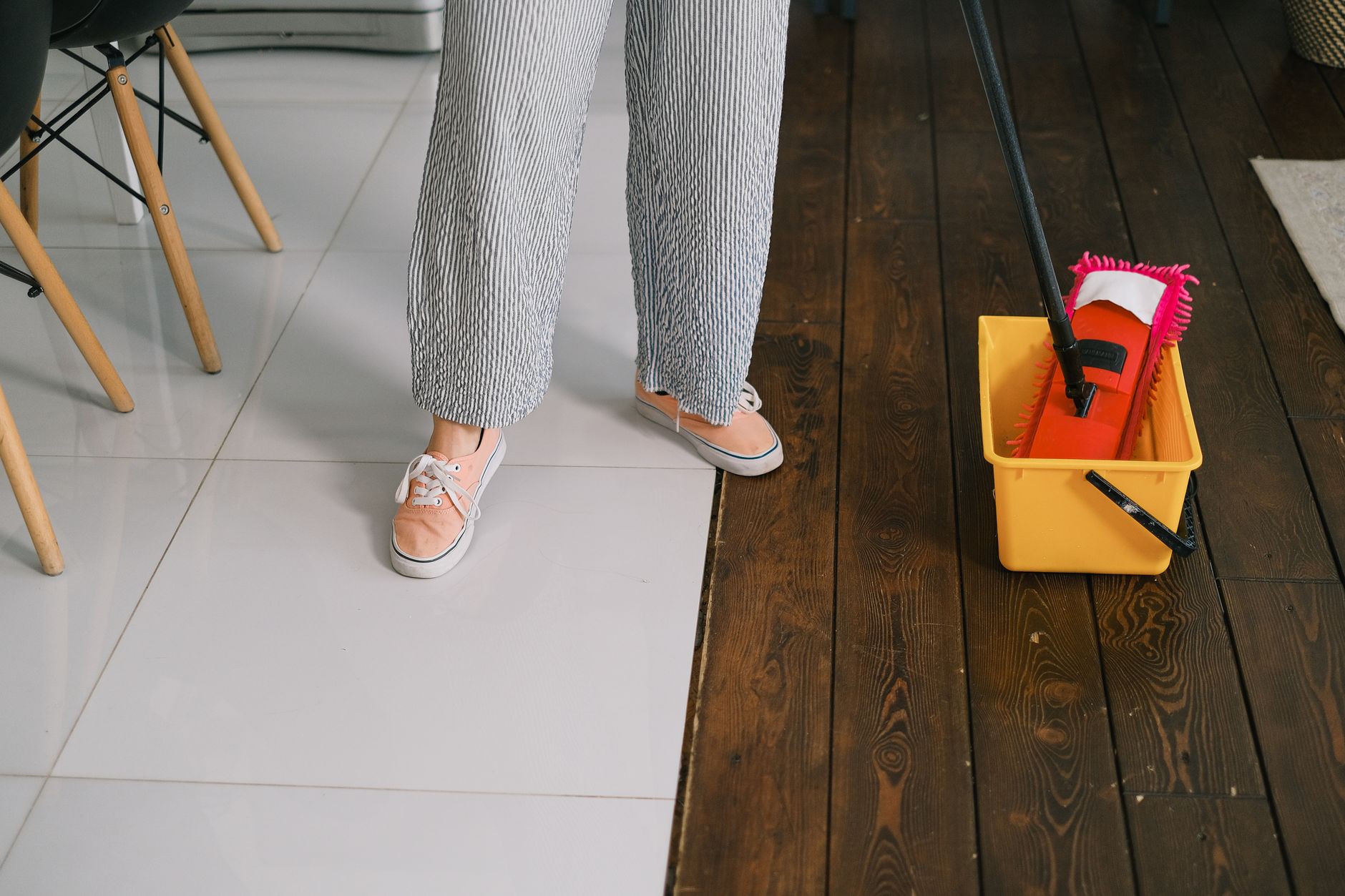
Hardwood floors: Vacuum first with a soft-brush attachment to avoid scratches. Mop with a barely damp mop and a hardwood-safe cleaner. Excess moisture warps wood, so wring the mop thoroughly.
Tile and grout: Vacuum or sweep first, then mop with a pH-neutral cleaner. For grout, use a stiff brush and a grout cleaner or baking soda paste. Scrub in circular motions, then rinse.
Carpet: Vacuum in two directions to lift deep-set dirt. For stains, apply a carpet cleaner and blot from the outside of the stain inward, never scrub, which spreads the stain. Consider a steam cleaning or professional extraction every 12 to 18 months.
Vinyl and laminate: These surfaces scratch easily. Use a soft mop, avoid steam, and use a manufacturer-recommended cleaner.
Transition areas and thresholds: The strips between rooms collect grime. Wipe or scrub these as part of any full-home deep clean.
7. Seasonal and Pre-Event Deep Cleaning Strategy
Deep cleaning your house is not just a once-a-year task. Timing a thorough cleaning to seasonal changes, holiday gatherings, or before hosting guests gets your home to a level of cleanliness that regular maintenance cannot achieve.
Before the holidays: Clean ceiling fan blades, light fixtures, and windows so your home looks its best when guests arrive. Our holiday cleaning service is built specifically for this, handling the deep clean so you can focus on cooking and decorating.
Spring and fall: Use seasonal transitions to deep clean windows (inside and out), swap out bedding, and clean inside closets and storage areas.
Move-in and move-out: A full property deep clean before moving in removes the previous occupants’ buildup and gives you a genuinely fresh start. Move-out cleaning protects your security deposit.
After illness: Disinfect all high-touch surfaces, door handles, light switches, remote controls, faucets, and launder all bedding and towels.
Post-renovation: Construction dust is extremely fine and settles everywhere. A deep clean after renovation work includes wiping inside cabinets, washing all textiles, and cleaning HVAC vents.
Arizona’s Valley communities get a lot of dust intrusion from desert wind events. Homeowners in Mesa, Gilbert, Queen Creek, and San Tan Valley often find they need a deep cleaning session after any major dust storm to clear fine particulate from surfaces throughout the home. Resources like Good Housekeeping’s cleaning guides offer additional seasonal checklists that complement this approach.
8. When to Call a Professional Deep Cleaning Service
DIY deep cleaning is genuinely effective when you have the time and energy. But there are situations where calling in Arizona’s most-reviewed house cleaning company makes more sense than going it alone.
You are behind by months or more: When grime has been building for a long time, the initial deep clean requires significantly more scrubbing, product contact time, and effort than what a typical homeowner has on a weekend.
Post-construction or renovation: Professional equipment and techniques make a real difference when dealing with fine construction dust coating every surface.
Move-in or move-out situations: Landlords and property managers have specific standards. A professional deep clean gives you documented, thorough coverage.
Health events in the home: After illness, a professional disinfection service covers more surfaces with verified products than most homeowners would tackle alone.
Before a major event: When you have 30 people coming for a holiday dinner, you want to enjoy the week leading up to it, not spend it on your hands and knees scrubbing grout.
Recurring maintenance after the initial clean: Many families in Phoenix, Scottsdale, and Chandler schedule a one-time deep clean to reset their home, then switch to biweekly recurring service to keep it there. The cleaning mistakes that most homeowners make around common house cleaning mistakes are much less likely to occur when a pro is maintaining the home regularly.
Elite Maids House Cleaning serves Phoenix, Mesa, Scottsdale, Gilbert, Chandler, Glendale, Queen Creek, San Tan Valley, Tucson, and Flagstaff. Every cleaner is background-checked, bonded, and insured, and every visit is backed by a no-cost reclean guarantee if anything falls short.
Ready to stop spending your weekends scrubbing and start actually enjoying your home? Contact Elite Maids house cleaning today for a free quote, book online in minutes with instant pricing, same-day availability between 8am and 6pm, and a satisfaction guarantee that protects every single visit.
Frequently Asked Questions
What do housekeepers do in a deep clean?
In a deep clean, housekeepers go well beyond surface wiping. They clean inside appliances, scrub grout lines, wipe baseboards and door frames, clean ceiling fans, disinfect high-touch surfaces, clean behind and under furniture, sanitize bathroom fixtures thoroughly, and address buildup in areas that routine cleaning skips. A professional deep clean typically takes two to five hours depending on home size.
How often should you deep clean your house?
Most homes benefit from a full deep clean two to four times per year, roughly once per season. High-traffic households with kids, pets, or allergy sufferers may need it more frequently. After illness, before moving, and before hosting large gatherings are also ideal trigger points for a thorough whole-house deep clean regardless of the regular schedule.
How long does a house deep clean take?
A single person deep cleaning a standard three-bedroom home typically takes six to ten hours. A two-person professional team can complete the same job in three to five hours. The time varies based on the home’s current condition, square footage, and how many rooms need heavy-duty scrubbing versus light detail work.
What is the difference between a regular cleaning and a deep clean?
A regular cleaning maintains a home that is already reasonably clean, it covers visible surfaces, floors, bathrooms, and kitchen counters on a set schedule. A deep clean addresses the accumulated buildup in areas that regular cleaning does not touch: inside appliances, grout, baseboards, behind furniture, ceiling fans, window tracks, and cabinet interiors. Deep cleans take longer and require more effort and specialized products.
Should you clean top to bottom when deep cleaning a house?
Yes, always clean from top to bottom in every room. Start with ceiling fans, light fixtures, and high shelves, then work down through furniture surfaces to floors. This ensures dust and debris knocked from upper surfaces gets picked up when you clean floors last, rather than dirtying surfaces you have already cleaned.
How to Deep Clean Your Entire House in One Day: A Complete Checklist
SHARE:
You can deep clean your entire house in one day by working room to room in a specific order, keeping your supplies within reach, and tackling high-impact areas first. Most homes take six to eight hours with a focused plan. This guide walks you through a complete deep cleaning checklist, the right tools for each zone, and pro tips that cut your time in half.
Why a Whole-House Deep Clean Checklist Changes Everything
Most people underestimate what a full-house deep clean actually involves until they start without a plan and run out of energy by lunch. A solid deep clean house checklist solves that problem before it starts. When you map out each task by room and sequence them strategically, you stop backtracking, stop re-dirtying areas you already cleaned, and stop wasting time hunting for supplies.
The classic mistake is starting with the floors. Dust and debris fall downward, so if you mop first, you are mopping twice. A proper deep cleaning checklist always works top to bottom, back to front, and dirty to clean. That order is not just a preference; it is the most efficient path through a home.
Before you grab a single sponge, take fifteen minutes to gather everything you need: microfiber cloths, an all-purpose cleaner, a scrub brush, a mop, a vacuum with attachments, glass cleaner, a grout brush, baking soda, and white vinegar. According to the EPA Safer Choice program, choosing products certified for safety means fewer harsh chemicals in your home while still getting effective results. Set up a cleaning caddy so every product travels with you from room to room. That one habit alone saves twenty minutes on a whole-house clean.
If you want a deeper look at professional deep cleaning services in Arizona, check out this guide on deep cleaning service in Mesa that breaks down exactly what professionals tackle on every visit.
How to Deep Clean Your House Room by Room
The key to getting through a whole-house deep clean in one day is treating each room like its own contained project with a start and a finish line. Do not skip between rooms. Complete one space before moving to the next, and you will feel momentum building rather than the creeping overwhelm that kills most cleaning sessions.
Kitchen
The kitchen is the hardest room in the house to deep clean, so tackle it first when your energy is highest. Start by removing everything from cabinet surfaces and the stovetop. Degrease the stovetop grates by soaking them in hot, soapy water while you work on the rest of the kitchen. Wipe down cabinet fronts with a degreaser, paying attention to the areas around handles where grime collects. Pull the refrigerator out from the wall and vacuum the coils, then wipe the exterior. Clean the inside of the fridge, tossing expired items and wiping each shelf. Scrub the sink and faucet with a baking soda paste, then rinse with white vinegar for a natural disinfecting rinse. Finish by cleaning the oven interior, wiping countertops, and mopping the floor last.
Bathrooms
Spray the toilet bowl with cleaner and let it sit while you work on the surrounding areas. Scrub tile grout with a stiff brush and a baking soda paste. Clean the showerhead by soaking it in white vinegar for fifteen minutes to dissolve mineral buildup. Wipe mirrors with glass cleaner and a microfiber cloth for a streak-free finish. Scrub the sink, faucet, and countertop, then come back to the toilet and scrub the bowl. Wipe the toilet exterior top to bottom. Mop the floor last. The CDC recommends keeping bathroom surfaces dry between cleanings to prevent mold growth, so finish by running the exhaust fan and leaving the shower door or curtain open.
Bedrooms
Strip all bedding and wash it at the hottest safe temperature for the fabric. While it washes, dust ceiling fan blades, light fixtures, and the tops of furniture. Vacuum mattresses using the upholstery attachment, then rotate or flip the mattress if it is the two-sided type. Wipe down nightstands, dressers, and baseboards. Clean window sills and window tracks. Vacuum under beds, pulling out items stored there and wiping the floor beneath. Finish by vacuuming the carpet or mopping the floor, then remake the bed with fresh linens.
Living Areas
Dust ceiling corners, ceiling fans, and the tops of shelving units first. Remove cushions from sofas and chairs and vacuum underneath and in the crevices. Wipe down all hard surfaces including shelves, coffee tables, and entertainment centers. Clean glass surfaces on picture frames and TV screens with a dry microfiber cloth. Wipe baseboards and window sills. Vacuum upholstered furniture thoroughly. Finish with the floors, vacuuming carpet or mopping hard floors from the farthest corner toward the exit.
Deep Cleaning Strategies That Save Hours
Professional house cleaners use a handful of strategies that significantly cut down the time a deep cleaning session takes. These are not shortcuts that leave dirt behind; they are smarter sequencing and better product choices.
Let products do the work: Spray cleaners on surfaces and let them sit for two to five minutes before wiping. That dwell time means you scrub less and get a better result.
Use the two-cloth method: One damp cloth for cleaning, one dry microfiber for buffing. This prevents streaks on glass and stainless steel surfaces.
Clean laundry in parallel: Start a load of bedding or towels before you begin cleaning rooms. Laundry runs while you clean, so both tasks finish at the same time.
Vacuum before mopping, always: Mopping over dry debris just smears it around. A quick vacuum pass first gives you a genuinely clean floor.
Keep a trash bag on your belt: Clip a small trash bag to your waistband or cleaning caddy so you can toss items without walking to the trash can on every pass through a room.
Set a timer per room: Give yourself a hard limit of thirty to forty-five minutes per room. A timer creates urgency and prevents perfectionism from eating your day.
For a thorough seasonal reset, the ultimate guide to spring cleaning on the Elite Maids blog pairs well with this approach, covering the seasonal tasks that go beyond a standard whole-house clean.
Cleaning Products That Do the Heavy Lifting
The right cleaning products make a one-day whole-house clean realistic. Using the wrong product on the wrong surface means more scrubbing, more time, and sometimes surface damage. Here is a room-by-room product guide.
All-purpose cleaner: Use on countertops, cabinet fronts, exterior appliances, and bathroom surfaces. A plant-based formula works on nearly every hard surface and is safe around children and pets.
Degreaser: Essential for stovetops, range hoods, and kitchen cabinet fronts near the stove. A standard all-purpose spray is not strong enough to cut through cooking grease.
Baking soda: A mild abrasive that is safe on most surfaces. Mix it with a small amount of dish soap for a grout paste or a sink scrub.
White vinegar: Cuts through mineral deposits and acts as a natural deodorizer. Do not use it on natural stone surfaces like marble or granite; the acid etches the finish.
Microfiber cloths: Outperform paper towels on almost every surface. They trap dust rather than pushing it around and can be washed and reused hundreds of times.
Glass cleaner: Use a streak-free formula for mirrors, windows, and glass shower doors. A 50/50 water-and-vinegar solution in a spray bottle is a solid homemade alternative.
The Good Housekeeping cleaning team regularly tests consumer cleaning products and offers independent, lab-backed guidance on what works and what is mostly marketing. It is a reliable resource when you are deciding whether to invest in a premium cleaner or stick with pantry staples.
If you prefer eco-friendly options, recurring house cleaning Arizona clients through Elite Maids can request green-certified products for every scheduled visit, keeping harsh chemicals out of the home without sacrificing results.
The Deep Clean Checklist: Every Task in One Place
A printed or digital cleaning house checklist keeps you on track when energy drops around hour four. Run through this before you call the deep clean done.
Kitchen Checklist
Degrease stovetop, grates, and range hood
Clean inside oven
Wipe refrigerator exterior and clean interior shelves and drawers
Sanitize sink and faucet
Wipe cabinet fronts and handles
Clean countertops and backsplash
Wipe light switch plates and doorknobs
Sweep and mop floor
Bathroom Checklist
Scrub toilet bowl, seat, and exterior
Clean shower or tub including grout lines
Descale showerhead
Wipe vanity, sink, and faucet
Clean mirror
Wipe light fixtures and exhaust fan cover
Mop floor and clean baseboard
Bedroom and Living Area Checklist
Wash all bedding and pillow covers
Vacuum mattress
Dust ceiling fans, light fixtures, and tops of furniture
Wipe all hard surfaces and electronics
Clean window sills and window tracks
Vacuum upholstered furniture
Vacuum carpet or mop hard floors under and around furniture
Whole-House Tasks
Wash interior windows
Wipe all baseboards
Clean light switch plates throughout
Dust air vents and returns
Vacuum stairs and hallways
Empty all trash bins and reline
When to Hire a Professional House Cleaner Instead
A solo whole-house deep clean is genuinely doable, but there are situations where bringing in a professional cleaning team is the smarter call. If your home has not had a thorough clean in several months, or you are moving in or out of a property, the level of scrubbing needed goes beyond what a single person can realistically accomplish in one day without exhaustion.
Professional holiday cleaning services are also worth considering when you have guests arriving and need the home in top condition without spending your prep time scrubbing. A trained two-person or three-person team can cover the same ground in far less time because they work in parallel, carry professional-grade equipment, and use techniques developed across thousands of homes.
For Arizona homeowners, visit Elite Maids House Cleaning to see same-day booking options across Phoenix, Mesa, Scottsdale, Gilbert, Chandler, Glendale, Queen Creek, San Tan Valley, Tucson, and Flagstaff. Every cleaner is background-checked, bonded, and backed by a reclean satisfaction guarantee, so you know the job will be done right.
The EPA’s indoor air quality guidelines note that thorough cleaning reduces the concentration of allergens, particulates, and pollutants indoors, which is a meaningful health benefit beyond just having a tidy home. When professional tools and methods are involved, those benefits are more consistently achieved.
How to Keep Your Home Clean After a Whole-House Deep Clean
The hardest part of a whole-house deep clean is maintaining the results. Most homes return to a baseline level of mess within a week without a simple maintenance routine. The good news is that after a thorough initial clean, upkeep takes far less time than the original effort.
A fifteen-minute daily reset is the most effective tool for maintaining a clean home. Each evening, clear countertops, wipe the kitchen sink, and do a quick scan of visible surfaces. That habit prevents buildup from ever reaching the level that requires another eight-hour cleaning session.
Weekly light cleaning should cover bathrooms, kitchen surfaces, floors, and a quick dust of the main living areas. Monthly, revisit the tasks from your deep clean house checklist: refrigerator interior, oven interior, window sills, and under furniture. If that schedule sounds like too much to maintain alongside work and family commitments, a recurring cleaning plan is worth considering. Many Arizona families who have tried to stay on top of it themselves end up booking a regular service simply because reclaiming that time is worth more than the cost.
Ready to skip the full-day scrub and let a professional team handle it? Contact Elite Maids house cleaning today for a free quote on a deep clean, recurring visit, or move-in and move-out cleaning anywhere in Arizona’s Valley communities. Online booking takes under two minutes, instant quotes are available, and same-day appointments are open between 8am and 6pm.
Frequently Asked Questions
How long does it take to deep clean an entire house?
For a solo cleaner, a thorough whole-house deep clean typically takes six to eight hours in an average three-bedroom home. Larger homes or homes with heavy buildup can take longer. A two-person professional team can cover the same work in three to four hours because tasks run in parallel rather than sequentially.
What is the difference between a regular cleaning and a deep clean?
A regular cleaning maintains a home that is already in decent shape: wiping surfaces, vacuuming, mopping, and cleaning bathrooms. A deep clean goes further by scrubbing grout, cleaning inside appliances, washing baseboards, removing buildup on cabinet fronts, and reaching areas that routine cleaning skips. Deep cleans are typically done every three to six months.
What should I clean first when doing a whole-house deep clean?
Start with the kitchen since it requires the most time and effort, and tackle it while your energy is highest. Within each room, work top to bottom: dust ceiling fixtures first, then work down to surfaces, and finish with the floors. This order prevents dust and debris from falling onto areas you have already cleaned.
What supplies do I need to deep clean my house?
The core supplies for a whole-house deep clean are microfiber cloths, an all-purpose cleaner, a degreaser, baking soda, white vinegar, glass cleaner, a grout brush, a scrub brush, a mop, and a vacuum with attachments. A cleaning caddy to carry everything room to room saves significant time over the course of the day.
How often should you deep clean your house?
Most households benefit from a thorough deep clean two to four times per year. Homes with pets, children, or allergy sufferers may need one every six to eight weeks in high-traffic areas like kitchens and bathrooms. A recurring professional cleaning between deep cleans helps prevent heavy buildup from accumulating in the first place.