Best Cleaning Products for People With Allergies: A Complete Guide
SHARE:
The best cleaning products for people with allergies are fragrance-free, hypoallergenic formulas that avoid harsh chemicals like ammonia, chlorine bleach, and synthetic perfumes. These products clean effectively without releasing volatile compounds that trigger sneezing, watery eyes, or respiratory flare-ups. This guide covers every product category allergy sufferers need to know about, from vacuums and detergents to air purifiers and household cleaners.
Why Standard Cleaning Products Trigger Allergy Symptoms
Most off-the-shelf cleaners are loaded with synthetic fragrances, dyes, and preservatives that can irritate the airways of anyone with sensitivities. According to the EPA’s research on volatile organic compounds and indoor air quality, many conventional cleaning sprays release VOCs that linger in the air long after you’ve finished scrubbing. For allergy sufferers, that lingering chemical cloud can be just as problematic as the dust and pet dander you were trying to remove in the first place.
Common culprits include:
Synthetic fragrances: Even products marketed as “fresh” or “clean-scented” can contain dozens of undisclosed chemical compounds.
Ammonia: Found in many glass cleaners and multi-surface sprays. It irritates the nose and throat almost instantly.
Chlorine bleach: Powerful at killing germs, but the fumes are harsh on the lungs and can trigger asthma attacks in sensitive individuals.
Preservatives like methylisothiazolinone: Common in liquid cleaners and linked to skin and respiratory reactions.
Optical brighteners in laundry detergents: These coat fabrics and can cause skin reactions in people with contact allergies.
The American Lung Association’s indoor air quality guidelines recommend choosing products with no added fragrances and minimal chemical ingredients whenever possible. That advice is the backbone of every recommendation in this guide on allergy-friendly cleaning products.
If you already work with a professional house cleaning service, ask them about their product options. Many reputable teams, including Elite Maids, offer eco-friendly and fragrance-free product selections that won’t send your sinuses into overdrive.
Allergy-Friendly Vacuum Cleaners: What to Look For
A vacuum is the single most important tool in any allergy-friendly cleaning routine. Not all vacuums are created equal when it comes to allergen control. The wrong machine can actually redistribute dust, pet dander, and pollen back into the air as it runs, making your allergy symptoms worse, not better.
When shopping for a vacuum designed for allergy sufferers, focus on these features:
True HEPA filtration: A HEPA (High-Efficiency Particulate Air) filter captures 99.97% of particles as small as 0.3 microns, including dust mite debris, mold spores, and pet allergens. “HEPA-type” or “HEPA-style” filters are not the same thing and offer far less protection.
Sealed system design: The vacuum’s suction path should be fully sealed so particles captured by the filter can’t leak back into the room through gaps in the casing.
Bagged vs. bagless: Bagged vacuums are generally better for allergy sufferers because you never have to open a dusty bin. When you remove a bag, the debris stays contained. If you prefer bagless, empty the canister outside and away from your face.
Low-emission certification: Look for models certified by the Asthma and Allergy Foundation of America or similar third-party programs.
Frequency matters as much as equipment. Running a HEPA vacuum on carpets and rugs at least twice a week dramatically reduces the allergen load in your home. Hard floors should be vacuumed before mopping, not after, to capture loose particles rather than pushing them around with a wet mop.
For a deeper look at specific product picks that actually perform in allergy-prone homes, check out our guide on household cleaning products that work.
Hypoallergenic Laundry Detergents and Fabric Cleaners
Your laundry detergent touches every piece of clothing, every pillowcase, and every towel that makes contact with your skin and airways. For someone with allergies, choosing the wrong detergent can mean waking up with itchy eyes, a stuffy nose, or a skin rash, even if the rest of your home is spotless.
Here is what to look for in a hypoallergenic laundry detergent:
Free and clear formulas: These are detergents with no dyes and no perfumes. Most major brands offer a version. Read the label carefully because “free and clear” on the front does not always mean fragrance-free on the ingredients list.
EPA Safer Choice certification: The EPA Safer Choice program evaluates every ingredient in a product for human health and environmental impact. A Safer Choice label is one of the fastest ways to identify a detergent that won’t irritate sensitive airways or skin.
Plant-based surfactants: These lift dirt and grease without the harsh chemical residue left by petroleum-derived cleaners.
No optical brighteners: Optical brighteners coat fabric fibers and can trigger contact dermatitis in people with skin allergies.
Washing bedding in hot water (at least 130°F) weekly is one of the most effective strategies for killing dust mites, according to allergy specialists. Pair that with a hypoallergenic detergent and you have a powerful one-two punch against bedroom allergens. Don’t forget to run an extra rinse cycle to remove any detergent residue from fabrics before they touch your skin.
Household Cleaners Safe for Allergy Sufferers
Switching to allergy-safe household cleaners does not mean sacrificing cleaning power. There is a wide range of effective options that skip the irritating ingredients without leaving surfaces less than spotless. The key is knowing which formulas work and which ones just smell nicer while still containing problematic chemicals.
Cleaning products safe for people with allergies typically share a few characteristics:
Short ingredient lists: The fewer ingredients, the fewer opportunities for a hidden allergen to sneak through.
No synthetic fragrance: This is non-negotiable. Even products labeled “unscented” sometimes contain a masking fragrance to cover up the chemical smell. Check for “fragrance-free” specifically.
Third-party certified: Look for the EPA Safer Choice seal, MADE SAFE certification, or NSF/ANSI certification as indicators that the product has been evaluated against health standards.
pH-balanced formulas: Strongly acidic or alkaline cleaners are more likely to off-gas VOCs and irritate skin on contact.
For all-purpose surfaces, a simple solution of distilled white vinegar and water (one part vinegar to one part water) handles everyday grime on most non-porous surfaces without any synthetic additives. Baking soda is a safe, non-toxic abrasive for scrubbing sinks and tubs. Castile soap diluted in water works as a gentle all-purpose cleaner that is naturally fragrance-optional.
For allergy sufferers in Arizona, allergen loads can be especially high due to desert dust, pollen, and dry conditions that keep particles airborne longer. Our detailed resource on asthma and allergy cleaning products goes deeper on what to use and what to skip entirely.
When you need a thorough seasonal reset, a professional holiday cleaning service using eco-friendly, fragrance-free products can clear out accumulated allergens from surfaces that rarely get attention during routine tidying.
Air Purifiers and Indoor Air Quality for Allergy Relief
No matter how allergy-friendly your cleaning products are, if your indoor air is full of pollen, mold spores, and pet dander, you will still struggle with symptoms. Air purifiers fill the gap between cleaning sessions by continuously filtering airborne allergens that settle on surfaces between cleans.
When selecting an air purifier for allergy relief:
True HEPA filtration: Just like with vacuums, a certified HEPA filter in an air purifier will capture the microscopic particles most responsible for allergy flare-ups.
Activated carbon layer: This layer absorbs VOCs and odors, including the chemical residue that can linger after using conventional cleaners. It is especially valuable if you share a space with someone who uses scented products.
Appropriate room coverage: Match the purifier’s CADR (Clean Air Delivery Rate) to the square footage of the room. An undersized unit working too hard won’t clean the air effectively.
No ozone-generating technology: Some older or low-cost purifiers use ionizing technology that produces ozone as a byproduct. Ozone is itself a respiratory irritant, which is exactly the opposite of what allergy sufferers need.
The EPA’s indoor air quality resources note that indoor air can be two to five times more polluted than outdoor air, primarily because homes trap particles, VOCs, and biological allergens with limited ventilation. Running a HEPA air purifier in bedrooms and main living areas is one of the most impactful steps an allergy sufferer can take between professional cleaning visits.
Keep filters clean. A clogged filter on an air purifier or a vacuum becomes less effective and can even redistribute what it has collected. Replace HEPA filters according to manufacturer schedules, typically every six to twelve months depending on usage.
Dust Cloths and Mops That Trap Allergens Instead of Spreading Them
The tool you use to dust is just as important as the product. Traditional feather dusters and dry cotton rags are notorious for scattering allergens rather than removing them. One swipe across a shelf with the wrong duster can send a cloud of dust mite debris and pollen into the air, where it stays suspended for hours.
Allergy-friendly dusting tools include:
Microfiber cloths:Microfiber cloths have millions of tiny fibers that use electrostatic attraction to grab and hold dust particles rather than pushing them around. Use them dry for dusting and slightly damp for wiping down surfaces. Wash them regularly to prevent them from becoming allergen reservoirs themselves.
Electrostatic dusters: These work on a similar principle to microfiber, using a static charge to attract and hold fine particles rather than flinging them into the air.
Damp mopping over dry sweeping: For hard floors, a damp mop picks up particles that a dry broom would redistribute. Use plain warm water or a diluted, fragrance-free floor cleaner.
Washable mop heads: Disposable mop pads are convenient, but washable microfiber mop heads are more consistent in their allergen-trapping performance and reduce waste.
Always dust before vacuuming, not after. Dusting dislodges particles onto the floor; vacuuming then captures them. Reversing the order means your vacuum just re-deposits what fell from surfaces while you were vacuuming.
For DIY cleaning recipes using naturally derived ingredients that are easy on allergies, our resource on eco-friendly cleaning product recipes walks through several safe, effective formulas you can make at home.
Skin-Safe Lotions, Gloves, and Personal Protection While Cleaning
Even with the most allergy-safe cleaning products on the market, physical contact with any cleaning agent can cause skin reactions in people with sensitive skin or contact allergies. Personal protection is a layer of defense that is often overlooked in conversations about allergy-friendly cleaning.
Here is how to protect yourself while you clean:
Nitrile or latex-free rubber gloves: Wear gloves for every cleaning task that involves a product, even gentle ones. If you have a latex allergy, choose nitrile gloves specifically. Disposable or reusable both work, just wash reusable gloves inside and out after each session.
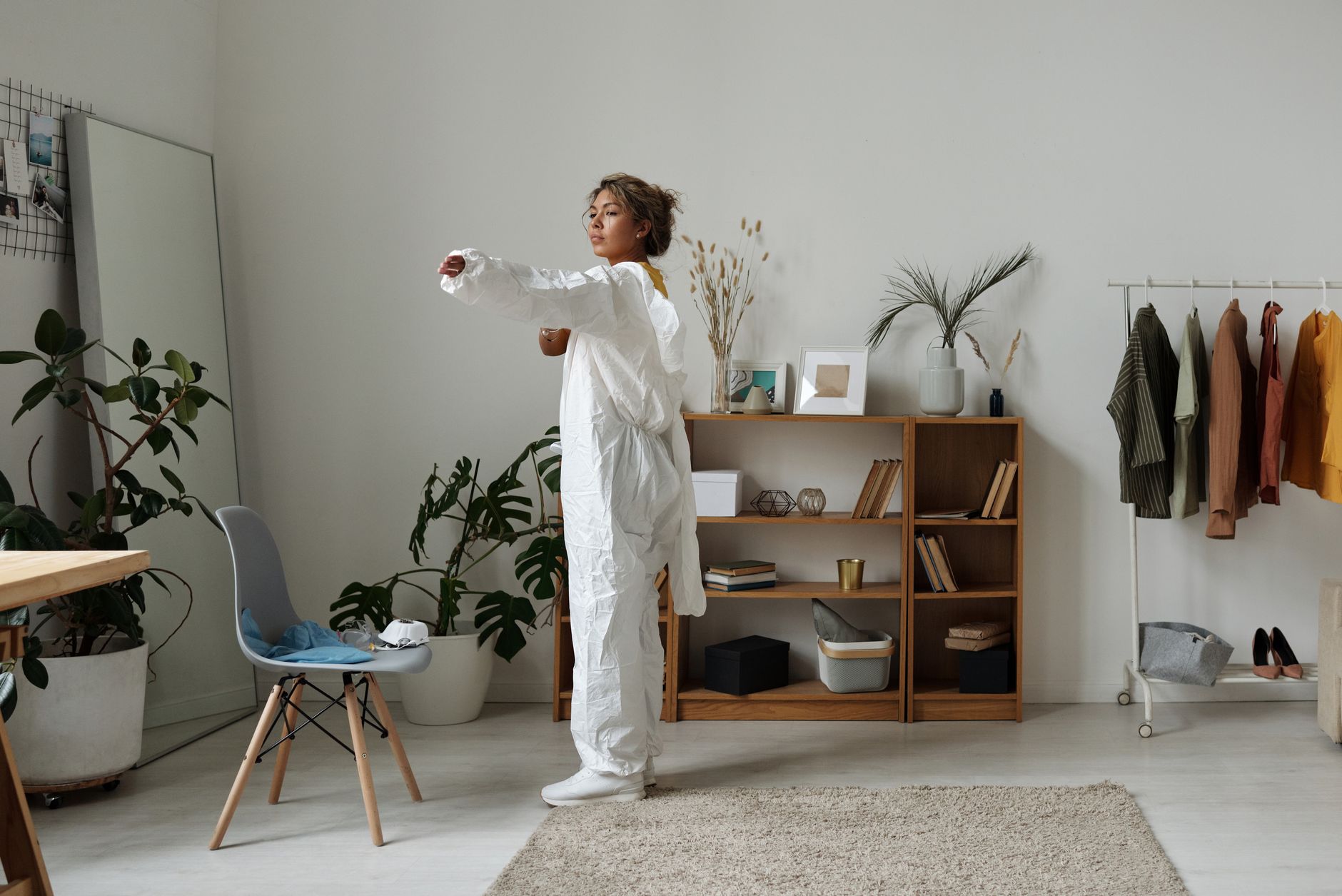
A simple face mask or respirator: Particularly useful when cleaning dusty spaces, working with any spray product, or tackling mold. An N95 mask filters fine particles and offers real protection for allergy-prone airways.
Fragrance-free hand lotion: After cleaning, even with gloves, wash hands thoroughly and apply a fragrance-free, dye-free moisturizer to repair the skin barrier. Repeated exposure to water and even mild cleaners can dry and crack skin, creating an entry point for contact allergens.
Ventilation while cleaning: Open windows and run exhaust fans whenever possible during and after cleaning. Fresh air dilutes any VOCs released by cleaning products, even the gentle ones, and reduces the concentration of airborne particles you breathe in.
If mold is present in your home, personal protection becomes even more critical. The CDC’s mold guidance for homeowners recommends gloves, goggles, and an N95 respirator for any mold remediation task. For larger mold problems, professional disinfection services are a safer option than DIY approaches, especially for people with respiratory sensitivities.
Choosing the right cleaning products for allergies makes a real difference in daily comfort, but the products are only part of the equation. How often you clean, which tools you use, and how thoroughly you reach allergen hotspots all determine whether your home is truly a relief zone or just a prettier source of the same triggers. If you are ready to hand that work off to people who know exactly how to reduce allergen loads in a home, Arizona house cleaning service at Elite Maids is a phone call or a click away. Our five-star Arizona cleaners are background-checked, fully insured, and experienced with eco-friendly and fragrance-free product options that protect sensitive households. Book online in minutes and get an instant quote. Contact Elite Maids house cleaning today for a free quote and take the first step toward a home that works with your health, not against it.
Frequently Asked Questions
What cleaning products are safe for people with allergies?
Cleaning products safe for allergy sufferers are fragrance-free, dye-free, and free of harsh chemicals like ammonia, chlorine bleach, and synthetic preservatives. Look for EPA Safer Choice-certified products, plant-based formulas, and short ingredient lists. Simple DIY options like diluted white vinegar, baking soda, and castile soap are also effective and naturally low in allergens.
What is the best vacuum cleaner for allergy sufferers?
The best vacuums for allergy sufferers use true HEPA filtration and a fully sealed system that prevents captured particles from leaking back into the air. Bagged vacuums are easier to empty without releasing dust. Look for third-party certifications from organizations like the Asthma and Allergy Foundation of America to confirm a vacuum meets allergy-reduction standards before you buy.
Can cleaning products make allergies worse?
Yes. Many conventional cleaning products contain synthetic fragrances, VOCs, and harsh chemicals that irritate the airways and skin, sometimes more than the dust or grime they are removing. Switching to fragrance-free, low-VOC, or naturally derived cleaners and ensuring good ventilation during cleaning can significantly reduce allergy symptoms triggered by cleaning routines.
How often should allergy sufferers clean their homes?
Allergy sufferers generally benefit from vacuuming high-traffic areas and hard floors two to three times per week, washing bedding in hot water weekly, and dusting surfaces with a microfiber cloth at least once a week. Running a HEPA air purifier continuously and scheduling a professional deep clean every one to three months helps manage allergen buildup in areas routine cleaning misses.
Are natural or green cleaning products better for allergies?
Not automatically, but many are. Natural and green cleaning products tend to skip synthetic fragrances, harsh preservatives, and VOC-heavy solvents that trigger allergy symptoms. The key is to check for EPA Safer Choice certification or a certified fragrance-free label rather than assuming a “natural” claim on the front of the bottle means it is allergy-friendly. Always read the full ingredient list.
Vacuum vs. Broom: When to Use Each for Cleaner Floors
SHARE:
Use a vacuum when you need to pull fine dust, allergens, and debris from carpet, rugs, or hard floors without scattering particles into the air. Reach for a broom when you want quick, quiet cleanup of larger visible debris on hard surfaces. Both tools have a place in a smart cleaning routine, and the rest of this guide breaks down exactly when each one wins.
Vacuum vs. Broom: Understanding the Core Difference
The vacuum versus broom debate comes down to one fundamental question: do you want to contain debris or move it? A vacuum cleaner uses suction to pull dirt into a sealed chamber, trapping fine particles, pet dander, and allergens so they never re-enter the air you breathe. A broom sweeps debris into a pile you collect with a dustpan, which works well for large crumbs and grit but inevitably stirs up the finer dust that settles back onto surfaces, countertops, and furniture.
When you choose between a vacuum and a broom, you are really choosing between thoroughness and speed. Vacuuming picks up what you cannot see. Sweeping with a broom handles what you can. For a truly clean home, both tools belong in your arsenal, but knowing which one to grab first makes a real difference in the quality of your results.
According to the EPA’s indoor air quality guidance, fine particulate matter inside the home is a significant contributor to poor air quality, and vacuuming with a HEPA-filtered machine is one of the most effective ways to reduce that load. Sweeping alone simply cannot accomplish the same result because the act of brushing the floor launches fine particles back into suspension.
When to Use a Vacuum: The Right Situations for Suction
Choosing to vacuum makes the most sense in these situations:
Carpets and rugs: A broom is useless on pile surfaces. Vacuuming is the only practical way to extract embedded dirt, pet hair, and dust from carpet fibers. Run the vacuum slowly and make overlapping passes to pull debris from deep in the pile.
Allergy households: If anyone in your home suffers from dust mite allergies, pet dander sensitivity, or asthma, use a vacuum with a HEPA filter on hard floors as well as carpets. The American Lung Association recommends HEPA-filtered vacuuming as a frontline strategy for reducing indoor allergen levels.
After cooking or heavy foot traffic: Fine flour, dried spices, and tracked-in soil are all microscopic enough to become airborne when swept. Vacuuming contains them instantly.
Under furniture and in corners: Vacuum attachments, especially crevice tools and brush heads, reach underneath sofas, inside cabinet toe kicks, and along baseboards far more effectively than a broom bristle.
Pet-owner homes: Pet hair wraps around broom bristles and is difficult to collect cleanly. Suction lifts hair off the floor and deposits it directly into the bin.
Before mopping: Always vacuum hard floors before you mop. A broom can leave behind fine grit that scratches wood or tile when you drag a wet mop over it.
The rule of thumb for when to use a vacuum: if the debris is fine, fibrous, or microscopic, suction wins every time. Using a vacuum on hard floors might feel like overkill, but it produces measurably cleaner results than sweeping alone.
When to Use a Broom: The Right Situations for Sweeping
Despite the vacuum’s advantages in thoroughness, there are plenty of situations where reaching for a broom is the smarter move:
Large debris on hard floors: Broken crackers, cereal, pasta, or potting soil are bulky enough that a broom gathers them faster than a vacuum’s suction port can pull them in. Sweeping that pile into a dustpan takes seconds.
Outdoor spaces: Patios, garages, driveways, and entryways call for a push broom or an angled broom. These surfaces are not places you would take a household vacuum.
Quiet hours: Vacuums are loud. Early morning cleanups, nap time, or late-night spills are all situations where a broom lets you tidy up without waking anyone.
Quick pre-party sweep: When guests arrive in 10 minutes and the kitchen floor has crumbs, a broom is faster to deploy, maneuver, and put away than a full vacuum setup.
Delicate hard floors: Certain antique or hand-scraped hardwood floors can scratch from a vacuum’s beater bar. A soft-bristle broom with fine fibers is gentler for a quick pass.
No power access: Power outages, outdoor cleanups away from outlets, or areas without nearby electrical access all favor the broom.
Using a broom is ideal for visible, chunky messes that need to be moved fast. Think of sweeping as triage: it handles the obvious debris so you can decide whether the situation warrants following up with a vacuum or a mop.
Best Flooring Types for Vacuuming vs. Sweeping
Not all floors respond the same way to each tool, and understanding which flooring type suits vacuuming versus sweeping helps you clean smarter without damaging your surfaces.
Hardwood and Engineered Wood
Both tools work on wood floors, but with caveats. Use a broom with soft, fine-angled bristles for a quick pass. For deeper cleaning, use a vacuum set to “hard floor” mode with the beater bar turned off. Spinning brush rolls on hardwood can leave micro-scratches over time. The goal when choosing between vacuuming and sweeping on wood is surface protection first, thoroughness second.
Tile and Stone
Tile handles both tools well. A broom moves large debris efficiently, while a vacuum excels at pulling dust and grit from grout lines, which bristles tend to skip over. If your tile floors have textured grout, vacuuming is the clear winner for thorough cleaning.
Carpet and Area Rugs
Carpet is a vacuum-only zone. No broom can clean carpet pile. For area rugs, a rubber broom can lift hair from low-pile rugs in a pinch, but regular vacuuming is the only method that pulls embedded debris from deeper fibers.
Laminate
Laminate is sensitive to moisture and scratching. A soft broom is gentle and safe for quick passes. When you vacuum laminate, turn off the beater bar and use a soft floor head attachment. Either way, follow up with a dry or barely damp microfiber mop for the cleanest result.
Vinyl and LVP
Luxury vinyl plank and standard vinyl both handle vacuuming easily. Choose a vacuum setting without a spinning brush roll to avoid scuffing the surface coating. Sweeping with a microfiber-tipped broom also works beautifully on vinyl for everyday dust and debris.
How Vacuuming Affects Indoor Air Quality
One of the most overlooked reasons to prefer vacuuming over sweeping on interior floors is the impact each method has on the air your family breathes. Every time you sweep, you temporarily improve the floor’s appearance while redistributing fine particles into the breathing zone. Those particles settle back within 20 to 30 minutes, landing on surfaces you may not clean as frequently.
Vacuuming, especially with a sealed-system HEPA vacuum, captures particles as small as 0.3 microns, including dust mite debris, mold spores, pollen, and pet allergens. This matters particularly for households with children, elderly residents, or anyone with respiratory conditions. The EPA’s Safer Choice program emphasizes that reducing indoor pollutants through better cleaning practices, including upgraded vacuuming habits, contributes meaningfully to a healthier home environment.
If you are managing a home where deep sanitization is a priority, pairing regular vacuuming with professional home disinfection services takes your indoor environment to a level that routine sweeping simply cannot reach. That combination addresses both visible soil and the microscopic layer of contaminants living on surfaces throughout your home.
Building a Smarter Floor Cleaning Routine
The most effective floor cleaning routine does not treat the vacuum and broom as rivals. It uses them in sequence based on the task at hand. Here is a practical framework that professional cleaners use:
Daily: Spot sweep kitchen and high-traffic hard floors with a broom or dry microfiber mop to manage crumbs and visible debris between deeper cleans.
Two to three times per week: Vacuum carpets, rugs, and any hard floors where fine dust accumulates. Pay special attention to entryways, hallways, and living areas.
Weekly: Vacuum all flooring types thoroughly, including under furniture and along baseboards. Follow up hard floors with a damp mop after vacuuming.
Seasonally: Pull furniture away from walls and vacuum the areas beneath. Wash rugs and vacuum both sides of area rugs. If you host gatherings during the holiday season, schedule a professional holiday home cleaning to handle the full home before or after the event.
This kind of structured routine prevents the buildup that makes cleaning feel overwhelming. When you sweep daily and vacuum regularly, you spend less time on each session because you are never starting from scratch.
For families in Arizona who want professional-grade results without the time investment, get a free house cleaning quote and see how Elite Maids can handle the heavy lifting on a recurring schedule that fits your life.
Choosing the Right Vacuum or Broom for Your Home
Not all vacuums or brooms are created equal, and picking the right tool for your specific flooring situation prevents damage and improves results. Here is what to look for when selecting each type:
Choosing a Vacuum
HEPA filter: Essential for allergy households. Captures fine particles that standard filters release back into the air.
Adjustable height and suction: Lets you transition from carpet to hard floors without switching machines.
Beater bar on/off switch: Protects hardwood and laminate while still giving you the power you need on carpet.
Canister vs. upright: Canisters maneuver more easily around furniture and stairs. Uprights cover large carpeted areas faster. Cordless stick vacuums offer convenience for quick passes on hard floors.
Choosing a Broom
Angled vs. straight bristles: Angled brooms reach corners and edges more precisely. Straight push brooms cover wide open areas efficiently.
Soft vs. stiff bristles: Soft flagged bristles capture fine dust on smooth floors. Stiff bristles work better for outdoor surfaces and rough concrete.
Microfiber broom heads: A microfiber dust mop-style broom traps fine dust on hard floors instead of just pushing it around, giving you results closer to vacuuming without a cord.
Rubber brooms: Excellent for pulling pet hair from low-pile carpet and upholstery when a vacuum is not available.
The right combination of tools, a quality vacuum with HEPA filtration paired with a soft-bristle angled broom, covers virtually every floor type in a typical Arizona home. According to Good Housekeeping’s cleaning guides, investing in the right cleaning tools is one of the highest-leverage changes you can make to the quality and speed of your cleaning routine.
If you want the job done right without spending your weekend comparing bristle types, Arizona’s most-reviewed house cleaning company brings professional-grade equipment and trained cleaners to every visit.
Whether you prefer to clean on your own schedule or hand the job off to professionals, knowing when to use a vacuum versus a broom puts you in control of a cleaner, healthier home. Ready to skip the debate entirely? Contact Elite Maids house cleaning today for a free quote and let Arizona’s most trusted residential cleaning team handle every floor in your home, every time.
Frequently Asked Questions
Is it better to vacuum or sweep hardwood floors?
Vacuuming is generally better for hardwood floors because it captures fine dust without scattering it into the air. Use a vacuum with the beater bar turned off and a soft floor head. A soft-bristle broom works well for quick passes between vacuum sessions, but for thorough cleaning, suction is more effective and leaves less residue behind.
Does sweeping with a broom spread dust around the room?
Yes, sweeping a broom across hard floors does stir up fine dust and lighter particles, sending them airborne for 20 to 30 minutes before they resettle. For allergy-prone households or homes with young children, vacuuming with a HEPA filter is a significantly better option for interior floors because it captures those fine particles rather than redistributing them.
How often should you vacuum versus sweep?
A quick sweep of kitchen and high-traffic floors can happen daily to manage visible crumbs and debris. Full vacuuming of carpets should happen two to three times per week, while hard floors benefit from a vacuum pass at least once a week. In homes with pets or allergy sufferers, vacuum all floors every two to three days for the best results.
Can you vacuum instead of sweeping before mopping?
Absolutely, and it is actually the preferred method. Vacuuming before mopping picks up fine grit and debris that a broom might miss or scatter. Dragging a wet mop over unswept or poorly swept floors can scratch surfaces and push loose soil into a muddy film. Vacuuming first gives you a cleaner, safer surface to mop.
What is the best tool for cleaning floors with pet hair?
A vacuum with strong suction and a motorized brush roll is the most effective tool for homes with pet hair. Pet hair clings to broom bristles and is difficult to collect neatly. Rubber brooms are a useful secondary option for lifting hair from low-pile rugs or upholstery, but for full-home cleaning, a dedicated pet vacuum outperforms any broom.
Duct cleaning services involve the professional removal of dust, debris, allergens, mold spores, and contaminants from a home’s HVAC ductwork system. Technicians use specialized vacuum equipment, brushes, and air tools to clean supply and return air ducts, registers, grilles, coils, and drain pans. The goal is to improve indoor air quality, reduce allergens, and help your heating and cooling system run more efficiently.
What Does Duct Cleaning Actually Cover?
Duct cleaning services typically cover every component connected to your home’s forced-air system. A thorough job includes:
Supply and return air ducts throughout every room
Registers and grilles that push air into living spaces
Heat exchangers and evaporator coils
Drain pans and fan motors
Air handling unit housing
Some providers also offer duct sealing as part of a combined service, patching small cracks or gaps in ductwork that cause conditioned air to leak into unconditioned spaces like attics or crawlspaces. This can meaningfully cut energy bills in Arizona homes where cooling runs hard for months at a stretch.
Not all duct cleaning services are equal. The EPA’s guidance on indoor air quality notes that a proper cleaning should use source-removal methods, meaning equipment that physically extracts debris rather than simply agitating it. If a company only blows air through the ducts without using negative-pressure vacuums, the debris just relocates inside your home.
The Air Duct Cleaning Process: Step by Step
Understanding the air duct cleaning process helps you spot the difference between a legitimate service and a cut-rate operation. Here is what a proper visit looks like:
Inspection: The technician inspects accessible ducts visually and sometimes with a camera to assess buildup, moisture, or mold before any work begins.
Equipment setup: A large, truck-mounted or portable negative-pressure vacuum attaches to the main trunk line and creates suction throughout the duct system.
Agitation: Rotating brushes or compressed air whips loosen stuck-on dust and debris from duct walls while the vacuum pulls everything out.
Register and grille cleaning: Each supply and return register is removed, cleaned, and reinstalled so no debris enters the living space.
Component cleaning: The blower motor, evaporator coil, and drain pan are cleaned separately since these collect moisture and can grow mold if ignored.
Final inspection: A reputable technician re-inspects before leaving and shows you before-and-after photos if available.
The entire air duct cleaning process typically takes two to four hours for an average-sized home, depending on the number of vents and the level of buildup. Homes with pets, smokers, or recent renovation work often need more time.
How Much Does Duct Cleaning Services Cost?
Duct cleaning services cost varies widely based on home size, number of vents, duct material, and your location. For a typical single-family home, expect to pay between $300 and $700 for a complete, reputable service. Larger homes or those requiring mold remediation can run higher.
You may see ads for $99 air duct cleaning deals. Be cautious. These low-price offers often involve bait-and-switch tactics where the advertised price covers only one or two vents, and extras are added on once a technician is inside your home. The EPA warns consumers about duct cleaning scams that promise dramatic air quality improvements or use scare tactics like showing alarming but non-representative debris samples.
A legitimate provider gives you a clear, itemized quote before work starts and will not pressure you into add-on treatments like chemical biocides unless there is a confirmed mold issue backed by evidence.
Is Duct Cleaning a Waste of Money?
Duct cleaning is not a waste of money when done correctly and at the right time. The EPA notes that while routine duct cleaning has not been proven to prevent health problems in all cases, it is clearly worthwhile when ducts have visible mold growth, are infested with rodents or insects, or are clogged with heavy debris that is actively being released into living spaces.
For most Arizona homes, the biggest practical benefit is improved airflow and system efficiency rather than a dramatic overnight shift in air quality. If your HVAC system has never been cleaned, if you have just completed a deep cleaning service after a renovation, or if household members suffer from allergies or asthma, having the ducts professionally cleaned is a sound investment.
The American Lung Association’s indoor air guidance consistently recommends keeping HVAC components clean as part of a broader strategy to reduce indoor respiratory triggers. Combining duct cleaning with regular filter changes and whole-home cleaning keeps the air your family breathes as clean as possible.
When Should You Schedule Duct Cleaning Services?
Most HVAC professionals and industry guidelines suggest scheduling duct cleaning services every three to five years for the average home. That said, certain situations call for a cleaning sooner:
After a home renovation or remodel that generated significant dust
When moving into a previously owned home and you do not know the duct history
After water damage or flooding that may have introduced moisture into the duct system
When you notice musty odors coming from vents when the system runs
If allergy or asthma symptoms in household members seem tied to HVAC use
After pest activity inside the ductwork
Pairing duct cleaning with a thorough whole-home clean makes sense logistically. For example, scheduling a holiday cleaning before guests arrive can be a smart time to also address ducts, so your home is fresh from floor to ceiling and register to register.
For households with young children, elderly residents, or anyone with respiratory conditions, more frequent attention to HVAC cleanliness is a reasonable precaution. An commercial cleaning services provider can advise on frequency for business properties, while residential specialists focus on the family home environment.
How Duct Cleaning Fits Into Your Overall Home Cleaning Routine
Duct cleaning services work best as one layer of a broader home maintenance approach. Clean ducts circulate less dust, which means surfaces stay cleaner longer between professional visits. Conversely, a home with layers of settled dust on furniture and floors will re-contaminate even freshly cleaned ducts faster, so addressing both together makes practical sense.
At Elite Maids, we are home cleaning experts who understand how every part of a clean home connects. While we specialize in residential surface cleaning rather than HVAC services, we work alongside homeowners who want to maintain a genuinely healthy indoor environment. We also offer eco-friendly cleaning service Arizona residents can trust, using products that minimize the chemical load already circulating through your home’s air. Keeping your ducts clean and your surfaces professionally maintained is the combination that makes the biggest difference for indoor air quality day to day.
Identifying Greener Cleaning Products in Scottsdale: What the EPA Wants You to Know
SHARE:
Identifying greener cleaning products starts with knowing what to look for on the label. The EPA’s Safer Choice program certifies products that meet strict safety standards for human health and the environment, making it one of the most reliable shortcuts for Scottsdale homeowners who want cleaner air and safer surfaces. This guide walks through the key ecolabels, ingredients to avoid, and how Elite Maids House Cleaning puts these standards to work inside your home. If you want the short answer: look for EPA Safer Choice, Green Seal, or EWG Verified labels, and skip any product whose ingredient list reads like a chemistry exam.
Whether you’ve searched the 10 BEST House Cleaning Services in Scottsdale, AZ or you’re just starting to think about what goes on your floors and countertops, making smarter product choices protects your family, your pets, and the desert ecosystem we all share here in Scottsdale.
1. Why Greener Cleaning Products Matter for Scottsdale Homes
Most conventional household cleaners contain volatile organic compounds (VOCs) that off-gas long after you’ve put the bottle away. In a desert climate like Scottsdale’s, where windows stay closed for much of the summer to keep the heat out, indoor air quality can degrade faster than you’d expect. According to the American Lung Association, indoor air can be two to five times more polluted than outdoor air, and cleaning sprays are a leading contributor.
Switching to greener cleaning products reduces VOC exposure in your home, lowers the chemical load that gets rinsed into the municipal water supply, and keeps harsh residues off the surfaces where your kids and pets spend most of their time. For Scottsdale families already dealing with desert dust and seasonal allergies, that reduction in chemical irritants can make a noticeable difference in how the house feels and smells. Eco-friendly cleaning products for home use are not a niche trend; they’re a practical response to real indoor air quality data.
2. Understanding EPA Safer Choice and What the Label Actually Means
The EPA Safer Choice label is the federal government’s stamp of approval that every ingredient in a product has been reviewed for safety. To earn the label, manufacturers must disclose all ingredients, and each one has to pass the EPA’s chemical hazard evaluation. Products also have to meet packaging and environmental performance standards. This makes EPA Safer Choice products among the most rigorously vetted eco-friendly cleaning products on the market.
What the label does NOT mean: it doesn’t mean a product is 100% natural or that you can use it without reading directions. Even safer-formulated cleaners should be used in ventilated spaces. The EPA’s Safer Choice program covers everything from dish soaps and multi-surface sprays to laundry detergents and floor cleaners, so there’s a certified option for nearly every cleaning task in your home. If a product claims to be “green” but doesn’t carry Safer Choice, Green Seal, or a similarly rigorous third-party certification, treat that claim with skepticism. Marketing copy is not the same as a certified standard.
For Scottsdale residents researching house cleaning services in Scottsdale, it’s worth asking your cleaning company which certification system their products meet, not just whether they use “eco-friendly” products. That one question will tell you a lot.
3. How to Read Ecolabels Without Getting Fooled
Ecolabels are a useful shortcut, but the market is crowded with impostors. Here’s how to tell a legitimate ecolabel from a marketing badge a company printed for itself:
Third-party certification: Real ecolabels are awarded by an independent organization, not the brand selling the product. Look for EPA Safer Choice, Green Seal, EWG Verified, or USDA Certified Biobased.
Ingredient transparency: Certified products disclose their full ingredient list. If a bottle says “proprietary blend” with no details, that’s a red flag regardless of the leaf logo on the front.
Specific claims vs. vague claims: “Plant-derived surfactants” is a specific, verifiable claim. “Natural” and “non-toxic” without supporting data are not regulated terms and mean almost nothing on their own.
Fragrance disclosure: Synthetic fragrances can contain dozens of undisclosed chemicals. Greener products either use no fragrance or list their fragrance ingredients. The word “fragrance” alone on an ingredient list is a sign the formulator isn’t being fully transparent.
Concentration and dilution instructions: Many eco-friendly cleaning products for business and home use are concentrated, meaning a little goes a long way. Products with dilution instructions tend to be better formulated and produce less plastic waste.
The research notes from the EPA make it clear: ecolabels are a good tool to help purchasers quickly identify greener products, but consumers need to stay careful. Not every label on a green-looking bottle carries the same weight. Spend thirty seconds cross-checking on the EPA Safer Choice product database before you buy.
4. Environmental and Health Concerns Linked to Conventional Cleaners
Conventional cleaning products pose two overlapping sets of risks: environmental and human health. On the environmental side, phosphates, synthetic surfactants, and antimicrobial agents like triclosan wash into waterways and disrupt aquatic ecosystems. Arizona’s Salt River and its connected waterways are sensitive to chemical runoff, and household cleaners that go down the drain contribute to that load.
On the health side, EPA indoor air quality research has linked repeated exposure to certain cleaning chemicals with respiratory irritation, skin sensitization, and in some studies, longer-term effects on lung function. Chlorine bleach mixed accidentally with ammonia-based cleaners produces chloramine gas, a genuine hazard that sends people to urgent care every year. Green cleaning products that avoid these reactive ingredients sidestep that risk entirely.
For households with young children, elderly residents, or anyone managing asthma or allergies, the health argument for switching to EPA-certified cleaning products is especially strong. Children’s developing respiratory systems are more vulnerable to chemical exposure, and they spend more time on floors where cleaning product residues settle. A recurring maid service that uses greener formulations isn’t a luxury; it’s a straightforward way to reduce the chemical burden in your home on a regular basis.
5. Sustainability Considerations: Packaging, Concentration, and Waste
Identifying greener cleaning products isn’t just about the chemical formula inside the bottle. Sustainability considerations extend to the entire lifecycle of the product: how it’s packaged, how much water it contains, and what happens to the container after you’re done with it.
Concentrated formulas: Products sold as concentrates require you to dilute them with water at home. This dramatically reduces packaging waste and the carbon footprint of shipping mostly water across the country. Simple Green, for example, offers a concentrated all-purpose cleaner that’s widely available and EPA Safer Choice listed.
Recyclable or refillable packaging: Some eco-friendly cleaning brands now sell refill pouches or dissolvable tablets that eliminate plastic bottles almost entirely. This is becoming more common at natural grocery stores and online retailers.
Biodegradable formulas: Products certified as readily biodegradable break down quickly in wastewater systems, reducing their impact on aquatic environments. Look for this language in the product’s safety data sheet, not just on the label.
Cruelty-free certification: Many consumers prefer products that haven’t been tested on animals. The Leaping Bunny or PETA-certified logos indicate this, though these are separate from environmental certifications.
If you’re looking for a deeper dive into how green cleaning differs from conventional approaches, the post on green cleaning vs. traditional cleaning breaks down the real differences in ingredients, methods, and outcomes. It’s a practical read for anyone making the switch.
Professional cleaning in Scottsdale services that take sustainability seriously will often bring their own EPA-reviewed products rather than leaving the product choice up to the homeowner. Ask your cleaner to walk you through what they use and why before the first visit.
6. Green Cleaning Product Examples You Can Actually Buy
One of the most common questions homeowners ask is: which green cleaning products are actually good? Here are some EPA Safer Choice-certified and widely respected options across common cleaning categories:
Disinfectant: Benefect Botanical Disinfectant (derived from thyme oil, meets EPA registration requirements without synthetic biocides).
You can search the full database of certified products directly on the EPA Safer Choice website by product type, which makes it easy to find certified options for every room in your home. Consumer Reports also runs independent testing on cleaning product performance, so cross-referencing their ratings with Safer Choice certification is a reliable way to find products that are both safe and effective.
For Scottsdale households doing a thorough seasonal reset, pairing these certified products with a professional deep cleaning service gives you the best of both worlds: the right chemistry and the right technique applied by experienced cleaners who know how to get results without oversaturating surfaces.
If you’re putting together a full cleaning plan for the season, the ultimate guide to spring cleaning is a solid starting point for knowing what to prioritize room by room.
7. How Elite Maids Applies Green Cleaning Standards in Scottsdale
Elite Maids House Cleaning offers eco-friendly product options as a standard part of every booking. When you request a green clean, the team arrives with EPA Safer Choice-reviewed or equivalent certified products and uses microfiber cloths instead of paper towels, which reduces both waste and the amount of cleaning solution needed per surface.
Every cleaner on the Elite Maids team is background-checked, bonded, and fully insured. The company backs every visit with a reclean-at-no-cost satisfaction guarantee, so if something isn’t right, they come back and fix it without argument. For Scottsdale homeowners who care about what’s being used in their space, that combination of certified products and accountable service is worth a lot.
You can read more about non-toxic product choices and how they’re applied in real homes in this post on eco-friendly non-toxic home cleaning products, which covers ingredient-by-ingredient breakdowns that apply equally well to Scottsdale households.
Elite Maids also offers professional house cleaning on a recurring weekly, biweekly, or monthly schedule, which means your home gets maintained with the same green standards every time, not just once. Recurring cleaning with certified products is one of the most practical ways to keep indoor chemical exposure low over the long run.
If you want to see what other Scottsdale residents have said about their experience, check the professional cleaning services in Scottsdale page for details on service areas, pricing, and booking options.
8. Practical Tips for Buying Greener Cleaning Products on a Budget
Eco-friendly cleaning products for home use have gotten significantly more affordable as demand has grown. Here’s how to get the most out of your green cleaning budget:
Buy concentrated formulas: The upfront cost may be higher per bottle, but you’re getting far more cleaning power per dollar when you dilute correctly. Simple Green concentrate, for example, can be diluted at ratios as high as 1:30 for light cleaning tasks.
Use the EPA database before you shop: Don’t pay a premium for a product that just has green packaging. Check the EPA Safer Choice database first, then compare prices. Certified products are often no more expensive than conventional ones.
Make multi-purpose work: One good EPA-certified all-purpose cleaner can replace three or four single-use specialty products, reducing both cost and cabinet clutter.
Look for store brands with certification: Some grocery chains have introduced their own certified eco-friendly lines that are priced below national brands. The certification matters more than the brand name.
Supplement with DIY basics:Baking soda for scrubbing, white vinegar for cutting mineral deposits, and castile soap for general cleaning are all inexpensive, widely available, and low-hazard options for tasks that don’t require a certified commercial product.
For more room-specific cleaning strategies that pair well with greener products, the post on bathroom cleaning in Scottsdale walks through exactly how to get a spotless bathroom without relying on harsh bleach-based formulas.
Want to book a house cleaning in Scottsdale with green product options? Online booking with instant quotes is available same-day between 8am and 6pm, no phone call needed.
Closing: Make the Switch to Greener Cleaning in Scottsdale
Identifying greener cleaning products doesn’t have to be complicated. Stick to EPA Safer Choice, Green Seal, or EWG Verified labels, read ingredient lists, skip vague “natural” marketing claims, and buy concentrates when you can. Scottsdale homes benefit especially from reducing indoor chemical loads given how much time residents spend indoors during the summer heat. Whether you’re doing the cleaning yourself or hiring a professional team, the products used in your home matter. If you’re ready to hand off the work entirely to people who take green cleaning seriously, see what makes cleaning in Scottsdale a search term that consistently points back to Elite Maids, then contact Elite Maids house cleaning today for a free quote and experience the difference for yourself.
Frequently Asked Questions
What does the EPA Safer Choice label mean on a cleaning product?
The EPA Safer Choice label means every ingredient in the product has been evaluated by the Environmental Protection Agency for safety to human health and the environment. It covers chemical hazards, packaging, and environmental performance. It is one of the most rigorous third-party cleaning product certifications available in the United States, and it’s searchable by product type on the EPA’s website.
Are eco-friendly cleaning products as effective as conventional ones?
Yes, when used correctly. EPA Safer Choice-certified products are tested for cleaning performance as part of the certification process, not just safety. Concentrated formulas like Simple Green and Seventh Generation perform comparably to conventional cleaners on everyday soil and grease. For heavy-duty jobs, a professional deep cleaning service combined with certified products will deliver results that match or exceed conventional approaches.
What ingredients should I avoid in household cleaning products?
Avoid products containing chlorine bleach mixed with ammonia, synthetic fragrances listed only as “fragrance,” phthalates, triclosan, and high concentrations of phosphates. These ingredients are associated with respiratory irritation, hormone disruption, and environmental damage. The EWG’s Guide to Healthy Cleaning and the EPA Safer Choice database are both reliable tools for cross-checking specific products and ingredients before you buy.
Can I request eco-friendly cleaning products when booking a house cleaning in Scottsdale?
Yes. Elite Maids House Cleaning offers eco-friendly product options as part of every booking. When you request a green clean, the team arrives with EPA-reviewed or certified products and uses microfiber cloths to reduce waste. You can specify your preference when you book online, and the instant quote system reflects the request so there are no surprises on the day of your cleaning.
Are homemade cleaning products like vinegar and baking soda good enough for regular home cleaning?
For light maintenance cleaning, baking soda, white vinegar, and castile soap work well and carry very low chemical hazard profiles. However, they are not disinfectants and won’t kill pathogens on high-touch surfaces like toilet seats and kitchen cutting boards. For disinfection, an EPA-registered botanical disinfectant or a Safer Choice-certified disinfecting spray is a better choice than a DIY solution.
Green Cleaning vs. Traditional Cleaning in Scottsdale: Real Differences That Matter
SHARE:
Green cleaning and traditional cleaning differ in three core ways: the ingredients used, the health and environmental impact, and the cost over time. Green cleaners rely on plant-derived or mineral-based ingredients that break down safely, while traditional products use synthetic chemicals that clean powerfully but carry real risks indoors. If you’re weighing both options for your Scottsdale home, this post covers everything you need to decide with confidence, including when to call a professional either way.
Scottsdale homeowners searching for cleaning scottsdale prices are asking the right question, because the method you choose affects not just cleanliness but the air your family breathes every day. Elite Maids House Cleaning serves homes across Scottsdale with both eco-friendly and traditional cleaning options, so we’ve seen up close what each approach does well and where it falls short.
The Basics: Green Cleaning vs. Traditional Cleaning
Understanding the green cleaning vs. traditional cleaning debate starts with what each method actually is. Green cleaning uses products formulated from plant-based surfactants, essential oils, citric acid, and other biodegradable compounds. These eco-friendly cleaners are designed to remove dirt and bacteria without leaving harmful residues behind. Traditional cleaning products, by contrast, tend to rely on synthetic chemicals such as sodium hypochlorite (bleach), ammonia, and phosphates. They’ve been the industry standard for decades because they work fast and cost less per bottle upfront.
The green cleaning vs. traditional cleaning comparison isn’t simply about which one gets surfaces shinier. It’s about what happens after the cleaning is done: what stays in the air, what rinses into the water supply, and what your kids or pets come into contact with on the floor. For Scottsdale residents who spend a lot of time indoors, especially during the brutal summer months, the choice carries more weight than most people realize. Our guide to green cleaning vs. traditional cleaning covers the national picture, but this post zeroes in on what these differences mean for homes right here in Scottsdale.
According to the EPA Safer Choice program, products that earn the Safer Choice label have been reviewed to ensure every ingredient is safer for human health and the environment. That’s a useful benchmark when you’re standing in a cleaning aisle trying to figure out which bottle actually lives up to its label claims.
Ingredient Profiles: What Each Type of Cleaner Contains
The ingredient list is where the real differences between eco-friendly cleaners and conventional products show up most clearly. Green cleaning products typically contain:
Plant-derived surfactants (like those from coconut or corn) that lift grease and grime
Citric acid for mineral deposit removal and disinfection
Essential oils such as tea tree or lavender for natural antimicrobial properties
Baking soda for gentle abrasion and odor neutralization
Biodegradable preservatives that break down after use
Traditional cleaning products often include:
Synthetic surfactants derived from petrochemicals
Bleach (sodium hypochlorite) for disinfection and whitening
Ammonia for cutting through grease on glass and surfaces
Artificial fragrances that can contain dozens of undisclosed chemical compounds
Phosphates that enhance cleaning power but persist in waterways
The ingredient gap matters because many of the synthetic compounds in conventional cleaners fall into a category the EPA calls volatile organic compounds (VOCs). VOCs off-gas from surfaces and cleaning products, building up in indoor air and contributing to respiratory irritation, headaches, and long-term health concerns. Scottsdale’s sealed, air-conditioned homes trap those fumes more efficiently than you might expect.
Cleaning Performance: Where Each Method Excels
Honest comparison means acknowledging that traditional cleaning products still hold real advantages in specific situations. If you’re dealing with heavy mold, serious bacterial contamination, or a surface that needs hospital-grade disinfection, bleach-based products are hard to match for speed and kill rate. The CDC’s guidance on mold in homes recommends diluted bleach solutions for certain mold removal scenarios, and that advice exists because the chemistry works.
Green cleaning performance has improved dramatically in recent years, though. Modern plant-based formulas handle everyday cleaning tasks, including kitchen grease, bathroom soap scum, and general surface bacteria, just as effectively as their conventional counterparts. The biggest performance gap shows up in two places: heavy-duty disinfection and extreme grease buildup. For routine house cleaning tasks, eco-friendly cleaners get the job done without compromise.
For Scottsdale homes with hard water, which is common throughout the Valley, citric-acid-based green cleaners can actually outperform bleach on mineral deposits and calcium scale. Hard water leaves white spots on fixtures and glass surfaces, and acid-based eco cleaners dissolve those deposits more effectively than alkaline bleach. That’s a real performance win for green cleaning in this specific market.
If you want a deeper look at how these products stack up in independent tests, Consumer Reports’ laundry and cleaning reviews include side-by-side performance data that’s worth checking before you commit to a product line.
Health and Safety: How Each Type Affects Your Scottsdale Household
This is the section most Scottsdale homeowners care about most, especially families with young children, pets, or anyone dealing with asthma or allergies. The American Lung Association warns that many common household cleaning products release chemicals that can trigger asthma attacks, irritate airways, and contribute to long-term lung damage with repeated exposure. Traditional cleaning products are the primary source of those chemical exposures in a typical home.
Specific health concerns tied to conventional cleaning products include:
Respiratory irritation from bleach and ammonia fumes
Skin and eye burns from concentrated disinfectants
Hormone disruption linked to certain synthetic fragrances and preservatives
Accidental poisoning risk, especially for children and pets who contact recently cleaned surfaces
Green cleaning products aren’t risk-free either. Some essential oils are toxic to pets, and even plant-based surfactants can irritate skin if used in high concentrations without gloves. The key difference is that the risk profile of eco-friendly cleaners is generally much lower, and the hazards are easier to identify and avoid.
For Scottsdale families spending summers almost entirely indoors, the EPA’s indoor air quality guidance makes a strong case for reducing chemical cleaning products at home. Indoor air can be two to five times more polluted than outdoor air, and cleaning products are a major contributor to that problem.
Environmental Impact: Surface, Water, and Air
Beyond your home’s four walls, the cleaning products you use flow into Scottsdale’s water system, affect soil near your property, and contribute to the air quality of the entire metro area. Traditional cleaning products with phosphates and non-biodegradable surfactants accumulate in waterways, promoting algae growth that depletes oxygen and harms aquatic ecosystems. Synthetic fragrances and VOCs released during cleaning contribute to outdoor air pollution after ventilation removes them from your home.
Green cleaning products are specifically formulated to biodegrade after use, meaning they break down into harmless components rather than persisting in the environment. The EPA Safer Choice framework evaluates products on aquatic toxicity, biodegradability, and air quality impact, giving consumers a verified way to identify genuinely low-impact options.
In a desert city like Scottsdale, water conservation and water quality carry extra weight. Every drop of water that runs off a cleaned surface or goes down a drain eventually circles back into a system that serves the whole community. Choosing biodegradable, non-toxic cleaners is a small but meaningful way to reduce the chemical load on that system.
Cost Comparison: What You Actually Pay for Green vs. Traditional Cleaning
The upfront cost of green cleaning products is usually higher than traditional cleaners, and that’s a real consideration. A bottle of plant-based all-purpose cleaner can run two to three times the price of a conventional alternative at the same volume. For budget-conscious Scottsdale households, that premium adds up over a year of regular cleaning.
The full cost picture looks different when you factor in hidden expenses, though. Traditional cleaning products create costs that don’t show up on the receipt:
Medical costs from chemical exposures, including doctor visits and prescription inhalers for triggered asthma
Surface damage from harsh chemicals that degrade grout, seals, and finishes faster than necessary
Ventilation costs from needing to run fans or air conditioning longer after cleaning to clear fumes
Disposal costs for concentrated or hazardous products
Green cleaning costs have also come down significantly as demand has grown. Many eco-friendly cleaning concentrate formats let you mix your own solutions at home, which dramatically reduces the per-use cost. When you break it down to cost per square foot cleaned, the gap between green and traditional products shrinks considerably. For cleaning in scottsdale, the real value equation isn’t just the price of the bottle; it’s the total cost to your household over a full year.
When you hire a professional cleaning service that offers eco-friendly product options, you also avoid the cost of stocking and maintaining your own product inventory entirely.
Common Mistakes When Switching from Traditional to Green Cleaners
Switching to eco-friendly cleaning products sounds straightforward, but most households make at least a few mistakes that undermine the results and leave them feeling like green cleaning doesn’t work. Here are the most common errors and how to avoid them:
Using green products the same way as traditional ones. Plant-based cleaners often need slightly longer dwell time to work. Spray, wait 30 to 60 seconds, then wipe rather than spraying and immediately wiping.
Assuming “natural” means effective for every task. Some jobs, like sanitizing after a raw meat spill, still call for an EPA-registered disinfectant. Green cleaning covers most daily tasks; know when to use something stronger.
Mixing eco-friendly products with leftover conventional cleaners. Mixing cleaning chemistries, even green and traditional, can create unexpected reactions. Use up or properly dispose of old products before switching.
Skipping a deep cleaning before the transition. If your home has significant buildup of grease, mold, or mineral deposits from years of conventional cleaning, a thorough one-time deep clean first gives green products a clean slate to maintain.
Not reading the label. “Green,” “natural,” and “non-toxic” are marketing terms, not regulated claims. Look for EPA Safer Choice certification or read the full ingredient list before trusting a product.
The cleaning guides at Real Simple offer practical tips on building a sustainable cleaning routine that mixes the best of both approaches without overcomplicating it.
When to Use Green Cleaning, When to Use Traditional, and When to Hire a Pro
The most practical takeaway from this entire green cleaning vs. traditional cleaning comparison is that most Scottsdale households don’t need to pick one side and stick to it rigidly. The smarter approach is knowing which tool fits which job.
Use green cleaning products for:
Daily and weekly surface maintenance (countertops, sinks, toilets)
Homes with children under five, pets, or anyone with asthma or chemical sensitivities
Hard water scale and mineral deposit removal
Any surface where residue contact is likely (cutting boards, high-chair trays, pet bowls)
Use traditional cleaning products for:
Confirmed mold remediation in bathrooms or utility areas
Post-illness disinfection when a household member has had a contagious illness
Heavy grease buildup in range hoods or commercial-style cooking surfaces
Drains and pipes where industrial-strength products are needed
You need a recurring maid service that can reliably use eco-friendly products visit after visit
A move-in or move-out situation requires a full reset of the home’s cleanliness
Life is simply too busy to keep up with a consistent cleaning schedule on your own
For a broader perspective on how green methods apply across the Valley, the green cleaning comparison for Glendale homes covers the same topic with a slightly different local lens.
If you’re thinking about refreshing your entire home with a proper seasonal reset, the ultimate guide to spring cleaning walks through a room-by-room framework that works with either cleaning method.
And if you’re ready to skip the research and just book a clean, you can get an instant quote and schedule your cleaning online in under two minutes with same-day availability between 8am and 6pm.
Our Verdict: A Practical Head-to-Head Recommendation
After looking at ingredients, performance, health impact, environmental footprint, and cost, the honest verdict is this: green cleaning wins for everyday residential use in Scottsdale, and the gap between eco-friendly and traditional products has narrowed to the point where most households have no real reason to stick with conventional products for routine cleaning. The health and environmental benefits are real, the performance for daily tasks is comparable, and the long-term cost difference is smaller than it looks on the store shelf.
Traditional products still have a place in specific, high-stakes scenarios: confirmed mold outbreaks, post-illness disinfection, and heavy-duty grease removal. Keep a small supply of EPA-registered conventional disinfectant on hand for those moments, but make eco-friendly products your daily default.
The best move for most Scottsdale homeowners is pairing a quality green cleaning routine with periodic professional cleaning visits from a team that uses eco-friendly products by default. That combination keeps your home consistently clean, protects your indoor air quality, and takes the pressure off your schedule. House Cleaning Service in Scottsdale AZ by Elite Maids is available on a weekly, biweekly, or monthly recurring schedule, with every cleaner background-checked, bonded, and backed by a no-cost reclean guarantee.
Whether you’re committed to green cleaning, still relying on traditional products, or somewhere in between, one thing is certain: a professionally cleaned home is cleaner, safer, and more comfortable than a DIY routine alone can deliver. Professional cleaning services scottsdale from Elite Maids House Cleaning give you the flexibility to choose eco-friendly products, a team that knows how to use them properly, and a satisfaction guarantee that takes all the risk out of booking. Contact Elite Maids house cleaning today for a free quote and let us handle the cleaning so you can get your weekends back.
Frequently Asked Questions
How do eco-friendly cleaners differ from traditional cleaners?
Eco-friendly cleaners use plant-derived or mineral-based ingredients that biodegrade safely after use, while traditional cleaners rely on synthetic chemicals like bleach, ammonia, and petroleum-based surfactants. The main practical differences are indoor air quality (traditional products release more VOCs), surface and water safety (green products leave fewer harmful residues), and long-term health impact for households with children, pets, or respiratory conditions.
Are green cleaning products actually effective, or do they clean less thoroughly?
For everyday residential tasks, including countertops, bathrooms, floors, and glass, modern eco-friendly cleaners perform on par with conventional products. The gap shows up only in heavy-duty disinfection scenarios, such as confirmed mold or post-illness sanitizing, where EPA-registered traditional disinfectants still hold an edge. For Scottsdale homes with hard water, citric-acid-based green products can actually outperform bleach on mineral deposits.
Is green cleaning more expensive than traditional cleaning?
Upfront, yes. Eco-friendly cleaning products typically cost more per bottle than conventional alternatives. However, concentrate formats reduce the per-use cost significantly, and green products tend to cause less surface damage over time, reducing replacement and repair costs. When you factor in potential health costs from chemical exposure, the total cost of green cleaning is often comparable or lower over a full year of use.
Can I use green cleaning products for everything in my home?
Most green cleaning products handle everyday residential surfaces well. For tasks requiring hospital-grade disinfection, such as mold remediation or sanitizing after a contagious illness, you may need an EPA-registered disinfectant regardless of its eco credentials. The smart approach is making eco-friendly products your daily default and keeping a small stock of targeted conventional products for those specific, higher-stakes situations.
Should I hire a professional cleaning service that uses green products?
If indoor air quality, pet safety, or chemical sensitivity is a concern in your Scottsdale home, hiring a professional team that uses eco-friendly products by default is a practical choice. A professional service also ensures products are used correctly, surfaces get the right treatment, and the results are consistent visit after visit. Elite Maids House Cleaning offers eco-friendly product options with every service level.
Green Cleaning vs. Traditional Cleaning in Arvada: Real Differences That Matter
SHARE:
Green cleaning and traditional cleaning differ in three core ways: ingredients, health impact, and environmental footprint. Green products rely on plant-derived, biodegradable ingredients that break down safely, while traditional cleaners often contain synthetic chemicals linked to respiratory irritation and long-term exposure concerns. This post walks Arvada homeowners through every real difference so you can make the smartest choice for your family and home.
1. Why the Green Cleaning vs. Traditional Cleaning Debate Matters for Arvada Homes
If you live in Arvada, you already know that the quality of your indoor environment matters just as much as the neighborhood outside. We spend roughly 90 percent of our time indoors, and according to the EPA’s indoor air quality research, indoor air can be two to five times more polluted than outdoor air. A significant contributor to that pollution? Cleaning products.
The green cleaning vs. traditional cleaning conversation is not just a lifestyle trend. It is a genuine health and safety question for families, pet owners, and anyone who wants to know what is actually being sprayed across their kitchen counters and bathroom tiles. Homeowners searching for Dry Cleaners Arvada are already thinking about the quality of cleaning in their community. This post gives you the facts so you can decide with confidence.
For Arvada households with children, elderly residents, or family members who have asthma or allergies, the choice between eco-friendly and conventional cleaners carries real weight. Even if you fall somewhere in the middle, understanding what each approach actually contains and how each performs will help you clean smarter.
2. Understanding the Ingredients: What Is Actually in Each Type of Product
The single biggest difference between green cleaning products and traditional cleaning products is what goes into the bottle. Traditional cleaners frequently contain chemicals like ammonia, sodium hypochlorite (bleach), phthalates, and triclosan. These compounds are effective disinfectants, but they come with trade-offs in terms of fume exposure and chemical residue on surfaces.
Eco-friendly cleaners, by contrast, use ingredients like citric acid, plant-based surfactants, baking soda, and essential oils. These ingredients are often biodegradable, meaning they break down in the environment rather than accumulating in waterways or soil. The EPA’s Safer Choice program evaluates every ingredient in a product before granting its label, which is one of the most reliable ways to verify a product’s green credentials.
One key nuance: “natural” does not automatically mean safe, and “synthetic” does not automatically mean dangerous. Some naturally derived ingredients can still cause skin irritation or allergic reactions. The ingredient list matters more than the label on the front of the bottle, which is why reading product data sheets is always worth the extra minute.
Traditional cleaner common ingredients: ammonia, bleach, 2-butoxyethanol, synthetic fragrances, phosphates, triclosan
Green cleaner common ingredients: citric acid, plant-derived surfactants, baking soda, hydrogen peroxide, essential oils, vinegar
What to look for on the label: EPA Safer Choice seal, USDA Certified Biobased label, or third-party certifications like EWG Verified
For a deeper look at how ingredients compare, the team at Consumer Reports’ laundry and cleaning coverage regularly tests both categories and publishes ingredient breakdowns that go beyond marketing language.
3. Health and Safety Impacts for Arvada Households
Health impact is where the green cleaning vs. traditional cleaning comparison gets most personal. Conventional household cleaners are among the most common sources of volatile organic compounds (VOCs) in the home. VOCs off-gas from sprays and liquids, accumulate in poorly ventilated rooms, and can trigger headaches, throat irritation, and in some cases more serious long-term effects with repeated exposure.
The American Lung Association specifically calls out certain cleaning products as problematic for people with asthma and other respiratory conditions. For Arvada families where someone is dealing with respiratory sensitivities, switching to low-VOC or VOC-free eco-friendly cleaning products can produce a noticeable difference in how the home feels after cleaning day.
Green cleaning products, particularly those certified under the EPA Safer Choice program, are formulated to minimize VOC content and avoid chemicals with known health risks. That does not mean every green product is perfectly benign, but the risk profile is generally lower, especially for skin contact and inhalation during regular use.
Children and pets are the most vulnerable members of a household to chemical exposure. Kids crawl on floors and put their hands in their mouths. Dogs and cats walk across freshly mopped surfaces and then groom themselves. Choosing plant-based, non-toxic cleaning solutions for those surfaces is a straightforward way to reduce incidental exposure without sacrificing a clean home. If you are curious about what home cleaning companies are recommended in Arvada?, the answer increasingly includes teams that offer eco-friendly product options as a standard choice, not an add-on.
4. Environmental Footprint and Sustainability in Home Cleaning
Traditional cleaning products are not only processed inside your home. They wash down drains and enter the water supply. Phosphates from conventional dish soaps and detergents contribute to algae blooms in rivers and lakes. Synthetic fragrances and preservatives can pass through wastewater treatment facilities and accumulate in aquatic environments.
Eco-friendly cleaning products are generally formulated to biodegrade quickly and completely, reducing their downstream impact. Concentrated green cleaners go one step further by using less packaging per cleaning use. When you buy a concentrated plant-based cleaner and dilute it yourself, you are also cutting down on plastic waste, which matters if you care about what leaves your home, not just what goes into it.
Arvada homeowners who are thinking about their carbon footprint can also look at how cleaning products are manufactured and shipped. Many certified green brands prioritize renewable energy in manufacturing and use post-consumer recycled packaging. The Good Housekeeping cleaning resource hub covers sustainability standards and what to look for when comparing product lines side by side.
For households running professional house cleaning services on a recurring schedule, the cumulative environmental difference between conventional and eco-friendly products adds up quickly. A biweekly cleaning across 52 weeks means over 24 cleaning sessions per year. Multiply that by the number of products used per visit and the environmental case for going green becomes very clear.
5. Identifying Genuine Eco-Friendly Cleaners vs. Greenwashing
Greenwashing is one of the most frustrating parts of shopping for green cleaning products. A bottle with leaves and the word “natural” on the label tells you almost nothing about what is actually inside. Manufacturers are not required to list every ingredient in cleaning products the same way food manufacturers must, which means marketing language can easily mislead shoppers.
Here is how to cut through the noise and spot a genuinely eco-friendly product:
Look for third-party certification: The EPA Safer Choice label, EWG Verified, and USDA Certified Biobased are the most rigorous and independently verified.
Check the full ingredient list: A trustworthy green cleaner discloses every ingredient, including fragrance components. If the label just says “fragrance,” that is a red flag.
Be skeptical of “free of” claims alone: “Free of bleach” or “no phosphates” sounds positive but tells you nothing about what the product does contain.
Research the brand: Companies that publish safety data sheets (SDS) for their products and have a transparent supply chain are far more credible than those that rely purely on visual branding.
Compare cleaning Arvada cost with product quality: A slightly higher price for a certified eco-friendly product often reflects the actual cost of sourcing safer ingredients and funding third-party testing.
The team at Real Simple’s cleaning section has published thorough guides on reading cleaning product labels and distinguishing genuine sustainability claims from marketing fluff. It is worth bookmarking if you shop for cleaning products regularly.
6. Cleaning Performance: Does Eco-Friendly Mean Less Effective?
This is the most common objection people raise when switching from conventional to green cleaning products: “But do they actually work?” The honest answer is that it depends on the task, the product, and the technique.
For everyday residential cleaning tasks such as wiping counters, mopping sealed hardwood or tile floors, cleaning mirrors, and freshening up bathrooms, high-quality green cleaners perform on par with traditional products. The surfactants in plant-based formulas lift grease and grime effectively, and citric acid is genuinely excellent at dissolving mineral deposits and soap scum.
Where traditional cleaners historically had an edge is in heavy disinfection tasks, particularly killing specific pathogens. However, the gap has narrowed significantly. Hydrogen peroxide-based green disinfectants are now EPA-registered for use against many household pathogens, and some plant-based formulas carry EPA-approved disinfection claims. For a standard home cleaning, this distinction rarely matters. For a post-illness deep clean or a situation where true disinfection is required, it is worth verifying the product’s EPA registration number.
A deep cleaning service is a good example of where the product choice needs to match the task. Professional cleaning teams who offer eco-friendly options should be able to tell you exactly which products they use and which tasks they are rated for. Transparency here is a sign of a quality provider.
For recurring home cleaning in Arvada, the performance difference between a well-chosen eco-friendly product and a conventional one is minimal for most homeowners. The health and environmental benefits of going green, though, are very real and accumulate over time.
7. Cost Comparison: Green Cleaning vs. Traditional Cleaning in Arvada
Cost is one of the most searched aspects of the green cleaning vs. traditional cleaning debate, and the answer is more nuanced than a simple “green costs more.” The upfront price per bottle of a certified eco-friendly cleaner is often higher than a comparable conventional product. However, several factors shift the overall cost calculation.
First, concentrated green cleaners deliver more cleaning uses per bottle than ready-to-use conventional sprays. When you factor in cost per use rather than cost per bottle, the gap shrinks considerably. Second, many eco-friendly products are multi-surface, meaning one bottle replaces three or four specialty conventional cleaners. That consolidation reduces both spending and cabinet clutter.
Third, consider the long-term cost of health impacts. Repeated exposure to harsh chemical fumes can contribute to respiratory issues that carry their own costs in terms of healthcare and missed workdays. For families in Arvada who are weighing the real numbers, the full cost picture includes more than the price tag at the store.
When hiring a professional cleaning service that offers eco-friendly options, the price difference is typically small. If you are looking for Cheapest cleaning in Arvada that still uses quality products, it is worth asking any service you consider whether their eco-friendly option costs extra or is included as a standard choice. Recurring maid service plans, whether weekly or biweekly, let you lock in a consistent approach to product type while keeping costs predictable over time.
If you want a useful comparison framework for household cleaning products across price tiers, the guides at The Spruce’s cleaning resource break down value comparisons clearly without pushing any particular brand agenda.
8. How to Make the Switch to Green Cleaning in Your Arvada Home
Making the switch from traditional to eco-friendly cleaning does not have to happen all at once. A gradual transition is practical and avoids the waste of throwing out perfectly good conventional products before they are used up. Here is a sensible approach:
Start with high-contact surfaces: Replace the cleaner you use most often first. Countertops, stovetops, and bathroom sinks are surfaces your family touches constantly, so switching those products delivers the fastest health benefit.
Pick one certified product: Choose a product with the EPA Safer Choice label or EWG Verified status and test it for two weeks. If it performs well, replace the next conventional product in your rotation.
Consolidate with multi-surface formulas: A good plant-based multi-surface spray and a separate eco-friendly scrub covers the majority of home cleaning tasks. You do not need a different product for every room.
Update your seasonal cleaning routine: A full seasonal clean is the perfect moment to audit every product under your sink and replace anything that does not meet your new standards.
Ask your cleaning service: If you use a professional home cleaning service, ask them specifically which products they use and whether eco-friendly alternatives are available. A quality service will answer clearly and without hesitation.
Store products safely regardless of type: Whether you use green or conventional products, keep all cleaners locked away from children and pets in their original containers. Never mix products, as even some natural ingredients can produce harmful reactions when combined incorrectly.
9. Choosing a Professional Cleaning Service in Arvada That Aligns With Your Values
Once you have decided where you stand on the green cleaning vs. traditional cleaning spectrum, the next step is finding a professional cleaning team in Arvada that matches your preferences. Not all services are created equal when it comes to product transparency, and some companies use the word “green” loosely without backing it up with certified products or documented practices.
Here is what to ask any professional cleaning service before you book:
Do you offer eco-friendly or green cleaning as a standard option, or is it an upcharge?
Which specific products do you use, and do any carry EPA Safer Choice or EWG Verified certification?
Can you accommodate scent sensitivities or allergies by adjusting the products used in my home?
Are your cleaners trained on the proper dilution ratios and application methods for the products they carry?
Do you have a satisfaction guarantee if the cleaning does not meet my expectations?
A service that cannot or will not answer these questions clearly is probably not the right fit for a health-conscious or environmentally minded Arvada household. Transparency about products is a basic sign of professionalism, not a special request.
Elite Maids House Cleaning backs every visit with a reclean-at-no-cost satisfaction guarantee, offers eco-friendly product options, and employs background-checked, fully insured cleaners who know exactly what is in their cleaning kits. Every Arvada home deserves that level of accountability.
Whether you are leaning toward eco-friendly products, sticking with conventional cleaners, or looking for a professional team in Arvada who can handle either approach, now is the right time to get a clean home on your calendar. Check out cleaning Arvada reddit for real local perspectives, then book your cleaning online today for instant pricing and same-day availability. Contact Elite Maids House Cleaning today for a free quote by reaching out through our house cleaning services in Arvada page and let our team handle the hard work while you enjoy your weekend.
Frequently Asked Questions
Are green cleaners actually non-toxic?
Not always, and the word “non-toxic” has no regulated definition on cleaning product labels. Certified green cleaners, particularly those carrying the EPA Safer Choice or EWG Verified label, are formulated to avoid ingredients with known serious health risks. However, even plant-derived ingredients can cause skin irritation or allergic reactions in some people. Reading full ingredient lists and choosing certified products is the most reliable way to minimize exposure risk in your Arvada home.
How do eco-friendly cleaners differ from traditional cleaners?
Eco-friendly cleaners use plant-derived, biodegradable ingredients such as citric acid, plant-based surfactants, and hydrogen peroxide. Traditional cleaners rely more heavily on synthetic chemicals like ammonia, bleach, and phthalates. The key practical differences are VOC content, ingredient transparency, environmental impact after the product goes down the drain, and how safe each formula is for incidental contact by children and pets during routine home cleaning.
Can professional cleaning services in Arvada use eco-friendly products?
Yes. Many professional residential cleaning services now offer certified eco-friendly product options, either as a standard service or upon request. When booking a cleaning in Arvada, ask specifically which products the team uses and whether they carry any third-party certification. A transparent, reputable cleaning service should be able to name the products in their kit and explain the certification behind each one without hesitation.
Do green cleaning products cost more than traditional cleaners?
The upfront price per bottle is often slightly higher for certified eco-friendly products, but the cost per cleaning use is frequently comparable once you account for concentration levels and multi-surface versatility. Many green cleaners replace multiple conventional specialty products, reducing overall spending. For professional cleaning services in Arvada, eco-friendly options are typically a small add-on cost or included as a standard option, depending on the provider.
Is green cleaning better for people with asthma or allergies?
Generally, yes. The American Lung Association identifies certain conventional cleaning chemicals as triggers for asthma and respiratory irritation. Low-VOC and fragrance-free eco-friendly cleaners reduce airborne irritants during and after cleaning. If someone in your Arvada household has respiratory sensitivities, switching to certified green products or requesting eco-friendly options from your professional cleaning service is a practical step toward a healthier indoor environment.
The Truth About Steam Cleaning Carpets in Flagstaff Homes
SHARE:
Steam cleaning carpets is one of the most effective ways to remove deep-seated dirt, allergens, and bacteria from carpet fibers. Hot water extraction, which most people call steam cleaning, forces pressurized hot water deep into the pile and then vacuums it back out along with loosened debris. This post breaks down what actually happens during a professional carpet cleaning process, what the common myths are, and what Flagstaff homeowners need to know before booking a service.
1. What “Steam Cleaning” Actually Means (And What It Doesn’t)
Here is the first thing most people get wrong about Flagstaff carpet cleaning: the process commonly called “steam cleaning” does not actually use steam in the way you might imagine. True steam comes out of a clothing steamer at very high temperatures with almost no moisture. What carpet professionals use is hot water extraction, a process where hot water mixed with a cleaning solution is injected under pressure into the carpet and then immediately extracted with a powerful vacuum system.
The distinction matters because homeowners sometimes expect a dry result right away. Hot water extraction leaves a small amount of residual moisture in the carpet, which is completely normal. Flagstaff’s high-altitude, drier climate actually helps carpets dry faster compared to more humid cities, so that moisture concern is less of an issue here than in coastal areas. Understanding what the process actually does sets realistic expectations and helps you evaluate whether a company is doing the job correctly.
According to The Spruce’s cleaning guides, hot water extraction is widely recognized as one of the most thorough methods available for residential carpet care, removing not just surface soil but contaminants embedded in the base of the fibers.
2. The Myths That Keep Homeowners From Getting Clean Carpets
Several persistent myths about steam cleaning carpets cause homeowners to either skip the service entirely or choose inferior alternatives. Let’s go through the most common ones so you can make a well-informed decision for your Flagstaff home.
Myth: Steam cleaning shrinks carpets. This was occasionally true decades ago with certain wool-blend carpets and improper technique. Modern carpets made from nylon, polyester, or olefin are highly resistant to shrinkage when cleaned by a trained professional using calibrated equipment.
Myth: It makes carpets get dirty faster afterward. This happens only when too much cleaning solution is left behind as a sticky residue. A properly rinsed and extracted carpet should not attract more dirt than before.
Myth: You can get the same result with a rental machine. Consumer-grade rental units operate at much lower water pressure and heat, and their extraction motors are significantly weaker. The result is more moisture left behind and less contaminant removal.
Myth: Dry cleaning is always safer. Dry compound cleaning uses chemical powders that can leave residue in carpet fibers over time. For heavily soiled carpets, hot water extraction is generally more thorough, as noted by Consumer Reports in their coverage of home cleaning equipment.
Myth: You only need it done when carpets look dirty. Carpets act as filters, trapping allergens, dust mites, pet dander, and bacteria that are invisible to the naked eye. Regular professional cleaning matters even when the carpet looks fine on the surface.
3. Why Indoor Air Quality Is the Real Reason to Clean Your Carpets
Most people think about carpet cleaning as a cosmetic service. In reality, the bigger benefit is what it does to the air inside your home. Carpets trap dust mites, pet dander, pollen, and mold spores. Every time someone walks across an uncleaned carpet, those particles get kicked back up into the breathing zone.
The EPA’s indoor air quality guidelines highlight carpets as a significant reservoir for biological contaminants in homes. For families with children, elderly residents, or anyone with respiratory sensitivities, this is not a minor issue. Regular carpet cleaning through hot water extraction removes a large portion of these trapped particles, which translates directly into cleaner indoor air.
Flagstaff sits at over 7,000 feet in elevation, and the pine-heavy surroundings mean pollen loads can be significant seasonally. Homes near forested areas or in neighborhoods close to the San Francisco Peaks can see higher rates of tracked-in organic debris. That makes routine deep cleaning of carpets especially worthwhile for homeowners in this area.
If mold is a concern in any part of your home, the CDC’s guidance on mold in homes is worth reviewing before choosing a cleaning method, as moisture-heavy carpet cleaning on already-damp subfloors can sometimes aggravate existing mold conditions.
4. A Nine-Step Professional Carpet Cleaning Process That Actually Works
A thorough professional carpet cleaning service is not just a single pass with a wand. When done correctly, it follows a deliberate sequence. Here is what a reputable nine-step process looks like, and why each stage matters for Flagstaff homes:
Pre-inspection: The technician examines fiber type, existing stains, and problem areas before any solution is applied.
Furniture moving: Light furniture is moved to clean the full carpet area, not just the visible sections.
Dry soil removal: A commercial-grade vacuum removes loose dirt and debris from the surface before moisture is introduced. Skipping this step turns dry soil into mud.
Pre-treatment: A pH-appropriate pre-spray is applied to high-traffic lanes and stained areas to begin breaking down oily soils and set-in grime.
Pre-agitation: A grooming brush or rotary tool works the pre-treatment into the carpet pile for better penetration.
Dwell time: The solution is given adequate time to emulsify the soil before extraction begins.
Hot water extraction: The cleaning wand injects hot water and simultaneously extracts it along with dissolved soils, detergent residue, and contaminants.
Post-treatment: Stubborn spots receive targeted stain treatment after the main extraction pass.
Post-grooming and drying: Carpet fibers are groomed upright to promote even drying and a uniform appearance. Fans or air movers are used when needed.
This kind of methodical approach is what separates a true deep cleaning service from a rushed surface-level clean. If a company skips the pre-inspection, dry vacuum step, or post-extraction rinse, you are not getting the full benefit.
5. How Steam Cleaning Compares to Other Carpet Cleaning Methods
Homeowners shopping for carpet cleaning in Flagstaff will encounter a few different methods. Understanding how hot water extraction stacks up against the alternatives helps you ask better questions before hiring anyone.
Dry compound cleaning: A powder or foam is worked into the carpet and then vacuumed out. It is faster and produces no moisture, but it is far less effective on deeply embedded soils and leaves chemical residue over repeated use.
Bonnet cleaning: A rotating pad soaked in cleaning solution buffs the surface of the carpet. It works well for light soil between deep cleans but does not reach the base of the pile where allergens and bacteria concentrate.
Encapsulation: A crystallizing polymer traps soil particles as it dries, and the crystals are then vacuumed away. It is a solid interim maintenance method, especially for commercial settings with high foot traffic and limited drying time.
Hot water extraction (steam cleaning): The most thorough residential option for deep soil, allergen removal, and sanitization. It requires the longest drying window but delivers results the other methods cannot match on a heavily soiled carpet.
For homes that have not been professionally cleaned in over a year, or those with pets or allergy sufferers, hot water extraction is the right starting point. You can find related context on cleaning methods that go beyond the surface in our post on carpet cleaning services in Chandler, which explores many of the same considerations for Arizona homeowners.
6. What Flagstaff’s Climate Does to Your Carpets (And Why It Matters)
Flagstaff’s climate is genuinely different from the rest of Arizona. While Phoenix homeowners deal with fine desert dust blowing in under every door, Flagstaff residents face a mix of pine pollen, wood ash during fire season, red clay soil from hiking trails, and winter road salt tracked in on boots. Each of these creates a different type of carpet contamination, and not all of them respond the same way to cleaning.
Red clay soil, common on trails near Flagstaff, can bond tightly to synthetic carpet fibers when it dries. Pre-treatment with a soil-emulsifying solution and adequate dwell time is critical before extraction. Pine pollen is a fine particle that settles deep into the pile, making a thorough pre-vacuum step essential. Road salt, tracked in during winter months, creates a crystalline residue that can damage carpet fibers and backing over time if not rinsed out properly with hot water extraction.
Flagstaff’s lower humidity also means carpets dry significantly faster than they would in coastal cities, which is a genuine advantage. A carpet that might take 12 hours to dry in a humid climate can be ready to walk on in 4 to 6 hours under normal Flagstaff indoor conditions with adequate airflow.
For homeowners curious about keeping the rest of their home as clean as their carpets, our post on house cleaning in Tucson’s desert climate covers allergen and dust management strategies that apply equally well to Flagstaff homes.
7. When to Schedule Professional Carpet Cleaning in Flagstaff
Frequency matters as much as method. Industry guidance and most carpet manufacturer warranties recommend professional hot water extraction at least once per year for a household without pets. Homes with pets or children typically need it every 6 months, and high-traffic areas may benefit from an interim dry or encapsulation clean between deep extractions.
The best timing for Flagstaff residents is generally late spring after pollen season winds down, or early fall before winter sets in. Both windows align with a natural desire to prepare the home for a new season, and they avoid the peak summer monsoon period when higher outdoor humidity can slow carpet drying times slightly even at elevation.
If you are preparing a home for sale, completing a disinfection service alongside carpet cleaning is worth considering. It addresses surface bacteria and viruses throughout the home, not just in the carpet fibers, which is a strong selling point for prospective buyers.
Homes undergoing seasonal turnover, such as vacation rentals or properties between tenants, should always include carpet cleaning as part of the turnover process. This is especially important in Airbnb cleaning Flagstaff turnovers, where guest expectations for cleanliness are high and reviews are public.
8. What to Look for When Hiring a Carpet Cleaning Service in Flagstaff
Not every carpet cleaning company operates with the same standards. Before handing over access to your home, there are a few things worth checking. According to Good Housekeeping’s cleaning guidance, homeowners should always verify that a service provider carries liability insurance and uses solutions appropriate for their specific carpet type.
Here is a short checklist for evaluating any carpet cleaning company near Flagstaff:
Do they provide a written quote before starting work?
Are their technicians trained and background-checked?
Do they explain their process step by step before starting?
Do they offer a satisfaction guarantee or reclean policy?
Are their cleaning solutions safe for children and pets?
Do they carry proof of insurance and bonding?
Eco-friendly product options are also worth asking about. Some carpet pre-treatment solutions contain volatile organic compounds (VOCs) that linger in indoor air after cleaning. Choosing a provider that offers low-VOC or EPA Safer Choice certified solutions is a smart move for homes with children, pets, or anyone with asthma.
You can also read more about how non-toxic products perform compared to conventional cleaners in our post covering natural cleaning products tested for real-world results.
9. How Elite Maids House Cleaning Approaches Residential Cleaning in Flagstaff
Elite Maids House Cleaning is a family-owned residential cleaning company serving Flagstaff and communities across Arizona. Every cleaner is background-checked, bonded, fully insured, and five-star rated. The business backs every visit with a reclean-at-no-cost satisfaction guarantee so homeowners can book with confidence rather than having to take a gamble on quality.
While Elite Maids specializes in recurring house cleaning services including weekly, biweekly, and monthly plans, the team also handles holiday cleaning visits, move-in and move-out cleans, and one-time deep cleans for homes that need a thorough reset. Eco-friendly product options are available for homeowners who want a clean home without heavy chemical use.
Online booking with instant quotes lets Flagstaff homeowners schedule same-day service between 8am and 6pm without picking up a phone. For anyone managing a busy household, that kind of convenience is genuinely useful. Also worth noting: Dry cleaners Flagstaff searches often lead homeowners toward textile-specific services, but for whole-home cleaning and recurring maid service needs, Elite Maids is the team built for the job.
If your carpets, floors, or entire home need professional attention, cleaning flagstaff reviews will show you what Flagstaff homeowners already know. contact Elite Maids house cleaning today for a free quote and find out what a properly cleaned home feels like.
Frequently Asked Questions
How much does it cost to have your carpet steam cleaned?
Professional carpet steam cleaning in Flagstaff typically ranges from $100 to $300 for an average-sized home, depending on square footage, the number of rooms, the level of soiling, and any add-ons like stain treatment or deodorizing. Per-room pricing usually runs $30 to $80 per room, with larger whole-home packages often offering a better per-square-foot rate. Always request a written quote before work begins.
How long does it take for steam-cleaned carpets to dry in Flagstaff?
In Flagstaff’s dry, high-altitude climate, most carpets dry within 4 to 8 hours after hot water extraction. Opening windows, running ceiling fans, or using portable air movers can cut that time significantly. Avoid walking on carpets with outdoor shoes during the drying window to prevent re-soiling while fibers are still slightly damp.
Is steam cleaning safe for all carpet types?
Hot water extraction is safe for the vast majority of synthetic carpets, including nylon, polyester, and olefin. Natural fiber carpets like wool or sisal require lower moisture levels and more careful handling. A professional technician should always inspect the carpet type before starting and adjust water temperature and extraction settings accordingly to avoid any risk of damage.
Can steam cleaning remove pet odors from carpets?
Hot water extraction removes a significant amount of the organic matter that causes pet odors, but deeply set urine that has soaked into the carpet backing or subfloor may require an enzyme-based pre-treatment before extraction. For severe cases, a technician may recommend a specialized odor-neutralizing treatment applied during or after the cleaning process for the best results.
How often should Flagstaff homeowners steam clean their carpets?
For a typical household without pets, once per year is the minimum. Homes with pets, children, or anyone with allergies benefit from cleaning every 6 months. High-traffic areas like hallways and living rooms may need attention more frequently. Flagstaff’s trail-heavy lifestyle means more outdoor debris gets tracked in, which is one more reason to stay on a consistent schedule.
Allergy and Asthma Safe Cleaning Solutions for Phoenix Homes
SHARE:
Allergy and asthma safe cleaning solutions use low-VOC, fragrance-free, and non-toxic formulas that remove allergens without triggering respiratory symptoms. In Phoenix, where dust, pollen, and dry desert air already stress airways, the right cleaning approach matters even more. This guide covers the most effective allergy-friendly cleaning methods, products, and professional strategies to help Phoenix households breathe easier year-round.
1. Why Allergy Safe Cleaning Matters in Phoenix Homes
Phoenix sits in one of the most allergy-intense climates in the country. Desert dust, mold spores from monsoon season, and high pollen counts from invasive plants like olive and mulberry trees keep allergen levels elevated throughout the year. Standard cleaning products loaded with synthetic fragrances and harsh chemicals can make indoor air quality worse, not better. According to EPA Indoor Air Quality guidance, indoor air can be two to five times more polluted than outdoor air, and many common cleaning sprays contribute directly to that problem.
Allergy-safe cleaning in Phoenix means choosing products and techniques that physically remove allergens from surfaces rather than simply masking them with scent. For households with asthma sufferers, children, or elderly residents, this distinction is critical. Switching to asthma-friendly cleaning methods reduces the chemical load in your home and cuts down on the airborne particles that irritate bronchial passages. The American Lung Association consistently recommends limiting exposure to cleaning product fumes as a first step toward better respiratory health at home.
2. Understanding VOCs and Fragrance-Free Cleaning Products
Many conventional cleaning products release volatile organic compounds, or VOCs, into the air during and after use. These chemicals, found in everything from glass cleaner to scented multi-surface sprays, are a leading cause of indoor respiratory irritation. The EPA’s research on VOCs and indoor air quality confirms that many VOCs cause short-term effects like headaches and throat irritation, while long-term exposure carries more serious health risks.
Fragrance-free cleaning products eliminate the primary VOC source in most households. “Fragrance-free” and “unscented” are not the same thing. Unscented products sometimes contain masking fragrances that still emit VOCs. When shopping for low-VOC cleaning products, look for the EPA Safer Choice label or check the EPA Safer Choice database to verify a product’s ingredient safety. For Phoenix families dealing with allergies or asthma, fragrance-free, low-VOC cleaners are the single most impactful product switch you can make. Our related post on hypoallergenic cleaning supplies in Phoenix goes deeper on which specific products earn a spot in an allergy-safe cleaning kit.
3. Allergy-Safe Cleaning Solutions You Can Make at Home
You do not need a cabinet full of specialty products to clean safely. Several of the most effective allergy-friendly cleaning solutions use ingredients you likely already have. A reliable all-purpose solution combines 2 cups of white vinegar, 2 cups of very hot water, half a cup of salt, and 2 cups of borax. Apply the mixture to the surface, let it sit for 30 minutes, then wipe clean. This formula cuts through grime, tackles light mold, and leaves no harsh chemical residue.
Other trusted DIY options for asthma-friendly cleaning include:
Baking soda paste: Mix baking soda with just enough water to form a thick paste. Use it to scrub sinks, tubs, and tile grout without releasing fumes.
Diluted castile soap: A few drops of unscented castile soap in warm water handles floors, counters, and most hard surfaces safely.
Hydrogen peroxide spray: A 3% hydrogen peroxide solution disinfects hard surfaces without the respiratory risks of bleach-based cleaners.
Plain steam: A steam cleaner sanitizes hard floors and upholstery using nothing but water vapor, making it a zero-chemical option for allergy-sensitive rooms.
These homemade allergy-safe cleaning solutions work well for routine maintenance. For heavily soiled areas or deep allergen removal, professional-grade tools and techniques make a bigger difference.
4. HEPA Vacuuming: The Most Effective Allergen Removal Method
Standard vacuum cleaners can actually worsen allergy symptoms. Many older models pull dust and pet dander into the motor and exhaust fine particles back into the air. A HEPA filter vacuum captures 99.97% of particles as small as 0.3 microns, including dust mite waste, pet dander, and pollen. For Phoenix homes, where desert dust works into every corner, HEPA vacuuming is the single most important tool for allergen control on carpets, rugs, and upholstered furniture.
Best practices for allergen-reducing vacuuming include:
Vacuum carpets and rugs at least twice per week in high-traffic areas.
Use slow, overlapping passes to pick up embedded particles rather than surface-only debris.
Vacuum mattresses, box springs, and upholstered sofas monthly.
Empty or replace HEPA filter bags outdoors to avoid releasing captured allergens back into the home.
Vacuum hard floors before mopping so dust is captured, not spread by a wet mop.
Professional cleaning teams trained in allergy-safe methods always include HEPA vacuuming as part of a thorough allergen-reduction clean. A deep cleaning service that incorporates HEPA vacuuming can dramatically reduce the allergen burden in your home, especially if it has been several months since a thorough clean.
5. Targeting High-Allergen Zones: Bedrooms, Bathrooms, and Kitchens
Not every room carries the same allergen risk. Focusing allergy-safe cleaning efforts on the highest-risk zones makes the work more efficient and your indoor air quality noticeably better.
Bedrooms: Dust mites thrive in mattresses, pillows, and bedding. Wash all bedding weekly in hot water (at least 130°F). Encase mattresses and pillows in allergen-proof covers. Dust ceiling fans, light fixtures, and window blinds before vacuuming so falling particles get captured. Clutter on dressers and shelves collects dust, so clearing surfaces makes cleaning faster and more effective.
Bathrooms: Phoenix’s monsoon humidity creates perfect conditions for mold and mildew growth in bathroom grout, caulk, and behind toilets. Mold spores are among the most potent asthma triggers. According to CDC guidance on mold in homes, controlling moisture is the primary strategy for mold prevention. Wipe down shower walls after each use, run the exhaust fan during and after showers, and clean grout lines monthly with a hydrogen peroxide solution.
Kitchens: Cockroach allergens are a serious concern in Phoenix’s warm climate. Keeping counters and floors free of food debris, sealing food in airtight containers, and cleaning under appliances regularly reduces the conditions that attract pests. Avoid spray aerosol cleaners on kitchen surfaces where food is prepared. Opt for fragrance-free dish soap and a diluted castile soap solution for countertops instead.
6. Mold Prevention and Asthma-Friendly Cleaning After Phoenix Monsoons
Phoenix monsoon season brings intense humidity that can push moisture into walls, carpets, and ceiling materials within hours. Mold can begin growing on damp surfaces in as little as 24 to 48 hours, and mold exposure is a direct asthma trigger for millions of people. Post-monsoon cleaning is one of the most important seasonal tasks for allergy-conscious Phoenix homeowners.
Mold-safe cleaning steps after significant rain or flooding include:
Dry wet surfaces and materials within 24 hours using fans and dehumidifiers.
Inspect window frames, door seals, and air conditioning drip pans for standing water or visible mold growth.
Clean visible mold on hard, non-porous surfaces with a hydrogen peroxide solution or a baking soda paste rather than bleach, which releases chlorine fumes that irritate airways.
Discard porous materials like cardboard boxes or ceiling tiles that show mold growth, since mold embeds too deeply for surface cleaning to eliminate it.
Check the EPA’s mold remediation guidance for larger infestations that require professional remediation rather than DIY treatment.
Recurring maid service visits after each major monsoon event can catch developing moisture and mold issues before they become serious health problems. Consistency is the key to keeping Phoenix homes mold-free through the summer storm season.
7. Choosing an Asthma and Allergy Friendly Professional Cleaning Service in Phoenix
Hiring a house cleaning service in Phoenix that understands allergy-safe protocols is not the same as hiring any general cleaner. The right team will use fragrance-free, low-VOC products, employ HEPA vacuuming equipment, and follow practices that reduce rather than redistribute allergens. Before booking, ask any cleaning company these questions:
Do you offer eco-friendly or fragrance-free product options?
Are your vacuums fitted with HEPA filters?
Can you avoid products containing bleach, ammonia, or synthetic fragrance for allergy-sensitive clients?
Are your cleaners trained on allergy-safe techniques, not just standard surface cleaning?
For Cleaning in phoenix prices that reflect genuine allergy-safe standards, Elite Maids House Cleaning offers eco-friendly product options on every booking. Every cleaner is background-checked, fully insured, and trained to handle sensitive households with care. Online booking with instant quotes makes it easy to schedule same-day service without a phone call.
For a broader look at how eco-conscious products compare to conventional ones, our post on green cleaning services in Mesa breaks down the real differences between the two approaches.
8. Building an Allergy-Safe Cleaning Routine for Phoenix Households
A one-time deep clean helps, but ongoing allergen control requires a consistent routine. Phoenix’s dry, dusty environment means allergens resettle quickly after cleaning. Building weekly habits that address the most common sources keeps symptoms manageable year-round.
A practical allergy-safe cleaning schedule for Phoenix homes:
Daily: Wipe down kitchen counters with a fragrance-free cleaner. Vacuum or sweep high-traffic floors. Run the bathroom exhaust fan for 20 minutes after showers.
Weekly: Wash all bedding in hot water. HEPA vacuum carpets, rugs, and upholstered furniture. Damp-mop hard floors with a diluted castile soap solution. Dust ceiling fans and air vents with a microfiber cloth.
Monthly: Deep-clean bathroom grout with a hydrogen peroxide solution. Vacuum mattresses. Wipe down window blinds and door frames. Clean under and behind large appliances.
Seasonally: Inspect and replace HVAC air filters (a MERV-11 or higher rating captures finer particles). Wash window treatments. Schedule a professional deep clean to reset allergen levels throughout the home.
Our ultimate guide to spring cleaning offers a full room-by-room checklist that pairs well with an allergy-safe routine, especially heading into pollen season.
Consistency is more powerful than any single cleaning product. Committing to this schedule, combined with allergy-safe cleaning products, creates a measurable difference in indoor air quality for Phoenix families dealing with seasonal allergies or asthma.
Hire Elite Maids House Cleaning for Allergy-Safe Home Cleaning in Phoenix
You do not have to figure out allergy-safe cleaning on your own. Elite Maids House Cleaning brings eco-friendly products, HEPA-grade equipment, and trained professionals directly to your Phoenix home. Whether you need a one-time deep clean before allergy season or recurring service to keep allergen levels low all year, the team is ready to help. Every visit is backed by a reclean-at-no-cost satisfaction guarantee, and booking takes just minutes online. Book a cleaning online today, or contact Elite Maids house cleaning today for a free quote and find out why Phoenix families call us the most-reviewed residential cleaning team in Arizona.
Frequently Asked Questions
What cleaning products are safe for people with asthma?
The safest cleaning products for asthma sufferers are fragrance-free, low-VOC formulas that carry the EPA Safer Choice label. Look for options without bleach, ammonia, or synthetic fragrances. DIY solutions made from vinegar, baking soda, castile soap, and hydrogen peroxide are effective and produce minimal airborne irritants compared to conventional spray cleaners.
How often should I clean my Phoenix home to reduce allergy symptoms?
Aim for HEPA vacuuming at least twice a week in carpeted areas, weekly bedding washing, and monthly deep cleaning of bathrooms and air vents. Phoenix’s desert dust means allergens resettle faster than in many other climates. Professional recurring cleaning every two to four weeks helps keep allergen levels consistently low between your own maintenance efforts.
Is professional house cleaning worth it for allergy sufferers?
Yes. Professional cleaners trained in allergy-safe techniques use equipment and products most homeowners do not have access to, including HEPA vacuums and commercial-grade fragrance-free solutions. A professional clean removes deeply embedded dust, dander, and mold spores that routine home cleaning misses. For Phoenix households with asthma or severe allergies, the health benefit often outweighs the cost.
Can cleaning products cause an asthma attack?
Certain cleaning products absolutely can trigger asthma attacks. Aerosol sprays, bleach-based cleaners, and products with synthetic fragrances release VOCs and fine particles that irritate the airways. The American Lung Association specifically recommends using fragrance-free, non-aerosol cleaners in homes where asthma sufferers live. Switching to asthma-friendly cleaning products is one of the fastest ways to reduce attack frequency indoors.
What should I look for in an allergy-safe cleaning service near Phoenix?
Ask whether the company offers fragrance-free or eco-friendly product options, uses HEPA filter vacuums, and trains cleaners on allergen-reduction techniques. A reputable Phoenix cleaning service will be transparent about the products they use and should accommodate requests to avoid bleach, ammonia, or scented sprays for allergy-sensitive households.
2026 Cleaning Trends in Salt Lake City That Actually Save You Time and Money
SHARE:
The top cleaning trends for Salt Lake City homes in 2026 center on doing more with less: fewer products, smarter routines, and a bigger focus on indoor air quality and health. Homeowners who adopt these shifts are cutting their cleaning time nearly in half while keeping their spaces genuinely clean. Read on for the specific trends worth adopting and the ones you can skip.
If you have been searching for the cleaning salt lake city reddit threads to find what actually works, you are not alone. Residents across Salt Lake City are rethinking how they clean their homes, and the shift is real. Elite Maids House Cleaning works with families every week who are tired of spending their entire Saturday scrubbing, only to feel like the house is dirty again by Tuesday. These trends are changing that cycle for good.
1. Multi-Purpose Eco Products Are Replacing the Cluttered Cleaning Cabinet
One of the biggest house cleaning trends hitting Salt Lake City right now is the move away from a different bottle for every surface. Instead of buying ten different sprays, savvy homeowners are investing in three high-quality, multi-surface cleaners that handle 80 percent of the work. This approach saves money, reduces plastic waste, and cuts down on the overwhelm that makes people avoid cleaning in the first place.
The key is choosing concentrated formulas that dilute into multiple applications. Look for products certified under the EPA Safer Choice program, which vets ingredients for both human safety and environmental impact. A certified multi-purpose concentrate, a plant-based disinfectant, and a streak-free glass cleaner will cover kitchens, bathrooms, and living areas without a cabinet full of single-use bottles. This is one home cleaning trend that pays for itself within the first month. For more ideas on building a sustainable cleaning routine, check out this guide on spring cleaning strategies that work year-round.
2. Indoor Air Quality Is Now a Core Part of Any Cleaning Routine
Salt Lake City residents already know that outdoor air quality can be a serious concern, especially during winter inversions. What fewer people realize is that indoor air can be two to five times more polluted than the air outside, according to EPA guidance on indoor air quality. That fact is pushing a major shift in how people think about residential cleaning in 2026.
Cleaning trends are now incorporating air quality steps as non-negotiables. That means swapping aerosol sprays for pump bottles, choosing low-VOC cleaners, and vacuuming with a HEPA filter vacuum at least twice a week. HEPA vacuums trap particles that standard vacuums recirculate back into the room, which matters a lot for families with allergies or asthma. The American Lung Association recommends prioritizing ventilation and low-emission products as part of any regular cleaning plan. This is a home cleaning trend built for Salt Lake City’s unique air quality challenges.
If you want to learn more about which products are safer for sensitive households, this post on cleaning products for asthma and allergies breaks it down in plain terms.
3. The Deep Clean Reset: Doing It Right Once Changes Everything
Here is a cleaning trend that seems obvious but most people skip: one thorough deep cleaning at the start of a new routine makes every subsequent clean faster and easier. A proper deep clean tackles baseboards, grout, refrigerator coils, oven interiors, ceiling fans, and all the spots that never get touched during a standard weekly clean.
Salt Lake City homeowners who book a one-time deep clean before setting up a recurring schedule consistently report that their home feels cleaner longer between visits. Think of it as resetting the baseline. Once the grime buildup is gone, maintenance cleaning actually maintains something instead of just managing layers of old dirt. A thorough deep cleaning service also uncovers hidden mold or moisture issues early, which matters in a climate with dry winters and occasional spring humidity. The CDC notes that prompt cleaning and moisture control are the primary defenses against mold growth in residential spaces.
4. Smarter Recurring Schedules Are Replacing the Weekend Marathon Clean
The old model was simple: ignore the house all week and spend Saturday deep in rubber gloves. The new model, and one of the fastest-growing cleaning trends of 2026, is distributing small cleaning tasks across the week so no single day becomes a project. Fifteen minutes a day beats three hours on Saturday every time.
A recurring maid service fits naturally into this trend. Weekly or biweekly cleaning visits mean professional cleaners handle the heavy lifting on a set schedule, so the homeowner only needs to do light daily tidying in between. For Salt Lake City families with kids, pets, or demanding work schedules, this shift from reactive to proactive cleaning is a genuine quality-of-life change. If you are building your own schedule from scratch, this post on making a cleaning checklist you will actually stick to is worth reading before you start.
5. Disinfection as a Targeted Practice, Not a Full-Home Habit
One of the most useful cleaning trend corrections happening right now is the shift from disinfecting everything to disinfecting the right things. Disinfecting every surface in your home every day is unnecessary, often counterproductive, and can leave behind chemical residues that affect indoor air quality. High-touch surfaces, on the other hand, genuinely benefit from regular disinfection.
The current guidance from health experts points to a targeted approach: focus disinfection services on door handles, light switches, faucet handles, toilet flush levers, and phone screens. These are the surfaces that transfer pathogens between household members most efficiently. For the rest of the home, regular cleaning with a good multi-purpose product is enough. This targeted disinfection model is both safer for your family and easier to maintain as a habit. Salt Lake City households with young children or elderly residents benefit most from getting this distinction right.
6. Move-Out and Move-In Cleaning Has Become a Non-Negotiable Step
The Salt Lake City rental and real estate market keeps people moving, and one cleaning trend that has gained serious traction is the professional move-out cleaning as a standard part of every transition. Tenants who skip it routinely lose security deposits. Buyers who skip a move-in clean are starting fresh in someone else’s dirt.
Professional Move-out cleaning services Salt Lake City have grown in demand specifically because real estate agents and property managers are now recommending them as part of the handoff process. A move-in or move-out clean covers appliances inside and out, cabinet interiors, window tracks, bathroom tile and grout, and all the baseboards and corners that standard cleaning skips. Getting this done by professionals, rather than trying to squeeze it into the chaos of moving day, reduces stress and protects your deposit or your investment. You can also see how similar trends are playing out for homeowners in nearby areas with this post on spring cleaning trends in Ogden.
7. Technology-Assisted Cleaning Is Making Routines More Consistent
Robot vacuums and mop hybrids have been around for years, but the 2026 version of this cleaning trend is about using technology strategically rather than as a novelty. Modern robotic vacuums with mapping software can be scheduled to run at specific times in specific rooms, which means daily floor maintenance happens without any human effort at all.
Salt Lake City homeowners are pairing these devices with professional house cleaning visits to get the most out of both. The robot handles daily dust and pet hair between visits; the professional cleaners handle surfaces, bathrooms, kitchens, and all the detail work that a robot cannot reach. Consumer Reports consistently finds that robotic vacuums perform best as a supplement to, not a replacement for, regular hands-on cleaning. Think of the robot as a daily maintenance tool and the professional visit as the quality-control check. This combination is becoming one of the most practical home cleaning upgrades Salt Lake City residents are making right now.
8. Green Cleaning Is Shifting From a Nice-to-Have to a Standard Expectation
Eco-friendly cleaning has crossed from trend into expectation for a growing share of Salt Lake City homeowners. This shift is driven partly by health awareness and partly by the visible improvement in product quality. Early green cleaning products had a reputation for being ineffective. That reputation is outdated. Today’s plant-based, biodegradable formulas clean as well as conventional products on most surfaces, without the synthetic fragrances and harsh chemicals that trigger headaches and respiratory irritation.
The EPA’s research on volatile organic compounds shows that many conventional cleaning products release VOCs that linger indoors long after the cleaning is done. Green formulas, especially those with Safer Choice certification, are designed to minimize this off-gassing. Beehive house cleaning clients frequently request eco-friendly product options specifically because of indoor air quality concerns. It is a reasonable request, and the products have caught up to the demand. For a broader look at what is trending in nearby markets, this post on spring cleaning trends for Queen Creek homeowners covers similar ground with useful overlap.
9. Cleaning Checklists and Zone Systems Are Replacing Guesswork
One of the quieter but most effective cleaning trends of 2026 is the rise of the structured cleaning checklist and zone-based system. Instead of wandering room to room and cleaning whatever catches your eye, a zone system assigns specific areas of the home to specific days. Monday is bathrooms, Tuesday is the kitchen, Wednesday is bedrooms, and so on.
This approach works because it distributes the cognitive load evenly and makes it much harder to let any area of the home fall into serious neglect. Professional house cleaning teams already use checklist-based systems on every visit, which is part of why a professional clean feels so thorough compared to a DIY session of the same length. Adopting the same structure for your own between-visit cleaning closes the gap significantly. Salt Lake City residents who combine a personal zone system with professional biweekly cleaning visits consistently maintain the cleanest homes with the least total effort.
10. Mold Prevention Has Become a Year-Round Priority, Not a Spring Task
Salt Lake City’s dry climate can create a false sense of security around mold. But bathrooms, basements, and crawl spaces in the area are still vulnerable, especially during spring snowmelt and monsoon-adjacent humidity shifts. Mold prevention as a cleaning practice, not just a remediation response, is one of the most important residential cleaning trends for homeowners to adopt.
Practical mold prevention in a cleaning routine means wiping down shower walls after use, running exhaust fans during and after showers, checking under sinks monthly for slow leaks, and using a squeegee on glass doors. The EPA’s mold guidance for homeowners makes clear that moisture control is the single most effective prevention tool. A professional Salt and Slate Cleaning visit can also flag early signs of moisture buildup in spots that homeowners overlook, like behind toilet bases and under refrigerators, before those areas become expensive problems.
11. Spring Cleaning Has Evolved Into a Quarterly Reset
Spring cleaning trends for Salt Lake City in 2026 have shifted from one big annual purge to a quarterly reset model. Rather than waiting all year for one overwhelming overhaul, homeowners are scheduling four lighter resets: one each season. Each reset covers decluttering, a deeper clean of overlooked areas, and a check of seasonal maintenance items like air filters, drain covers, and window screens.
This quarterly approach keeps homes from accumulating the kind of deep-set grime that requires a full-day effort to address. It also makes seasonal transitions smoother, whether that is swapping out winter gear or airing out the home after months of closed windows. The Good Housekeeping cleaning team has noted that homes maintained with frequent lighter resets score measurably better on sanitation checks than homes that rely on one annual deep effort. For Salt Lake City families, this shift is one of the most practical updates you can make to your cleaning habits right now.
Whether you are a longtime Salt Lake City resident or new to the area, these cleaning trends point toward the same conclusion: a cleaner home does not require more time. It requires a smarter approach, the right products, and the right help when you need it.
If you are ready to stop guessing and start seeing real results, connect with the Professional Home Cleaners in Salt Lake City, UT who have built their reputation on exactly this kind of thorough, reliable work. Contact Elite Maids House Cleaning today for a free quote and let a team of background-checked, five-star rated professionals handle the heavy lifting while you take back your weekend.
Frequently Asked Questions
What are the spring cleaning trends for 2026?
Spring cleaning trends for 2026 in Salt Lake City focus on quarterly resets instead of one annual overhaul, eco-friendly multi-purpose products, HEPA vacuuming for indoor air quality, and pairing a professional deep clean with a recurring maintenance schedule. The goal is a cleaner baseline that requires less effort to maintain throughout the rest of the year.
Which four things can we use to clean your home?
The four workhorses of effective home cleaning are a concentrated multi-surface cleaner, a plant-based disinfectant for high-touch areas, a streak-free glass cleaner, and a HEPA filter vacuum. These four tools handle the vast majority of residential cleaning needs without the clutter or cost of a cabinet full of single-use specialty products.
What is the future of the cleaning industry?
The cleaning industry is moving toward greener chemistry, technology-assisted maintenance tools like robotic vacuums, data-driven scheduling, and a stronger emphasis on health outcomes, particularly indoor air quality. Professional cleaning services are also adding more flexible booking options, transparent pricing, and satisfaction guarantees to meet the expectations of modern homeowners who research before they book.
How often should Salt Lake City homes be professionally cleaned?
Most Salt Lake City households benefit from professional cleaning every two weeks. Homes with pets, young children, or residents with allergies often do better with weekly visits. A one-time deep clean is the right starting point if the home has not been professionally cleaned recently, as it resets the baseline and makes recurring maintenance cleaning far more effective.
Are eco-friendly cleaning products effective enough for a thorough home clean?
Yes. Today’s certified eco-friendly products, particularly those carrying EPA Safer Choice certification, perform at the same level as conventional cleaners on most residential surfaces. They are formulated without harsh synthetic fragrances or high-VOC solvents, making them a strong choice for Salt Lake City households concerned about indoor air quality, allergies, or the safety of children and pets.
The Truth About Steam Cleaning Carpets in Chandler Homes
SHARE:
If you live in Chandler and have carpeted floors, chances are you’ve heard that steam cleaning is the ultimate solution for getting them truly clean. It sounds convincing: hot steam blasts through carpet fibers, kills bacteria, and lifts years of grime in a single pass. But the reality is more complicated than the marketing suggests. Whether you’re researching cleaning in Chandler or just trying to make the right call for your family, understanding what steam cleaning actually does, and what it doesn’t do, will save you time, money, and potential headaches.
What Steam Cleaning Carpets Actually Does (and Doesn’t Do)
Steam cleaning carpets, technically called hot water extraction when done by professionals, works by injecting hot water and a cleaning solution deep into carpet fibers and then extracting the dirty water back out. The process does a solid job of loosening embedded soil, removing certain allergens, and reducing bacteria counts in the carpet pile. The EPA’s guidance on indoor air quality acknowledges that carpets can trap dust, pet dander, and other particulates, and periodic deep extraction cleaning helps manage those levels.
That said, steam cleaning carpets is not a magic reset button. It does not permanently sanitize a carpet, it does not remove every type of stain, and it absolutely does not make up for a lack of regular vacuuming. If your carpet hasn’t been vacuumed consistently before a steam clean, the machine is essentially pushing wet debris deeper into the pile rather than pulling it out. The preparation step matters just as much as the cleaning process itself.
It’s also worth understanding that true steam cleaning, using only dry steam vapor with no suction, is different from hot water extraction. Dry steam is occasionally used on hard surfaces and upholstery but is rarely ideal for wall-to-wall carpet because it introduces moisture without removing it. Most residential carpet cleaning machines you see advertised as “steam cleaners” are actually hot water extractors. Knowing the difference helps you ask the right questions before you hire anyone.
The Moisture Problem: Mold Risk in Arizona Homes
Here’s where steam cleaning carpets gets genuinely tricky for Chandler homeowners. Arizona is a dry climate most of the year, but Chandler sits at a lower elevation and sees higher humidity during monsoon season. If carpets are not dried thoroughly and quickly after a wet extraction cleaning, you create the exact conditions that the CDC warns about for mold growth in homes: trapped moisture, limited airflow, and an organic substrate for mold to take hold.
Mold in carpet is a serious issue. Once it takes hold beneath the backing, it’s nearly impossible to remove with surface cleaning alone. The EPA’s mold guidelines are clear: if mold has penetrated the carpet padding, replacement is often the only safe option. Preventing that situation starts with choosing a cleaning method and a provider that understands proper drying protocols. Fans, open windows, and adequate ventilation time, typically 6 to 12 hours of drying before foot traffic resumes, are non-negotiable steps after any wet carpet cleaning.
This is one reason many Chandler homeowners are revisiting whether full steam cleaning is always the right call, or whether targeted spot treatment combined with a thorough deep cleaning service for the rest of the home makes more practical sense for their routine maintenance schedule.
DIY Carpet Steam Cleaning vs. Hiring a Professional
Rental steam cleaners from big-box stores are tempting because the upfront cost looks low. But the results rarely match what a professional machine delivers, and the risks are higher. Consumer-grade hot water extractors leave significantly more moisture in the carpet than truck-mounted professional units, which increases drying time and mold risk. Consumer Reports has consistently noted that rental cleaning equipment often underperforms professional alternatives, particularly when it comes to water extraction power.
There’s also the question of which cleaning solution you use. Many of the concentrated solutions sold alongside rental machines contain harsh surfactants that leave a sticky residue in carpet fibers. That residue acts like a magnet for new dirt, meaning your freshly cleaned carpet gets dirty again faster than it would have without the cleaning. Professional-grade solutions, especially enzyme-based and low-residue formulas, are far less likely to cause this resoiling problem.
If you’re a Chandler homeowner weighing your options, the honest answer is that DIY steam cleaning once or twice a year on lightly soiled carpets in a dry, well-ventilated home can work reasonably well. For homes with pets, kids, allergies, or any history of spills, investing in a professional clean with proper extraction equipment is the smarter long-term choice. You can also check out tips for spring cleaning in the Valley to build carpet care into a broader seasonal routine that keeps your whole home ahead of the mess.
How Often Should Chandler Homeowners Steam Clean Their Carpets?
The frequency of carpet steam cleaning depends on your household’s specific conditions, not a blanket rule. Here’s a practical breakdown for Chandler homes:
Pets or allergy sufferers: Every 3 to 4 months. Pet dander and tracked-in dust accumulate quickly in carpet fibers, and the American Lung Association notes that indoor allergens are a significant trigger for respiratory issues.
Homes with young children: Every 4 to 6 months. Kids bring in more outside debris and spills happen regularly.
Adult households with no pets: Once or twice a year is typically sufficient if regular vacuuming is happening weekly.
Light-traffic rooms: Once a year, or as-needed after visible soiling or spills.
Between professional cleans, weekly vacuuming with a HEPA-filter vacuum is the single most important thing you can do for carpet longevity and indoor air quality. Steam cleaning is a periodic reset, not a substitute for consistent maintenance. If you’re curious how carpet care fits into a full-home cleaning rhythm, the ultimate guide to spring cleaning is a useful reference for setting up a schedule that covers every surface in your home.
What to Do Before and After Steam Cleaning Carpets
Getting the most out of a carpet steam cleaning session comes down to preparation and aftercare. Skipping either one undermines the entire process. Here’s what actually makes a difference:
Before the clean:
Vacuum thoroughly, including edges and corners where pet hair and dust collect.
Treat visible stains with a pre-spray appropriate for the stain type. Enzyme-based cleaners work well for organic stains like food, urine, and blood.
Move lightweight furniture off the carpet so the machine can reach the full floor area.
Clear the room of clutter so the cleaning technician, or you, can work efficiently.
After the clean:
Keep foot traffic off wet carpet for at least 6 hours, longer if humidity is elevated.
Run ceiling fans or portable fans to accelerate drying.
If drying is slow, a dehumidifier in the room helps pull residual moisture out of the fibers.
Once dry, do a final vacuum pass to lift any fibers that flattened during cleaning.
These steps apply whether you’re doing the cleaning yourself or having a professional come in. Good results depend on process, not just equipment. If you want a broader view of how to handle dust and allergens throughout your home, the strategies in this guide to desert climate house cleaning translate well to Chandler homes dealing with similar conditions.
When Steam Cleaning Isn’t Enough: Considering a Deep Clean
Steam cleaning carpets handles the floors, but it leaves the rest of your home untouched. Many Chandler families discover that after a carpet clean, the contrast makes other surfaces look noticeably dirtier. Baseboards, ceiling fans, bathrooms, and kitchen surfaces all collect the same dust and allergens that end up in carpet fibers.
A deep cleaning service covers those overlooked areas comprehensively, scrubbing grout, degreasing appliances, wiping inside cabinets, and cleaning behind and under furniture. Pairing a carpet refresh with a whole-home deep clean gives you a true reset rather than a partial one. For Chandler households preparing for a move, a new season, or guests, this combination approach is far more effective than treating carpet alone.
If you’re on a recurring schedule, weekly or bi-weekly maid service keeps the rest of your home in a state where your carpets stay cleaner longer because dust, pet hair, and debris get removed before they migrate into the pile. It’s a smarter system than waiting for everything to build up and then attacking it all at once.
Professional House Cleaning Services in Chandler That Go Beyond the Carpet
Understanding steam cleaning is one piece of the puzzle. Knowing where to turn for reliable, thorough cleaning in Chandler is another. Elite Maids House Cleaning is a family-owned residential cleaning company serving Chandler and communities throughout Arizona’s Valley. Every cleaner is background-checked, bonded, and fully insured. The team backs every visit with a reclean-at-no-cost satisfaction guarantee, so you’re never left with a result you’re unhappy with. Online booking with instant quotes means you can schedule cleaning in Chandler same-day without a phone call, with service available between 8am and 6pm. Eco-friendly product options are also available for households that want to limit chemical exposure around kids and pets.