Keeping a Clean Apartment in Scottsdale: Tips That Actually Work
SHARE:
Keeping a clean apartment in Scottsdale comes down to a handful of consistent habits: dust and vacuum regularly, stay on top of the bathroom, swap out bedsheets and towels on a set schedule, and mop hard floors at least once a week. When those four pillars are in place, your apartment almost maintains itself. The tips below walk you through each step in detail, with a deep-clean apartment checklist you can follow room by room, plus advice on when to call in a pro.
1. Start With a Room-by-Room Declutter Before You Clean Anything
Trying to clean around clutter is like trying to mop around furniture you never move. Before you grab a single sponge, walk through every room in your Scottsdale apartment and clear the counters, floors, and surfaces. Toss trash, return items to their proper spots, and pile anything homeless into a laundry basket you can deal with later. This one step cuts your actual cleaning time in half.
Decluttering also reveals the dirt you have been ignoring. Piles of mail hide dusty counters. Shoes by the door cover gritty grout. Once surfaces are clear, you will have a realistic picture of what needs attention. Think of decluttering as the pre-game to your apartment cleaning routine, not an optional extra.
Work from one end of the apartment to the other so nothing gets overlooked.
Keep a donation box near the door so impulse-declutters actually leave the building.
Clear bathroom counters completely before you wipe them down.
2. Dust All Furniture and Objects From Top to Bottom
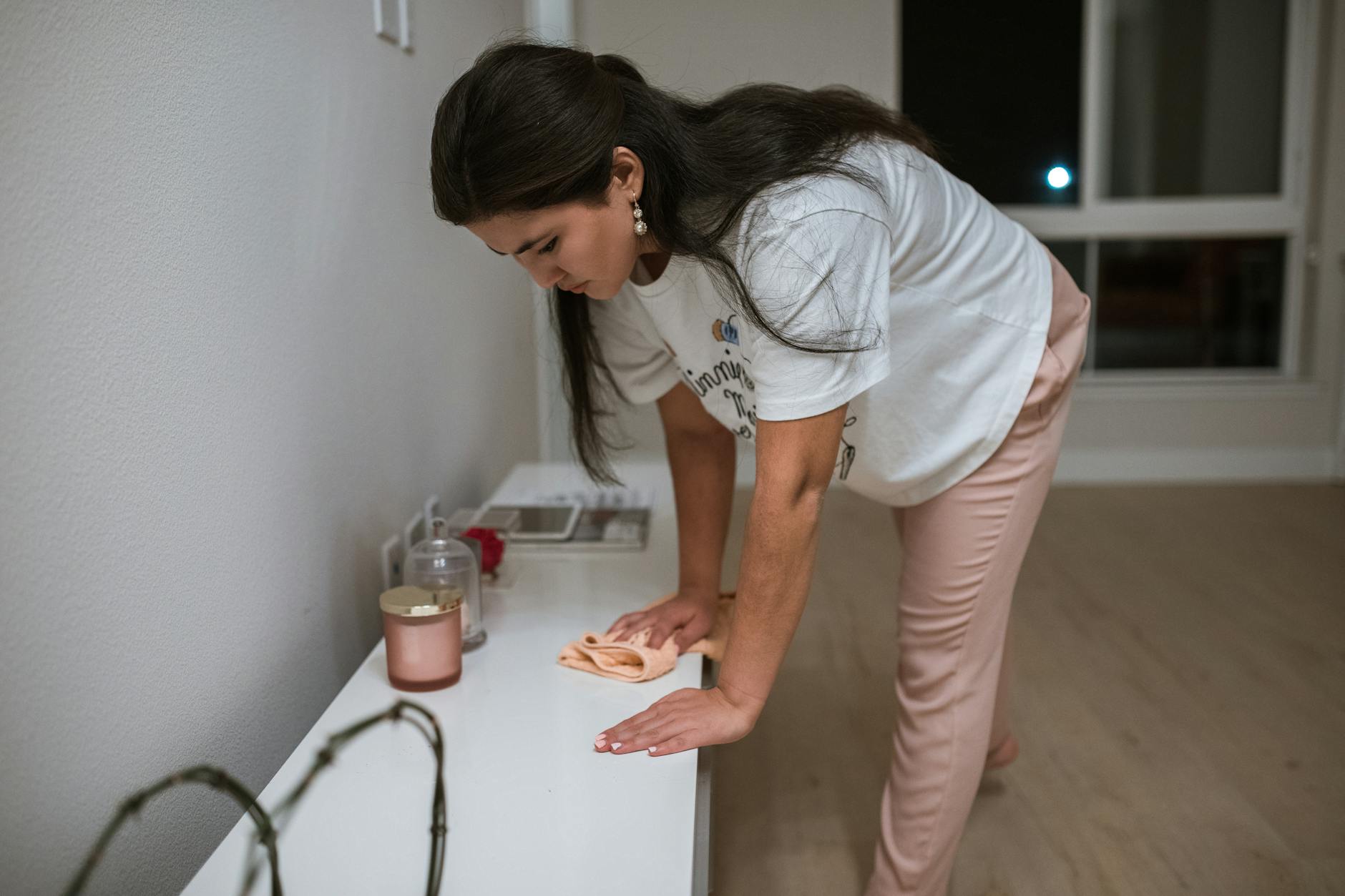
Dust settles downward, which means you should always dust from the ceiling down to the floor, never the other way around. Start with ceiling fan blades, then work your way to shelves, furniture tops, and finally baseboards. Dusting all furniture and objects this way means loose particles fall onto surfaces you have not cleaned yet, so nothing gets double-dirtied.
In Scottsdale, desert dust is a real concern. Fine particulate matter can settle indoors fast, especially if you open windows during windy stretches. According to the EPA’s guidance on indoor air quality, keeping indoor surfaces free of dust and particulate buildup is one of the most effective ways to protect household air quality. A microfiber cloth traps dust rather than pushing it around, which makes a noticeable difference compared to a dry rag or feather duster.
Dust lamp shades, picture frames, and decorative objects weekly.
Use a damp microfiber cloth on wood furniture to pick up fine desert dust.
Vacuum upholstered furniture with a brush attachment after you dust.
3. Vacuum and Mop the Whole Apartment on the Same Day
Vacuuming and mopping go hand in hand. Vacuuming first picks up the loose debris, hair, and dry grit. Mopping after that gets the sticky residue, tracked-in dirt, and anything the vacuum missed. If you mop without vacuuming first, you just push wet debris around your floors.
For a Scottsdale apartment, hard flooring is common, which means mopping matters more than it does in carpeted spaces. Use a damp mop rather than a soaking wet one, especially on tile grout, because excess water can seep into cracks over time. The Good Housekeeping cleaning team recommends wringing your mop until it is just damp to the touch before each pass. Vacuum the entire apartment first, then mop room by room, and let each section dry before walking on it.
Vacuum under beds and sofas at least every two weeks.
Use a vacuum with a HEPA filter to capture fine dust and allergens common in dry climates.
Mop kitchen floors last since they are typically the dirtiest.
If you want a trusted apartment cleaning service to handle the vacuuming and mopping for you, Elite Maids has you covered on a weekly, biweekly, or monthly schedule.
4. Clean the Bathroom Thoroughly Every Single Week
The bathroom is the area most people clean least often and the one that shows dirt fastest. A thorough bathroom clean means tackling the toilet bowl, tank, and exterior; scrubbing the shower and tub; wiping the sink, faucet, and mirror; and mopping the floor. Every single week, without exception.
Mold is the sneaky enemy in any bathroom. Scottsdale summers bring humidity spikes that can encourage mold growth even in a city known for dry weather. The CDC’s resources on mold in homes note that keeping surfaces dry and well-ventilated is the single best prevention method. Run the exhaust fan during and after every shower, wipe down shower walls when you get out, and keep a squeegee handy for glass doors.
Spray toilet bowl cleaner first so it has time to work while you clean the rest of the room.
Use a grout brush on tile lines every other week to prevent soap scum buildup.
Wipe the mirror with a dry microfiber cloth after a damp wipe to eliminate streaks.
Replace bath mats weekly or at least shake them out and hang them to dry.
5. Change Your Bedsheets and Bath Towels on a Set Schedule
Fresh bedsheets and clean towels are two of the fastest wins in apartment cleanliness, and both are easy to neglect. Bedsheets should be washed weekly. Towels should be washed every three to four uses. If you wait longer, both become breeding grounds for bacteria, dead skin cells, and dust mites.
Set a specific laundry day rather than doing it “when it feels like it’s time.” Sunday laundry means Monday always starts fresh. This simple habit is cited by Real Simple’s cleaning editors as one of the highest-impact routines for maintaining a clean, healthy home. For Scottsdale renters who run the AC heavily in summer, sheets can accumulate sweat and oils faster than in cooler climates, so the weekly cadence matters even more.
Keep a second set of sheets so laundry day does not mean a bare mattress.
Wash pillowcases separately if acne or skin sensitivity is a concern.
Hang towels flat after each use so they dry completely between uses.
6. Build a Deep Cleaning Apartment Checklist and Use It Monthly
Regular tidying keeps an apartment livable. A deep cleaning apartment checklist keeps it actually clean at a level that weekly surface cleaning cannot reach. A monthly deep clean targets the spots your routine misses: inside the oven, behind the refrigerator, inside cabinets, around the toilet base, grout lines, window tracks, and ceiling corners.
Using an apartment cleaning checklist template makes the job feel less overwhelming because you know exactly what to tackle and in what order. You can find printable versions or download an Apartment Cleaning Checklist PDF from a number of trusted home organization sources. The point is to never rely on memory. A checklist ensures nothing gets skipped.
For those preparing to leave a rental, an apartment cleaning checklist moving out is especially important. Landlords in Scottsdale will typically inspect every surface, including inside appliances and behind fixtures. Check out our ultimate guide to spring cleaning for a comprehensive deep-clean framework you can adapt for any apartment.
Wipe the inside of the microwave and oven monthly.
Pull the refrigerator out and vacuum the coils every three months.
Clean window tracks and door tracks with a stiff brush and damp cloth.
Scrub grout lines in the kitchen and bathroom with a paste of baking soda and water.
Dust ceiling fan blades and light fixtures thoroughly.
If you are searching for professional cleaning in Scottsdale, Elite Maids House Cleaning offers one-time deep cleans that cover every item on your checklist, top to bottom.
7. Focus on the Most Overlooked Areas in Any Apartment
Even diligent cleaners miss spots. The most overlooked areas to clean in an apartment include: the tops of kitchen cabinets, the underside of toilet rims, door handles and light switches, the refrigerator seal gasket, baseboards, the dishwasher filter, and the area around the stove knobs. These spots collect grease, bacteria, and grime silently.
Door handles and light switches deserve special attention because they are high-touch surfaces touched dozens of times a day and rarely wiped down. A quick pass with a disinfecting wipe once a week handles this in under two minutes. For kitchen cabinet tops in a Scottsdale apartment, airborne grease from cooking mixes with desert dust and creates a grimy film that needs a degreaser, not just a damp cloth.
Disinfect light switches and door handles every week.
Clean the dishwasher filter monthly by rinsing it under hot water.
Wipe the refrigerator seal gasket with a damp cloth to prevent mold buildup.
Use a long-handled duster on top of kitchen cabinets monthly.
8. How to Deep Clean Your Apartment Before Moving In or Out
Whether you are moving into a new Scottsdale apartment or handing back keys to a landlord, a move-in/move-out deep clean is not optional. How to deep clean an apartment before moving in means starting with every surface the previous tenant touched: inside closets, inside the oven, bathroom tile, window sills, and cabinet interiors. How to clean your apartment before moving out means leaving it in a condition that meets or exceeds the original move-in standard.
Hiring a professional move-out cleaning service is often the smartest move for renters who want their deposit back without the stress. Professionals follow a checklist designed specifically for landlord inspection standards, covering areas that a DIY clean almost always misses.
Clean inside every oven drawer, not just the main cavity.
Wipe walls and baseboards with a Magic Eraser to remove scuffs.
Descale faucets and showerheads with a white vinegar soak.
Steam clean carpets or hire a carpet cleaner if permitted by the lease.
9. Create a Weekly Apartment Cleaning Schedule You Will Actually Stick To
The difference between people who keep their apartments consistently clean and everyone else is almost always a schedule. A weekly apartment cleaning schedule breaks the workload into small daily tasks so nothing ever piles up to the point of feeling impossible. Rather than spending four hours cleaning on a Saturday, you spend 10 to 15 minutes each day on a rotating focus.
Here is a simple structure that works for most Scottsdale renters:
Monday: Wipe kitchen counters and sink, take out trash.
Tuesday: Dust all furniture and objects in the living room and bedroom.
Wednesday: Clean the bathroom thoroughly, top to bottom.
Thursday: Vacuum the whole apartment.
Friday: Mop hard floors, change towels.
Saturday: Change bedsheets, do laundry.
Sunday: Rest or handle any monthly deep-clean checklist items.
Reading reviews from satisfied clients can help you decide whether to go it alone or call in help. The De La Rosa House Cleaning reviews and other local feedback show just how much Scottsdale residents value a cleaning team that shows up consistently and does the job right.
10. Use the Right Cleaning Products for Your Apartment Surfaces
Not every cleaner works on every surface. Using the wrong product can scratch stone countertops, dull hardwood floors, or strip finish from painted walls. Knowing what to use where is part of how to clean your apartment like a professional.
For those who prefer a safer home environment, eco-friendly cleaning products are worth considering. The EPA Safer Choice program certifies products that are effective without harsh chemicals, which matters especially in apartments with pets or small children. Scottsdale renters who run the AC year-round benefit from low-VOC cleaners because indoor air circulates more than in naturally ventilated spaces.
Use a pH-neutral cleaner on hardwood and sealed stone floors.
Avoid bleach on grout unless diluted; it can weaken the grout over time.
White vinegar and water handles most glass and mirror surfaces streak-free.
Baking soda is a gentle abrasive for sinks and tubs without scratching.
If you prefer to leave the product decisions to the experts, you can browse services like Dry Cleaners Scottsdale or book directly with a professional team that brings everything needed for a complete clean.
11. Know When to Call a Professional Apartment Cleaning Service
There is no shame in admitting your schedule does not leave room for thorough cleaning. Life in Scottsdale is full, and the honest question is not whether you should clean but whether you should clean it yourself every single time. Recurring apartment cleaning from a professional team makes sense if you work long hours, travel frequently, host guests often, or simply want to reclaim your weekends.
Elite Maids House Cleaning serves Scottsdale renters and homeowners with weekly, biweekly, and monthly plans, as well as one-time deep cleaning services for those moments when the apartment needs a full reset. Every cleaner is background-checked, bonded, and insured. The team uses eco-friendly product options and backs every visit with a no-cost reclean guarantee. Booking takes minutes online with an instant quote, and same-day service slots between 8am and 6pm are available.
Book a recurring maid service to keep your apartment consistently clean between deep cleans.
Schedule a one-time deep clean before a big event or after a long travel stretch.
Use move-in/move-out cleaning services before handing back keys to protect your deposit.
Ready to Stop Stressing About Your Scottsdale Apartment? Book Today
Keeping a clean apartment in Scottsdale does not have to eat your free time or your weekends. With a solid weekly schedule, a monthly deep cleaning apartment checklist, and the right products for each surface, your space can stay fresh and comfortable without heroic effort. When life gets too full to keep up, the professionals at Elite Maids House Cleaning are ready to step in. Verified by Eco Mama Green Clean reviews and similar local feedback that Scottsdale residents trust, our team has built a reputation on consistent, thorough results. Contact Elite Maids house cleaning today for a free quote and let us do the heavy lifting so you can enjoy everything Scottsdale has to offer.
Frequently Asked Questions
How do people keep their apartments so clean?
People who consistently keep clean apartments usually do two things: they follow a daily or weekly schedule that breaks the work into small tasks, and they clean as they go rather than letting messes accumulate. Wiping the kitchen counter after cooking, hanging towels to dry after a shower, and doing a quick vacuum at the end of the week add up to a noticeably cleaner space without any single marathon cleaning session.
What are the most overlooked areas to clean?
The most overlooked areas in any apartment are door handles, light switches, the refrigerator seal gasket, the dishwasher filter, cabinet tops, and the area around stove knobs. These high-touch or hard-to-reach spots collect bacteria, grease, and grime silently. Adding them to a monthly deep cleaning apartment checklist ensures they get attention before buildup becomes a real problem.
How often should I deep clean my Scottsdale apartment?
A thorough deep clean should happen at minimum once a month for most Scottsdale apartments. In the desert climate, fine dust and airborne particles settle indoors quickly, making regular deep cleaning more important than in wetter climates. If you have pets, host guests regularly, or suffer from allergies, every two to three weeks is a better target for a full deep clean.
What should be on an apartment cleaning checklist for moving out?
An apartment cleaning checklist for moving out should cover the inside of all appliances, cabinet interiors, bathroom grout and fixtures, windows and window tracks, baseboards, walls for scuffs, and all flooring. Scottsdale landlords often deduct from deposits for oven grease and bathroom mold, so those two areas need extra attention. Hiring a professional move-out cleaning team removes the guesswork entirely.
Is it worth hiring a professional cleaning service for a Scottsdale apartment?
Professional cleaning services Scottsdale residents rely on are worth the investment for anyone whose schedule does not allow consistent deep cleaning. A professional team covers every item on the checklist, uses the right products for each surface, and takes the stress of inspection-ready cleaning off your plate, whether for routine upkeep or a move-out situation.
Deep Clean Essentials Every Scottsdale Homeowner Needs to Know
SHARE:
A full deep clean covers every surface, corner, and hidden space in your home, going far beyond a standard weekly tidy. The absolute essentials include the right tools, effective cleaning products, a room-by-room plan, and enough time to do each task properly. This post walks Scottsdale homeowners through every step, from the supplies you need to the smartest order to tackle each room, so your home gets genuinely clean from top to bottom.
Deep Clean Checklist: The Supplies You Actually Need
Before you start a deep cleaning session, gathering the right supplies saves you from stopping mid-task and losing momentum. A proper deep clean requires more than an all-purpose spray and a roll of paper towels. Here is what should be on your list before you begin a thorough cleaning of any Scottsdale home:
Microfiber cloths (at least a dozen): These lift dust and bacteria more effectively than cotton rags. A microfiber cloth traps particles instead of pushing them around.
HEPA-filter vacuum: Arizona homes collect fine dust and allergens quickly. A vacuum with a HEPA filter captures 99.97% of particles, protecting indoor air quality.
Grout brush and stiff-bristle scrub brushes: For tile, grout lines, and oven grates that a sponge simply cannot reach.
Extendable duster: Ceiling fans, light fixtures, and top-of-cabinet dust are a constant battle in the desert.
Baking soda and white vinegar: A classic combination for scrubbing sinks, deodorizing drains, and cutting through mineral buildup left by Scottsdale’s hard water.
Disinfecting spray or wipes: High-touch surfaces such as door handles, light switches, and remote controls need a proper disinfectant, not just a wipe-down.
Steam cleaner (optional but powerful): Grout, tile floors, and upholstery respond extremely well to steam.
Bucket, mop, and floor-specific cleaner: Choose a product rated for your floor type, whether it is tile, hardwood, or luxury vinyl.
According to Good Housekeeping’s cleaning guidance, having everything staged in a caddy before you start cuts deep cleaning time by nearly a third. That holds true whether you are doing a one-time deep clean or prepping a home for new occupants. If you would rather skip the supply run entirely, Professional cleaning services Scottsdale residents rely on will bring every tool and product to your door.
Room-by-Room Deep Cleaning Guide for Scottsdale Homes
One of the biggest mistakes people make during a deep cleaning is bouncing from room to room without a plan. A structured, room-by-room approach keeps you efficient and makes sure nothing gets missed. For Scottsdale homes specifically, the desert climate creates unique challenges: fine dust infiltrates everywhere, hard water leaves mineral deposits on faucets and glass, and sun exposure fades and dries out surfaces faster than in cooler climates.
Kitchen Deep Clean
The kitchen demands the most attention in any thorough cleaning. Start at the top and work down: wipe cabinet fronts, degrease the range hood filter, clean inside the oven and microwave, descale the coffee maker, and wipe down all appliance exteriors. Pull the refrigerator out from the wall to vacuum the coils and mop the floor beneath it. Finish with the sink, faucet, and floor. The Real Simple cleaning team recommends degreasing range hoods every month in households that cook regularly, since built-up grease is both a fire hazard and a magnet for grime.
Bathroom Deep Clean
Scottsdale’s hard water means calcium and limescale build up on showerheads, faucets, and glass enclosures faster than in most other cities. Soak showerheads in white vinegar overnight to dissolve deposits. Scrub grout with a stiff brush and a baking soda paste, disinfect the toilet inside and out (including the base and behind the tank), and wipe down vents, mirrors, and baseboards. Mold thrives in poorly ventilated bathrooms. The CDC’s guidance on mold in homes recommends keeping bathroom humidity below 50% and cleaning tile regularly to prevent spore growth.
Bedrooms and Living Areas
Wash all bedding, including pillowcases, duvet covers, and mattress covers, at a high temperature. Flip or rotate the mattress and vacuum it with the upholstery attachment. Dust ceiling fans, light fixtures, and blinds before vacuuming floors so fallen particles get picked up. Move sofas and furniture to vacuum underneath. Wipe down all baseboards, windowsills, and door frames, which are notorious dust collectors in desert climates.
Eco-Friendly Cleaning Products That Work in the Arizona Climate
Many Scottsdale families are making the switch to safer, greener cleaning products, and for good reason. Conventional cleaning sprays can release volatile organic compounds (VOCs) into your home’s air, and in a climate where windows stay closed for air conditioning most of the year, those compounds accumulate fast. The EPA’s Safer Choice program certifies products that are effective without the toxic load, and many of those products work just as well on Arizona’s stubborn mineral deposits and desert dust as conventional chemicals do.
Look for plant-based degreasers, fragrance-free disinfectants, and concentrated formulas you dilute yourself to reduce plastic waste. Baking soda, castile soap, and hydrogen peroxide handle the vast majority of household cleaning tasks without harsh fumes. If you are sensitive to chemical smells or have young children and pets at home, requesting eco-friendly products is always an option when you book a cleaning online with a professional service.
Deep cleaning services from Elite Maids include eco-friendly product options on request, so you get a thorough cleaning without filling your home with harsh chemical residue.
How Often Should You Deep Clean Your Home in Scottsdale?
This is a question Scottsdale homeowners ask all the time, and the honest answer depends on your household size, pets, and lifestyle. As a baseline, most homes benefit from a full deep clean two to four times a year. However, desert dust, pollen season, and high monsoon humidity during summer months can push that frequency higher for allergy sufferers or families with young children.
Here is a practical frequency guide:
Every 3 months: Full deep clean of all rooms, appliances, and hard-to-reach areas.
Monthly: Wipe inside the microwave and oven, descale faucets, clean ceiling fan blades, and sanitize trash cans.
Weekly: Surfaces, floors, bathrooms, and kitchen counters as part of a routine maid service visit.
Seasonally: Before and after monsoon season is smart timing for Scottsdale homes. Post-storm dust and increased humidity create perfect conditions for mold and allergens.
The American Lung Association’s indoor air guidance strongly recommends regular cleaning of HVAC filters and surfaces to reduce airborne allergens, which is especially relevant in a high-pollen, high-dust environment like Scottsdale.
If you are preparing for a gathering, the holiday cleaning service from Elite Maids is designed to get your home guest-ready from top to bottom in a single visit.
Deep Cleaning vs. Regular House Cleaning: What Is the Difference?
A regular house cleaning keeps your home maintained between deeper sessions. It covers surfaces, floors, bathrooms, and kitchens at a surface level: wiping counters, mopping floors, scrubbing toilets, and vacuuming. A deep clean goes substantially further. It hits the inside of the oven, the grout lines, behind appliances, inside cabinets, baseboards, window tracks, light switches, door frames, and vents.
Think of regular cleaning as maintenance and deep cleaning as a reset. Most professional cleaning companies, including Elite Maids House Cleaning, recommend starting with a deep clean before switching to a recurring schedule. That way, the regular visits maintain a home that is already at a high standard rather than playing catch-up every time.
The Spruce’s cleaning resource library draws the same distinction: a deep clean is a one-time intensive reset, while recurring visits keep the baseline from slipping. House cleaners Scottsdale homeowners book often start with a deep clean and then transition to a weekly or biweekly schedule for ongoing maintenance.
Move-In and Move-Out Deep Cleaning in Scottsdale
Moving is one of the most common triggers for a full deep clean, and for good reason. Whether you are leaving a property and want your security deposit back or moving into a new home and want a fresh start, a professional house cleaning during a move covers areas that standard recurring service does not always reach: inside closets and cabinets, appliance interiors, window tracks, light fixtures, and garage floors.
In Scottsdale’s competitive rental and real estate market, move-out cleanliness directly affects security deposit returns and property turnover speed. A Scottsdale landlord or property manager will almost always inspect for grout condition, appliance cleanliness, and wall scuffs before releasing a deposit. Hiring professionals for a move-out clean is almost always cheaper than the deductions a rushed DIY job can cost you.
For anyone searching for cleaning Scottsdale Reddit recommendations, the consensus is consistent: professional move-out cleaning saves time, stress, and money compared to doing it yourself the night before handing over keys.
Why Hire a Professional Deep Cleaning Service in Scottsdale
DIY deep cleaning is absolutely possible, but it takes a full day (often two) and requires the right supplies, the right techniques, and the stamina to stay focused for hours. Most Scottsdale homeowners who try it once end up hiring professionals the second time around. Here is what a professional deep cleaning service brings that a solo effort typically cannot match:
Trained technique: Professional cleaners know the correct products for each surface, the right dwell times for disinfectants, and how to clean without spreading contamination from room to room.
Commercial-grade equipment: HEPA vacuums, professional steam cleaners, and industrial microfiber tools get results that consumer products often cannot replicate.
Speed and efficiency: A two-person professional team can deep clean a three-bedroom home in the time it would take one person to finish just the kitchen and bathrooms.
Accountability: Reputable companies are bonded and insured, and the best ones back every visit with a satisfaction guarantee. Elite Maids backs every clean with a no-cost reclean guarantee if anything is missed.
Background-checked cleaners: Every cleaner from Elite Maids is background-checked and five-star rated, so you can feel comfortable having them in your home.
Consumer Reports’ analysis of cleaning services consistently finds that professional services outperform DIY efforts in sanitization benchmarks, particularly in kitchens and bathrooms where bacterial contamination is highest. For Scottsdale families who value their weekends, hiring a professional home cleaning service is one of the most efficient investments in home comfort you can make.
A full deep clean goes well beyond a standard maintenance visit. It typically includes cleaning inside appliances (oven, microwave, refrigerator), scrubbing grout and tile, wiping down baseboards, door frames, and window tracks, sanitizing high-touch surfaces, dusting ceiling fans and light fixtures, and vacuuming under and behind furniture. Professional deep cleaning services cover all of these areas in a single visit.
How long does a deep clean take?
For a standard two- to three-bedroom Scottsdale home, a professional deep clean typically takes three to six hours depending on the home’s current condition and square footage. A team of two cleaners can cut that time nearly in half. DIY deep cleaning generally takes longer because of interruptions, supply runs, and the learning curve on technique for challenging areas like grout or oven interiors.
How often should you deep clean your house?
Most cleaning professionals recommend a thorough deep clean two to four times per year. In Scottsdale, the arrival of monsoon season and the end of winter pollen season are natural trigger points. Homes with pets, young children, or allergy sufferers often benefit from a deep cleaning every six to eight weeks to keep allergen loads manageable and indoor air quality high.
What is the difference between a deep clean and a regular clean?
A regular clean maintains surfaces between sessions: counters, floors, bathrooms, and kitchens at a surface level. A deep clean resets the home by addressing areas that are rarely touched in a routine visit, such as appliance interiors, cabinet fronts, grout lines, vents, and behind furniture. Most cleaning companies recommend starting with a deep clean before beginning any recurring service schedule.
Is it worth hiring a professional for deep cleaning in Scottsdale?
Yes, for most homeowners it is. Professional deep cleaning services bring trained technique, commercial-grade equipment, and time efficiency that are hard to replicate on your own. In Scottsdale, where hard water, desert dust, and high sun exposure create unique cleaning challenges, professional cleaners who know how to handle those conditions get consistently better results than a DIY approach, and they free up your entire weekend in the process.
5 Cleaning Myths Scottsdale Homeowners Believe That Are Making Their Homes Dirtier
SHARE:
Some of the most common cleaning myths Scottsdale homeowners follow are actually working against them, leaving surfaces dirtier, spreading bacteria, and quietly damaging finishes. These misconceptions get passed down through generations and feel like common sense, but the science tells a different story. This post breaks down the five biggest cleaning myths and shows you what actually works instead.
If you live in Scottsdale and want a home that is genuinely clean rather than just looking clean, keep reading. Whether you are doing your own weekly tidying or considering bringing in help, knowing the difference between cleaning fact and fiction makes every effort count. You can also Find Trusted House Cleaning Services in Scottsdale, AZ if you would rather leave the work to professionals who get it right every time.
Most people learn how to clean a home from whoever raised them. That knowledge gets locked in early and rarely gets questioned. The problem is that a lot of it is outdated, based on faulty logic, or just flat-out wrong. Common cleaning misconceptions can leave your kitchen sponge teeming with bacteria, your bathroom surfaces coated in chemical residue, and your floors looking dull within days of mopping. Before we get into each myth individually, it helps to understand why these false cleaning beliefs stick around: they feel intuitive, and no one is testing them with a microscope in their kitchen. Good Housekeeping’s cleaning experts have spent years documenting exactly how popular cleaning habits fall short, and the patterns are consistent.
If you want to see how local homeowners compare on Cleaning in scottsdale prices and what a professional clean actually covers, you can get an instant quote without picking up the phone.
Myth 1: More Cleaning Product Means a Cleaner Surface
This is one of the most widespread cleaning product myths out there. The reasoning makes sense on the surface: if a little soap cleans well, more soap must clean better. In reality, using too much cleaning product leaves a sticky residue on countertops, floors, and appliances. That residue attracts dust, traps dirt, and makes surfaces look grimy faster than if you had used less product to begin with.
Overusing cleaning solutions is especially common with multi-purpose sprays. When you saturate a counter and wipe it quickly, the surfactants do not fully lift off. Within hours, that surface has a thin film that collects whatever floats through your Scottsdale home: dust, skin cells, pet dander. The fix is simple. Use the recommended amount on the label, and always follow a cleaning product with a damp rinse cloth to remove any residue left behind. According to Consumer Reports’ laundry and cleaning research, using the correct product dosage consistently outperforms over-application in both cleanliness and surface longevity.
This myth also applies to laundry. Too much detergent leaves buildup inside your washing machine drum and on your clothes, making them feel stiff and smell musty faster. The right amount, used consistently, is always the better approach.
Myth 2: Bleach Cleans Everything
Bleach has a reputation as the ultimate household cleaner, and that reputation is only partially earned. Bleach is a powerful disinfectant on hard, non-porous surfaces, but it does not actually clean. It kills germs on surfaces that are already clean, but if a surface has grease, soap scum, or food residue on it, the bleach cannot reach the bacteria underneath. You end up disinfecting dirt rather than the surface itself.
This bleach cleaning myth leads a lot of Scottsdale homeowners to skip the actual cleaning step and go straight to dousing surfaces with bleach, feeling confident the job is done. It is not. The correct process is to clean the surface first with an appropriate cleaner to remove physical soil, then disinfect with bleach or another disinfectant if needed. The CDC’s guidance on mold in homes also makes clear that bleach alone is not adequate for porous surfaces like grout or drywall, where mold can grow beneath the surface layer.
There is also the indoor air quality angle. Bleach releases chlorine gas when it interacts with ammonia-based cleaners, and even on its own it releases volatile organic compounds that can irritate the lungs, especially in enclosed bathrooms. Ventilation matters every time you use it.
Myth 3: Feather Dusters Are Great for Removing Dust
Feather dusters are satisfying to use and look the part, but they are one of the least effective dusting tools available. Rather than trapping and removing dust, a feather duster redistributes it. It sweeps particles off surfaces and launches them into the air, where they float for several minutes before settling right back onto the same shelves, furniture, and floors you just dusted.
This is a particularly relevant dust removal myth for Scottsdale homes. The desert environment means significantly more fine particulate matter in outdoor air, and it finds its way inside constantly through doors, windows, and HVAC systems. Using the wrong dusting tool in a high-dust environment means you are essentially cycling the same dust around your home indefinitely. The American Lung Association’s indoor air quality guidance specifically recommends microfiber cloths and tools for dusting because they electrostatically attract and hold particles rather than scattering them.
A damp microfiber cloth or a vacuum with a soft brush attachment is the right tool for shelves, baseboards, and ceiling fans. If you want to understand how microfiber compares to other materials in real-world use, the breakdown on microfiber vs cotton cloths for home cleaning is worth reading. The short answer: microfiber wins every time for dust removal.
Myth 4: Vinegar Is a Safe Cleaner for Every Surface
Vinegar has earned its spot as a natural cleaning staple, and it genuinely works well in specific situations. It cuts through mineral deposits, handles light grease on glass, and works fine on sealed tile. But the vinegar cleaning myth that it is a safe, universal cleaner for every surface in your home has caused a lot of damage to a lot of kitchens and bathrooms.
Natural stone countertops, including marble, travertine, and granite, are acid-sensitive. A single application of undiluted vinegar can etch the surface permanently, leaving dull spots that no amount of polishing will fix. The same applies to grout: repeated vinegar use breaks down the cement-based material, loosening grout and making it more porous, which actually makes mold and staining worse over time. Hardwood floors are another casualty of the vinegar myth. The acidity strips the finish over repeated use, dulling the wood and shortening its lifespan. The Spruce cleaning guides consistently warn against vinegar on stone, grout, and wood for exactly these reasons.
Use vinegar where it belongs: on glass, stainless steel, and sealed ceramic tile. For everything else, choose a surface-appropriate cleaner. If you are scheduling a deep cleaning service and want eco-friendly products used on your specific surfaces, make sure you communicate that when booking so the right products go to the right places.
Scottsdale homes often feature natural stone in kitchens and bathrooms because it suits the aesthetic of the area. Knowing what not to use on those surfaces is just as important as knowing what to use. You can check out cleaning in scottsdale to see how a professional team handles surface-specific products correctly on every visit.
Myth 5: A Visually Clean Home Is a Sanitary Home
This is the most dangerous home cleanliness myth on the list because it provides false confidence. A home can look spotless and still harbor bacteria, mold spores, allergens, and dust mite colonies in places that never get attention during a typical surface clean.
The areas that drive the biggest gap between appearance and actual cleanliness include: the inside of your refrigerator seals, the underside of toilet rims, the inside of your dishwasher filter, grout lines in showers, the tops of door frames, and the area behind and beneath major appliances. These spots are out of sight during regular tidying, so they accumulate grime for months or years. The EPA’s mold resources note that moisture and organic material in hidden areas are the primary drivers of mold growth inside homes, which can affect indoor air quality long before you see or smell anything.
The fix is a scheduled house cleaning that goes beyond surface wiping. A true deep clean addresses the neglected zones that a standard tidy misses entirely. For Scottsdale homeowners who want to reset their home’s cleanliness, scheduling a one-time deep clean before switching to recurring maintenance visits is one of the most effective strategies available.
If you have been following this myth and skipping those hidden zones, you are not alone. A related post on cleaning mistakes that make your home dirtier goes deeper into the specific habits that undercut an otherwise diligent cleaning routine. It is a useful companion to this list.
What Scottsdale Homeowners Should Do Instead
Replacing bad cleaning habits with good ones does not have to be complicated. A few straightforward changes make a real difference in how clean your home actually is, not just how clean it looks.
Always clean before you disinfect. Remove physical soil first, then apply your disinfectant so it can do its job on a clean surface.
Use the correct amount of product. Check labels and measure when possible. More product is not more effective.
Switch to microfiber cloths for dusting. They trap particles rather than redistributing them, which matters in Scottsdale’s dusty desert climate.
Know your surfaces. Stone, wood, and grout each need specific products. Vinegar, bleach, and generic sprays are not universal solutions.
Schedule deep cleaning regularly. At minimum, a thorough deep clean twice a year catches the hidden buildup a weekly tidy cannot reach. You can review the ultimate guide to spring cleaning for a detailed breakdown of what a full reset should cover.
Check your cleaning tools. A dirty sponge, a clogged vacuum filter, or a rinsed-but-not-clean mop all spread bacteria more than they remove it.
For homeowners who want consistent results without the time investment, a recurring maid service removes the guesswork entirely. When a professional team arrives with the right tools, the right products for each surface, and a checklist that includes those often-missed zones, the gap between how clean your home looks and how clean it actually is disappears. Many Scottsdale residents who try professional home cleaning services once end up keeping them on a biweekly schedule because the difference is that noticeable.
You can also check out how other Arizona homeowners have navigated similar cleaning pitfalls in this post on cleaning myths in San Tan Valley homes for additional perspective.
Check what other Scottsdale clients are saying and get local House cleaners Scottsdale pricing details before you book.
Ready to Stop Cleaning Harder and Start Cleaning Smarter in Scottsdale?
Elite Maids House Cleaning has built its reputation in Scottsdale on one simple promise: a genuinely clean home, not just a surface-level tidy. Every cleaner on the team is background-checked, bonded, insured, and trained on the right products for the right surfaces. Whether you need a one-time deep clean to reset your home or a recurring schedule that keeps things consistently clean, you can book online for same-day service and get an instant quote without a phone call. Every visit is backed by a reclean-at-no-cost satisfaction guarantee. Stop letting cleaning myths undercut your efforts and let the Professional Home Cleaners in Scottsdale, AZ take care of it properly. Contact Elite Maids house cleaning today for a free quote and find out how much cleaner your Scottsdale home can actually be.
Frequently Asked Questions
Does vinegar actually disinfect surfaces?
Vinegar has mild antimicrobial properties, but it is not a registered disinfectant and it does not kill common pathogens like Salmonella or Staphylococcus at the levels needed to be effective. It works well for mineral deposits and light grease on appropriate surfaces, but for true disinfection on non-porous surfaces you need an EPA-registered disinfectant product used according to label directions.
How often should Scottsdale homeowners schedule a deep clean?
Most Scottsdale homes benefit from a thorough deep clean at least twice a year, with recurring maintenance cleaning in between. The desert environment brings elevated dust, pollen, and fine particulate matter indoors, which means buildup happens faster here than in other climates. A deep clean before monsoon season and again after it ends is a schedule many local homeowners find practical.
Is a clean-looking home actually clean?
Not necessarily. Bacteria, mold spores, and allergens accumulate in areas that look fine visually: inside appliance seals, behind toilets, in grout lines, and beneath furniture. Regular surface cleaning maintains appearances, but a scheduled deep clean targeting these hidden zones is what actually reduces pathogen load and improves indoor air quality in a meaningful way.
What cleaning products should I avoid mixing?
Never mix bleach with ammonia-based cleaners, as this produces toxic chloramine gases. Bleach and vinegar together release chlorine gas. Hydrogen peroxide and vinegar combined form peracetic acid, which can irritate lungs and skin. Always read labels and clean surfaces with one product before applying another. When in doubt, rinse a surface thoroughly between different cleaning agents.
Why does my home get dusty again so quickly after cleaning?
If dust returns within a day or two, the likely cause is that your dusting method is redistributing particles rather than removing them. Feather dusters, dry cotton rags, and dry paper towels all scatter dust into the air instead of capturing it. Switching to damp microfiber cloths and vacuuming with a HEPA-filter vacuum before dusting surfaces significantly reduces how quickly dust settles back.