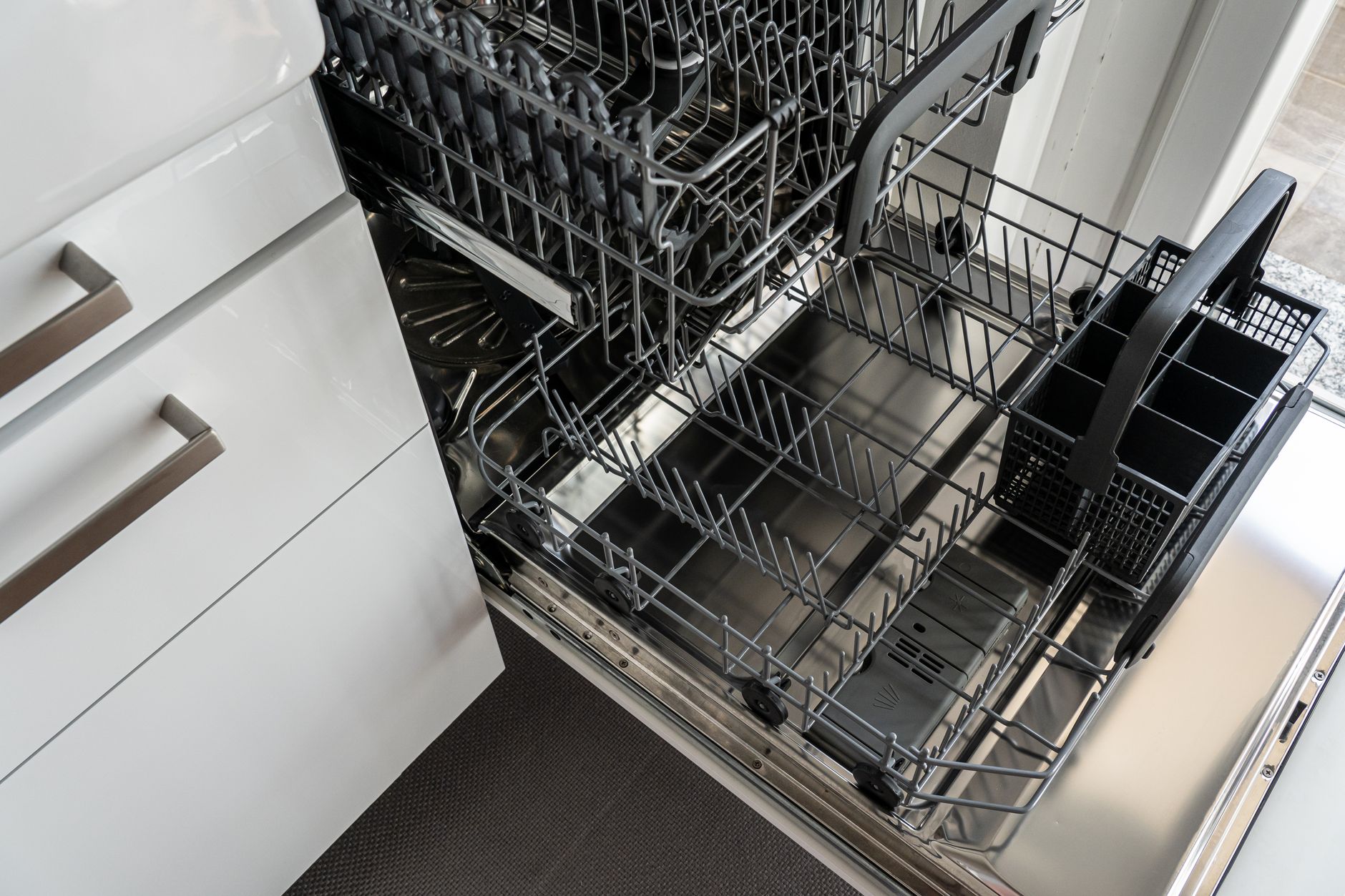
Cleaning a dishwasher step by step takes about 30 minutes and requires nothing fancier than white vinegar, baking soda, and a stiff brush. Start by removing and rinsing the filter, wipe down the door gasket and spray arms, run a hot vinegar cycle, then follow with a baking soda rinse. This guide walks Phoenix homeowners through every step so your machine comes out spotless and odor-free. If deep-cleaning your entire kitchen is the goal, our team at Elite Maids House Cleaning also offers Luxury cleaning services phoenix, so you can hand off the hard work entirely.
Step 1: Gather Your Supplies Before You Start
Before you begin cleaning the dishwasher, pull together everything you need so you are not running around mid-task. Having your materials ready makes the whole process faster and more thorough. Phoenix tap water is notoriously hard, so you will also want a descaling solution or plain white vinegar on hand to cut through mineral buildup that accumulates quickly in the Valley’s water supply.
A commercial dishwasher cleaner tablet (optional, see Step 5)
If you prefer eco-friendly cleaning options, the EPA Safer Choice program lists certified products that clean effectively without harsh chemicals. That matters whether you are running a quick refresh or doing a full deep clean of your kitchen appliances. For a broader approach to cleaning your kitchen from top to bottom, our guide on deep cleaning a kitchen in Phoenix covers every surface in detail.
Step 2: How to Clean a Dishwasher Filter
The dishwasher filter is the single most neglected part of the appliance, and it is almost always the source of bad smells. Most modern dishwashers have a manual-clean filter located at the bottom of the tub, usually a cylindrical piece that twists out by hand. If your machine is a KitchenAid dishwasher or a Samsung dishwasher, check your owner’s manual first because filter locations vary slightly by brand.
Follow these steps to clean the dishwasher filter properly:
Pull out the bottom rack and set it aside.
Locate the filter assembly in the center or rear of the tub floor.
Twist the filter counterclockwise and lift it out.
Rinse it under warm running water, scrubbing gently with a soft brush and dish soap.
For stubborn grease, soak the filter in warm soapy water for 10 minutes, then scrub again.
Rinse thoroughly and replace it by twisting clockwise until it locks into place.
Make cleaning the dishwasher filter a monthly habit. In Phoenix, where hard water leaves mineral scale on every surface it touches, a clogged filter forces the machine to work harder and leaves gritty residue on your dishes. Consumer Reports consistently flags filter maintenance as one of the top reasons dishwashers underperform over time.
Step 3: Wipe Down the Spray Arms, Door Gasket, and Interior Walls
Once the filter is back in place, shift your attention to the spray arms, door gasket, and the interior walls of the tub. These spots trap grease, food debris, and mold spores, especially in a warm climate like Phoenix, where heat accelerates microbial growth inside damp appliances.
Here is how to tackle each area:
Spray arms: Pull the spray arms off (most snap or unscrew easily) and hold them under running water. Use a toothpick or thin brush to clear any clogged holes. Rinse and reattach.
Door gasket: The rubber seal around the door edge collects mold and mildew. Wipe it down with a damp microfiber cloth dipped in warm soapy water, pressing into every fold. The CDC’s guidance on mold in homes notes that rubber seals in humid, enclosed spaces are common mold hotspots, so this step is more important than most people realize.
Interior walls and door: Spray a little white vinegar on a cloth and wipe down the inside walls, the door panel, and the bottom of the tub. Pay extra attention to the sides of the door where soap scum builds up.
Utensil baskets and racks: Remove the racks, rinse them in the sink, and scrub any coated tines that show rust or residue.
Skipping this manual wipe-down and relying only on machine cycles is a common mistake. The spray arms cannot reach the door gasket or the crevices along the tub edges, so hand-cleaning those areas is always necessary for a truly clean dishwasher interior.
Step 4: How to Clean a Dishwasher with Vinegar and Baking Soda
Cleaning a dishwasher with vinegar and baking soda is the most popular natural method, and for good reason. White vinegar cuts through grease, dissolves mineral deposits, and neutralizes odors. Baking soda follows up with a gentle abrasive scrub that brightens the interior and absorbs lingering smells. Together, they tackle what daily wash cycles leave behind.
Here is the step-by-step method for cleaning a dishwasher with vinegar:
Place a dishwasher-safe bowl filled with 2 cups of white distilled vinegar on the top rack of an otherwise empty dishwasher.
Run a full hot-water cycle. The vinegar disperses through the machine, breaking down grease, soap scum, and hard-water scale.
Once the cycle ends and the machine cools slightly, sprinkle 1 cup of baking soda across the bottom of the tub.
Run a short hot-water cycle again.
Open the door and let the tub air dry. You should notice a noticeably fresher smell and a cleaner-looking interior.
This method for cleaning a dishwasher with vinegar and baking soda works on most machines, including Whirlpool, KitchenAid, Samsung, and Bosch models. If you want to skip using vinegar entirely (some manufacturers advise caution with rubber gaskets and older machines), you can substitute a citric-acid-based cleaner. The Good Housekeeping cleaning team recommends citric acid as a gentler alternative for machines with rubber components that have seen a lot of use.
Step 5: What Is the Best Dishwasher Cleaner for Hard Water?
Hard water is one of the top complaints from Phoenix homeowners when it comes to dishwasher performance. Phoenix sits in a region where water hardness regularly exceeds 200 parts per million, leaving white cloudy deposits on glassware, the tub walls, and the spray arms. Choosing the right dishwasher cleaner for hard water makes a real difference in how well your machine cleans and how long it lasts.
Here are the options worth knowing:
Commercial dishwasher cleaning tablets (Affresh, Finish, Cascade): Affresh dishwasher cleaner tablets are among the most widely recommended for hard-water mineral buildup. Drop one in the bottom of an empty machine and run a hot cycle. Affresh’s formula is designed specifically to break down limescale and iron deposits.
Citric-acid powder: A natural and effective hard-water dishwasher cleaner. Add 2 to 3 tablespoons to the detergent dispenser and run a hot cycle. It dissolves calcium deposits without the smell of vinegar.
White vinegar cycles (see Step 4): A solid DIY option for mild to moderate hard-water buildup, though it requires more frequent application than commercial tablets.
Rinse aid: Adding rinse aid to the dispenser every few weeks prevents new mineral deposits from forming on dishes and interior surfaces. This is especially useful in Phoenix where hard water is a constant factor.
If your dishwasher has heavy scaling that none of these approaches are fully clearing, it may be time for a professional appliance service call. That level of mineral buildup is common in Phoenix homes that have gone a year or more without a proper machine cleaning.
Speaking of which, if the rest of your home needs the same attention your dishwasher just got, our deep cleaning service covers every room from top to bottom with the same thorough approach outlined in this guide. You can also book a cleaning online and get an instant quote without picking up the phone.
Step 6: How to Get Rid of Dishwasher Odors
A smelly dishwasher is almost always caused by food debris rotting in the filter, mold growing in the door gasket, or standing water that never fully drains. In Phoenix, the combination of heat and trapped moisture creates the perfect environment for odors to develop fast. Getting rid of dishwasher odors is about eliminating the source, not just masking the smell.
Here is how to remove dishwasher odors for good:
Clean the filter first (see Step 2). This removes the most common odor source immediately.
Wipe the gasket with a vinegar-soaked cloth. Mold hiding in the rubber folds is a very common culprit for that musty smell.
Check the drain: Run the garbage disposal before starting a dishwasher cycle if your units share a drain line. A clogged disposal backs water into the dishwasher tub.
Leave the door cracked: After every cycle, crack the dishwasher door open a few inches to let steam escape and air circulate. This simple habit prevents mold and mildew from taking hold.
Run a baking soda cycle monthly: Sprinkle a cup of baking soda across the tub bottom and run a short hot cycle. Baking soda is a natural odor absorber and neutralizer.
Persistent odors that return within days of cleaning usually point to a drain problem or a gasket that needs replacing. If you are dealing with mold growth beyond just the gasket, the EPA’s mold resources are worth reviewing, particularly for households with young children or anyone with respiratory sensitivities.
For more practical kitchen cleaning habits that prevent odors throughout your home, read our tips on cleaning oven racks without chemicals, another often-neglected appliance surface.
Step 7: How Often Should You Clean Your Dishwasher?
How often you should clean your dishwasher depends on how heavily you use it and the quality of your water supply. For most Phoenix households, which deal with hard water daily, the following schedule works well:
Weekly: Wipe the door gasket and exterior controls with a damp cloth. Rinse any visible debris from the filter area.
Monthly: Remove and fully clean the filter. Run a full vinegar cycle followed by a baking soda cycle. Wipe down the spray arms and interior walls.
Every 3 months: Use a commercial dishwasher cleaner tablet like Affresh for a deeper descale treatment. Check the spray arm holes for clogs and clear them if needed.
Annually: Inspect the door gasket for cracks or mold that has penetrated the rubber. A worn gasket should be replaced.
If you run your dishwasher once or twice a day (common in larger Phoenix households with kids), lean toward monthly cleaning rather than stretching it to six weeks. The more cycles the machine runs, the faster buildup accumulates. The Spruce’s cleaning team puts it plainly: a dishwasher that is cleaned regularly not only smells better but uses less energy because water moves more freely through unclogged spray arms and filters.
Staying on top of regular appliance cleaning is part of keeping a clean house overall. If you want a system for the whole home, our post on house cleaning tips for a spotless home breaks down a realistic routine you can actually stick to.
Keeping up with regular dishwasher cleaning is one of those habits that pays off in multiple ways. Most Phoenix homeowners do not think about it until the machine starts leaving spots on glasses or smelling musty, but by that point the buildup has already been affecting performance for weeks.
Here is what consistent dishwasher maintenance actually gets you:
Cleaner dishes every cycle. Clogged spray arms and dirty filters mean water is not reaching all surfaces equally. A clean machine actually cleans dishes.
Longer appliance life. Scale buildup corrodes internal parts over time. Regular descaling extends the life of the heating element, pump, and seals significantly.
Lower energy bills. A machine running with clogged components has to work harder and run longer to complete a cycle. Clean components mean shorter, more efficient cycles.
No embarrassing odors. A dishwasher that smells like a drain makes the whole kitchen feel dirty, even right after mopping the floors.
Fewer repair calls. Many dishwasher service calls in Phoenix are the result of neglected filters and scale buildup, both of which are completely preventable with monthly maintenance.
Appliance upkeep is just one piece of overall home care. If your Move out cleaning services Phoenix needs are coming up as you transition between homes, our team handles everything from appliance wipe-downs to full room cleans so your deposit comes back in full.
For households that want recurring professional support, our recurring maid service includes kitchen appliance exteriors as part of every scheduled visit, keeping your home consistently maintained between your own deep-cleaning sessions.
Closing: Let Elite Maids Handle the Heavy Cleaning in Phoenix
Cleaning your dishwasher step by step is a manageable DIY task, but your whole home deserves the same level of attention. Phoenix families trust Elite Maids House Cleaning for thorough, reliable house cleaning services that cover every corner, every appliance surface, and every room you do not have time to tackle yourself. Every cleaner on our team is background-checked, bonded, and fully insured, and every visit is backed by our reclean-at-no-cost guarantee. You can also get an instant quote and schedule a same-day cleaning online between 8am and 6pm without a single phone call. When you are ready to hand off the cleaning to professionals who get it right the first time, Mopstar Cleaners: Cleaning Services in Phoenix, AZ is just a click away. Reach out to Elite Maids House Cleaning today for a free quote and get your weekends back.
Frequently Asked Questions
How to clean a dishwasher step by step?
To clean a dishwasher step by step: remove and rinse the filter, wipe down the spray arms and door gasket by hand, place a bowl of white vinegar on the top rack and run a hot cycle, then sprinkle baking soda across the tub floor and run a short hot cycle. Finish by leaving the door cracked so the interior dries completely. The whole process takes about 30 minutes.
Can I use vinegar and baking soda together in the dishwasher at the same time?
No, do not use them at the same time. Vinegar is acidic and baking soda is alkaline, so combining them neutralizes both and reduces their cleaning power. Run the vinegar cycle first, let it finish, then add baking soda for a second cycle. This two-step approach delivers far better results than mixing them together.
How often should you clean your dishwasher in Phoenix?
Phoenix homeowners should clean the dishwasher filter monthly and run a full vinegar and baking soda cleaning cycle every four to six weeks. Phoenix’s hard water accelerates mineral buildup faster than in softer-water cities, so staying on a monthly schedule keeps the machine running efficiently and prevents the cloudy glassware and musty odors that come with neglected maintenance.
What is the best dishwasher cleaner for hard water?
For Phoenix hard water, Affresh dishwasher cleaner tablets and citric-acid powder are the most effective options. Both break down calcium and limescale deposits that white vinegar alone may not fully remove. Adding a rinse aid to the dispenser after every cleaning cycle also prevents new mineral deposits from forming on dishes and the interior walls of the tub.
Why does my dishwasher still smell after cleaning it?
Persistent odors usually mean the filter was not fully cleaned, mold remains in the door gasket folds, or there is a partial drain clog. Check the filter first, then inspect every fold of the rubber gasket with a vinegar-soaked cloth. If your dishwasher shares a drain line with the garbage disposal, run the disposal before every dishwasher cycle to keep the shared drain clear.